Pain In The Neck

Pain In The Neck

STABILITY

PAIN IN THE NECK

A pain in the neck can be more than just an annoyance.  It can ripple into the shoulders, spine, and even the jaw, creating discomfort that affects the whole body. Often, this pain stems from subtle misalignments: a chin that juts forward, a rounded upper back, or a jaw that shifts out of place. These patterns may seem minor, but over time they compound into tension and imbalance. The solution lies in finding what Matt calls the “plumb line,” a neutral head and neck alignment that sets the foundation for healthy posture. By practicing this alignment consistently in key postures, we can support greater stability, reduce strain, and perhaps even prevent future pain in the neck. Consistency is what transforms fleeting relief into lasting results, paving the way for better movement, improved health, and a more easeful yoga practice.
chromatic yoga 15 hour immersion

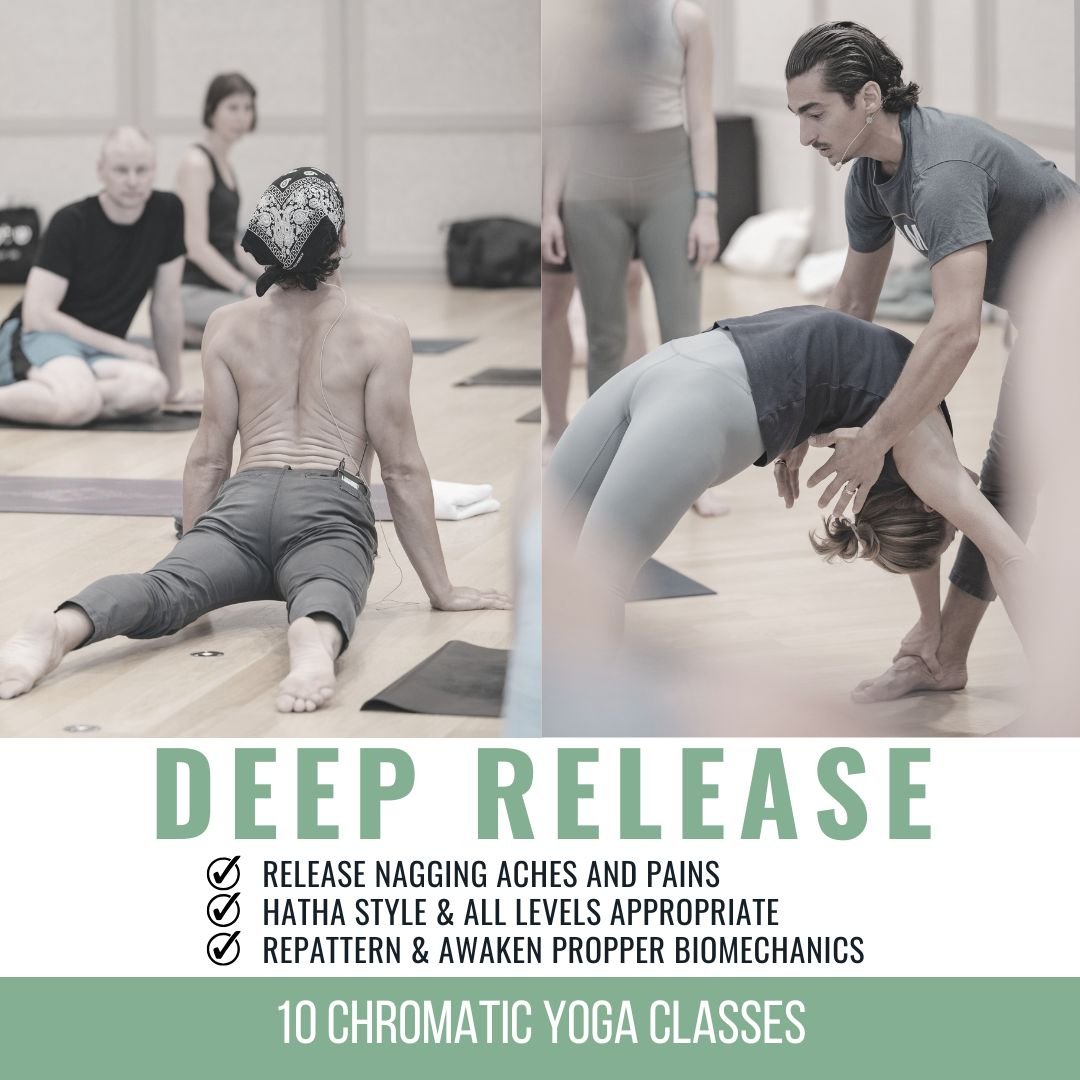
DEEP RELEASE

UNWIND NAGGING ACHES & PAINS

  • 10 Chromatic Yoga practices with founder Matt Giordano
  • Deep Unwinding of Unwanted Physical Patterns
  • Release Most Common Aches and Pains 
  • Meticulously Crafted Experiences to Enhance Your Postural Practice
  • All Levels Appropriate Full length 75 minute Classes
  • Non-dogmatic, Anatomy informed Alignment
  • The Perfect Blend of Knowledge and Practice
  • A Heavy Emphasis on Technique for the Poses Everyone Expects You to Know but Non One Teaches
  • 12 Continuing Education hours with Yoga Alliance and American Yoga Council
  • 12 Accredited Practice Hours with the Chromatic School of Yoga
  • Step-by-Step instruction for increased accessibility
  • Sweat, Breath, Strengthen, Stretch and Feel Amazing!

SIDE ANGLE NECK ALIGNMENT

In Side Angle, Matt guides us to rotate the chest without collapsing the shoulder forward. He reminds us that when there is pain in the neck, one of the first places to check is the relationship between ear and shoulder. Rather than letting them collapse together, we lengthen the neck. Options include pulling the chin slightly back or placing a hand behind the head, pressing the head back into the palm to encourage stability. Both shoulders are drawn back so the torso rotates inside the frame of the shoulders rather than dragging the shoulders with it. This mindful rotation helps us cultivate spaciousness and can reduce unnecessary tension in the neck.

WATCH THE VIDEO

PAIN IN THE NECK: ALIGN & PROTECT WITH 5 POSTURES

NECK IN A TWIST

Transitioning into a revolved lunge, Matt places the right elbow to the left thigh and cues us to bring the chin and throat back, keeping the head aligned on its axis. He points out that misalignment here can contribute to pain in the neck and encourages gentle self-adjustments: hand behind the skull, left ear low, right ear long. By pressing through the left heel and pulling the feet toward one another, we create stability through the legs, which frees the neck to rotate with more ease. The focus remains on spaciousness between ear and shoulder while lengthening through the cervical spine. These layers of engagement make the twist strong yet supportive.
200 Hour Online Teacher Training Certification

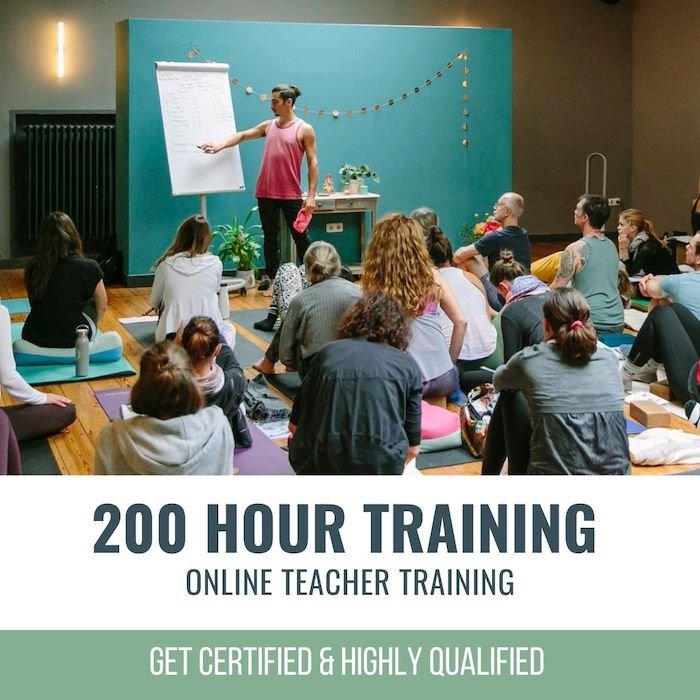
200 HOUR ONLINE TEACHER TRAINING

GET CERTIFIED & DEEPEN YOUR YOGA PRACTICE

  • Deepen your yoga practice
  • Build confidence speaking in front of groups in person and online
  • Learn foundational class structures and templates
  • Learn techniques for a wide range of yoga postures
  • Get certified and highly qualified to teach yoga
  • Yoga Alliance Globally Recognized Certification Program

WALL PRESS

With “stop sign” hands, Matt demonstrates another variation to refine awareness. Placing the right hand behind the head, we press the head back to activate opposing muscles while the chest rotates open. He reminds us to keep the back of the neck and occiput long, left ear drawing toward the ground, right ear toward the sky. In doing so, we deepen the twist while reinforcing strength and stability. This careful layering not only enhances mobility but also helps us understand how to work skillfully in positions that often trigger pain in the neck. The focus becomes less about achieving the deepest twist and more about maintaining integrity in the cervical spine.
300 hour teacher training online

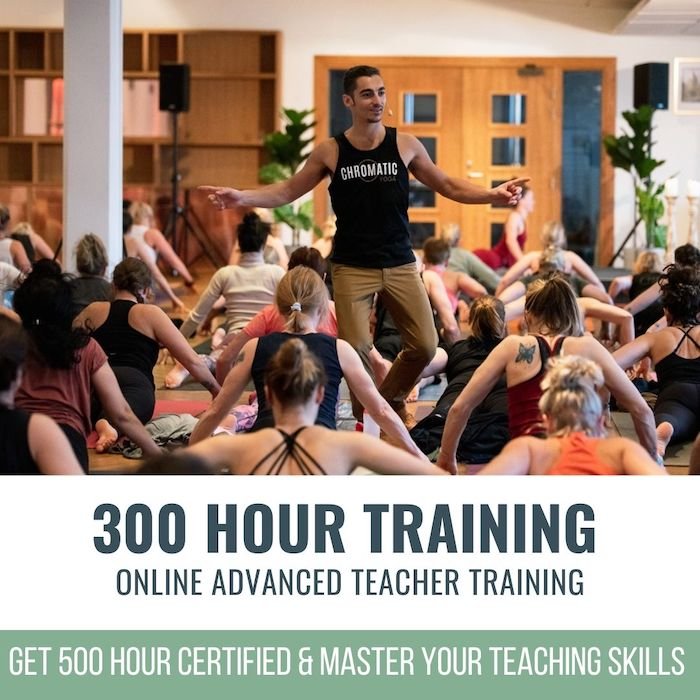
300 HOUR ONLINE TEACHER TRAINING

GET 500 HOUR CERTIFIED AS A MASTER TEACHER

Master your skill set as a teacher through refined techniques, anatomy, biomechanics, sequencing, philosophy, meditation techniques, theming, yoga business, and much more!

  • Get 500 hour certified
  • Learn anatomy, biomechanics, asana techniques
  • Expand your teaching skills
  • Masterful sequencing and verbal delivery
  • Learn meditation and breathwork techniques
  • Transformative tools: theming, dharma talks, satsang

THE DEPTH OF NECK ROTATION

In deeper twists like Revolved Chair and balancing shapes such as Ardha Chandrasana, Matt emphasizes that success comes from stability and alignment, not from forcing range of motion. In Revolved Chair, he once again offers the option of hand behind the head while pressing back for support, maintaining length through the back of the neck while rotating. In Ardha Chandrasana, he instructs us to align the lifted leg with the torso and shift weight into the big toe of the standing foot, preventing collapse into the pinky edge. From here, placing the hand behind the head can again highlight the need for integrity in the neck. The left ear draws down, right ear lifts up, maintaining a balance of effort and ease. By approaching these postures with patience and precision, we strengthen supportive muscles and learn to move in ways that reduce or even prevent recurring pain in the neck.

Learn about prevention before pain in Matt’s upcoming online immersion called Deep Release this October.

The 200 Hr. Teacher Training: Click Here to See the Next Start Date

The 300 Hr. Advanced Teacher Training: Click Here to See the Next Start Date

Article by Trish Curling

Video Extracted From: Therapeutics Immersion
lotus pose online yoga classes

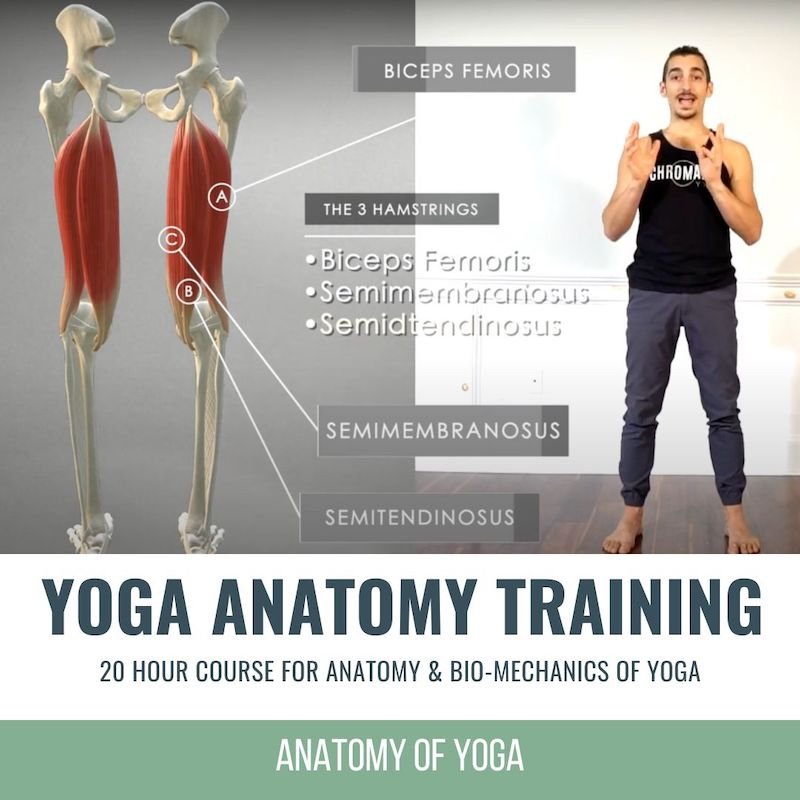
ONLINE ANATOMY COURSE

  • Accessible, exciting, and easy to learn
  • Anatomy and biomechanics for yoga
  • Appropriate for both teachers and students
  • Learn joint alignment vs pose alignment
  • Demystify yoga poses and transitions
  • Release aches and pains
  • Learn how to avoid common injuries
  • Caters to all levels with modifications and props
  • 20 hours Continued Education Credits with Yoga Alliance
  • 20 hours toward Chromatic Yoga Certification and 300 Hour
  • Lifetime access

Continue Learning

A Yoga Treatment For The Shoulders

A Yoga Treatment For The Shoulders

A Yoga Treatment For The ShouldersSTABILITYA YOGA TREATMENT FOR THE SHOULDERS Shoulders tend to speak up when stability is missing. Matt reminds us that building strength isn’t about aesthetics, it’s about support, resilience, and keeping the body working as one...

read more
Reverse Tabletop Strength

Reverse Tabletop Strength

Reverse Tabletop StrengthMECHANICSREVERSE TABLETOP STRENGTH “Solid” implies strength,  yet in yoga, we can easily lose sight of how intentionally building the back body supports everything we do. Reverse Tabletop may look simple, but it asks a lot from the posterior...
read more
Focus On Eagle Pose Legs

Focus On Eagle Pose Legs

Focus On Eagle Pose LegsMECHANICSFOCUS ON EAGLE POSE LEGS When we focus on Eagle Pose legs, it’s tempting to assume the bind is a flexibility test. But this posture quietly reveals something more nuanced: timing, joint mechanics, and how efficiently the legs organize...
read more
Build Connection On The Mat

Build Connection On The Mat

Build Connection On The MatGROUNDINGBUILD CONNECTION ON THE MAT Building connection on the mat starts at the place we tend to overlook: our feet. If we only practice the “shape” of a posture, we can miss the biomechanics that change how the whole pose feels from the...
read more
Flying Revolved Half Lotus

Flying Revolved Half Lotus

Flying Revolved Half LotusARM BALANCEFLYING REVOLVED HALF LOTUS Some postures don’t arrive through imitation; they arrive through investigation. Flying Revolved Half Lotus is one of those shapes. It borrows familiar ingredients like Side Crow mechanics, hip opening,...
read more
Eka Pada Bakasana

Eka Pada Bakasana

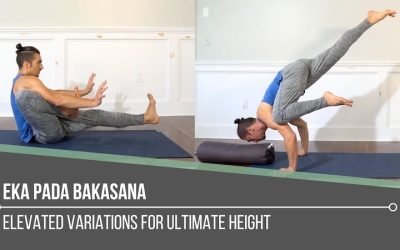
Eka Pada BakasanaSINGLE LEG CROWEKA PADA BAKASANA Eka Pada Bakasana asks us to balance curiosity with patience. This one-legged crow variation isn’t just about lifting a leg, it’s about organizing pressure, timing, and trust in unfamiliar territory. The posture...

read more

THE FREE TECHNIQUE PACK

When You Subscribe, You Will Get Instant Access to

  • the Technique Pack: 15 yoga pose breakdowns
  • exclusive online course discounts
  • exclusive blogs and videos
  • This field is for validation purposes and should be left unchanged.

Bound Half Moon

Bound Half Moon

BADDHA ARDHA CHANDRASANA

BOUND HALF MOON

The elements involved in Bound Half Moon are many.  There’s a lot at work and more than meets the eye.  Our ears, eyes, muscles, and proprioception help us to balance.  When it comes to which element carries more weight, an argument can be put forth for any of those.  

If all of the elements are working together, great! It is however possible to balance without having all working as a unit. 

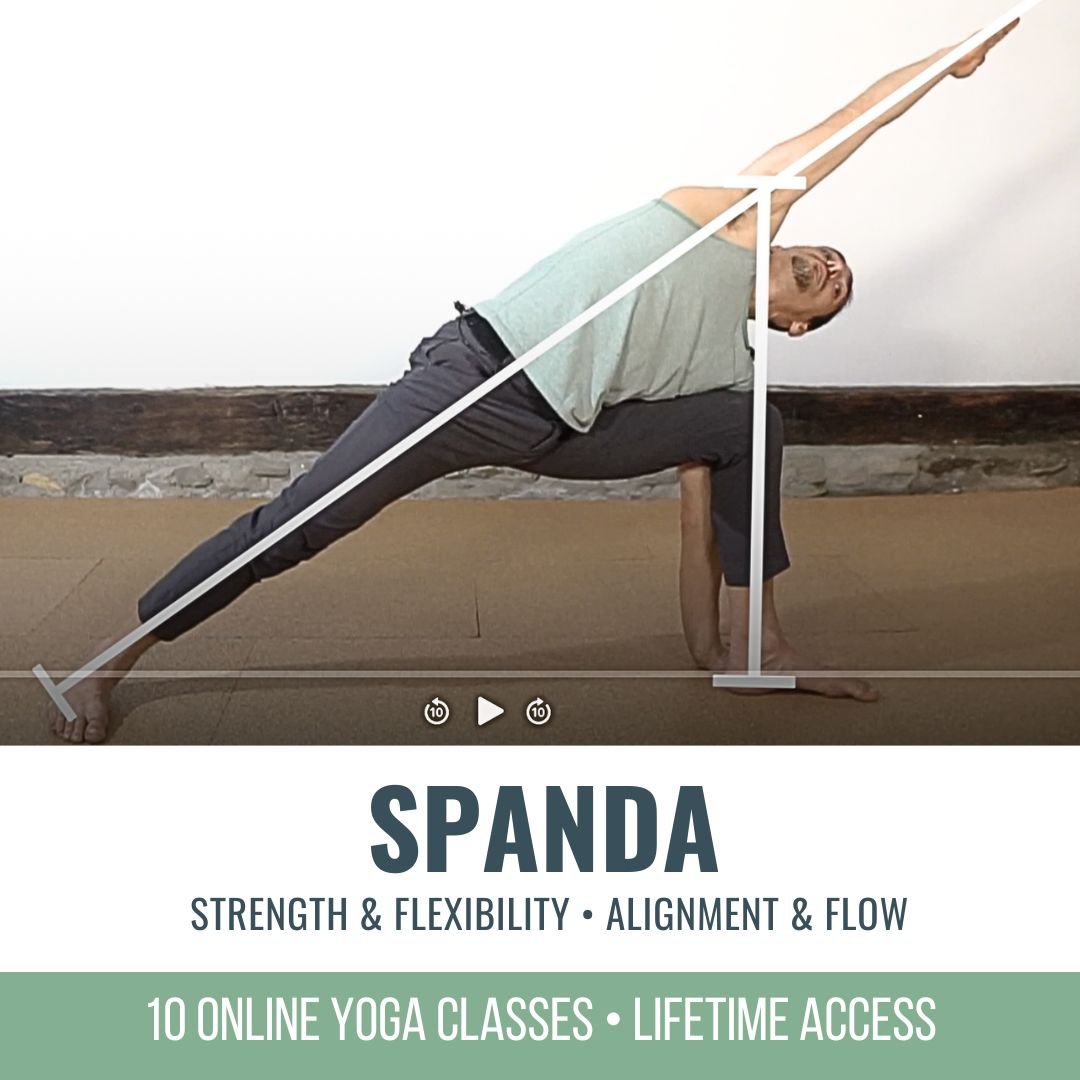
We may also consider how the idea of Spanda is integrated.  Spanda, the pulsation of energy and the balance between expansion and contraction, is beautifully embodied in Bound Half Moon. In this pose, we find the contrast between grounding and lifting—rooting through the standing leg while expanding the top leg and opening the chest.   

In today’s video, Matt lays a foundation and paves the way towards the ultimate expression of contraction and balance working together.

chromatic yoga 15 hour immersion

SPANDA

REGISTRATION NOW OPEN

  • 10 Chromatic Yoga practices with founder Matt Giordano
  • Full length 75 minute classes
  • Spanda: The Divine Pulse Between Expansion and Contraction
  • Strong and Long Held Postures with Pristine Technique
  • Vinyasa Flows Between Holds to Raise the Heart Rate
  • Expect a Cardiovascular Workout
  • The Dance Between Strength and Flexibility, Alignment and Movement
  • 12 Continuing Education hours with Yoga Alliance
  • 12 Accredited Hours with the Chromatic School of Yoga
  • Step-by-Step instruction for increased accessibility
  • Sweat, Breath, Strengthen, Stretch and Feel Amazing!

SET UP A SYSTEM

In the full class, Matt discusses how yoga provides a “training ground” for proprioception and our neuromuscular connection.

When it comes to balance, this means that if we fall out of balance, we can then employ the right actions to get back into balance.  Part of that is building the awareness to detect when we are about to fall out of balance, which helps us to nurture the actions and tools we can execute in order to prevent ourselves from falling out of balance.  

The system we can utilize to pattern ourselves for this ability is to deliberately move in and out of balance.  Shifting our weight back and forth and side to side to side can support our ability to know when to contract and when to expand.

If we intentionally practice in this way, we can speed up our response time, therefore reducing the amount of time we fall out of balance.

WATCH THE VIDEO

BOUND HALF MOON: A SYSTEM FOR STABILITY ON ONE FOOT

DO THE GROUND WORK

What we see in the first part of the video is Matt’s demonstration of how to position the pelvis along with how to turn on the muscles of the outer hip. He then repeats the action of lifting and lowering the top leg. By doing this, we are working on the contraction of the hip muscles for stability while also expanding the posture with the lift of the leg. This dynamic action mirrors Spanda, the pulsation between effort and ease, contraction and expansion. As the outer hip engages, we create the necessary control to support the pose, preventing collapse. At the same time, the lifted leg extends outward, reinforcing balance and strength. Matt’s drill helps us build proprioception, ensuring that we can hold Bound Half Moon with greater control, rather than relying on passive flexibility. This interplay of grounding and lifting enhances both stability and fluidity, making the pose feel more integrated and powerful.

200 Hour Online Teacher Training Certification

200 HOUR ONLINE TEACHER TRAINING

GET CERTIFIED & DEEPEN YOUR YOGA PRACTICE

  • Deepen your yoga practice
  • Build confidence speaking in front of groups in person and online
  • Learn foundational class structures and templates
  • Learn techniques for a wide range of yoga postures
  • Get certified and highly qualified to teach yoga
  • Yoga Alliance Globally Recognized Certification Program

HALF MOON OPTIONS

Option 1

Here, Matt emphasizes the positioning of the posture.  We must be intentional about squeezing the outer hip of the standing leg in so that we are not swaying and opening without control

Option 2

This time, we take one hand behind the heel of the standing leg while shifting our body weight forward towards the toes.  Again, we squeeze and contract while moving towards even more expansion by getting lighter in the posture (top leg up and lower arm floating in the opposite direction).

Option 3

Finally, we bind, adding in what might be the most challenging aspect.  Combining the balance and bind can be difficult, so Matt always encourages us to stay with where we may “comfortably” do the work to progress.

300 hour teacher training online

300 HOUR ONLINE TEACHER TRAINING

GET 500 HOUR CERTIFIED AS A MASTER TEACHER

Master your skill set as a teacher through refined techniques, anatomy, biomechanics, sequencing, philosophy, meditation techniques, theming, yoga business, and much more!

  • Get 500 hour certified
  • Learn anatomy, biomechanics, asana techniques
  • Expand your teaching skills
  • Masterful sequencing and verbal delivery
  • Learn meditation and breathwork techniques
  • Transformative tools: theming, dharma talks, satsang

BALANCING STRENGTH & FREEDOM

Bound Half Moon is more than just a pose, it’s a practice in control, expansion, and the fine-tuned awareness of movement. By engaging the standing leg and outer hip, we create a foundation of stability. As we lift, extend, and eventually bind, we step deeper into the balance between contraction and expansion, mirroring the essence of Spanda. Each variation Matt offers builds upon this idea, helping us refine proprioception and responsiveness. Whether we are working towards the full bind or simply finding steadiness in the posture, the key is cultivating a balance between effort and ease. With mindful practice, we train our bodies and minds to embrace both grounding and lightness, strength and fluidity, on the mat and beyond.

Register for Matt’s upcoming Spanda Immersion to expand both your practice and inner self.

The 200 Hr. Teacher Training: Click Here to See the Next Start Date

The 300 Hr. Advanced Teacher Training: Click Here to See the Next Start Date

Article by Trish Curling

Video Extracted From: Revelation Immersion

lotus pose online yoga classes

ONLINE ANATOMY COURSE

  • Accessible, exciting, and easy to learn
  • Anatomy and biomechanics for yoga
  • Appropriate for both teachers and students
  • Learn joint alignment vs pose alignment
  • Demystify yoga poses and transitions
  • Release aches and pains
  • Learn how to avoid common injuries
  • Caters to all levels with modifications and props
  • 20 hours Continued Education Credits with Yoga Alliance
  • 20 hours toward Chromatic Yoga Certification and 300 Hour
  • Lifetime access

Continue Learning

A Yoga Treatment For The Shoulders

A Yoga Treatment For The Shoulders

A Yoga Treatment For The ShouldersSTABILITYA YOGA TREATMENT FOR THE SHOULDERS Shoulders tend to speak up when stability is missing. Matt reminds us that building strength isn’t about aesthetics, it’s about support, resilience, and keeping the body working as one...

read more
Reverse Tabletop Strength

Reverse Tabletop Strength

Reverse Tabletop StrengthMECHANICSREVERSE TABLETOP STRENGTH “Solid” implies strength,  yet in yoga, we can easily lose sight of how intentionally building the back body supports everything we do. Reverse Tabletop may look simple, but it asks a lot from the posterior...

read more
Focus On Eagle Pose Legs

Focus On Eagle Pose Legs

Focus On Eagle Pose LegsMECHANICSFOCUS ON EAGLE POSE LEGS When we focus on Eagle Pose legs, it’s tempting to assume the bind is a flexibility test. But this posture quietly reveals something more nuanced: timing, joint mechanics, and how efficiently the legs organize...

read more
Build Connection On The Mat

Build Connection On The Mat

Build Connection On The MatGROUNDINGBUILD CONNECTION ON THE MAT Building connection on the mat starts at the place we tend to overlook: our feet. If we only practice the “shape” of a posture, we can miss the biomechanics that change how the whole pose feels from the...

read more
Flying Revolved Half Lotus

Flying Revolved Half Lotus

Flying Revolved Half LotusARM BALANCEFLYING REVOLVED HALF LOTUS Some postures don’t arrive through imitation; they arrive through investigation. Flying Revolved Half Lotus is one of those shapes. It borrows familiar ingredients like Side Crow mechanics, hip opening,...

read more
Eka Pada Bakasana

Eka Pada Bakasana

Eka Pada BakasanaSINGLE LEG CROWEKA PADA BAKASANA Eka Pada Bakasana asks us to balance curiosity with patience. This one-legged crow variation isn’t just about lifting a leg, it’s about organizing pressure, timing, and trust in unfamiliar territory. The posture...

read more

THE FREE TECHNIQUE PACK

When You Subscribe, You Will Get Instant Access to

  • the Technique Pack: 15 yoga pose breakdowns
  • exclusive online course discounts
  • exclusive blogs and videos
  • This field is for validation purposes and should be left unchanged.

Create Fluency In Your Flows

Create Fluency in Your Flows

Workshop These Vinyasa Transitions

FLUIDITY

IS IT “FIND” OR “CREATE” FLUENCY IN YOUR FLOWS?

It’s most definitely possible to say “find” fluency in your flows when it comes to a Vinyasa-style yoga practice, but I believe “create” is a more appropriate word to use here because it implies that you have to take action to make fluency happen. It’s vital to be very intentional about your approach when you are integrating something into your life, and it’s no different with regard to your yoga practice on the mat. Matt teaches specific techniques and strategies to make it easier for you to be intentional. Sometimes you have the yearning, but you don’t know what steps to take. In today’s video, you’ll see how Matt workshops how to utilize strength, the creative use of props, and harmony between breath and movement for a perfect equation to create fluency in your flows.

MOVE

  • Access your movement potential
  • Sweat and raise your heart rate
  • Master your breath/movement coordination
  • Increase mobility at all major joints
  • Learn to gracefully transition between postures
  • Improve your flexibility
  • Strengthen your hips, back, shoulders, and core
  • Improve your balance
  • Each class will raise your heart rate, bring you to a sweat, and return you back to a relaxed state of mind and body
  • 12 Classes: All levels appropriate
  • Lifetime unlimited access to all
  • Attend the livestream OR practice the replays any time that's convenient for you

$168.00

NAVIGATING TRANSITIONS

A Vinyasa-style practice is associated with almost seamless, flowing-type movements on your mat. The synchronicity of movement with breath elicits a certain pace and a “push” quality, since you are always looking ahead or moving towards the next posture. Doing this requires a degree of strength in order to flow with confidence.

It’s also important to understand that moving with control and elegance on your mat is so much more than the aesthetics. You can’t deny that watching someone gracefully move across their mat is beautiful, but what you’re actually witnessing is the time and effort that has gone into developing strength. Navigating your way through a sequence of postures requires not only focus in the moment but also anticipation of what is coming next.

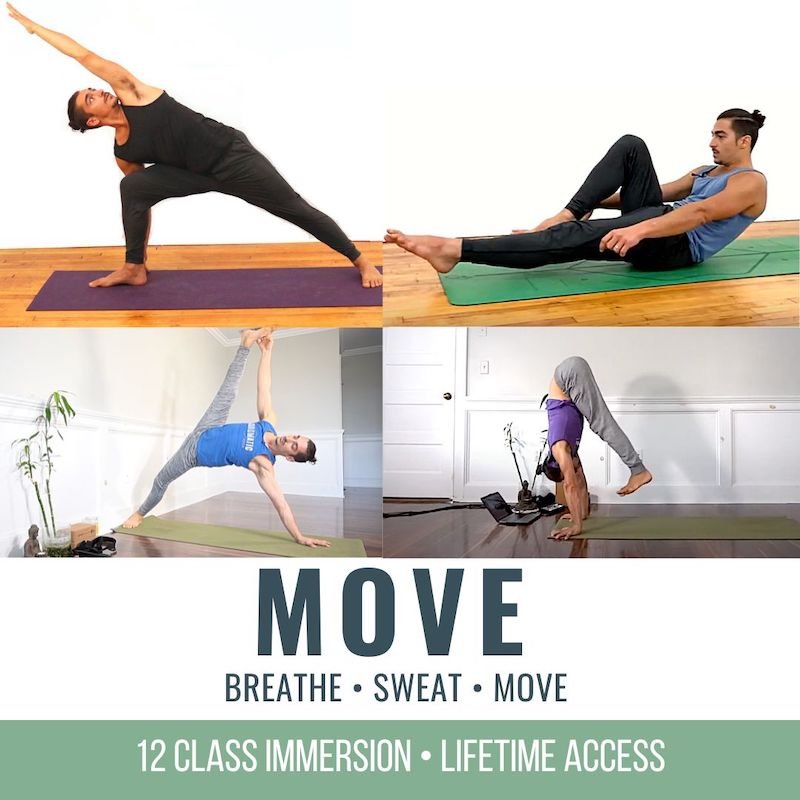
The clips from today’s video are from Matt’s MOVE Immersion. In the clips, he teaches you, with explicit instruction, how to transition from Warrior II to Half Moon Pose and how to Jump Back into Chaturanga from Standing Splits. Woven into the instruction of both transitions is how to utilize strength and how the power of props helps to pattern the fluidity of these transitions into your nervous system.

WATCH THE VIDEO

CREATE FLUENCY IN YOUR FLOWS: WORKSHOP THESE YOGA TRANSITIONS

WARRIOR II TO HALF MOON

First, let’s look at Warrior II to Half Moon. I would say that this is a fairly common transition, but without a deeper understanding of how to utilize your strength for balance, it can easily fall apart. For you to learn how to find fluency, Matt first advises you to come to the long side of your mat. From here, you can root down into your mat with your front foot. Next, he instructs you to take your back foot off of the mat. Doing this will help with the glide that’s necessary to “push” forward into Half Moon. What’s the best way to glide? The prop that’s used here is a sock on your back foot to glide across a hardwood floor or similar surface. The way to home in on strength here is to activate your gluteus muscles. Rooting down through your front heel encourages the activation of the glutes in the front leg. This firming down supports your ability to neatly drag or glide your back foot towards the front in order to lift into Half Moon. What happens when you return to your mat? You’ll see how Matt progresses you to the point where you can eventually take the contact of the back foot away from the floor completely. The return to Warrior II is simply the reversal of all of the steps. What you’re left with is powerful yet free-flowing movement that appears weightless.

200 Hour Online Teacher Training Certification

200 HOUR ONLINE TEACHER TRAINING

GET CERTIFIED & DEEPEN YOUR YOGA PRACTICE

  • Deepen your yoga practice
  • Build confidence speaking in front of groups in person and online
  • Learn foundational class structures and templates
  • Learn techniques for a wide range of yoga postures
  • Get certified and highly qualified to teach yoga
  • Yoga Alliance Globally Recognized Certification Program

JUMP BACK FROM STANDING SPLITS

This transition exhibits an explosive amount of power. One of the keys to unleashing the power for the lightness of the float in the jump back is to strengthen your hamstrings and glutes. You’ll see how Matt utilizes a block to maintain the activation in these muscle groups. To create the foundation, you’ll also use socks as a prop to learn to pattern a smooth sweep back into Chaturanga (the progression here happens without the block). The lift of the top leg in Standing Splits requires glute and hamstring strength. Maintaining this lift while jumping back is what contributes to the buoyancy. Of course, the upper-body strength required is not to be neglected, but breaking it down and layering each aspect will assist in finding the fluency required here. In the video, you’ll also want to pay attention to Matt’s hand placement when he’s setting up “Standing Splits preparation.” This detail is essential for preparing the upper body to harness more strength.

300 hour teacher training online

300 HOUR ONLINE TEACHER TRAINING

GET 500 HOUR CERTIFIED AS A MASTER TEACHER

Master your skill set as a teacher through refined techniques, anatomy, biomechanics, sequencing, philosophy, meditation techniques, theming, yoga business, and much more!

  • Get 500 hour certified
  • Learn anatomy, biomechanics, asana techniques
  • Expand your teaching skills
  • Masterful sequencing and verbal delivery
  • Learn meditation and breathwork techniques
  • Transformative tools: theming, dharma talks, satsang

LET IT ALL GO

Finding fluency in your flows means that you’ve found this beautiful collision, where strength meets softness. There is a level of push and action while giving over to the flow of momentum. Fluency is accessible and possible.  Cultivating strength is the foundation. The use of props can assist with strength and create ease. It’s true that your breath anchors it all, and it’s also what helps you to let go and flow freely.

There’s still time to register for MOVE, where Matt shares a plethora of techniques and tools to move with grace.

See you on the mat!

The 200 Hr. Teacher Training: Click Here to See the Next Start Date

The 300 Hr. Advanced Teacher Training: Click Here to See the Next Start Date

Article by Trish Curling

Video Clips Extracted From: Move Immersion

MOVE

  • Access your movement potential
  • Sweat and raise your heart rate
  • Master your breath/movement coordination
  • Increase mobility at all major joints
  • Learn to gracefully transition between postures
  • Improve your flexibility
  • Strengthen your hips, back, shoulders, and core
  • Improve your balance
  • Each class will raise your heart rate, bring you to a sweat, and return you back to a relaxed state of mind and body
  • 12 Classes: All levels appropriate
  • Lifetime unlimited access to all
  • Attend the livestream OR practice the replays any time that's convenient for you

$168.00

Continue Learning

A Yoga Treatment For The Shoulders

A Yoga Treatment For The Shoulders

A Yoga Treatment For The ShouldersSTABILITYA YOGA TREATMENT FOR THE SHOULDERS Shoulders tend to speak up when stability is missing. Matt reminds us that building strength isn’t about aesthetics, it’s about support, resilience, and keeping the body working as one...

read more
Reverse Tabletop Strength

Reverse Tabletop Strength

Reverse Tabletop StrengthMECHANICSREVERSE TABLETOP STRENGTH “Solid” implies strength,  yet in yoga, we can easily lose sight of how intentionally building the back body supports everything we do. Reverse Tabletop may look simple, but it asks a lot from the posterior...

read more
Focus On Eagle Pose Legs

Focus On Eagle Pose Legs

Focus On Eagle Pose LegsMECHANICSFOCUS ON EAGLE POSE LEGS When we focus on Eagle Pose legs, it’s tempting to assume the bind is a flexibility test. But this posture quietly reveals something more nuanced: timing, joint mechanics, and how efficiently the legs organize...

read more
Build Connection On The Mat

Build Connection On The Mat

Build Connection On The MatGROUNDINGBUILD CONNECTION ON THE MAT Building connection on the mat starts at the place we tend to overlook: our feet. If we only practice the “shape” of a posture, we can miss the biomechanics that change how the whole pose feels from the...

read more
Flying Revolved Half Lotus

Flying Revolved Half Lotus

Flying Revolved Half LotusARM BALANCEFLYING REVOLVED HALF LOTUS Some postures don’t arrive through imitation; they arrive through investigation. Flying Revolved Half Lotus is one of those shapes. It borrows familiar ingredients like Side Crow mechanics, hip opening,...

read more
Eka Pada Bakasana

Eka Pada Bakasana

Eka Pada BakasanaSINGLE LEG CROWEKA PADA BAKASANA Eka Pada Bakasana asks us to balance curiosity with patience. This one-legged crow variation isn’t just about lifting a leg, it’s about organizing pressure, timing, and trust in unfamiliar territory. The posture...

read more

THE FREE TECHNIQUE PACK

When You Subscribe, You Will Get Instant Access to

  • the Technique Pack: 15 yoga pose breakdowns
  • exclusive online course discounts
  • exclusive blogs and videos
  • This field is for validation purposes and should be left unchanged.

Pin It on Pinterest