Focus On Eagle Pose Legs

Focus On Eagle Pose Legs

MECHANICS

FOCUS ON EAGLE POSE LEGS

When we focus on Eagle Pose legs, it’s tempting to assume the bind is a flexibility test. But this posture quietly reveals something more nuanced: timing, joint mechanics, and how efficiently the legs organize around one another. The wrap isn’t forced by range alone; it emerges when the thigh rotates, the ankle everts strategically, and the pelvis cooperates. Eversion of the ankle in Chromatic yoga, is an action that is paired with internal rotation of the thigh.

Matt reframes Eagle as a coordination study. Internal rotation of the top thigh allows the leg to spiral closer, while the adductors stabilize the midline so the action doesn’t collapse. The hook of the foot is secondary. What matters is functionality and how the body learns to move in the right direction with intention. When mechanics lead, the shape often follows.
chromatic yoga 15 hour immersion

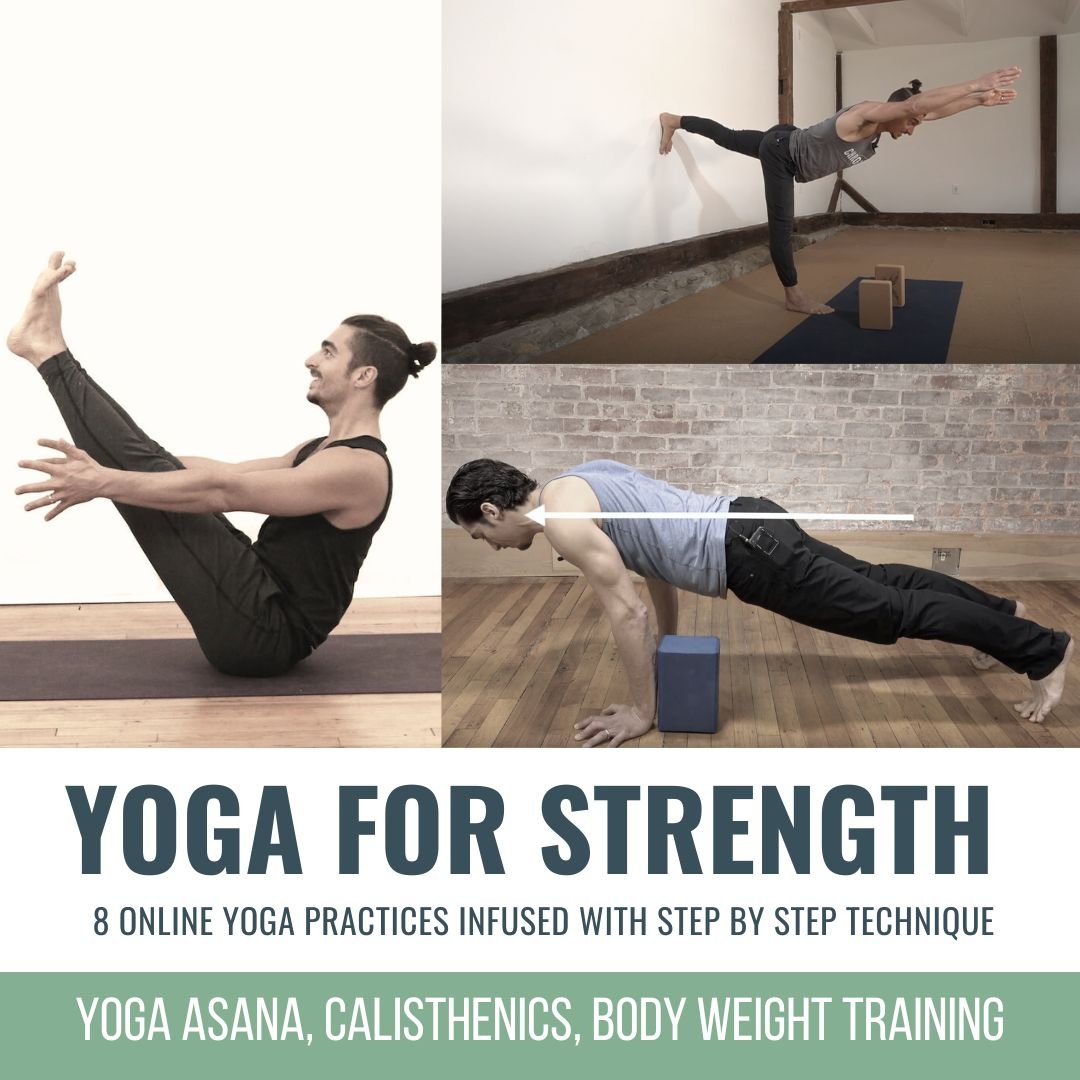
YOGA FOR STRENGTH

YOGA ASANA, CALISTHENICS,  BODY WEIGHT TRAINING

  • 8 Chromatic Yoga practices with founder Matt Giordano
  • Physically Invigorating Yet Accessible
  • Calisthenics and Body Weight Training For Improved Strength and Functionality
  • Improve Joint Integrity, Mobility, Balance, Stability, and Muscular Health
  • All Major Movement Joints
  • Designed as “Your Daily Yoga” 60 Minute Classes
  • Non-dogmatic, Anatomy informed Alignment
  • The Perfect Blend of Knowledge and Practice
  • Chromatic Slow Flow Style: Moderate Vinyasa Pacing Infused with Technique and Non-dogmatic Alignment
  • 8 Continuing Education hours with Yoga Alliance and American Yoga Council
  • 8 Accredited Practice Hours with the Chromatic School of Yoga
  • Step-by-Step instruction for increased accessibility
  • Sweat, Breath, Strengthen, Stretch and Feel Amazing!

SUPINE EAGLE

Practicing Eagle legs supine removes balance demands so we can study the mechanics clearly. As the top ankle inverts, the thigh externally rotates—often pushing the legs apart instead of drawing them together. To counter this, the thigh bone must internally rotate, allowing the top leg to “climb” closer to the standing leg.  This action becomes more natural when we evert the ankle.  In the video, we see how quickly internal rotation of the thigh bone occurs when eversion of the ankle occurs.

This is where the adductors also come online. They help guide the legs toward one another while the pelvis subtly hikes to create space. The foot may evert in an attempt to hook, but the goal isn’t the hook itself, it’s learning the pathway. Even without full range, moving in the correct direction trains coordination. Supine work makes it obvious: functionality matters more than how dramatic the wrap looks.

WATCH THE VIDEO

FOCUS ON EAGLE POSE LEGS: WHY THE HOOK STARTS BEFORE THE BIND

MECHANICS AT THE WALL

The wall becomes a teacher when we focus on Eagle Pose legs upright. Using one hand on the wall for support allows the top leg to wrap with better timing and less strain. Facing the chest toward the wall encourages internal rotation of the top thigh while the foot everts behind the calf.

Here, momentum plays a role.  Matt reminds us that it’s not speed, but rather a smooth, wave-like action. Moving too slowly often makes the wrap harder, not easier, because the mechanics stall. A controlled flow allows the joints to coordinate in sequence. The wall also lets us turn away and sit once the legs are organized, reinforcing that the wrap is built before depth is added. Stability first, then shape.
200 Hour Online Teacher Training Certification

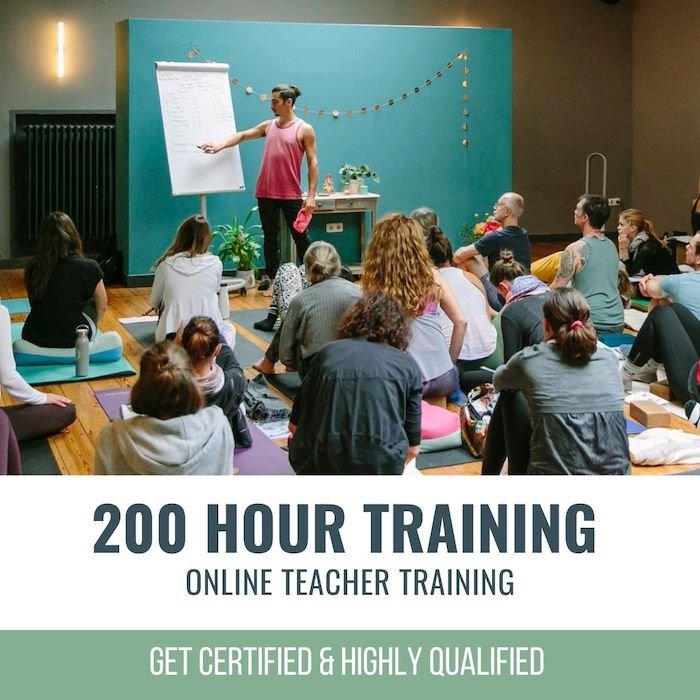
200 HOUR ONLINE TEACHER TRAINING

GET CERTIFIED & DEEPEN YOUR YOGA PRACTICE

  • Deepen your yoga practice
  • Build confidence speaking in front of groups in person and online
  • Learn foundational class structures and templates
  • Learn techniques for a wide range of yoga postures
  • Get certified and highly qualified to teach yoga
  • Yoga Alliance Globally Recognized Certification Program

FREE STANDING EAGLE

Away from the wall, the same principles apply. A kickstand with a yoga block is optional, but even with support, the ankle still everts with intention. The standing foot shortens, the big toe reaches forward, and the pinky toe draws back, creating a responsive base.

Again, a small amount of momentum (never force) helps the legs find their pathway. Once wrapped, sitting lower invites the adductors to stabilize while the tailbone tucks to lock the system in place. Free-standing Eagle reminds us that balance improves when mechanics are respected, not rushed.
300 hour teacher training online

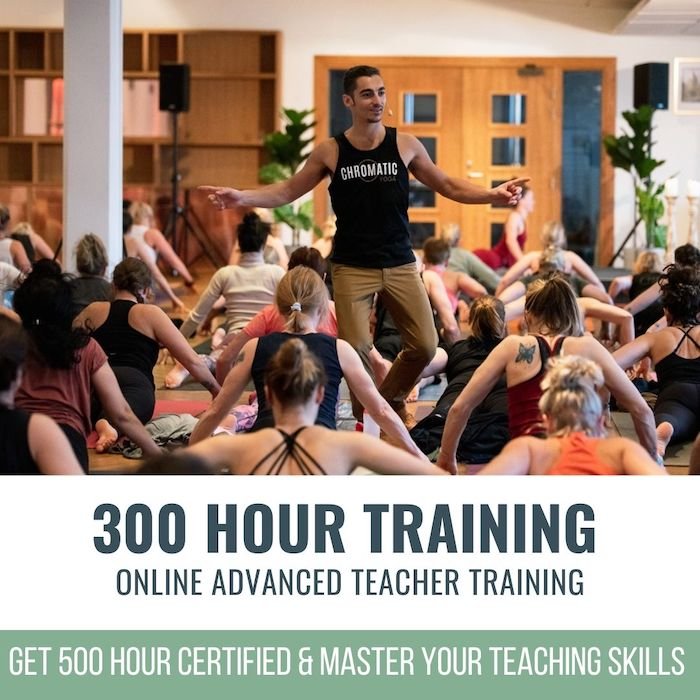
300 HOUR ONLINE TEACHER TRAINING

GET 500 HOUR CERTIFIED AS A MASTER TEACHER

Master your skill set as a teacher through refined techniques, anatomy, biomechanics, sequencing, philosophy, meditation techniques, theming, yoga business, and much more!

  • Get 500 hour certified
  • Learn anatomy, biomechanics, asana techniques
  • Expand your teaching skills
  • Masterful sequencing and verbal delivery
  • Learn meditation and breathwork techniques
  • Transformative tools: theming, dharma talks, satsang

LET THE ACTIONS DO THE WORK

Eagle Pose doesn’t ask for perfection, it respectfully invites participation. When we focus on Eagle Pose legs, the wrap becomes a conversation between ankle mechanics, thigh rotation, pelvic positioning, and adductor strength. The foot hook is simply one possible outcome, not the goal.

By letting actions lead instead of forcing range, the body learns how to organize efficiently. Over time, the bind may appear more easily, but even if it doesn’t, the nervous system has learned something valuable. Eagle becomes more accessible,  not because we pushed harder, but because we listened better.

Learn more about the skills involved in mechanics, functionality and strength of how we move in our asana practice in Matt’s upcoming online immersion Yoga For Strength

The 200 Hr. Teacher Training: Click Here to See the Next Start Date

The 300 Hr. Advanced Teacher Training: Click Here to See the Next Start Date

Article by Trish Curling

Video Extracted From: Slow Flow & Go Immersion
lotus pose online yoga classes

ONLINE ANATOMY COURSE

  • Accessible, exciting, and easy to learn
  • Anatomy and biomechanics for yoga
  • Appropriate for both teachers and students
  • Learn joint alignment vs pose alignment
  • Demystify yoga poses and transitions
  • Release aches and pains
  • Learn how to avoid common injuries
  • Caters to all levels with modifications and props
  • 20 hours Continued Education Credits with Yoga Alliance
  • 20 hours toward Chromatic Yoga Certification and 300 Hour
  • Lifetime access

Continue Learning

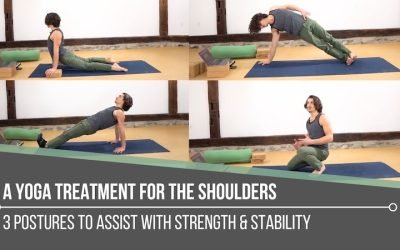
A Yoga Treatment For The Shoulders

A Yoga Treatment For The Shoulders

A Yoga Treatment For The ShouldersSTABILITYA YOGA TREATMENT FOR THE SHOULDERS Shoulders tend to speak up when stability is missing. Matt reminds us that building strength isn’t about aesthetics, it’s about support, resilience, and keeping the body working as one...

read more
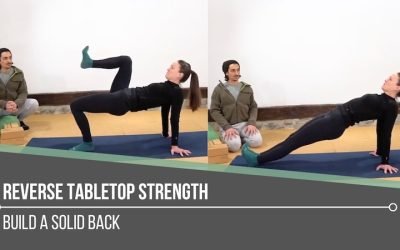
Reverse Tabletop Strength

Reverse Tabletop Strength

Reverse Tabletop StrengthMECHANICSREVERSE TABLETOP STRENGTH “Solid” implies strength,  yet in yoga, we can easily lose sight of how intentionally building the back body supports everything we do. Reverse Tabletop may look simple, but it asks a lot from the posterior...
read more
Focus On Eagle Pose Legs

Focus On Eagle Pose Legs

Focus On Eagle Pose LegsMECHANICSFOCUS ON EAGLE POSE LEGS When we focus on Eagle Pose legs, it’s tempting to assume the bind is a flexibility test. But this posture quietly reveals something more nuanced: timing, joint mechanics, and how efficiently the legs organize...
read more
Build Connection On The Mat

Build Connection On The Mat

Build Connection On The MatGROUNDINGBUILD CONNECTION ON THE MAT Building connection on the mat starts at the place we tend to overlook: our feet. If we only practice the “shape” of a posture, we can miss the biomechanics that change how the whole pose feels from the...
read more
Flying Revolved Half Lotus

Flying Revolved Half Lotus

Flying Revolved Half LotusARM BALANCEFLYING REVOLVED HALF LOTUS Some postures don’t arrive through imitation; they arrive through investigation. Flying Revolved Half Lotus is one of those shapes. It borrows familiar ingredients like Side Crow mechanics, hip opening,...
read more
Eka Pada Bakasana

Eka Pada Bakasana

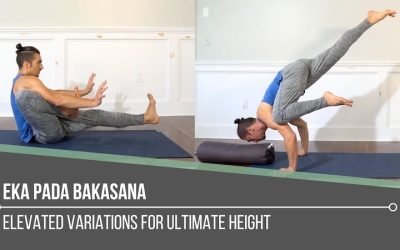
Eka Pada BakasanaSINGLE LEG CROWEKA PADA BAKASANA Eka Pada Bakasana asks us to balance curiosity with patience. This one-legged crow variation isn’t just about lifting a leg, it’s about organizing pressure, timing, and trust in unfamiliar territory. The posture...

read more

THE FREE TECHNIQUE PACK

When You Subscribe, You Will Get Instant Access to

  • the Technique Pack: 15 yoga pose breakdowns
  • exclusive online course discounts
  • exclusive blogs and videos
  • This field is for validation purposes and should be left unchanged.

Eagle Pose Legs

Eagle Pose Legs

Pelvic Articulations to Find the Bind

garudasana

EAGLE POSE

Eagle is a yoga posture that can really highlight the relationship between your pelvis and your hips. Of course, the more you understand your body and how it works, the more you begin to capitalize on its infinite potential. You can do this by utilizing not only drills to prepare you, but also specific articulations of various joints that help you build on strength, flexibility, and mobility in your physical yoga practice. It’s within this understanding that you begin to grow in your practice. Yoga postures that may seem unattainable actually become more accessible or even possible. Sometimes it’s a simple movement or sequence of movements that revolutionizes your experience. In today’s video, Matt shares a simple drill and also a sequence of movements that primarily involve specific actions of your pelvis and hips. Both will transform your Eagle Pose.

online classes for anatomy of arm balances

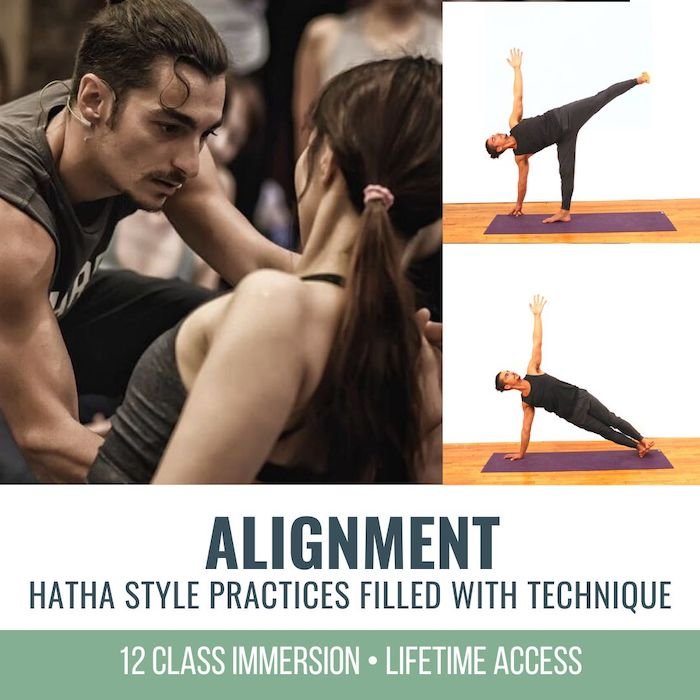
ALIGNMENT

JUNE 2023 Immersion

  • 12 Hatha-style practices
  • Transformative and informative experience
  • Alignment and techniques for the most common asana postures
  • Step-by-step, easy-to-follow instruction
  • Improve strength, balance, flexibility, and proprioception
  • Accessible and empowering modifications
  • Appropriate variations a modifications for all levels

$168.00 $138.00

MORE INFORMATION

START WITH THIS DRILL

If you know that you are moving in a specific direction within a given yoga practice (e.g., practicing a specific posture), your body requires specific warm-ups to execute the posture as safely as possible. The drill that Matt offers in today’s video focuses on supporting the shape of the legs in Eagle Pose. In the drill, he demonstrates a “straddle and criss-cross” movement in a supine position that works to prepare for the deep crossing of one leg over the other. This deep crossing requires a generous amount of flexibility and mobility. In addition to that, however, a great deal of stability is involved because Eagle Pose is also a balance posture. The drill works to prepare both the adductors and the abductors. As the drill progresses, Matt demonstrates how to pattern the actual wrapping of the legs. Continuing to build is key!

WATCH THE VIDEO

EAGLE POSE LEGS: PELVIC ARTICULATIONS TO FIND THE BIND

ARTICULATIONS TO CONSIDER

You’ll see in the progression of the drill that the wrapping movements prepare you for the internal and external rotation of the legs. However, these movements are only enhanced when you invite in other joint articulations.

As you practice Eagle legs in the supine position, it’s imperative to consider the articulation of the ankle in the top leg. In order to find the bind behind the lower leg, you must create an eversion in the ankle of the top leg. This means that you send your toes out and, as Matt explains it, you “shorten the outer ankle.” This creates a hook or locking to hold the bind in place. Now, remember that nothing works in isolation. How do we enhance this action, or make it more accessible? This is when you can really dive into supine Eagle Pose.

200 Hour Online Teacher Training Certification

200 HOUR ONLINE TEACHER TRAINING

GET CERTIFIED & DEEPEN YOUR YOGA PRACTICE

  • Deepen your yoga practice
  • Build confidence speaking in front of groups in person and online
  • Learn foundational class structures and templates
  • Learn techniques for a wide range of yoga postures
  • Get certified and highly qualified to teach yoga
  • Yoga Alliance Globally Recognized Certification Program

SUPINE EAGLE POSE

With the aim of increasing the accessibility of the bind, following a sequence of actions is essential. Breaking things down into bits will help you deepen your understanding. It’s like putting the pieces of a puzzle together. As Matt begins to demonstrate more of what’s involved with the legs in supine Eagle Pose, he introduces you to movements in the pelvis, which then inform the legs and feet. 

You’ll see in the video that he internally rotates the upper thigh bone, but to really emphasize this, he laterally tilts the pelvis (lifts the hip of the top leg). This will allow your foot to go behind the bottom leg with more ease. Want to go a step further? Lift your hips off of the ground first and then hike the hip while rotating your hips as if to twist.

300 hour teacher training online

300 HOUR ONLINE TEACHER TRAINING

GET 500 HOUR CERTIFIED AS A MASTER TEACHER

Master your skill set as a teacher through refined techniques, anatomy, biomechanics, sequencing, philosophy, meditation techniques, theming, yoga business, and much more!

  • Get 500 hour certified
  • Learn anatomy, biomechanics, asana techniques
  • Expand your teaching skills
  • Masterful sequencing and verbal delivery
  • Learn meditation and breathwork techniques
  • Transformative tools: theming, dharma talks, satsang

EAGLE POSE ENTRANCE AT THE WALL

Eagle Pose at the wall may provide even more room to experiment with pelvic articulations and movements of the hip. Matt suggests that this is because you no longer have a surface beneath you that may potentially limit the amount of rotation available to you. What’s nice here is that you can initially take the balance portion of the posture out of the equation. You’ll see that you stand perpendicular to the wall with your hand resting on it for balance as you execute the hip hike. The rotation is much more significant as you turn to face the wall. What’s slightly different here is that in order to get your leg over top, you must first externally rotate your thigh before you internally rotate it to then find the bind. Once you find the bind, you can turn away from the wall and attempt to find balance.

ONE STEP AT A TIME

Practicing these actions in isolation will help you to find the confidence to practice them in the perfect sequence. Following each step helps to unravel the pieces that need more attention alongside the pieces that feel strong. The most exciting part of it all is realizing what’s possible. When you attempt what may seem like a tiny adjustment, you’ll experience just how significant the shift is in a posture and ultimately your practice as a whole.  

If you’d like to delve even further, I suggest Matt’s Alignment Immersion, where you’ll really break down each posture one step at a time.

The 200 Hr. Teacher Training: Click Here to See the Next Start Date

The 300 Hr. Advanced Teacher Training: Click Here to See the Next Start Date

Article by Trish Curling

Video Extracted From: Alignment Immersion

lotus pose online yoga classes

The Teachers' Toolkit

  • Advance your practice
  • Learn masterful teaching techniques
  • Acquire business-building skills
  • Attract the right students
  • Learn about social media, marketing, and business structure
  • Catapult your teaching and career

Continue Learning

A Yoga Treatment For The Shoulders

A Yoga Treatment For The Shoulders

A Yoga Treatment For The ShouldersSTABILITYA YOGA TREATMENT FOR THE SHOULDERS Shoulders tend to speak up when stability is missing. Matt reminds us that building strength isn’t about aesthetics, it’s about support, resilience, and keeping the body working as one...

read more
Reverse Tabletop Strength

Reverse Tabletop Strength

Reverse Tabletop StrengthMECHANICSREVERSE TABLETOP STRENGTH “Solid” implies strength,  yet in yoga, we can easily lose sight of how intentionally building the back body supports everything we do. Reverse Tabletop may look simple, but it asks a lot from the posterior...

read more
Focus On Eagle Pose Legs

Focus On Eagle Pose Legs

Focus On Eagle Pose LegsMECHANICSFOCUS ON EAGLE POSE LEGS When we focus on Eagle Pose legs, it’s tempting to assume the bind is a flexibility test. But this posture quietly reveals something more nuanced: timing, joint mechanics, and how efficiently the legs organize...

read more
Build Connection On The Mat

Build Connection On The Mat

Build Connection On The MatGROUNDINGBUILD CONNECTION ON THE MAT Building connection on the mat starts at the place we tend to overlook: our feet. If we only practice the “shape” of a posture, we can miss the biomechanics that change how the whole pose feels from the...

read more
Flying Revolved Half Lotus

Flying Revolved Half Lotus

Flying Revolved Half LotusARM BALANCEFLYING REVOLVED HALF LOTUS Some postures don’t arrive through imitation; they arrive through investigation. Flying Revolved Half Lotus is one of those shapes. It borrows familiar ingredients like Side Crow mechanics, hip opening,...

read more
Eka Pada Bakasana

Eka Pada Bakasana

Eka Pada BakasanaSINGLE LEG CROWEKA PADA BAKASANA Eka Pada Bakasana asks us to balance curiosity with patience. This one-legged crow variation isn’t just about lifting a leg, it’s about organizing pressure, timing, and trust in unfamiliar territory. The posture...

read more

THE FREE TECHNIQUE PACK

When You Subscribe, You Will Get Instant Access to

  • the Technique Pack: 15 yoga pose breakdowns
  • exclusive online course discounts
  • exclusive blogs and videos
  • This field is for validation purposes and should be left unchanged.

Pin It on Pinterest