Flying Revolved Half Lotus

Flying Revolved Half Lotus

ARM BALANCE

FLYING REVOLVED HALF LOTUS

Some postures don’t arrive through imitation; they arrive through investigation. Flying Revolved Half Lotus is one of those shapes. It borrows familiar ingredients like Side Crow mechanics, hip opening, Janu Sirsasana–style leg positioning, spinal rotation, and the essential arm-balance actions of leaning, resisting, and pushing. It also demands strong scapular protraction and a willingness to stay curious rather than chase something predefined. In the full class, Matt shared that this pose wasn’t something he was necessarily taught, but rather that it emerged through exploration, asking how known shapes could reorganize into something new. In many ways, Flying Revolved Half Lotus can feel more approachable than Flying Full Lotus because it allows the hips to work asymmetrically. Instead of forcing symmetry, we learn to manage rotation, weight distribution, and balance through intelligent setup piece by piece – the Chromatic way of course.

chromatic yoga 15 hour immersion

FLYING HIP OPENERS

ASANA INFUSED WITH STEP BY STEP TECHNIQUES FOR ARM BALANCES

  • 10 Chromatic Yoga practices with founder Matt Giordano
  • Physically Invigorating
  • Foundations, Refinement and Advancement
  • Meticulously Crafted Experiences to Set you up for Maximum Success
  • Included Postures: Crow, Side Crow, Firefly, Dragon Fly, Revolved Flying Half Lotus, Koundenyasana 1 & 2, Hybrid Arm Balances, Straddle Handstand and More
  • 12+ Arm Balances with Modifications and Variations!
  • Hip Opening Techniques, Core Strength, Wrist Strength and Mobility
  • All Levels Appropriate Full length 75 minute Classes
  • Non-dogmatic, Anatomy informed Alignment
  • The Perfect Blend of Knowledge and Practice
  • A Heavy Emphasis on Technique for the Poses Everyone Expects You to Know but Non One Teaches
  • 12 Continuing Education hours with Yoga Alliance and American Yoga Council
  • 12 Accredited Practice Hours with the Chromatic School of Yoga
  • Step-by-Step instruction for increased accessibility
  • Sweat, Breath, Strengthen, Stretch and Feel Amazing!

PIGEON IS IMPORTANT

We begin in a lifted pigeon preparation, with the right shin across the mat and the legs staying active rather than sinking into flexibility. Matt cues us to pull the pelvis back by reaching strongly through the back heel, creating length and tone at the same time. From here, the twist becomes the priority. We flex the spine and rotate, placing the left elbow down while the right hand actively pushes the torso away from the front thigh. This push-and-reach dynamic creates space for rotation rather than collapsing into it. The left arm reaches to deepen the twist while the right hand provides resistance, keeping the body buoyant and supported. Although the stretch is deep, the strength in the legs keeps us organized. This phase establishes the rotational blueprint we’ll later need when gravity becomes part of the equation.

WATCH THE VIDEO

FLYING REVOLVED HALF LOTUS: UNRAVEL ALL OF ITS PARTS

SIDE CROW IS VITAL

Before taking flight, we return to something familiar: Side Crow. Matt instructs us that any variation works, as long as the pelvis isn’t resting passively on the opposite elbow. Matt emphasizes lining the knee up outside the elbow so the load transfers cleanly through the arms. Whether squeezing a block between the shins, pulling a strap apart, or keeping one foot grounded, the goal is the same, which is to lean forward, grip the ground, and hold. This isn’t about how long we balance, but about imprinting the arm-balance mechanics that Flying Revolved Half Lotus depends on. Protraction, finger grip, and forward lean all get rehearsed here. Side Crow becomes the structural anchor of the pose, reminding us how rotation and balance coexist without one overpowering the other.

200 Hour Online Teacher Training Certification

200 HOUR ONLINE TEACHER TRAINING

GET CERTIFIED & DEEPEN YOUR YOGA PRACTICE

  • Deepen your yoga practice
  • Build confidence speaking in front of groups in person and online
  • Learn foundational class structures and templates
  • Learn techniques for a wide range of yoga postures
  • Get certified and highly qualified to teach yoga
  • Yoga Alliance Globally Recognized Certification Program

THE INITIAL SHAPE

Next, Matt brings us back to the floor to “imprint the experience.” With the left foot grounded and the right leg extended or bent, we sit up and lower down repeatedly, flexing and rotating the spine. This sit-up pattern mimics the core engagement and twisting effort of the final pose without the pressure of balancing. Holding the shape briefly lets the nervous system recognize it as familiar. From here, we might explore a standing variation that draws the knee tightly across the body, echoing the half-lotus pathway. Hands hover as if preparing for Side Crow, knees stay compact, and we subtly wiggle to find alignment. This phase isn’t flashy, but it’s essential. It’s where the body learns the shape before being asked to support it.

300 hour teacher training online

300 HOUR ONLINE TEACHER TRAINING

GET 500 HOUR CERTIFIED AS A MASTER TEACHER

Master your skill set as a teacher through refined techniques, anatomy, biomechanics, sequencing, philosophy, meditation techniques, theming, yoga business, and much more!

  • Get 500 hour certified
  • Learn anatomy, biomechanics, asana techniques
  • Expand your teaching skills
  • Masterful sequencing and verbal delivery
  • Learn meditation and breathwork techniques
  • Transformative tools: theming, dharma talks, satsang

READY TO GO

When all the pieces come together, the transition feels deliberate rather than rushed. We move the knees slightly to create space for the elbow, place the hands wide, and lean forward and slightly sideways. One knee presses down as the other draws inward, creating opposition that stabilizes the lift. Matt demonstrates options here, reminding us that Flying Revolved Half Lotus isn’t about forcing elevation, it’s about honoring the setup. Whether we lift fully or hover with control, the work has already been done. The hips understand their role, the arms know how to support, and the spine rotates with clarity. At this point, the pose isn’t mysterious, it’s simply a conversation between familiar actions, organized with intention.

Matt finished off 2025 with strength in his Flying Hip Openers Immersion.  Did you miss it?  You can still register for all of the lifetime replays here.

The 200 Hr. Teacher Training: Click Here to See the Next Start Date

The 300 Hr. Advanced Teacher Training: Click Here to See the Next Start Date

Article by Trish Curling

Video Extracted From: Flying Hip Openers Immersion

lotus pose online yoga classes

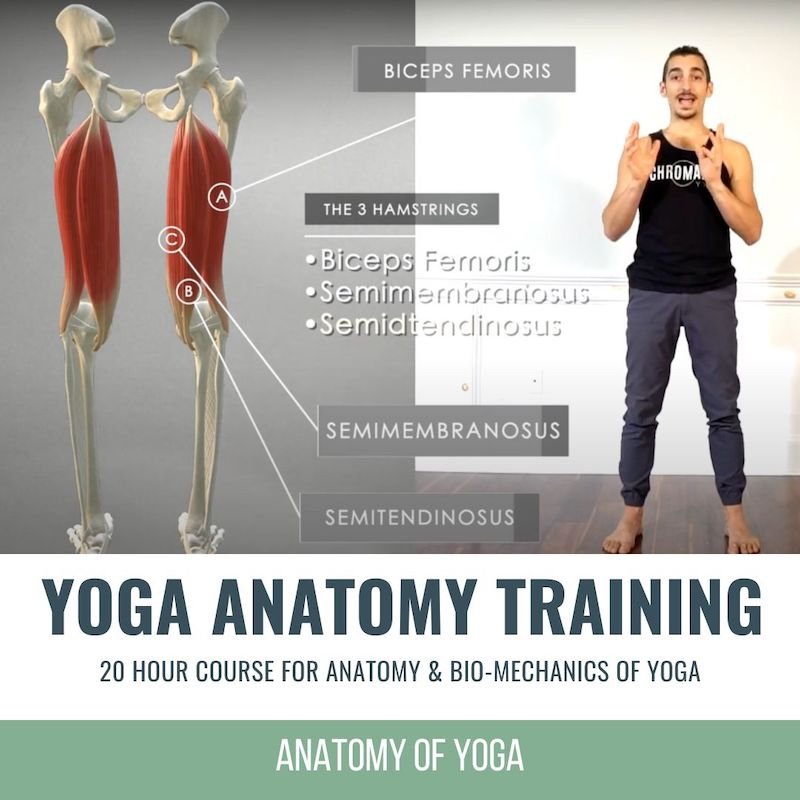
ONLINE ANATOMY COURSE

  • Accessible, exciting, and easy to learn
  • Anatomy and biomechanics for yoga
  • Appropriate for both teachers and students
  • Learn joint alignment vs pose alignment
  • Demystify yoga poses and transitions
  • Release aches and pains
  • Learn how to avoid common injuries
  • Caters to all levels with modifications and props
  • 20 hours Continued Education Credits with Yoga Alliance
  • 20 hours toward Chromatic Yoga Certification and 300 Hour
  • Lifetime access

Continue Learning

Build Connection On The Mat

Build Connection On The Mat

Build Connection On The MatGROUNDINGBUILD CONNECTION ON THE MAT Building connection on the mat starts at the place we tend to overlook: our feet. If we only practice the “shape” of a posture, we can miss the biomechanics that change how the whole pose feels from the...

read more
Flying Revolved Half Lotus

Flying Revolved Half Lotus

Flying Revolved Half LotusARM BALANCEFLYING REVOLVED HALF LOTUS Some postures don’t arrive through imitation; they arrive through investigation. Flying Revolved Half Lotus is one of those shapes. It borrows familiar ingredients like Side Crow mechanics, hip opening,...

read more
Eka Pada Bakasana

Eka Pada Bakasana

Eka Pada BakasanaSINGLE LEG CROWEKA PADA BAKASANA Eka Pada Bakasana asks us to balance curiosity with patience. This one-legged crow variation isn’t just about lifting a leg, it’s about organizing pressure, timing, and trust in unfamiliar territory. The posture...

read more
Eight Angle Pose

Eight Angle Pose

Eight Angle PoseASTAVAKRASANAEIGHT ANGLE POSE Sometimes we think arm balances are about getting higher, but Matt reframes Eight Angle pose as a mechanics workshop. This posture thrives when we test rotation, pelvic placement, and upper-body stability as interconnected...

read more
Approachable Arm Balances

Approachable Arm Balances

Approachable Arm BalancesPARSVA BAKASANAAPPROACHABLE ARM BALANCES Approachable arm balances aren’t about fearlessness; they’re about informed action. When we understand the mechanics behind the posture, we gain the power to shape our own outcomes. Rather than jumping...

read more
Perfect Protraction For Crow Pose

Perfect Protraction For Crow Pose

Perfect Protraction For Crow PoseBAKASANAPERFECT PROTRACTION FOR CROW POSE When working toward perfect protraction for Crow Pose, it’s essential to understand the role of the serratus anterior, the “fingertip” muscles that wrap around the rib cage and attach to the...

read more

THE FREE TECHNIQUE PACK

When You Subscribe, You Will Get Instant Access to

  • the Technique Pack: 15 yoga pose breakdowns
  • exclusive online course discounts
  • exclusive blogs and videos
  • This field is for validation purposes and should be left unchanged.

Shoulder Secrets

Shoulder Secrets

bhujapidasana

SHOULDER SECRETS

When approaching arm balances, it’s not unusual to go straight to a focus on the wrists.  Having to bear our weight into the wrists while balancing our body weight can be an intimidating thought (especially if we don’t have the right tools or “secrets”) that assist in the reduction of strain and pressure.  Arm balance postures are much more layered than simply requiring strength in the wrists.  We can allow the shoulders to take on some of the responsibilities.  In today’s video, Matt demonstrates the key actions (“shoulder secrets”) that will help us to feel more in control and at ease in our arm balance postures.
chromatic yoga 15 hour immersion

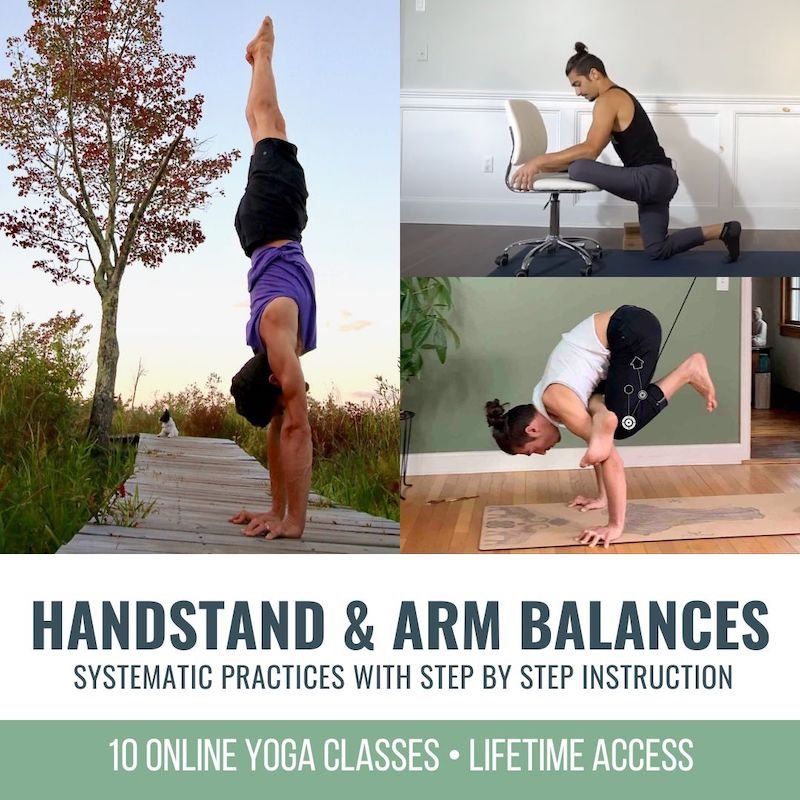
HANDSTAND AND ARM BALANCES

REGISTRATION NOW OPEN

  • 10 Chromatic Yoga practices with founder Matt Giordano
  • Full length 75 minute classes
  • Each Yoga class includes handstand drills and 1 arm balance breakdown
  • Each class includes warm ups, sun salutations, standing postures and preparatory postures for the selected arm balance of the day
  • Improve your body awareness and advance your practice
  • Technique, biomechanics, and alignment at the forefront
  • 12 Continuing Education hours with Yoga Alliance
  • 12 Accredited Hours with the Chromatic School of Yoga
  • Step-by-Step instruction for increased accessibility
  • Improve strength, balance, flexibility, and proprioception
  • Appropriate variations and modifications for all levels

POWER POINTS OF A POSTURE

Understanding the connection between our foundation and “power points” are the key to mastering poses. Matt goes into detail about in his online Pose Factory course.  

Our foundation is what’s in contact with the ground—feet in standing poses or hands in arm balances. The power point is the part of the torso closest to this foundation, acting as the source of strength. For arm balances, the power point is the shoulders, channeling energy from the ground through the arms. When practicing with Matt, we know that grip strength in our hands and wrists is important, but the real stability comes from an engaged shoulder girdle. Without this connection, the poses in today’s video may feel unstable or collapse. 

The shoulders serve as a bridge, channeling energy from our core to our foundation. By focusing on this connection, we transform our poses from shaky to steadfast, embodying both strength and grace.

WATCH THE VIDEO

SHOULDER SECRETS: CREATING STRENGTH & FREEDOM IN ARM BALANCES

TAKE THE WEIGHT OFF OF THE WRISTS

Supporting our wrists in arm balances begins with activating our shoulders. Matt teaches us that the key is to focus on the protraction of the scapula, the “shoulder secret”in today’s arm balances.  It’s the primary action that significantly reduces strain on the wrists. Protraction along with flexion of the spine, creates a powerful connection from the shoulder girdle to our hands. This not only makes the wrists feel lighter but also builds strength and stability in arm balances. While some arm balances demand more wrist strength, we learn to rely more on the shoulders in the arm balances from today’s video. Engaging the shoulders effectively transforms the balance of effort, making them feel more accessible and sustainable. With mindful activation, our wrists no longer bear the brunt of the work, and the power of our shoulder girdle supports us in finding ease and strength in these postures.
200 Hour Online Teacher Training Certification

200 HOUR ONLINE TEACHER TRAINING

GET CERTIFIED & DEEPEN YOUR YOGA PRACTICE

  • Deepen your yoga practice
  • Build confidence speaking in front of groups in person and online
  • Learn foundational class structures and templates
  • Learn techniques for a wide range of yoga postures
  • Get certified and highly qualified to teach yoga
  • Yoga Alliance Globally Recognized Certification Program

SHOULDER PRESSING POSE ON BLOCKS

While Matt demonstrates access to Shoulder Pressing Pose (Bhujapidasana) in the video, we learn exactly how and when to employ the action in the “power point” (protraction of the scapula).  For greater access, he utilizes blocks.  Here are the steps:

  1.  Slide 2 yoga blocks between wide feet
  2. Bend the knees and flex the spine
  3. Slide the blocks wide (behind the heels)
  4. Sit onto bent elbows
  5. Lift the heels up and point the feet
  6. Push the shoulder blades apart
  7. Flex the spine
  8. Squeeze the legs in

It’s right after step 5, that if we don’t create protraction of the shoulder blades, we will get heavy in the wrists.

Armed with our shoulder secrets and the foundation from Shoulder Pressing Pose, Matt then demonstrates how we can gain more access to Firefly Pose.
    300 hour teacher training online

    300 HOUR ONLINE TEACHER TRAINING

    GET 500 HOUR CERTIFIED AS A MASTER TEACHER

    Master your skill set as a teacher through refined techniques, anatomy, biomechanics, sequencing, philosophy, meditation techniques, theming, yoga business, and much more!

    • Get 500 hour certified
    • Learn anatomy, biomechanics, asana techniques
    • Expand your teaching skills
    • Masterful sequencing and verbal delivery
    • Learn meditation and breathwork techniques
    • Transformative tools: theming, dharma talks, satsang

    EFFORT WITH EASE

    Arm balances embody the dance between effort and ease, where strength meets freedom.  True stability comes from engaging the shoulders and harnessing their power, allowing the wrists and hands to feel light and supported.  This balance of activation and release creates a pose that feels both grounded and expansive.  Effort lies in the mindful protraction of the scapula and the alignment of the body, while ease comes from trusting the connection between our foundation and our power point.  When shoulders and wrists work in harmony, the pose transforms from a struggle into a flow, giving us the freedom to explore the strength within our bodies.   As we explore these principles in arm balances, the struggle fades, leaving behind a practice that embodies strength, confidence, and lightness. 

    With Matt’s guidance, we can embrace this balance and experience the joy of mastering effort with ease.

    Register for Matt’s January 2025 online immersion Handstand & Arm Balances for a deeper dive and greater access into balance postures.

    The 200 Hr. Teacher Training: Click Here to See the Next Start Date

    The 300 Hr. Advanced Teacher Training: Click Here to See the Next Start Date

    Article by Trish Curling

    Video Extracted From: Revelation Immersion
    lotus pose online yoga classes

    ONLINE ANATOMY COURSE

    • Accessible, exciting, and easy to learn
    • Anatomy and biomechanics for yoga
    • Appropriate for both teachers and students
    • Learn joint alignment vs pose alignment
    • Demystify yoga poses and transitions
    • Release aches and pains
    • Learn how to avoid common injuries
    • Caters to all levels with modifications and props
    • 20 hours Continued Education Credits with Yoga Alliance
    • 20 hours toward Chromatic Yoga Certification and 300 Hour
    • Lifetime access

    Continue Learning

    Build Connection On The Mat

    Build Connection On The Mat

    Build Connection On The MatGROUNDINGBUILD CONNECTION ON THE MAT Building connection on the mat starts at the place we tend to overlook: our feet. If we only practice the “shape” of a posture, we can miss the biomechanics that change how the whole pose feels from the...

    read more
    Flying Revolved Half Lotus

    Flying Revolved Half Lotus

    Flying Revolved Half LotusARM BALANCEFLYING REVOLVED HALF LOTUS Some postures don’t arrive through imitation; they arrive through investigation. Flying Revolved Half Lotus is one of those shapes. It borrows familiar ingredients like Side Crow mechanics, hip opening,...

    read more
    Eka Pada Bakasana

    Eka Pada Bakasana

    Eka Pada BakasanaSINGLE LEG CROWEKA PADA BAKASANA Eka Pada Bakasana asks us to balance curiosity with patience. This one-legged crow variation isn’t just about lifting a leg, it’s about organizing pressure, timing, and trust in unfamiliar territory. The posture...

    read more
    Eight Angle Pose

    Eight Angle Pose

    Eight Angle PoseASTAVAKRASANAEIGHT ANGLE POSE Sometimes we think arm balances are about getting higher, but Matt reframes Eight Angle pose as a mechanics workshop. This posture thrives when we test rotation, pelvic placement, and upper-body stability as interconnected...

    read more
    Approachable Arm Balances

    Approachable Arm Balances

    Approachable Arm BalancesPARSVA BAKASANAAPPROACHABLE ARM BALANCES Approachable arm balances aren’t about fearlessness; they’re about informed action. When we understand the mechanics behind the posture, we gain the power to shape our own outcomes. Rather than jumping...

    read more
    Perfect Protraction For Crow Pose

    Perfect Protraction For Crow Pose

    Perfect Protraction For Crow PoseBAKASANAPERFECT PROTRACTION FOR CROW POSE When working toward perfect protraction for Crow Pose, it’s essential to understand the role of the serratus anterior, the “fingertip” muscles that wrap around the rib cage and attach to the...

    read more

    THE FREE TECHNIQUE PACK

    When You Subscribe, You Will Get Instant Access to

    • the Technique Pack: 15 yoga pose breakdowns
    • exclusive online course discounts
    • exclusive blogs and videos
    • This field is for validation purposes and should be left unchanged.

    Plank, Chaturanga, Upward Dog

    Plank, Chaturanga, Upward Dog

    Shoulder Mechanics Simplified

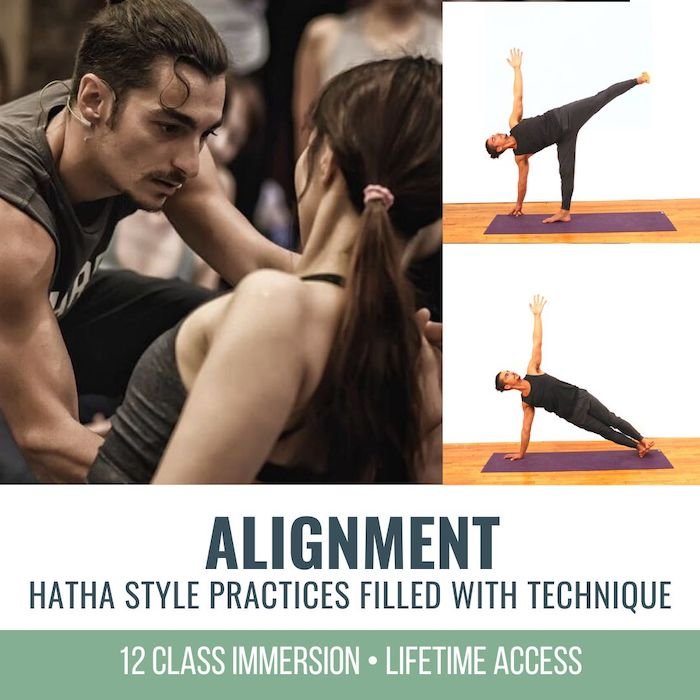
    ALIGNMENT

    PLANK, CHATURANGA, UPWARD DOG

    How many times have you heard the cue “Plank, Chaturanga, Upward Dog” in a yoga class? If you’re a regular practitioner, it’s probably quite often (particularly in Vinyasa-style classes). These postures are often strung together in a sequence, and the repetition of this sequence can feel quite nice in your body once it becomes a more regular part of your asana practice. It’s easy, however, to become complacent in the execution of these postures and potentially miss opportunities to practice with more skill. In today’s video, Matt simplifies the shoulder mechanics within each posture and highlights how to effectively utilize the appropriate muscle groups for maximum efficiency in your body. You’ll come away with alignment insights that will uplevel your yoga practice.

    online classes for anatomy of arm balances

    ALIGNMENT

    JUNE 2023 Immersion

    • 12 Hatha-style practices
    • Transformative and informative experience
    • Alignment and techniques for the most common asana postures
    • Step-by-step, easy-to-follow instruction
    • Improve strength, balance, flexibility, and proprioception
    • Accessible and empowering modifications
    • Appropriate variations a modifications for all levels

    $168.00 $138.00

    MORE INFORMATION

    UNDERSTANDING PLANK

    Plank is the foundation and start of the sequence of Plank, Chaturanga, Upward Dog. It is the start of being able to understand some of the common tendencies you may have when it comes to stability. Matt explains that one tendency is the anterior tilt of the scapulae (i.e., the shoulders roll forward). This is not necessarily wrong, but if your body regularly defaults into the pattern, it may be an indication that your serratus anterior is weak. It’s your serratus anterior that works to protract the scapulae (a requirement for Plank Pose). If this area is weak, then your pectoralis minor will attempt to take over. A big indicator here is a “sagging” between the shoulder blades. In Plank, your torso is being weighed down by gravity, so the pull of the chest, or “sagging,” is almost inevitable if the serratus anterior is weak.

    WATCH THE VIDEO

    PLANK, CHATURANGA, UPWARD DOG: SHOULDER MECHANICS SIMPLIFIED

    CHATURANGA AND THE ROLE OF GRAVITY

    In the full class, Matt discusses the importance of understanding the role of gravity and its influence on Plank and Chaturanga. In Plank, we now understand the tendency to close the distance between the shoulder blades. In Chaturanga, however, there is an element of going with gravity through the movement, while also opposing it. In other words, in Chaturanga, the shoulder mechanics change. You’re moving from protraction in Plank to retraction.  This is where it gets tricky. Even though there is a level of retraction, it’s critical to note that the muscles that allow you to lower into Chaturanga slowly are the muscles that create protraction. There is still a level of effort placed on protraction so as not to just go with gravity and fall on your face. Essentially, you are fighting against gravity in order to maintain a slow stable descent into Chaturanga.

    200 Hour Online Teacher Training Certification

    200 HOUR ONLINE TEACHER TRAINING

    GET CERTIFIED & DEEPEN YOUR YOGA PRACTICE

    • Deepen your yoga practice
    • Build confidence speaking in front of groups in person and online
    • Learn foundational class structures and templates
    • Learn techniques for a wide range of yoga postures
    • Get certified and highly qualified to teach yoga
    • Yoga Alliance Globally Recognized Certification Program

    UPWARD-FACING DOG

    Falling into the same pattern of anterior tilt in the shoulders is very easy here too. Upward Dog has the capacity to be a strong backbend, but this is achieved by creating a posterior tilt of the scapulae. Instead of thinking about how to manipulate this action from the top of the shoulder blades, Matt suggests bringing your awareness to the bottom tips. Bringing the bottom tips of the scapulae in towards your midline while sending them forward will help to create the shape. Lifting your shoulders up while also sending them back will ultimately send your chest forward to create the backbend. If this proves to be challenging, it comes back to strengthening both the serratus anterior and, in this case, the lower trapezius, which can help you break away from old patterns. It’s the difference between dropping into gravity and lifting up and out with more power.

    300 hour teacher training online

    300 HOUR ONLINE TEACHER TRAINING

    GET 500 HOUR CERTIFIED AS A MASTER TEACHER

    Master your skill set as a teacher through refined techniques, anatomy, biomechanics, sequencing, philosophy, meditation techniques, theming, yoga business, and much more!

    • Get 500 hour certified
    • Learn anatomy, biomechanics, asana techniques
    • Expand your teaching skills
    • Masterful sequencing and verbal delivery
    • Learn meditation and breathwork techniques
    • Transformative tools: theming, dharma talks, satsang

    TRANSITION

    Plank, Chaturanga, Upward Dog—instead of just going through the motions, you now need a deeper sense of awareness in this sequence. Of course, your body will start to re-pattern, and there will be less thought once the pattern becomes ingrained in your body. The sequence of Plank, Chaturanga, Upward Dog will become more fluid, but until then, it will be a process of becoming more familiar with the timing of when to protract, retract, elevate, and depress your shoulders. In today’s video from Matt’s Alignment Immersion, he takes you on the journey of these 3 postures. If you’re interested in going even further, investing in his 200 & 300 hour training programs is the way forward. This is where you will go further into not only transforming your own practice but becoming certified to support and transform the practice of your students.

    The 200 Hr. Teacher Training: Click Here to See the Next Start Date

    The 300 Hr. Advanced Teacher Training: Click Here to See the Next Start Date

    Article by Trish Curling

    Video Extracted From: Alignment Immersion

    lotus pose online yoga classes

    The Teachers' Toolkit

    • Advance your practice
    • Learn masterful teaching techniques
    • Acquire business-building skills
    • Attract the right students
    • Learn about social media, marketing, and business structure
    • Catapult your teaching and career

    Continue Learning

    Build Connection On The Mat

    Build Connection On The Mat

    Build Connection On The MatGROUNDINGBUILD CONNECTION ON THE MAT Building connection on the mat starts at the place we tend to overlook: our feet. If we only practice the “shape” of a posture, we can miss the biomechanics that change how the whole pose feels from the...

    read more
    Flying Revolved Half Lotus

    Flying Revolved Half Lotus

    Flying Revolved Half LotusARM BALANCEFLYING REVOLVED HALF LOTUS Some postures don’t arrive through imitation; they arrive through investigation. Flying Revolved Half Lotus is one of those shapes. It borrows familiar ingredients like Side Crow mechanics, hip opening,...

    read more
    Eka Pada Bakasana

    Eka Pada Bakasana

    Eka Pada BakasanaSINGLE LEG CROWEKA PADA BAKASANA Eka Pada Bakasana asks us to balance curiosity with patience. This one-legged crow variation isn’t just about lifting a leg, it’s about organizing pressure, timing, and trust in unfamiliar territory. The posture...

    read more
    Eight Angle Pose

    Eight Angle Pose

    Eight Angle PoseASTAVAKRASANAEIGHT ANGLE POSE Sometimes we think arm balances are about getting higher, but Matt reframes Eight Angle pose as a mechanics workshop. This posture thrives when we test rotation, pelvic placement, and upper-body stability as interconnected...

    read more
    Approachable Arm Balances

    Approachable Arm Balances

    Approachable Arm BalancesPARSVA BAKASANAAPPROACHABLE ARM BALANCES Approachable arm balances aren’t about fearlessness; they’re about informed action. When we understand the mechanics behind the posture, we gain the power to shape our own outcomes. Rather than jumping...

    read more
    Perfect Protraction For Crow Pose

    Perfect Protraction For Crow Pose

    Perfect Protraction For Crow PoseBAKASANAPERFECT PROTRACTION FOR CROW POSE When working toward perfect protraction for Crow Pose, it’s essential to understand the role of the serratus anterior, the “fingertip” muscles that wrap around the rib cage and attach to the...

    read more

    THE FREE TECHNIQUE PACK

    When You Subscribe, You Will Get Instant Access to

    • the Technique Pack: 15 yoga pose breakdowns
    • exclusive online course discounts
    • exclusive blogs and videos
    • This field is for validation purposes and should be left unchanged.

    Pin It on Pinterest