Shoulder Connections

Shoulder Connections

3 Postures for Increased Mobility

shoulder stability

SHOULDER CONNECTIONS

To increase mobility in our shoulders, we must first understand how they move, so we become more connected with their function and how they inform a variety of yoga postures. The exploration with intentional techniques is the key to gaining access to these postures. 

In regard to heart-opening postures, “shoulder connections” are also about understanding how the retraction of the shoulder blades affects the chest, rib cage, abdomen, and spine. In today’s video, Matt demonstrates the shoulder actions needed to access 3-Part Cobra, Upward Dog with blocks, and Wild Thing. The way that the retraction of the shoulder blades is applied in these postures will not only create the desired heart-opening shape but also strengthen the muscles necessary for healthy shoulder mobility.
chromatic yoga 15 hour immersion

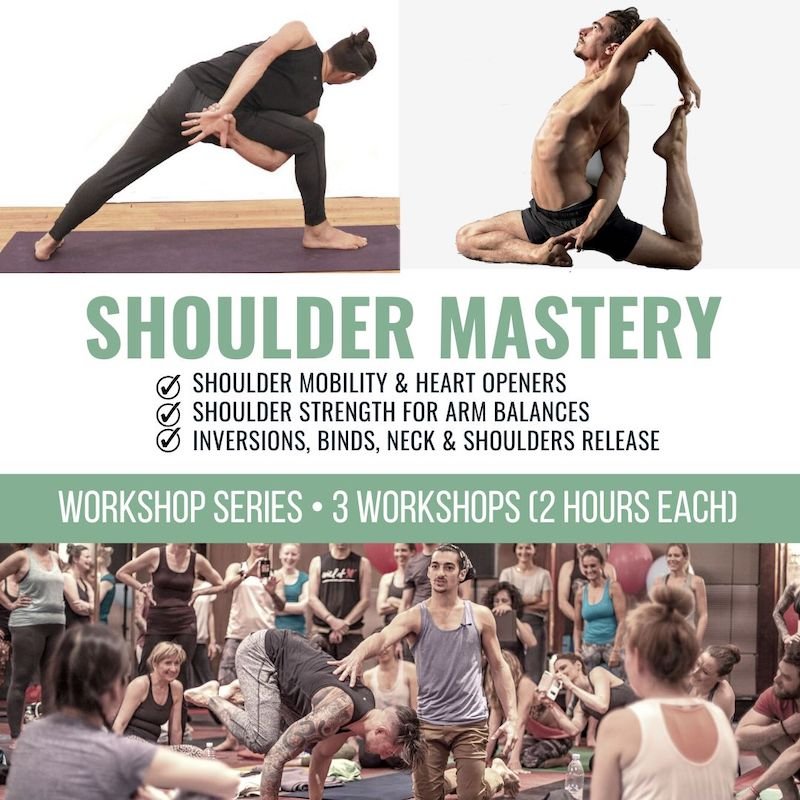
SHOULDER MASTERY

WORKSHOP SERIES

    •  3 livestream workshops and replays
    • Nondogmatic and effective alignment
    • Improve low-back health
    • Shoulder mobility + heart openers
    • Shoulder strength + arm balances
    • Inversions, binds, neck & shoulder release
    • 6 hours of continued education
    • Gain strength and stability
    • Increase range of motion, flexibility, and mobility
    • Step-by-step guidance: Everyone can follow and participate
    • Educationally infused: Learn while you embody
    • Livestream optional; all workshops available as livestreams (see dates below) and as on-demand replays for life
    • Automatically receive access to the replays immediately after the livestream

    3-PART COBRA

    The sequence of actions in this posture teaches us the ability to authentically stretch the front body and strengthen the back body. There’s a greater requirement for us to recruit the muscles in the upper body due to the decreased reliance on the hands to hold us up (if we allow it). In the video, Matt starts the sequence of lifting the upper body off the floor by first using the leverage of the hands; in order to reduce compression in the lower back, he sends the rib cage forward, then pulls the belly in and up. Here’s the key though: It’s the activation of the rear deltoids, the retraction of the shoulder blades, and the action of pulling the chest through the shoulders that creates the “bowing of the spine” required in all backbends. 

    WATCH THE VIDEO

    SHOULDER CONNECTIONS: 3 POSTURES FOR INCREASED MOBILITY

    UPWARD-FACING DOG: PREPARATION WITH BLOCKS

    If we pay attention to the smaller, more intricate details within the application of techniques in a posture, the benefits become more profound. First, Matt demonstrates the simple action of turning the fingers outward on the blocks. Lifting the shoulders up and back now becomes more accessible, which encourages the action of external rotation in the arms, promoting retraction of the scapulae and allowing for more opportunity to contract and strengthen the rear deltoids, rhomboids, lower fibers of the trapezius muscles, and the latissimi dorsi. The final action is to push the hands down into the blocks to access increased spinal extension along with greater heart opening.  
    200 Hour Online Teacher Training Certification

    200 HOUR ONLINE TEACHER TRAINING

    GET CERTIFIED & DEEPEN YOUR YOGA PRACTICE

    • Deepen your yoga practice
    • Build confidence speaking in front of groups in person and online
    • Learn foundational class structures and templates
    • Learn techniques for a wide range of yoga postures
    • Get certified and highly qualified to teach yoga
    • Yoga Alliance Globally Recognized Certification Program

    WILD THING

    In Wild Thing, there are 3 shoulder actions that help create more expansion and mobility in the shoulders. First, we lift the bottom shoulder up, move it back (retract), and then bring the bottom wing tip of the shoulder blade around. These actions send the chest forward and up. The posture is different, but the same actions apply here as in 3-Part Cobra. In the full class, Matt reminds us that it can be easy to lose the integrity of the positioning of the shoulder once we start to lift up into the pose, but if we continue to connect with the sensation of muscle contraction between the shoulder blades, there’s more success in maintaining the shoulder position. Ideally, the chest is above the height of the shoulder. In order to gain shoulder mobility, we must build strength and endurance in the muscles associated with and connected to the shoulders. Stretching alone will not have the same effect.
    300 hour teacher training online

    300 HOUR ONLINE TEACHER TRAINING

    GET 500 HOUR CERTIFIED AS A MASTER TEACHER

    Master your skill set as a teacher through refined techniques, anatomy, biomechanics, sequencing, philosophy, meditation techniques, theming, yoga business, and much more!

    • Get 500 hour certified
    • Learn anatomy, biomechanics, asana techniques
    • Expand your teaching skills
    • Masterful sequencing and verbal delivery
    • Learn meditation and breathwork techniques
    • Transformative tools: theming, dharma talks, satsang

    SHOULDER MOBILITY

    Shoulder mobility means having the ability to move the joint through the full range of motion. We can see why this is beneficial when it comes to heart openers: In order to find expansion, we need to be able to move the shoulder joint freely and safely. Strengthening also means better stability. In postures like Wild Thing, where we’re balancing on one arm, stability and strength are a must for a solid foundation.  

    Exploring the shoulder actions multiple times within a practice helps us record the biomechanics in our bodies. This is the reasoning behind the layering of actions and postures in a Chromatic Yoga class.

    In the 2nd week of Matt’s current 3-part workshop, Shoulder Mastery, he delves into shoulder strength for arm balances. Register and get access to this class and to last week’s class about the shoulders and heart openers.

    See you on the mat!

    The 200 Hr. Teacher Training: Click Here to See the Next Start Date

    The 300 Hr. Advanced Teacher Training: Click Here to See the Next Start Date

    Article by Trish Curling

    Videos Extracted From: Shoulder Mastery
    lotus pose online yoga classes

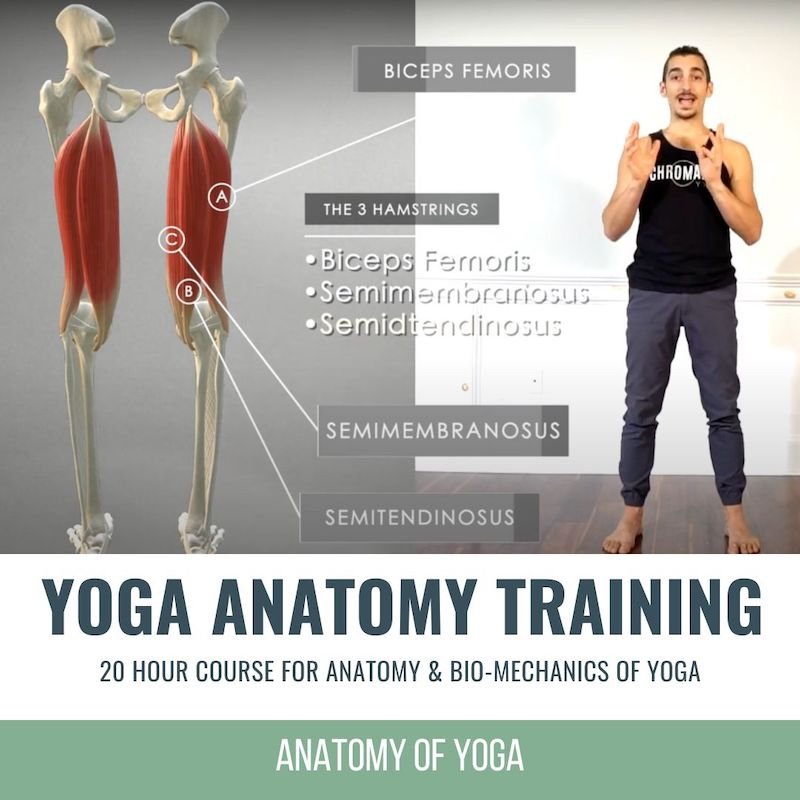
    ONLINE ANATOMY COURSE

    • Accessible, exciting, and easy to learn
    • Anatomy and biomechanics for yoga
    • Appropriate for both teachers and students
    • Learn joint alignment vs pose alignment
    • Demystify yoga poses and transitions
    • Release aches and pains
    • Learn how to avoid common injuries
    • Caters to all levels with modifications and props
    • 20 hours Continued Education Credits with Yoga Alliance
    • 20 hours toward Chromatic Yoga Certification and 300 Hour
    • Lifetime access

    Continue Learning

    Dragonfly Pose

    Dragonfly Pose

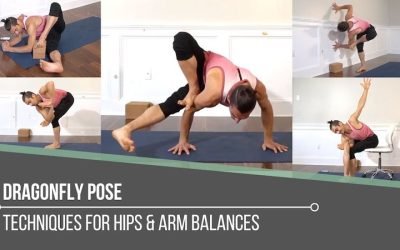
    Dragonfly Pose Techniques for Hips and for Arm Balancesparsva bhuja dandasanaDRAGONFLY POSE Recently, I was listening to a podcast where the founder and CEO of Spotify, Daniel Ek, mentioned the quote “Shoot for the moon. Even if you miss, you'll land among the stars.”...

    read more
    Bound Side Angle

    Bound Side Angle

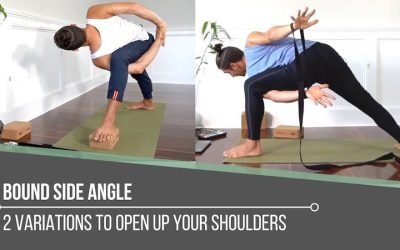
    Bound Side Angle 2 Variations To Open Up Your ShouldersexpandBOUND SIDE ANGLE You might either approach Bound Side Angle with excitement or with a sense of fear. If you adopt a certain perspective, it’s possible for the word “bound” to evoke a sense of freedom in the...
    read more
    Dancer Pose

    Dancer Pose

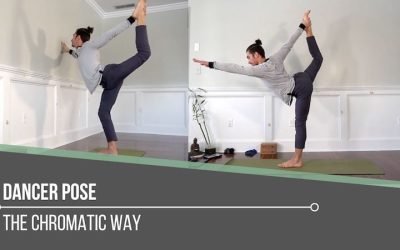
    Dancer Pose The Chromatic WaynatarajasanaDANCER POSE Dancer Pose is the kind of posture that embodies both grace and strength. In order to integrate these two things into your practice of this posture, there are quite a number of pieces of the puzzle to consider. You...
    read more
    Eka Pada Urdhva Dhanurasana

    Eka Pada Urdhva Dhanurasana

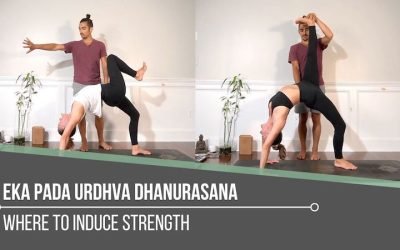
    Eka Pada Urdhva Dhanurasana Where to Induce Strengthback line strengthEKA PADA URDHVA DHANURASANA There’s no doubt that back-line strength (more specifically, strength from the gluteus maximus, hamstrings, and erector spinae) is a requirement to elevate your hips off...
    read more
    Utthita Hasta Padangusthasana B

    Utthita Hasta Padangusthasana B

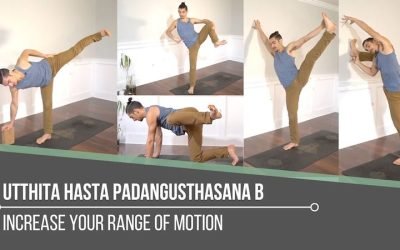
    Utthita Hasta Padangusthasana B Increase Your Range of MotionFLEXIBILITY BOOSTUTTHITA HASTA PADANGUSTHASANA B In my previous blog, we looked at how Matt prepares you for Standing Nose to Shin (Utthita Hasta Padangusthasana A). Although there are multiple similarities...
    read more
    Standing Nose To Shin

    Standing Nose To Shin

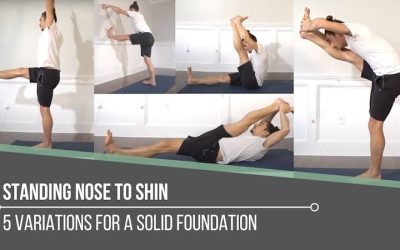
    Standing Nose to Shin Variations for a Solid FoundationstrengthSTANDING NOSE TO SHIN Standing Nose to Shin is an exceptional preparatory posture for Hanumanasana, or Splits Pose, but it is an equally profound posture on its own. It also requires thoughtful...

    read more

    THE FREE TECHNIQUE PACK

    When You Subscribe, You Will Get Instant Access to

    • the Technique Pack: 15 yoga pose breakdowns
    • exclusive online course discounts
    • exclusive blogs and videos
    • This field is for validation purposes and should be left unchanged.

    Deep Dive Into Chaturanga

    Deep Dive Into Chaturanga

    Shoulder Action Controversy

    shoulder stability

    DEEP DIVE INTO CHATURANGA

    Earlier this week, Matt posted a video on his Instagram page highlighting the shoulder blade movement that takes place in Chaturanga—moving from protraction to retraction. This can be a tricky subject, and it was cause for some discussion in the comments on that video. He goes into more detail here

    When we’re taught to do something (such as the execution of a yoga posture) a certain way, it may be difficult to consider an alternative. The Chromatic yoga approach, however, is a nondogmatic one and requires that we create our own understanding through action and being open to new possibilities. There is always room for perspective. Now, Chaturanga can be a challenging posture due to the strength it requires, but in today’s video, we see a breakdown of the steps and gain insight into the anatomy in order to make informed choices in our yoga practice.

    chromatic yoga 15 hour immersion

    SHOULDER MASTERY

    WORKSHOP SERIES

      •  3 livestream workshops and replays
      • Nondogmatic and effective alignment
      • Improve low-back health
      • Shoulder mobility + heart openers
      • Shoulder strength + arm balances
      • Inversions, binds, neck & shoulder release
      • 6 hours of continued education
      • Gain strength and stability
      • Increase range of motion, flexibility, and mobility
      • Step-by-step guidance: Everyone can follow and participate
      • Educationally infused: Learn while you embody
      • Livestream optional; all workshops available as livestreams (see dates below) and as on-demand replays for life
      • Automatically receive access to the replays immediately after the livestream

      SEQUENCING FOR THE SHOULDERS

      The intelligent sequencing offered in a Chromatic yoga class helps us prepare our bodies for optimal positioning in a given posture.

      In Chaturanga, there is a tendency for the scapulae to anterior tilt, causing the shoulders to punch forward into the anterior portion of the shoulder capsule. Over time, this can cause pain and/or increased wear and tear on the joint, not to mention the implications it may have for the neck, shoulders, back, and chest. What’s necessary is a healthy degree of external rotation. Matt demonstrates a few drills with a strap and blocks that help pattern the body in how to create the external rotation required for the pose. Why is this important? These drills teach us how to strengthen the rotator cuff muscles, which will help stabilize the shoulder joint and recruit the serratus anterior for a stronger descent in Chaturanga.

      WATCH THE VIDEO

      DEEP DIVE INTO CHATURANGA: SHOULDER ACTION CONTROVERSY

      STRAP SETUP FOR THE SHOULDERS

      These drills help us understand the foundations of the shoulder mechanics for Chaturanga.

      Pull the Strap Apart

      Here are the four key actions:

      1. Take an underhand grip of the strap.
      2. Pull the strap apart.
      3. Move the shoulder heads back.
      4. Bring the elbows in and forward.

      This drill is not static; when watching the video, we see that there is actually movement back and forth, which will help strengthen the rotator cuff muscles.

      Block in the Palm & Between the Elbow and the Body

      This drill can be done without  a block; however, the block between the body and elbow adds that extra awareness of activation and reminds to keep our elbows more narrow.

      Essentially what’s happening here are movements back and forth between the internal and external rotation of the humerus. Holding the additional block in the supinated palm of the same arm helps emphasize the required external rotation for Chaturanga.

      STRAP SETUP FOR THE SHOULDERS

      These drills help us understand the foundations of the shoulder mechanics for Chaturanga.

      Pull the Strap Apart

      Here are the four key actions:

      1. Take an underhand grip of the strap.
      2. Pull the strap apart.
      3. Move the shoulder heads back.
      4. Bring the elbows in and forward.

      This drill is not static; when watching the video, we see that there is actually movement back and forth, which will help strengthen the rotator cuff muscles.

      Block in the Palm & Between the Elbow and the Body

      This drill can be done without  a block; however, the block between the body and elbow adds that extra awareness of activation and reminds to keep our elbows more narrow.

      Essentially what’s happening here are movements back and forth between the internal and external rotation of the humerus. Holding the additional block in the supinated palm of the same arm helps emphasize the required external rotation for Chaturanga.

      200 Hour Online Teacher Training Certification

      200 HOUR ONLINE TEACHER TRAINING

      GET CERTIFIED & DEEPEN YOUR YOGA PRACTICE

      • Deepen your yoga practice
      • Build confidence speaking in front of groups in person and online
      • Learn foundational class structures and templates
      • Learn techniques for a wide range of yoga postures
      • Get certified and highly qualified to teach yoga
      • Yoga Alliance Globally Recognized Certification Program

      CHATURANGA AT THE WALL

      Transitioning to Chaturanga at the wall takes us to a closer setup of what position our bodies will be in. Of course, we are perpendicular to the floor in this variation, but we can negotiate hand and shoulder placement without the strength element. Matt has shown us variations at the wall before, and they are always helpful in navigating a posture.

      One of the key points in this variation, however, is the push through the heel of the hands. This action both brings the bottom wing tip of the scapulae through the arm bone, which encourages the head of the humerus to pull back, and it helps recruit the muscles of the serratus anterior. We also gain a “band of stability” in the upper body once this is in place. Once we’ve explored here, it’s time to take Chaturanga to the mat.

      300 hour teacher training online

      300 HOUR ONLINE TEACHER TRAINING

      GET 500 HOUR CERTIFIED AS A MASTER TEACHER

      Master your skill set as a teacher through refined techniques, anatomy, biomechanics, sequencing, philosophy, meditation techniques, theming, yoga business, and much more!

      • Get 500 hour certified
      • Learn anatomy, biomechanics, asana techniques
      • Expand your teaching skills
      • Masterful sequencing and verbal delivery
      • Learn meditation and breathwork techniques
      • Transformative tools: theming, dharma talks, satsang

      WHY PROTRACTION TO RETRACTION?

      In the video, Matt demonstrates how the shoulder blades come in towards one another on the descent portion of Chaturanga. This is what might conjure up some controversy. Matt explains that we’re not just easily allowing them to come together; instead, we’re still trying to resist the retraction in the lowering phase until we’re almost at the ground level. It’s therefore a “fight” between the actions of protraction and retraction of the scapulae.

      Remember the “push through the heel of the hand”? This ignites the protraction. The goal is to allow the shoulder blades to retract at a slow pace. Too often, we find that if there is no retraction, we can fall into the anterior tilt of the scapulae more easily. If there is no movement of the scapulae, it can affect the muscles in the front and the back of the neck by causing more strain.

      ALLOW MOVEMENT TO TAKE PLACE

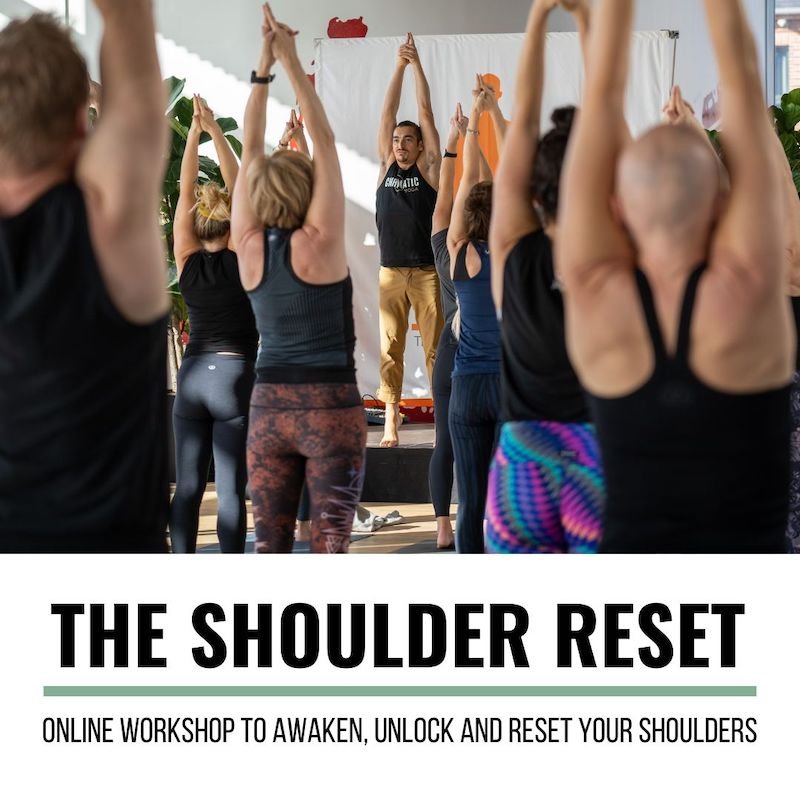
      In this full workshop (The Shoulder Reset), Matt explains that going from protraction to retraction means that we are allowing the shoulder joint to move as it was designed. We are allowing gravity to do its job. When allowing the movement from protraction to retraction to take place, we are creating an eccentric contraction, which will offer a smooth descent. It will also translate into creating lightness and ease in a jump back.

      The good news is that Matt’s offering a 3-part workshop series this month, Shoulder Mastery The education we can look forward to will have a profound effect on our yoga practice overall.  

      Part I is all about shoulder mobility and heart openers, and Part II delves into shoulder strength and arm balances. Part III tackles inversions, binds, and neck & shoulder releases.

      Click Shoulder Mastery to register.

      See you on the mat!

      The 200 Hr. Teacher Training: Click Here to See the Next Start Date

      The 300 Hr. Advanced Teacher Training: Click Here to See the Next Start Date

      Article by Trish Curling

      Videos Extracted From: The Shoulder Reset

      lotus pose online yoga classes

      ONLINE ANATOMY COURSE

      • Accessible, exciting, and easy to learn
      • Anatomy and biomechanics for yoga
      • Appropriate for both teachers and students
      • Learn joint alignment vs pose alignment
      • Demystify yoga poses and transitions
      • Release aches and pains
      • Learn how to avoid common injuries
      • Caters to all levels with modifications and props
      • 20 hours Continued Education Credits with Yoga Alliance
      • 20 hours toward Chromatic Yoga Certification and 300 Hour
      • Lifetime access

      Continue Learning

      Dragonfly Pose

      Dragonfly Pose

      Dragonfly Pose Techniques for Hips and for Arm Balancesparsva bhuja dandasanaDRAGONFLY POSE Recently, I was listening to a podcast where the founder and CEO of Spotify, Daniel Ek, mentioned the quote “Shoot for the moon. Even if you miss, you'll land among the stars.”...

      read more
      Bound Side Angle

      Bound Side Angle

      Bound Side Angle 2 Variations To Open Up Your ShouldersexpandBOUND SIDE ANGLE You might either approach Bound Side Angle with excitement or with a sense of fear. If you adopt a certain perspective, it’s possible for the word “bound” to evoke a sense of freedom in the...

      read more
      Dancer Pose

      Dancer Pose

      Dancer Pose The Chromatic WaynatarajasanaDANCER POSE Dancer Pose is the kind of posture that embodies both grace and strength. In order to integrate these two things into your practice of this posture, there are quite a number of pieces of the puzzle to consider. You...

      read more
      Eka Pada Urdhva Dhanurasana

      Eka Pada Urdhva Dhanurasana

      Eka Pada Urdhva Dhanurasana Where to Induce Strengthback line strengthEKA PADA URDHVA DHANURASANA There’s no doubt that back-line strength (more specifically, strength from the gluteus maximus, hamstrings, and erector spinae) is a requirement to elevate your hips off...

      read more
      Utthita Hasta Padangusthasana B

      Utthita Hasta Padangusthasana B

      Utthita Hasta Padangusthasana B Increase Your Range of MotionFLEXIBILITY BOOSTUTTHITA HASTA PADANGUSTHASANA B In my previous blog, we looked at how Matt prepares you for Standing Nose to Shin (Utthita Hasta Padangusthasana A). Although there are multiple similarities...

      read more
      Standing Nose To Shin

      Standing Nose To Shin

      Standing Nose to Shin Variations for a Solid FoundationstrengthSTANDING NOSE TO SHIN Standing Nose to Shin is an exceptional preparatory posture for Hanumanasana, or Splits Pose, but it is an equally profound posture on its own. It also requires thoughtful...

      read more

      THE FREE TECHNIQUE PACK

      When You Subscribe, You Will Get Instant Access to

      • the Technique Pack: 15 yoga pose breakdowns
      • exclusive online course discounts
      • exclusive blogs and videos
      • This field is for validation purposes and should be left unchanged.

      Strengthen Your “Shelf” For Mayurasana

      Strengthen Your “Shelf” for Mayurasana

      How to Prepare for This Unique Arm Balance

      DELTOIDS

      STRENGTHEN YOUR “SHELF” FOR MAYURASANA

      Let’s note that muscle groups do not work in isolation: The activation of accessory muscles, although not necessarily the focal point, are an integral part of the execution of a posture. In Mayurasana, the anterior deltoids and rotator cuff muscles may not be part of your first thoughts regarding how to execute this posture, but without considering the role they play, we simply will not be able to create the “shelf” required to create the balance we need in this posture. There is obvious core activation, not to mention strength and activation in the glutes and hamstrings, but the shelf Matt refers to in this class is the ability to hug the elbows in as tightly as possible so as to create an anchor for the pose. The anterior deltoids and rotator cuff muscles offer support, stability, and strength in Mayurasana.

      chromatic yoga 15 hour immersion

      SHOULDER MASTERY

      WORKSHOP SERIES

        •  3 livestream workshops and replays
        • Nondogmatic and effective alignment
        • Improve low-back health
        • Shoulder mobility + heart openers
        • Shoulder strength + arm balances
        • Inversions, binds, neck & shoulder release
        • 6 hours of continued education
        • Gain strength and stability
        • Increase range of motion, flexibility, and mobility
        • Step-by-step guidance: Everyone can follow and participate
        • Educationally infused: Learn while you embody
        • Livestream optional; all workshops available as livestreams (see dates below) and as on-demand replays for life
        • Automatically receive access to the replays immediately after the livestream

        BLOCK SQUEEZE DRILL

        In terms of teaching Mayurasana, Matt notes that it’s not an easy pose to sequence towards. Not many other postures mimic the mandatory actions, but there are certainly creative movements and drills we can incorporate into our practice in order to cultivate the inescapable strength required for Mayurasana. Of course, Matt demonstrates the actions we can take to strengthen the appropriate muscle groups. Included in this preparation, in particular for the shelf in Mayurasana, are the biceps, pectoralis muscles, anterior deltoids, and rotator cuff.

        Today’s video starts off with a “block squeeze” drill. The block is squeezed between the forearms with bent elbows, while the arms are externally rotated. Our palms are facing forward, and the upper back is rounded while we “sit” in a Chair Pose position. The pectoralis muscles are engaged, but it’s the external rotation that helps us target the rotator cuff muscles.

        WATCH THE VIDEO

        STRENGTHEN YOUR “SHELF” FOR MAYURASANA: HOW TO PREPARE FOR THIS UNIQUE ARM BALANCE

        MAYURASANA AT THE WALL AND ON YOUR BACK

        Mayurasana at the Wall

        Here, we can practice mimicking what we did in the block drill—squeezing our elbows in towards each other. In addition, the feeling of “trying to pull the wall up” turns on the pectoralis major, the anterior deltoids, and the biceps. We can’t lift our legs here, but we can practice the sensation of pulling our feet back to activate the glutes and hamstrings.

        Mayurasana on Your Back

        By pressing our feet into the ground in this variation, we can get more feedback and activation of the glutes and hamstrings. In the upper body, we practice the shape by rounding the back and placing our arms as if to set up the shelf on top of the rib cage. 

        200 Hour Online Teacher Training Certification

        200 HOUR ONLINE TEACHER TRAINING

        GET CERTIFIED & DEEPEN YOUR YOGA PRACTICE

        • Deepen your yoga practice
        • Build confidence speaking in front of groups in person and online
        • Learn foundational class structures and templates
        • Learn techniques for a wide range of yoga postures
        • Get certified and highly qualified to teach yoga
        • Yoga Alliance Globally Recognized Certification Program

        MAYURASANA “MASTERY”

        In the full class, Matt reminds us that creating the shelf with our arms doesn’t mean that we are resting on top of them. What we’re actually doing is setting up a strong base, our negotiating point for balance. To achieve the final expression of the posture, it’s the angle of the bend at the elbows, the grip of the ground with the fingers, and the strength in the shoulders and upper body that allow us to shift and find the sweet spot that supports the lift of the legs. In today’s video, you’ll see how Matt shifts his weight back and forth before he locks in to the next step, where he finds authentic balance and uses the strength of the core, glutes, and hamstrings to lift his legs. The trust in the foundation that’s been created allows for this masterful execution of Mayurasana.

        300 hour teacher training online

        300 HOUR ONLINE TEACHER TRAINING

        GET 500 HOUR CERTIFIED AS A MASTER TEACHER

        Master your skill set as a teacher through refined techniques, anatomy, biomechanics, sequencing, philosophy, meditation techniques, theming, yoga business, and much more!

        • Get 500 hour certified
        • Learn anatomy, biomechanics, asana techniques
        • Expand your teaching skills
        • Masterful sequencing and verbal delivery
        • Learn meditation and breathwork techniques
        • Transformative tools: theming, dharma talks, satsang

        KEY ACTIONS IN THIS ARM BALANCE

        Here are the 2 key actions Matt outlines for Mayurasana (we’ll find them in most arm balance postures):

        1. Bending the elbows at an open angle (helps to stop us from falling)
        2. Intentionally leaning forward while trying to stop at the same time

        For Mayurasana, more than building strength in the shoulders, biceps, core, glutes, and hamstrings, it’s about how to be very intentional in the drills we implement in our yoga practice. The only way to become masterful is to be informed and guided through drills like these and, of course, to practice the posture itself.

        In Matt’s upcoming 3-part series, Shoulder Mastery, he’ll delve into more about shoulder strength for arm balances, along with a deeper understanding of the shoulders when it comes to inversions, binds, and even releasing the neck.

        Strength without action offers no direction. Register for the workshop series today!

        The 200 Hr. Teacher Training: Click Here to See the Next Start Date

        The 300 Hr. Advanced Teacher Training: Click Here to See the Next Start Date

        Article by Trish Curling

        Videos Extracted From: Anatomy of Arm Balances

        lotus pose online yoga classes

        ONLINE ANATOMY COURSE

        • Accessible, exciting, and easy to learn
        • Anatomy and biomechanics for yoga
        • Appropriate for both teachers and students
        • Learn joint alignment vs pose alignment
        • Demystify yoga poses and transitions
        • Release aches and pains
        • Learn how to avoid common injuries
        • Caters to all levels with modifications and props
        • 20 hours Continued Education Credits with Yoga Alliance
        • 20 hours toward Chromatic Yoga Certification and 300 Hour
        • Lifetime access

        Continue Learning

        Dragonfly Pose

        Dragonfly Pose

        Dragonfly Pose Techniques for Hips and for Arm Balancesparsva bhuja dandasanaDRAGONFLY POSE Recently, I was listening to a podcast where the founder and CEO of Spotify, Daniel Ek, mentioned the quote “Shoot for the moon. Even if you miss, you'll land among the stars.”...

        read more
        Bound Side Angle

        Bound Side Angle

        Bound Side Angle 2 Variations To Open Up Your ShouldersexpandBOUND SIDE ANGLE You might either approach Bound Side Angle with excitement or with a sense of fear. If you adopt a certain perspective, it’s possible for the word “bound” to evoke a sense of freedom in the...

        read more
        Dancer Pose

        Dancer Pose

        Dancer Pose The Chromatic WaynatarajasanaDANCER POSE Dancer Pose is the kind of posture that embodies both grace and strength. In order to integrate these two things into your practice of this posture, there are quite a number of pieces of the puzzle to consider. You...

        read more
        Eka Pada Urdhva Dhanurasana

        Eka Pada Urdhva Dhanurasana

        Eka Pada Urdhva Dhanurasana Where to Induce Strengthback line strengthEKA PADA URDHVA DHANURASANA There’s no doubt that back-line strength (more specifically, strength from the gluteus maximus, hamstrings, and erector spinae) is a requirement to elevate your hips off...

        read more
        Utthita Hasta Padangusthasana B

        Utthita Hasta Padangusthasana B

        Utthita Hasta Padangusthasana B Increase Your Range of MotionFLEXIBILITY BOOSTUTTHITA HASTA PADANGUSTHASANA B In my previous blog, we looked at how Matt prepares you for Standing Nose to Shin (Utthita Hasta Padangusthasana A). Although there are multiple similarities...

        read more
        Standing Nose To Shin

        Standing Nose To Shin

        Standing Nose to Shin Variations for a Solid FoundationstrengthSTANDING NOSE TO SHIN Standing Nose to Shin is an exceptional preparatory posture for Hanumanasana, or Splits Pose, but it is an equally profound posture on its own. It also requires thoughtful...

        read more

        THE FREE TECHNIQUE PACK

        When You Subscribe, You Will Get Instant Access to

        • the Technique Pack: 15 yoga pose breakdowns
        • exclusive online course discounts
        • exclusive blogs and videos
        • This field is for validation purposes and should be left unchanged.

        What Are The Tilts Of The Scapula?

        What Are the Tilts of the Scapulae?

        4 Postures to Help You Lock Into These Shoulder Actions

        SHOULDER ROTATION

        WHAT ARE THE TILTS OF THE SCAPULAE?

        When we first dive into studying anatomy, it’s all about the basics. Once the foundation is laid, it becomes easier to scaffold more information. There will always be a learning curve, however, especially in the context of yoga. In Chromatic yoga, it’s about more than intellectually understanding anatomy; it’s also about how we integrate our knowledge of anatomy into our bodies from a non-dogmatic point of view.

        When studying shoulder anatomy, we are introduced to the basic actions (protraction, retraction, depression, and elevation). In today’s clip, Matt introduces us to the idea of “the tilts of the scapulae.” He explains that it can be a difficult concept to understand, both intellectually and physically. Essentially, it requires the co-activation of opposing muscle groups in order to create a lock for maximum support around the shoulder girdle. We gain insight into the tilts of the scapulae via 4 postures in today’s video.

        chromatic yoga 15 hour immersion

        THE SHOULDER RESET

        2-HOUR LIVESTREAM WORKSHOP!

          • Technique-infused 2-hour workshop
          • Non-dogmatic alignment awareness
          • Chest/heart flexibility
          • Increase active range of motion of the shoulder
          • Learn shoulder anatomy as you practice
          • Strengthen rotator cuff for stability and shoulder health
          • Gain access to shoulder-focused postures
          • Debunk popular alignment
          • Skillfully guided sequence by the founder of Chromatic Yoga, Matt Giordano

          UPWARD VS. DOWNWARD TILT OF THE SCAPULA

          Upward Tilt

          To begin integrating the upward tilt of the scapula into our bodies, we can begin by sitting upright and sending the shoulder forward while drawing the elbow back. This naturally sends the scapula climbing up over the rib cage.  It’s the pectoralis minor that initiates this action. This muscle helps pull the shoulder down towards the front of the ribs.

          Downward Tilt

          This can be harder to understand and integrate. The first step here may be to draw the head of the humerus back. When this happens, the bottom wing tip of the scapula pushes forward into the rib cage.  

          If we pull the rib cage back into the scapulae, as Matt explains in the full class, this creates a “suction cup” effect from the co-activation of opposing muscle groups. This is effective in our yoga practice when stability is required in postures like Chaturanga and arm balances like Side Crow.

          WATCH THE VIDEO

          WHAT ARE THE TILTS OF THE SCAPULAE?: 4 POSTURES TO LOCK IN ON THESE SHOULDER ACTIONS

          SIDE-ANGLE PREPARATION

          Part of integrating and understanding the upward and downward tilt of the scapulae is to explore the actions in postures in which we can remove some of the balance and strength elements from the equation. 

          When Matt demonstrates the downward tilt of the bottom scapula in Side-Angle Preparation, he explains that there is a distinction between where retraction and protraction take place. The initial action is still to pull the head of the humerus back, but understanding that there is a degree of retraction in the upper border of the scapula but protraction in the bottom wingtip helps us to negotiate its placement. We create the  protraction by pressing the elbow down into the top of the leg; this helps the bottom tip slide forward. From here, we can explore what the sensation feels like in order to record this pattern into our bodies.   

          200 Hour Online Teacher Training Certification

          200 HOUR ONLINE TEACHER TRAINING

          GET CERTIFIED & DEEPEN YOUR YOGA PRACTICE

          • Deepen your yoga practice
          • Build confidence speaking in front of groups in person and online
          • Learn foundational class structures and templates
          • Learn techniques for a wide range of yoga postures
          • Get certified and highly qualified to teach yoga
          • Yoga Alliance Globally Recognized Certification Program

          CHATURANGA AND JUMP BACKS

          In Chaturanga, it can be easy to fall into the pattern of allowing the head of the humerus to dip forward. When this happens, it’s very different from creating protraction. Repetitively allowing the head of the humerus to dip forward can cause strain in the anterior capsule of the shoulder. The goal is to create a play between the actions of external rotation of the humerus and protraction, depression, and retraction of the scapulae.  

          For Chaturanga Jump Backs, Matt presents a drill utilizing a towel. Again, we get an opportunity to practice the actions of external rotation of the arms, pulling the top of the arm bone back. Matt also reminds us that we can start by sending the scapulae into upward rotation to more distinctly feel the difference, and then execute the actions that will help us stabilize the jump back with the downward tilt of the scapulae. 

          300 hour teacher training online

          300 HOUR ONLINE TEACHER TRAINING

          GET 500 HOUR CERTIFIED AS A MASTER TEACHER

          Master your skill set as a teacher through refined techniques, anatomy, biomechanics, sequencing, philosophy, meditation techniques, theming, yoga business, and much more!

          • Get 500 hour certified
          • Learn anatomy, biomechanics, asana techniques
          • Expand your teaching skills
          • Masterful sequencing and verbal delivery
          • Learn meditation and breathwork techniques
          • Transformative tools: theming, dharma talks, satsang

          SIDE CROW

          In an arm balance like Side Crow, it’s imperative to feel more confident in our ability to “lock in” to the stability required. Because it’s required to send our weight forward in order to access the lift of the feet in the posture, we must be careful not to lean into an upward tilt—this would lead to imbalance in the posture and perhaps to a fall. In the clip, we see how the emphasis of pushing into the heel of the hands (which brings the bottom tip of the scapulae around) while sending the chest through (which draws the head of the arm bone back) and sending the weight forward into the fingers is ultimately what helps us access the balance required for Side Crow.

          ALLOW YOURSELF TIME FOR FULL INTEGRATION

          Ultimately, being patient enough to understand and integrate these actions will transform our experience in our practice. Exploring these actions in a variety of postures will take us on a journey of self discovery. We can tap into what comes naturally; at the same time, we can discover where we experience challenge and resistance. In the full class, Matt explains that upward and downward tilt of the scapulae can be difficult to comprehend. What this means is that it may require more persistence to uncover what is possible in our bodies.

          Register for Matt’s 2-hour online shoulder workshop, The Shoulder Reset, where there will be an abundance of opportunities to more deeply connect to and understand the biomechanics of the shoulders and how these new understandings can be applied to our yoga practice. 

          The 200 Hr. Teacher Training: Click Here to See the Next Start Date

          The 300 Hr. Advanced Teacher Training: Click Here to See the Next Start Date

          Article by Trish Curling

          Videos Extracted From: Shoulder Revelation

          lotus pose online yoga classes

          ONLINE ANATOMY COURSE

          • Accessible, exciting, and easy to learn
          • Anatomy and biomechanics for yoga
          • Appropriate for both teachers and students
          • Learn joint alignment vs pose alignment
          • Demystify yoga poses and transitions
          • Release aches and pains
          • Learn how to avoid common injuries
          • Caters to all levels with modifications and props
          • 20 hours Continued Education Credits with Yoga Alliance
          • 20 hours toward Chromatic Yoga Certification and 300 Hour
          • Lifetime access

          Continue Learning

          Dragonfly Pose

          Dragonfly Pose

          Dragonfly Pose Techniques for Hips and for Arm Balancesparsva bhuja dandasanaDRAGONFLY POSE Recently, I was listening to a podcast where the founder and CEO of Spotify, Daniel Ek, mentioned the quote “Shoot for the moon. Even if you miss, you'll land among the stars.”...

          read more
          Bound Side Angle

          Bound Side Angle

          Bound Side Angle 2 Variations To Open Up Your ShouldersexpandBOUND SIDE ANGLE You might either approach Bound Side Angle with excitement or with a sense of fear. If you adopt a certain perspective, it’s possible for the word “bound” to evoke a sense of freedom in the...

          read more
          Dancer Pose

          Dancer Pose

          Dancer Pose The Chromatic WaynatarajasanaDANCER POSE Dancer Pose is the kind of posture that embodies both grace and strength. In order to integrate these two things into your practice of this posture, there are quite a number of pieces of the puzzle to consider. You...

          read more
          Eka Pada Urdhva Dhanurasana

          Eka Pada Urdhva Dhanurasana

          Eka Pada Urdhva Dhanurasana Where to Induce Strengthback line strengthEKA PADA URDHVA DHANURASANA There’s no doubt that back-line strength (more specifically, strength from the gluteus maximus, hamstrings, and erector spinae) is a requirement to elevate your hips off...

          read more
          Utthita Hasta Padangusthasana B

          Utthita Hasta Padangusthasana B

          Utthita Hasta Padangusthasana B Increase Your Range of MotionFLEXIBILITY BOOSTUTTHITA HASTA PADANGUSTHASANA B In my previous blog, we looked at how Matt prepares you for Standing Nose to Shin (Utthita Hasta Padangusthasana A). Although there are multiple similarities...

          read more
          Standing Nose To Shin

          Standing Nose To Shin

          Standing Nose to Shin Variations for a Solid FoundationstrengthSTANDING NOSE TO SHIN Standing Nose to Shin is an exceptional preparatory posture for Hanumanasana, or Splits Pose, but it is an equally profound posture on its own. It also requires thoughtful...

          read more

          THE FREE TECHNIQUE PACK

          When You Subscribe, You Will Get Instant Access to

          • the Technique Pack: 15 yoga pose breakdowns
          • exclusive online course discounts
          • exclusive blogs and videos
          • This field is for validation purposes and should be left unchanged.

          Awaken Your Rotator Cuff Muscles

          Awaken Your Rotator Cuff Muscles

          6 Exercises for a More Stable Side Plank

          BELIEF

          AWAKEN YOUR ROTATOR CUFF MUSCLES

          The rotator cuff muscles carry a great deal of responsibility. When healthy and strong, they help to keep the head of the humerus inside of the glenoid fossa, the cavity of the joint. Because it’s a ball and socket joint, the shoulder joint can be quite vulnerable, so awareness of its positioning in postures that require stability is essential. On the mat, there are many opportunities to bear weight on the shoulders, which can prove challenging if we don’t know how to stabilize in postures that require this type of support. Moreover, if we neglect to maintain activation where necessary, we miss opportunities to build strength.  

          A posture like Vashistasana, Side Plank, requires a vast amount of stability and strength. In today’s video, Matt demonstrates 6 essential exercises that help strengthen our rotator cuff muscles for maximum stability.

          chromatic yoga 15 hour immersion

          THE SHOULDER RESET

          2-HOUR LIVESTREAM WORKSHOP!

            • Technique-infused 2-hour workshop
            • Non-dogmatic alignment awareness
            • Chest/heart flexibility
            • Increase active range of motion of the shoulder
            • Learn shoulder anatomy as you practice
            • Strengthen rotator cuff for stability and shoulder health
            • Gain access to shoulder-focused postures
            • Debunk popular alignment
            • Skillfully guided sequence by the founder of Chromatic Yoga, Matt Giordano

            ROTATOR CUFF: GET IN TOUCH WITH THE ANATOMY

            There are 5 muscles in the rotator cuff group: the subscapularis, supraspinatus, infraspinatus, teres major, and teres minor. These are the muscles of internal and external rotation and of abduction.

            The subscapularis and teres major are responsible for internal rotation, while the teres minor and infraspinatus are both external rotators. The last muscle, supraspinatus, contributes to the abduction of the arms.

            When all of these muscles are co-activated, they suction and secure the head of the humerus into the shoulder socket. In the full class, Matt explains that these muscles are often stretched during our asana practice. For yoga practitioners, it’s therefore vital to create opportunities to strengthen these muscles for overall function, health, and longevity. This can be integrated into our practice on the mat, particularly if we understand the anatomy involved in performing a given exercise to strengthen the rotator cuff muscles.

            WATCH THE VIDEO

            AWAKEN YOUR ROTATOR CUFF MUSCLES: 6 EXERCISES FOR A MORE STABLE SIDE PLANK

            6 EXERCISES FOR STRENGTH

            Strengthen with a Strap

            1. Matt demonstrates ways to strengthen the infraspinatus and teres minor by pulling the strap apart into external rotation of the humerus, along with some retraction of the shoulder blades.  
            2. Adding extra rotation and resistance will uplevel the activation.

            Towel Rotations

            1. In Tabletop position, drawing circles with a towel under one hand will immediately activate the rotator cuff muscles due to the weight-bearing nature of the exercise.
            2. Here, understanding the difference between rotation at the radioulnar joint and the upper arm bone is key in connecting to the rotator cuff.

            Block Raises

            1. Supraspinatus goes to work while holding yoga blocks and abducting your arms in slight internal rotation.
            2. Pushing the blocks back behind us while hugging in will again help activate the infraspinatus and teres major and minor.

            200 Hour Online Teacher Training Certification

            200 HOUR ONLINE TEACHER TRAINING

            GET CERTIFIED & DEEPEN YOUR YOGA PRACTICE

            • Deepen your yoga practice
            • Build confidence speaking in front of groups in person and online
            • Learn foundational class structures and templates
            • Learn techniques for a wide range of yoga postures
            • Get certified and highly qualified to teach yoga
            • Yoga Alliance Globally Recognized Certification Program

            STABILIZE YOUR SIDE PLANK

            There are articulations and joint alignments that are essential in creating healthy stability in Side Plank. In this variation, Matt demonstrates Extended Side Plank, utilizing a wall as a prop. The wall creates feedback that helps us better negotiate where and how to align the wrist and shoulder and to determine the distance between the standing hand and the feet.

            In order to create stability in this posture, it’s imperative to retract the shoulder blade and externally rotate the humerus, which activates the infraspinatus and teres minor. Moving our hips (and thus more weight) towards the wall takes the shoulder away from directly stacking over the wrist, which helps to reduce the load on the shoulder joint. Once the foundation is set, expanding into the rest of the posture becomes more accessible.

            300 hour teacher training online

            300 HOUR ONLINE TEACHER TRAINING

            GET 500 HOUR CERTIFIED AS A MASTER TEACHER

            Master your skill set as a teacher through refined techniques, anatomy, biomechanics, sequencing, philosophy, meditation techniques, theming, yoga business, and much more!

            • Get 500 hour certified
            • Learn anatomy, biomechanics, asana techniques
            • Expand your teaching skills
            • Masterful sequencing and verbal delivery
            • Learn meditation and breathwork techniques
            • Transformative tools: theming, dharma talks, satsang

            AWARENESS AND FOCUS FOR STRENGTH

            If resistance bands or weights are unavailable, strengthening of the rotator cuff muscles can still take place with a variety of yoga props.

            The exercises Matt demonstrates might appear to be simple in nature, but my goodness will they be a challenge! When executed with accuracy, they exhaust the muscles, which breaks them down in order for them to renew with increased strength.  

            It’s the well-placed effort (Abhyasa) that will inform our experience and translate into larger movements and postures like (Extended) Side Plank. Yes, it’s possible to strengthen the rotator cuff muscles with a variety of different tools and exercises, but when we apply technique and focus, our true potential unfolds.  

            Register for Matt’s upcoming Shoulder Reset workshop to learn and refine techniques to create strong, healthy shoulders.

            The 200 Hr. Teacher Training: Click Here to See the Next Start Date

            The 300 Hr. Advanced Teacher Training: Click Here to See the Next Start Date

            Article by Trish Curling

            Videos Extracted From: Anatomy In Motion

            lotus pose online yoga classes

            ONLINE ANATOMY COURSE

            • Accessible, exciting, and easy to learn
            • Anatomy and biomechanics for yoga
            • Appropriate for both teachers and students
            • Learn joint alignment vs pose alignment
            • Demystify yoga poses and transitions
            • Release aches and pains
            • Learn how to avoid common injuries
            • Caters to all levels with modifications and props
            • 20 hours Continued Education Credits with Yoga Alliance
            • 20 hours toward Chromatic Yoga Certification and 300 Hour
            • Lifetime access

            Continue Learning

            Dragonfly Pose

            Dragonfly Pose

            Dragonfly Pose Techniques for Hips and for Arm Balancesparsva bhuja dandasanaDRAGONFLY POSE Recently, I was listening to a podcast where the founder and CEO of Spotify, Daniel Ek, mentioned the quote “Shoot for the moon. Even if you miss, you'll land among the stars.”...

            read more
            Bound Side Angle

            Bound Side Angle

            Bound Side Angle 2 Variations To Open Up Your ShouldersexpandBOUND SIDE ANGLE You might either approach Bound Side Angle with excitement or with a sense of fear. If you adopt a certain perspective, it’s possible for the word “bound” to evoke a sense of freedom in the...

            read more
            Dancer Pose

            Dancer Pose

            Dancer Pose The Chromatic WaynatarajasanaDANCER POSE Dancer Pose is the kind of posture that embodies both grace and strength. In order to integrate these two things into your practice of this posture, there are quite a number of pieces of the puzzle to consider. You...

            read more
            Eka Pada Urdhva Dhanurasana

            Eka Pada Urdhva Dhanurasana

            Eka Pada Urdhva Dhanurasana Where to Induce Strengthback line strengthEKA PADA URDHVA DHANURASANA There’s no doubt that back-line strength (more specifically, strength from the gluteus maximus, hamstrings, and erector spinae) is a requirement to elevate your hips off...

            read more
            Utthita Hasta Padangusthasana B

            Utthita Hasta Padangusthasana B

            Utthita Hasta Padangusthasana B Increase Your Range of MotionFLEXIBILITY BOOSTUTTHITA HASTA PADANGUSTHASANA B In my previous blog, we looked at how Matt prepares you for Standing Nose to Shin (Utthita Hasta Padangusthasana A). Although there are multiple similarities...

            read more
            Standing Nose To Shin

            Standing Nose To Shin

            Standing Nose to Shin Variations for a Solid FoundationstrengthSTANDING NOSE TO SHIN Standing Nose to Shin is an exceptional preparatory posture for Hanumanasana, or Splits Pose, but it is an equally profound posture on its own. It also requires thoughtful...

            read more

            THE FREE TECHNIQUE PACK

            When You Subscribe, You Will Get Instant Access to

            • the Technique Pack: 15 yoga pose breakdowns
            • exclusive online course discounts
            • exclusive blogs and videos
            • This field is for validation purposes and should be left unchanged.

            Pin It on Pinterest