Flying Revolved Half Lotus

Flying Revolved Half Lotus

ARM BALANCE

FLYING REVOLVED HALF LOTUS

Some postures don’t arrive through imitation; they arrive through investigation. Flying Revolved Half Lotus is one of those shapes. It borrows familiar ingredients like Side Crow mechanics, hip opening, Janu Sirsasana–style leg positioning, spinal rotation, and the essential arm-balance actions of leaning, resisting, and pushing. It also demands strong scapular protraction and a willingness to stay curious rather than chase something predefined. In the full class, Matt shared that this pose wasn’t something he was necessarily taught, but rather that it emerged through exploration, asking how known shapes could reorganize into something new. In many ways, Flying Revolved Half Lotus can feel more approachable than Flying Full Lotus because it allows the hips to work asymmetrically. Instead of forcing symmetry, we learn to manage rotation, weight distribution, and balance through intelligent setup piece by piece – the Chromatic way of course.
chromatic yoga 15 hour immersion

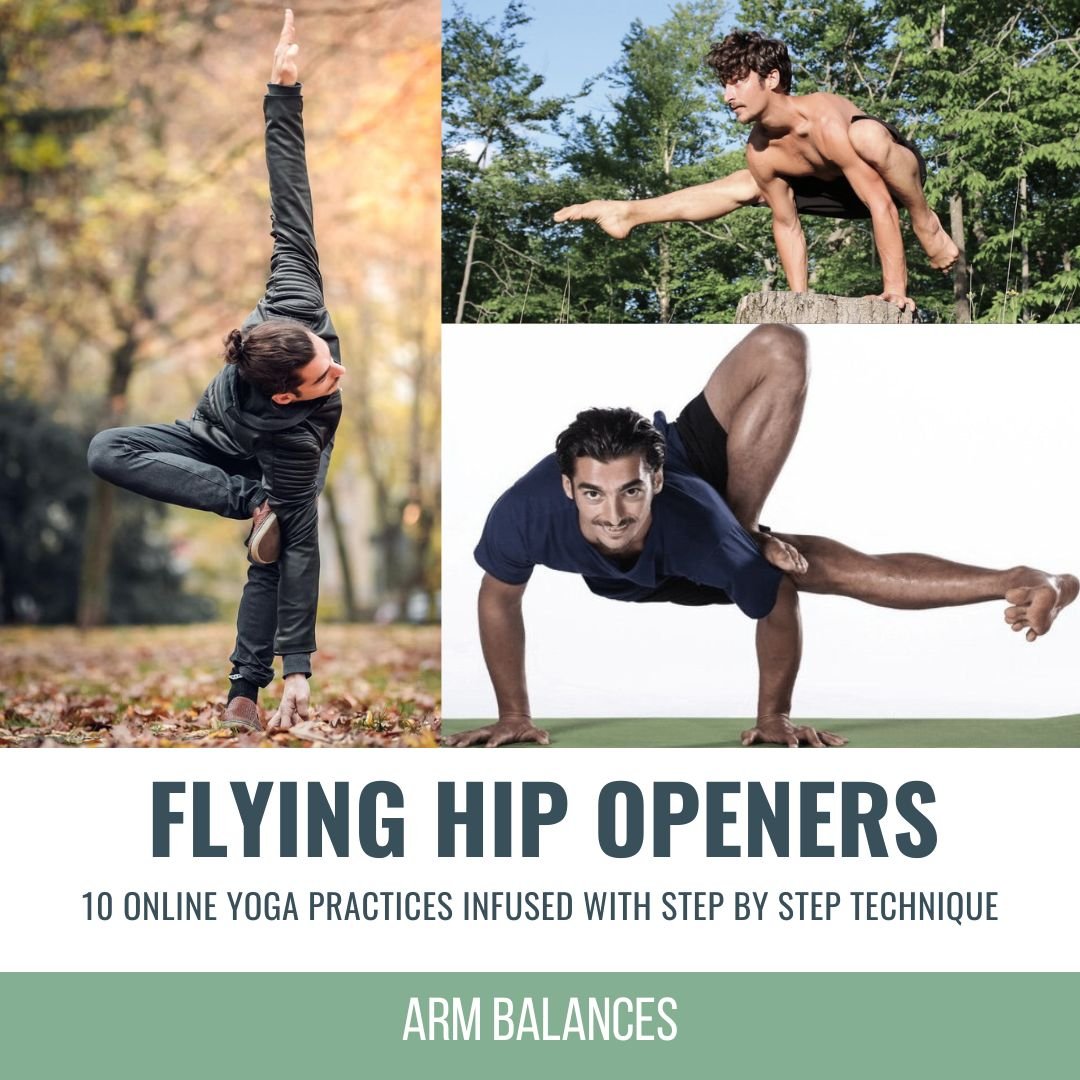
FLYING HIP OPENERS

ASANA INFUSED WITH STEP BY STEP TECHNIQUES FOR ARM BALANCES

  • 10 Chromatic Yoga practices with founder Matt Giordano
  • Physically Invigorating
  • Foundations, Refinement and Advancement
  • Meticulously Crafted Experiences to Set you up for Maximum Success
  • Included Postures: Crow, Side Crow, Firefly, Dragon Fly, Revolved Flying Half Lotus, Koundenyasana 1 & 2, Hybrid Arm Balances, Straddle Handstand and More
  • 12+ Arm Balances with Modifications and Variations!
  • Hip Opening Techniques, Core Strength, Wrist Strength and Mobility
  • All Levels Appropriate Full length 75 minute Classes
  • Non-dogmatic, Anatomy informed Alignment
  • The Perfect Blend of Knowledge and Practice
  • A Heavy Emphasis on Technique for the Poses Everyone Expects You to Know but Non One Teaches
  • 12 Continuing Education hours with Yoga Alliance and American Yoga Council
  • 12 Accredited Practice Hours with the Chromatic School of Yoga
  • Step-by-Step instruction for increased accessibility
  • Sweat, Breath, Strengthen, Stretch and Feel Amazing!

PIGEON IS IMPORTANT

We begin in a lifted pigeon preparation, with the right shin across the mat and the legs staying active rather than sinking into flexibility. Matt cues us to pull the pelvis back by reaching strongly through the back heel, creating length and tone at the same time. From here, the twist becomes the priority. We flex the spine and rotate, placing the left elbow down while the right hand actively pushes the torso away from the front thigh. This push-and-reach dynamic creates space for rotation rather than collapsing into it. The left arm reaches to deepen the twist while the right hand provides resistance, keeping the body buoyant and supported. Although the stretch is deep, the strength in the legs keeps us organized. This phase establishes the rotational blueprint we’ll later need when gravity becomes part of the equation.

WATCH THE VIDEO

FLYING REVOLVED HALF LOTUS: UNRAVEL ALL OF ITS PARTS

SIDE CROW IS VITAL

Before taking flight, we return to something familiar: Side Crow. Matt instructs us that any variation works, as long as the pelvis isn’t resting passively on the opposite elbow. Matt emphasizes lining the knee up outside the elbow so the load transfers cleanly through the arms. Whether squeezing a block between the shins, pulling a strap apart, or keeping one foot grounded, the goal is the same, which is to lean forward, grip the ground, and hold. This isn’t about how long we balance, but about imprinting the arm-balance mechanics that Flying Revolved Half Lotus depends on. Protraction, finger grip, and forward lean all get rehearsed here. Side Crow becomes the structural anchor of the pose, reminding us how rotation and balance coexist without one overpowering the other.
200 Hour Online Teacher Training Certification

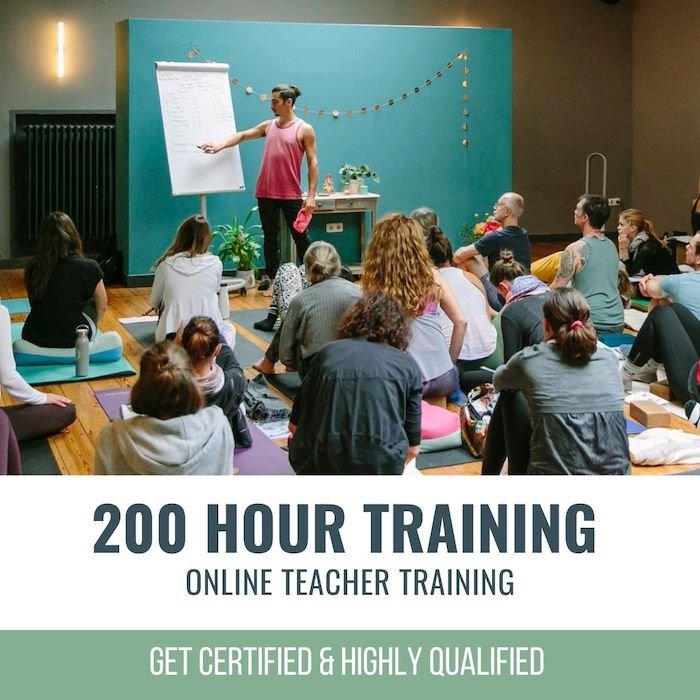
200 HOUR ONLINE TEACHER TRAINING

GET CERTIFIED & DEEPEN YOUR YOGA PRACTICE

  • Deepen your yoga practice
  • Build confidence speaking in front of groups in person and online
  • Learn foundational class structures and templates
  • Learn techniques for a wide range of yoga postures
  • Get certified and highly qualified to teach yoga
  • Yoga Alliance Globally Recognized Certification Program

THE INITIAL SHAPE

Next, Matt brings us back to the floor to “imprint the experience.” With the left foot grounded and the right leg extended or bent, we sit up and lower down repeatedly, flexing and rotating the spine. This sit-up pattern mimics the core engagement and twisting effort of the final pose without the pressure of balancing. Holding the shape briefly lets the nervous system recognize it as familiar. From here, we might explore a standing variation that draws the knee tightly across the body, echoing the half-lotus pathway. Hands hover as if preparing for Side Crow, knees stay compact, and we subtly wiggle to find alignment. This phase isn’t flashy, but it’s essential. It’s where the body learns the shape before being asked to support it.
300 hour teacher training online

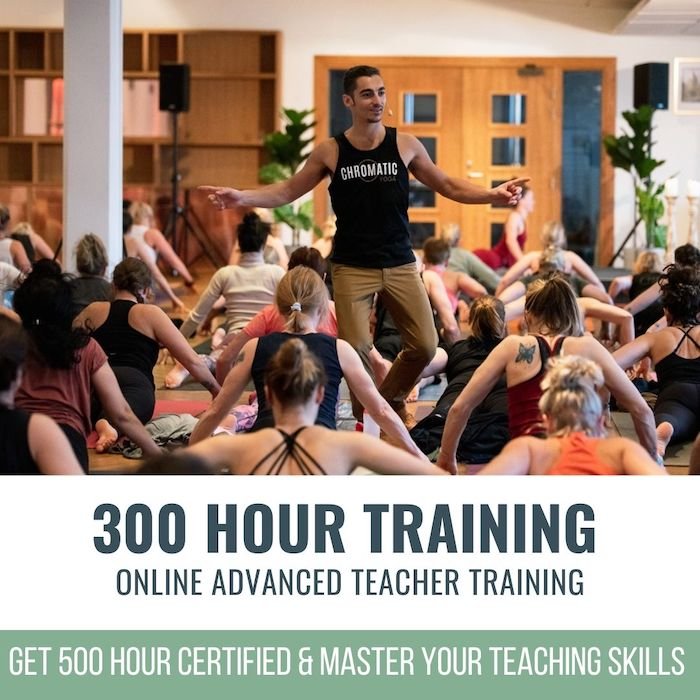
300 HOUR ONLINE TEACHER TRAINING

GET 500 HOUR CERTIFIED AS A MASTER TEACHER

Master your skill set as a teacher through refined techniques, anatomy, biomechanics, sequencing, philosophy, meditation techniques, theming, yoga business, and much more!

  • Get 500 hour certified
  • Learn anatomy, biomechanics, asana techniques
  • Expand your teaching skills
  • Masterful sequencing and verbal delivery
  • Learn meditation and breathwork techniques
  • Transformative tools: theming, dharma talks, satsang

READY TO GO

When all the pieces come together, the transition feels deliberate rather than rushed. We move the knees slightly to create space for the elbow, place the hands wide, and lean forward and slightly sideways. One knee presses down as the other draws inward, creating opposition that stabilizes the lift. Matt demonstrates options here, reminding us that Flying Revolved Half Lotus isn’t about forcing elevation, it’s about honoring the setup. Whether we lift fully or hover with control, the work has already been done. The hips understand their role, the arms know how to support, and the spine rotates with clarity. At this point, the pose isn’t mysterious, it’s simply a conversation between familiar actions, organized with intention.

Matt finished off 2025 with strength in his Flying Hip Openers Immersion.  Did you miss it?  You can still register for all of the lifetime replays here.

The 200 Hr. Teacher Training: Click Here to See the Next Start Date

The 300 Hr. Advanced Teacher Training: Click Here to See the Next Start Date

Article by Trish Curling

Video Extracted From: Flying Hip Openers Immersion
lotus pose online yoga classes

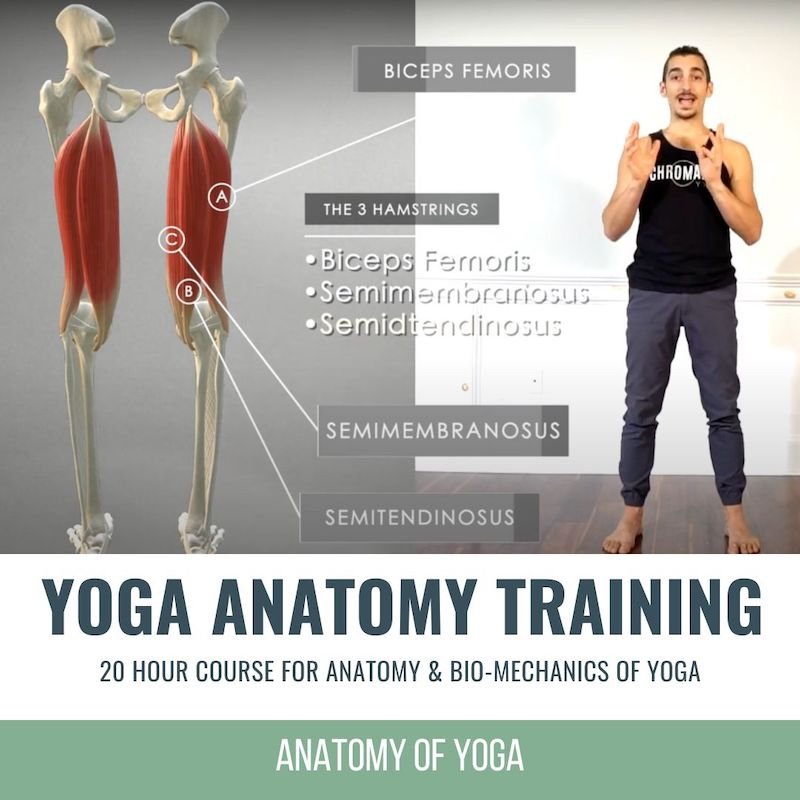
ONLINE ANATOMY COURSE

  • Accessible, exciting, and easy to learn
  • Anatomy and biomechanics for yoga
  • Appropriate for both teachers and students
  • Learn joint alignment vs pose alignment
  • Demystify yoga poses and transitions
  • Release aches and pains
  • Learn how to avoid common injuries
  • Caters to all levels with modifications and props
  • 20 hours Continued Education Credits with Yoga Alliance
  • 20 hours toward Chromatic Yoga Certification and 300 Hour
  • Lifetime access

Continue Learning

Flying Revolved Half Lotus

Flying Revolved Half Lotus

Flying Revolved Half LotusARM BALANCEFLYING REVOLVED HALF LOTUS Some postures don’t arrive through imitation; they arrive through investigation. Flying Revolved Half Lotus is one of those shapes. It borrows familiar ingredients like Side Crow mechanics, hip opening,...

read more
Eka Pada Bakasana

Eka Pada Bakasana

Eka Pada BakasanaSINGLE LEG CROWEKA PADA BAKASANA Eka Pada Bakasana asks us to balance curiosity with patience. This one-legged crow variation isn’t just about lifting a leg, it’s about organizing pressure, timing, and trust in unfamiliar territory. The posture...

read more
Eight Angle Pose

Eight Angle Pose

Eight Angle PoseASTAVAKRASANAEIGHT ANGLE POSE Sometimes we think arm balances are about getting higher, but Matt reframes Eight Angle pose as a mechanics workshop. This posture thrives when we test rotation, pelvic placement, and upper-body stability as interconnected...

read more
Approachable Arm Balances

Approachable Arm Balances

Approachable Arm BalancesPARSVA BAKASANAAPPROACHABLE ARM BALANCES Approachable arm balances aren’t about fearlessness; they’re about informed action. When we understand the mechanics behind the posture, we gain the power to shape our own outcomes. Rather than jumping...

read more
Perfect Protraction For Crow Pose

Perfect Protraction For Crow Pose

Perfect Protraction For Crow PoseBAKASANAPERFECT PROTRACTION FOR CROW POSE When working toward perfect protraction for Crow Pose, it’s essential to understand the role of the serratus anterior, the “fingertip” muscles that wrap around the rib cage and attach to the...

read more
Help For Hamstrings

Help For Hamstrings

Help For HamstringsFLEXIBILITYHELP FOR HAMSTRINGS “Yoga butt” or high hamstring tendonitis can be a literal pain where the sit bones meet the hamstrings and glutes. This area is prone to overuse injuries, especially when repetitive forward folds overstretch rather...

read more

THE FREE TECHNIQUE PACK

When You Subscribe, You Will Get Instant Access to

  • the Technique Pack: 15 yoga pose breakdowns
  • exclusive online course discounts
  • exclusive blogs and videos
  • This field is for validation purposes and should be left unchanged.

Eka Pada Bakasana

Eka Pada Bakasana

SINGLE LEG CROW

EKA PADA BAKASANA

Eka Pada Bakasana asks us to balance curiosity with patience. This one-legged crow variation isn’t just about lifting a leg, it’s about organizing pressure, timing, and trust in unfamiliar territory. The posture quickly reveals where we rush, where we brace unnecessarily, and where we disconnect effort from intention. Instead of chasing flight, this pose invites us to study how weight transfers forward, how the back body contributes, and how the hands communicate with the floor. When Eka Pada Bakasana feels elusive, it’s rarely due to lack of strength. More often, it’s because the body hasn’t yet learned how to coordinate grip, leverage, and momentum as one conversation. This posture becomes a laboratory for intelligent risk-taking where preparation, not courage alone, determines whether lift-off feels chaotic or controlled.

chromatic yoga 15 hour immersion

FLYING HIP OPENERS

ASANA INFUSED WITH STEP BY STEP TECHNIQUES FOR ARM BALANCES

  • 10 Chromatic Yoga practices with founder Matt Giordano
  • Physically Invigorating
  • Foundations, Refinement and Advancement
  • Meticulously Crafted Experiences to Set you up for Maximum Success
  • Included Postures: Crow, Side Crow, Firefly, Dragon Fly, Revolved Flying Half Lotus, Koundenyasana 1 & 2, Hybrid Arm Balances, Straddle Handstand and More
  • 12+ Arm Balances with Modifications and Variations!
  • Hip Opening Techniques, Core Strength, Wrist Strength and Mobility
  • All Levels Appropriate Full length 75 minute Classes
  • Non-dogmatic, Anatomy informed Alignment
  • The Perfect Blend of Knowledge and Practice
  • A Heavy Emphasis on Technique for the Poses Everyone Expects You to Know but Non One Teaches
  • 12 Continuing Education hours with Yoga Alliance and American Yoga Council
  • 12 Accredited Practice Hours with the Chromatic School of Yoga
  • Step-by-Step instruction for increased accessibility
  • Sweat, Breath, Strengthen, Stretch and Feel Amazing!

DO THIS FIRST

If you’ve practiced with Matt, you’ll know that before lifting anything in an arm balance, he directs our attention to the hands. Fingers actively grip the ground, then sustain that grip as weight shifts forward. This isn’t passive contact, it’s deliberate contraction. The primary muscles at work are the flexor digitorum profundus and flexor digitorum superficialis, muscles that flex the fingers and cross the wrist joint. When we press the fingertips down and slightly back, these muscles stabilize the wrist and help distribute load through the palms rather than dumping it into the heel of the hand. Matt emphasizes that this activation must be maintained, not flickered on and off. In Eka Pada Bakasana, consistent finger engagement becomes our steering wheel. Without it, forward movement feels abrupt and unstable. With it, the body learns how to lean without panic and push without collapse.

WATCH THE VIDEO

EKA PADA BAKASANA: ELEVATED VARIATIONS FOR ULTIMATE HEIGHT

SIMULATE THE EXPERIENCE

Rather than forcing the full pose, Matt offers ways to simulate the physical experience of Eka Pada Bakasana. One option begins in a pigeon-like setup where the hips lift, hands walk forward, and forearms lower to the ground. From here, lifting the back leg introduces the sensation of hamstrings and glutes activating under forward weight shift. The front knee doesn’t need deep flexion due to the fact that it isn’t a flying pigeon.  This “simulation” can also make it accessible for many bodies. The lifted leg remains in a turned-out position, offering hip opening without demanding extreme range. As body weight shifts forward and pressure moves into the shin, the back leg begins to feel lighter. These simulations allow the nervous system to experience the pose’s demands without the risk of immediate balance, building confidence and clarity before full execution.

200 Hour Online Teacher Training Certification

200 HOUR ONLINE TEACHER TRAINING

GET CERTIFIED & DEEPEN YOUR YOGA PRACTICE

  • Deepen your yoga practice
  • Build confidence speaking in front of groups in person and online
  • Learn foundational class structures and templates
  • Learn techniques for a wide range of yoga postures
  • Get certified and highly qualified to teach yoga
  • Yoga Alliance Globally Recognized Certification Program

ONE-LEGGED CROW IN BOAT POSE

To further demystify Eka Pada Bakasana, Matt introduces a seated variation using Boat Pose. One shin clamps outside the arm, supported by the opposite hand, while the torso leans back slightly with the tailbone tucked. From here, the free leg extends forward, mimicking the asymmetry of the arm balance without the complexity of being inverted. This variation teaches the body how the leg connects to the arm shelf and how core engagement supports lift. The shape becomes familiar before it becomes airborne. By rehearsing Eka Pada Bakasana in Boat Pose, we remove fear from the equation and replace it with understanding. The body begins to recognize the posture not as a leap, but as a continuation of actions it already knows.

300 hour teacher training online

300 HOUR ONLINE TEACHER TRAINING

GET 500 HOUR CERTIFIED AS A MASTER TEACHER

Master your skill set as a teacher through refined techniques, anatomy, biomechanics, sequencing, philosophy, meditation techniques, theming, yoga business, and much more!

  • Get 500 hour certified
  • Learn anatomy, biomechanics, asana techniques
  • Expand your teaching skills
  • Masterful sequencing and verbal delivery
  • Learn meditation and breathwork techniques
  • Transformative tools: theming, dharma talks, satsang

TAKE THE LEAP FORWARD

When it’s time to approach the full expression, Matt encourages us to use support strategically. One foot rests on a block while the opposite knee positions outside the shoulder, allowing us to lean forward without fully committing to balance. Cushions beneath the head create a safe zone, turning fear into curiosity. From here, the back foot becomes an articulator, gently extending through the ankle to guide momentum forward. This subtle action helps the lifted leg feel lighter without forcing it. Eka Pada Bakasana emerges not from a jump, but from a controlled glide. Even if the leg doesn’t lift fully, the body learns something valuable: how forward intention, finger grip, and back-body activation work together. The leap forward isn’t sudden , it’s earned, informed, and repeatable.

There’s still time to explore this process in Matt’s current online Immersion Flying Hip Openers.

The 200 Hr. Teacher Training: Click Here to See the Next Start Date

The 300 Hr. Advanced Teacher Training: Click Here to See the Next Start Date

Article by Trish Curling

Video Extracted From: Flow & Fly Immersion

lotus pose online yoga classes

ONLINE ANATOMY COURSE

  • Accessible, exciting, and easy to learn
  • Anatomy and biomechanics for yoga
  • Appropriate for both teachers and students
  • Learn joint alignment vs pose alignment
  • Demystify yoga poses and transitions
  • Release aches and pains
  • Learn how to avoid common injuries
  • Caters to all levels with modifications and props
  • 20 hours Continued Education Credits with Yoga Alliance
  • 20 hours toward Chromatic Yoga Certification and 300 Hour
  • Lifetime access

Continue Learning

Flying Revolved Half Lotus

Flying Revolved Half Lotus

Flying Revolved Half LotusARM BALANCEFLYING REVOLVED HALF LOTUS Some postures don’t arrive through imitation; they arrive through investigation. Flying Revolved Half Lotus is one of those shapes. It borrows familiar ingredients like Side Crow mechanics, hip opening,...

read more
Eka Pada Bakasana

Eka Pada Bakasana

Eka Pada BakasanaSINGLE LEG CROWEKA PADA BAKASANA Eka Pada Bakasana asks us to balance curiosity with patience. This one-legged crow variation isn’t just about lifting a leg, it’s about organizing pressure, timing, and trust in unfamiliar territory. The posture...

read more
Eight Angle Pose

Eight Angle Pose

Eight Angle PoseASTAVAKRASANAEIGHT ANGLE POSE Sometimes we think arm balances are about getting higher, but Matt reframes Eight Angle pose as a mechanics workshop. This posture thrives when we test rotation, pelvic placement, and upper-body stability as interconnected...

read more
Approachable Arm Balances

Approachable Arm Balances

Approachable Arm BalancesPARSVA BAKASANAAPPROACHABLE ARM BALANCES Approachable arm balances aren’t about fearlessness; they’re about informed action. When we understand the mechanics behind the posture, we gain the power to shape our own outcomes. Rather than jumping...

read more
Perfect Protraction For Crow Pose

Perfect Protraction For Crow Pose

Perfect Protraction For Crow PoseBAKASANAPERFECT PROTRACTION FOR CROW POSE When working toward perfect protraction for Crow Pose, it’s essential to understand the role of the serratus anterior, the “fingertip” muscles that wrap around the rib cage and attach to the...

read more
Help For Hamstrings

Help For Hamstrings

Help For HamstringsFLEXIBILITYHELP FOR HAMSTRINGS “Yoga butt” or high hamstring tendonitis can be a literal pain where the sit bones meet the hamstrings and glutes. This area is prone to overuse injuries, especially when repetitive forward folds overstretch rather...

read more

THE FREE TECHNIQUE PACK

When You Subscribe, You Will Get Instant Access to

  • the Technique Pack: 15 yoga pose breakdowns
  • exclusive online course discounts
  • exclusive blogs and videos
  • This field is for validation purposes and should be left unchanged.

Side Crow Strategy

Side Crow Strategy

PARSVA BAKASANA

SIDE CROW STRATEGY

When we step onto the yoga mat with a strategy, we open ourselves up to a practice that’s both intelligent and transformational. Side Crow is one of those postures that calls for a clear plan, one that breaks down the mechanics and balances effort with trust. Rather than relying on sheer strength or guesswork, Matt’S Chromatic Yoga method offers a layered approach rooted in precision. It’s not just sequencing, it’s a system that honours tapas (effort) and Ishvara Pranidhana (surrender). With Side Crow, much of that effort is directed toward activating and stabilizing the adductors.  This may not often be examined in a “typical” yoga class, but drawing our awareness here helps to keep us connected to the midline. This intentional use of muscular engagement provides both structure and support. A Side Crow strategy gives us permission to slow down and build awareness of our spine, our core, our balance, and how we distribute energy.  From that foundation, we can begin to fly.

chromatic yoga 15 hour immersion

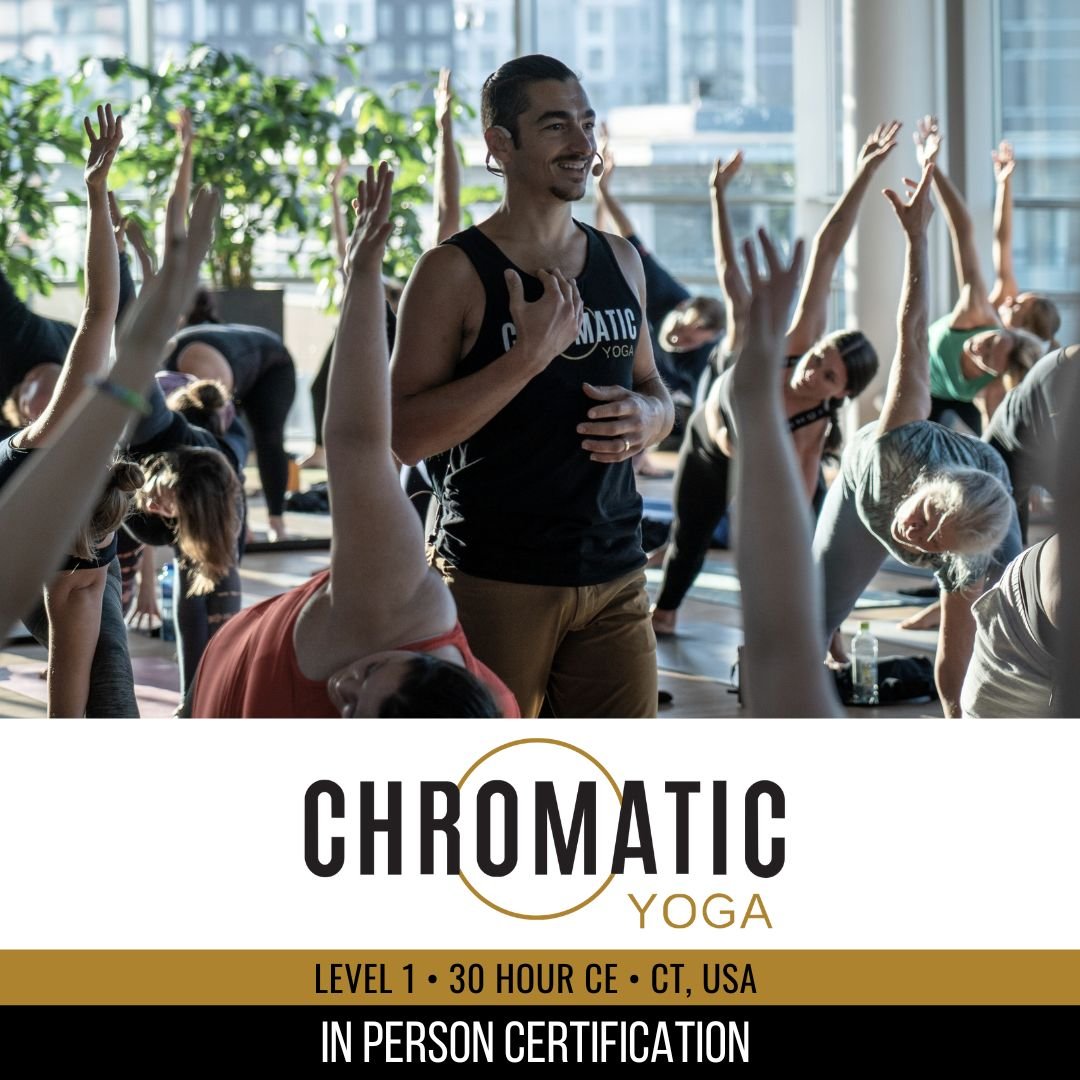
CHROMATIC LEVEL 1 TRAINING

CHROMATIC LEVEL 1 REGISTRATION

  • 30 hours in person with Matt
  • Short Online pre-training to maximize in person time together
  • Become a Certified Chromatic Yoga Teacher
  • Revolutionize your teaching skills
  • Gain the strength of the global collective
  • All Yoga Teachers get continued ed hours with Yoga Alliance
  • Certified Chromatic Teacher’s attending this event will get continued Ed hours toward their next level within Chromatic Yoga
  • Chromatic Yoga does not adhere to dogmatic alignment principals, instead you will learn to make deliberate alignment based on intention.
  • Residential training – you will book your stay at the Hotel and Spa, close to multiple international Airports
  • Location: Our Farm in Connecticut

ONE-LEGGED CHAIR POSE

In today’s video, Matt instructs us to place a block between the upper thighs and squeeze to activate the adductors. From there, we twist to the left, placing the right tricep on the left thigh. Leaning into the left foot makes the right heel light, and we start to build a one-legged variation of Revolved Chair pose, drawing the right heel to the glutes. This “flamingo-style” chair pose (as Matt refers to it) is less about aesthetics and more about teaching the body to rotate and stabilize at once. With the block engaged and the twist deepening, we simultaneously challenge balance and coordination. It’s a strong preparation for understanding how internal pressure and spiral activation become essential later on in Side Crow. Once the shape is complete, we bring the right foot back down and head to the ground for the next layer of training.

WATCH THE VIDEO

SIDE CROW STRATEGY: SYSTEMATIC SEQUENCING FOR SUCCESS

FLIP IT UPSIDE DOWN

From our backs, the same strategic tone continues, this time placing a block between the shins, (adductors still firing). Matt cues a subtle posterior tilt of the pelvis, then shifts the knees to the left while the arms move to the right. We engage in a sit-up that resists the temptation for the knees to drift. This upright engagement through twist keeps the focus on the obliques and reinforces spinal control. With arms stretched wide, Matt invites us to continue exploring the twist, only letting the pelvis rotate as far as we can control—never beyond that. There’s no forcing. There’s no rush. He then demonstrates a “side-to-side roll”, with the block still in place, which helps us refine symmetry and continue conditioning the midsection. This phase may seem simple, but it’s crucial. We are wiring the body for rotation, stability, and centerline strength, all components we’ll call on in the Side Crow.

200 Hour Online Teacher Training Certification

200 HOUR ONLINE TEACHER TRAINING

GET CERTIFIED & DEEPEN YOUR YOGA PRACTICE

  • Deepen your yoga practice
  • Build confidence speaking in front of groups in person and online
  • Learn foundational class structures and templates
  • Learn techniques for a wide range of yoga postures
  • Get certified and highly qualified to teach yoga
  • Yoga Alliance Globally Recognized Certification Program

SIDE CROW SET UP

The moment we’ve prepared for begins to take form. Matt sets us up for Side Crow with the option to place the block between the shins (more challenging) or thighs (more accessible). Facing the side of the mat, we take our hands wide, so wide that initially, we can’t even touch the floor. This forces us to lift the hips, find height, and make space before planting the second hand. Squeezing the block, we shift into a zone of possibility. Hips high, bum lifted, knees squeezing inward.  We have the option to stay here and hover, or eventually fly. If we choose to “fly”, the lean comes next, moving our weight toward the fingertips while keeping the tailbone lifted and knees spiraling inward. Matt reminds us to “wag the tail,” a cue that activates the obliques and centers the pelvis. At every step, we are reminded to grip, lean, spiral, and squeeze.  This is our Side Crow strategy in action.

300 hour teacher training online

300 HOUR ONLINE TEACHER TRAINING

GET 500 HOUR CERTIFIED AS A MASTER TEACHER

Master your skill set as a teacher through refined techniques, anatomy, biomechanics, sequencing, philosophy, meditation techniques, theming, yoga business, and much more!

  • Get 500 hour certified
  • Learn anatomy, biomechanics, asana techniques
  • Expand your teaching skills
  • Masterful sequencing and verbal delivery
  • Learn meditation and breathwork techniques
  • Transformative tools: theming, dharma talks, satsang

INTEGRATION LEADS TO TRANSFORMATION

The beauty of this approach is that nothing is random. Each drill is intentional, each cue a puzzle piece that fits into the larger structure. From standing to seated to upside down, we build body awareness layer by layer. We don’t just attempt Side Crow, we construct it. The internal rotation, the spinal rotation, the controlled lean, all of it becomes part of us. This is what the Chromatic Yoga approach teaches: not just to perform, but to integrate. Our transformation doesn’t come from nailing the pose, it comes from respecting the path it took to get there. We practice discernment, meet resistance with strategy, and stay present in the process. As with any meaningful practice, the goal isn’t just to arrive, it’s to understand how we arrived. That’s the strategy. That’s the system. And in that, we prevail.

Take a deep dive into the Chromatic Yoga approach at Matt’s next Chromatic Level 1 In PersonTraining.  

Transform your yoga offerings to your students by registering for Matt’s 200 & 300/500 Hour Yoga Teacher Trainings.

The 200 Hr. Teacher Training: Click Here to See the Next Start Date

The 300 Hr. Advanced Teacher Training: Click Here to See the Next Start Date

Article by Trish Curling

Video Extracted From: Chromatic Yoga 15 Hour Online Immersion

lotus pose online yoga classes

ONLINE ANATOMY COURSE

  • Accessible, exciting, and easy to learn
  • Anatomy and biomechanics for yoga
  • Appropriate for both teachers and students
  • Learn joint alignment vs pose alignment
  • Demystify yoga poses and transitions
  • Release aches and pains
  • Learn how to avoid common injuries
  • Caters to all levels with modifications and props
  • 20 hours Continued Education Credits with Yoga Alliance
  • 20 hours toward Chromatic Yoga Certification and 300 Hour
  • Lifetime access

Continue Learning

Flying Revolved Half Lotus

Flying Revolved Half Lotus

Flying Revolved Half LotusARM BALANCEFLYING REVOLVED HALF LOTUS Some postures don’t arrive through imitation; they arrive through investigation. Flying Revolved Half Lotus is one of those shapes. It borrows familiar ingredients like Side Crow mechanics, hip opening,...

read more
Eka Pada Bakasana

Eka Pada Bakasana

Eka Pada BakasanaSINGLE LEG CROWEKA PADA BAKASANA Eka Pada Bakasana asks us to balance curiosity with patience. This one-legged crow variation isn’t just about lifting a leg, it’s about organizing pressure, timing, and trust in unfamiliar territory. The posture...

read more
Eight Angle Pose

Eight Angle Pose

Eight Angle PoseASTAVAKRASANAEIGHT ANGLE POSE Sometimes we think arm balances are about getting higher, but Matt reframes Eight Angle pose as a mechanics workshop. This posture thrives when we test rotation, pelvic placement, and upper-body stability as interconnected...

read more
Approachable Arm Balances

Approachable Arm Balances

Approachable Arm BalancesPARSVA BAKASANAAPPROACHABLE ARM BALANCES Approachable arm balances aren’t about fearlessness; they’re about informed action. When we understand the mechanics behind the posture, we gain the power to shape our own outcomes. Rather than jumping...

read more
Perfect Protraction For Crow Pose

Perfect Protraction For Crow Pose

Perfect Protraction For Crow PoseBAKASANAPERFECT PROTRACTION FOR CROW POSE When working toward perfect protraction for Crow Pose, it’s essential to understand the role of the serratus anterior, the “fingertip” muscles that wrap around the rib cage and attach to the...

read more
Help For Hamstrings

Help For Hamstrings

Help For HamstringsFLEXIBILITYHELP FOR HAMSTRINGS “Yoga butt” or high hamstring tendonitis can be a literal pain where the sit bones meet the hamstrings and glutes. This area is prone to overuse injuries, especially when repetitive forward folds overstretch rather...

read more

THE FREE TECHNIQUE PACK

When You Subscribe, You Will Get Instant Access to

  • the Technique Pack: 15 yoga pose breakdowns
  • exclusive online course discounts
  • exclusive blogs and videos
  • This field is for validation purposes and should be left unchanged.

Mastering Bakasana

Mastering Bakasana

Crow Pose

MASTERING BAKASANA

We may never truly master a posture, but as we go on a journey of exploration towards our greatest potential within our asana practice, we most definitely become masters of our own awareness—cultivating the ability to discern where to go throughout the next phases of our journey, both on and off the mat.

As we delve into a posture like Bakasana, we become aware very quickly that we must gain a sense of our proprioception in the posture. Proprioception is essentially the understanding of where our bodies are in space. Because this is not necessarily easy, investigating the posture in different planes can assist with this understanding. In addition, applying technique is the ticket to the elevation of our abilities. The marriage between technique and proprioception will help us realize our potential in Bakasana. 

chromatic yoga 15 hour immersion

ITALY RETREAT

REGISTRATION NOW OPEN

  • Spa & Yoga Retreat
  • Close to the coast line and beaches
  • 2 spa days included (sauna, hot tub, Turkish bath)
  • Morning and early-evening yoga with Matt
  • Daytime free for adventures or to enjoy Ayurvedic massage and treatments
  • Connect with incredible yogis from around the world!
  • ALL LEVELS and all ages 18-85 appropriate
  • Skillfully guided experience: yoga, meditation, breathwork
  • Biomechanics and inspirational philosophy
  • Welcoming and communal group of yogis!

MALASANA POSE POSITIONING

In today’s video, Matt demonstrates variations of Bakasana with techniques that help prepare our bodies for this challenging arm balance. The first variation we see is in a Malasana Pose position, which is essentially Bakasana in a squatted position. As Matt always teaches, such variations take some of the complexity out of the posture and help up home in on the foundations.  

Here, we focus on placing the knees onto the outer arms and squeezing the knees in. Now, the element that can become more difficult when we implement the balance is the necessary spinal flexion. In this Malasana position, we practice rounding the back and extending the arms into the arm balance position, being mindful to keep the forearms parallel to the ground. This is how we begin to get more comfortable with proprioception.

WATCH THE VIDEO

MASTERING BAKASANA: PROPRIOCEPTION & ARM BALANCE TECHNIQUES

BAKASANA ON YOUR BACK

Bakasana on our back begins to promote increased activation in the body. Matt teaches that the objective here is to get the head and buttocks off of the ground. We are still squeezing the inner thighs into the outer arms in order to activate the adductors.

The benefit of practicing this variation is a better understanding of the tension and strength required for the balanced variation; Bakasana on our back is the next stepping stone in developing stability and control. As we move into the balanced variation, we rely on this strength and patterning.

200 Hour Online Teacher Training Certification

200 HOUR ONLINE TEACHER TRAINING

GET CERTIFIED & DEEPEN YOUR YOGA PRACTICE

  • Deepen your yoga practice
  • Build confidence speaking in front of groups in person and online
  • Learn foundational class structures and templates
  • Learn techniques for a wide range of yoga postures
  • Get certified and highly qualified to teach yoga
  • Yoga Alliance Globally Recognized Certification Program

GET LIGHTER

When we start to implement the balance in Bakasana, we feel the heaviness of supporting our body weight. What we need to strive for is a lightness in the posture, which we access by starting with the foundation.  

With the elevation of blocks under the feet, we can maneuver the body into deeper spinal flexion, with knees outside the upper arms and shoulders. Once the shape is created and we squeeze the legs in, we shift our weight forward. If we don’t have a good sense of proprioception, this is when the pose can fall apart. Matt brings our attention to shifting the weight out of our feet and into our hands. From here, we grip the hands more, which helps us feel more secure when leaning forward. This is where the lightness is achieved.

300 hour teacher training online

300 HOUR ONLINE TEACHER TRAINING

GET 500 HOUR CERTIFIED AS A MASTER TEACHER

Master your skill set as a teacher through refined techniques, anatomy, biomechanics, sequencing, philosophy, meditation techniques, theming, yoga business, and much more!

  • Get 500 hour certified
  • Learn anatomy, biomechanics, asana techniques
  • Expand your teaching skills
  • Masterful sequencing and verbal delivery
  • Learn meditation and breathwork techniques
  • Transformative tools: theming, dharma talks, satsang

KNOW EXACTLY WHERE YOU ARE

“Knowing exactly where we are” can be interpreted in many ways. It can easily refer to our own understanding of where we are on the journey of Bakasana, in other words, to knowing which variation we need to grasp before we move towards the next. As we progress through the course of exploration, it definitely also refers to proprioception: We need to know where we are in space in order to find the lift and lightness required for this arm balance.

Awareness enables us to adjust and refine with greater precision. With this understanding, we embrace the journey of our practice rather than an end goal. It’s through this deepened self-awareness that we can feel the subtle shifts and adjustments that lead to progress. 

A few spots have opened up in Matt’s 2025 Italy Retreat! Secure your spot here.

The 200 Hr. Teacher Training: Click Here to See the Next Start Date

The 300 Hr. Advanced Teacher Training: Click Here to See the Next Start Date

Article by Trish Curling

Video Extracted From: Step into the Fire Workshop

lotus pose online yoga classes

ONLINE ANATOMY COURSE

  • Accessible, exciting, and easy to learn
  • Anatomy and biomechanics for yoga
  • Appropriate for both teachers and students
  • Learn joint alignment vs pose alignment
  • Demystify yoga poses and transitions
  • Release aches and pains
  • Learn how to avoid common injuries
  • Caters to all levels with modifications and props
  • 20 hours Continued Education Credits with Yoga Alliance
  • 20 hours toward Chromatic Yoga Certification and 300 Hour
  • Lifetime access

Continue Learning

Flying Revolved Half Lotus

Flying Revolved Half Lotus

Flying Revolved Half LotusARM BALANCEFLYING REVOLVED HALF LOTUS Some postures don’t arrive through imitation; they arrive through investigation. Flying Revolved Half Lotus is one of those shapes. It borrows familiar ingredients like Side Crow mechanics, hip opening,...

read more
Eka Pada Bakasana

Eka Pada Bakasana

Eka Pada BakasanaSINGLE LEG CROWEKA PADA BAKASANA Eka Pada Bakasana asks us to balance curiosity with patience. This one-legged crow variation isn’t just about lifting a leg, it’s about organizing pressure, timing, and trust in unfamiliar territory. The posture...

read more
Eight Angle Pose

Eight Angle Pose

Eight Angle PoseASTAVAKRASANAEIGHT ANGLE POSE Sometimes we think arm balances are about getting higher, but Matt reframes Eight Angle pose as a mechanics workshop. This posture thrives when we test rotation, pelvic placement, and upper-body stability as interconnected...

read more
Approachable Arm Balances

Approachable Arm Balances

Approachable Arm BalancesPARSVA BAKASANAAPPROACHABLE ARM BALANCES Approachable arm balances aren’t about fearlessness; they’re about informed action. When we understand the mechanics behind the posture, we gain the power to shape our own outcomes. Rather than jumping...

read more
Perfect Protraction For Crow Pose

Perfect Protraction For Crow Pose

Perfect Protraction For Crow PoseBAKASANAPERFECT PROTRACTION FOR CROW POSE When working toward perfect protraction for Crow Pose, it’s essential to understand the role of the serratus anterior, the “fingertip” muscles that wrap around the rib cage and attach to the...

read more
Help For Hamstrings

Help For Hamstrings

Help For HamstringsFLEXIBILITYHELP FOR HAMSTRINGS “Yoga butt” or high hamstring tendonitis can be a literal pain where the sit bones meet the hamstrings and glutes. This area is prone to overuse injuries, especially when repetitive forward folds overstretch rather...

read more

THE FREE TECHNIQUE PACK

When You Subscribe, You Will Get Instant Access to

  • the Technique Pack: 15 yoga pose breakdowns
  • exclusive online course discounts
  • exclusive blogs and videos
  • This field is for validation purposes and should be left unchanged.

Practice Peacock Pose

Practice Peacock Pose

Mayurasana

PRACTICE PEACOCK POSE

We go to our yoga practice for many different reasons at any given time. In our asana practice, we are sometimes seeking softness and ease. At other times, we might be striving for vigour and strength. Peacock Pose is for when we are in pursuit of the latter. The full pose requires an ample amount of strength, but it will equally build strength if we are not yet at that point. Taking steps to practice Peacock Pose means we are ready to jump into the fire of what this arm balance posture has to offer.  

With regard to arm balances, Matt teaches us the concept of “lean, resist, push.” This is what guides us to ultimately finding our balance. The same concept exists in Peacock Pose, except that we must approach the “resist” portion differently. The backwards placement of the hands changes our experience. The muscle engagements are different.

chromatic yoga 15 hour immersion

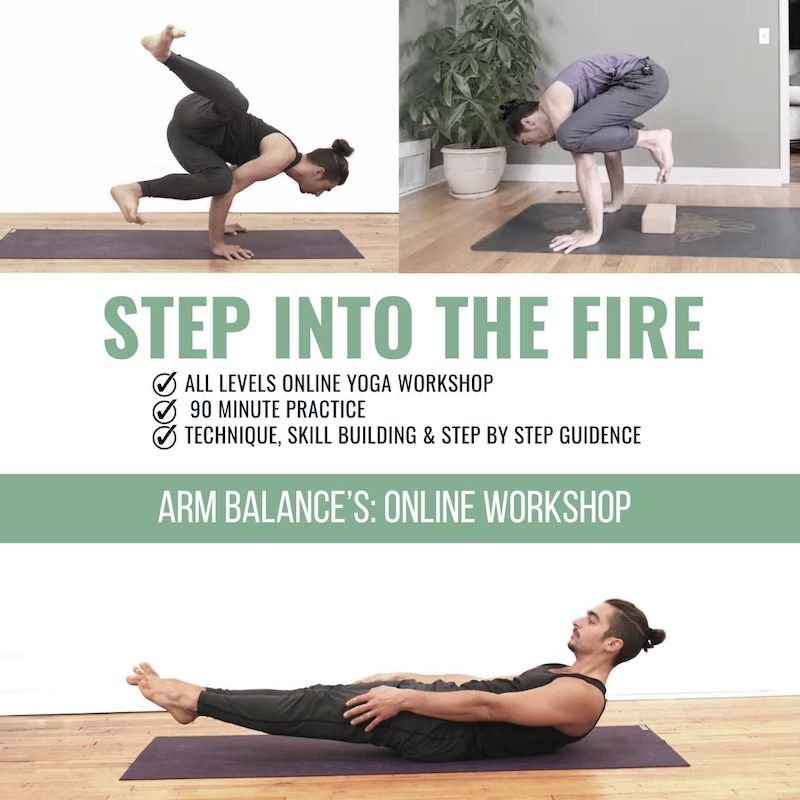
STEP INTO THE FIRE

REGISTRATION NOW OPEN

  • Step-by-step guidance
  • Intelligent and precise warm-up for your body
  • Drills to build and refine your skill sets
  • Essential arm balance techniques
  • All levels appropriate
  • Lifetime access available
  • Live attendance is NOT necessary—you can practice the replays
  • Affordable options available
  • VIP options available

START WITH “SIMPLE” BICEP ACTIVATION

Even though we have many of the traditional principles of an arm balance in Peacock Pose, there’s a lot we can learn from what is different. For example, the placement of the hands is backwards, which makes our hands a pulling force rather than the usual pushing. Our biceps pull us into a position to avoid leaning too much and falling over.

Asana practice, however, does not provide many opportunities for bicep strength. So how do we prepare these muscles, which are integral to the pose? In today’s video, Matt offers two drills that can be incorporated into our practice. 

First, like a bicep curl, you can place one hand on top of the other and resist the push of the top hand by bringing the bottom hand up toward your face or by simply creating an isometric contraction.

Next, on hands and knees, you can pull one hand toward the other, even swiping each hand up to the opposite shoulder.

WATCH THE VIDEO

PRACTICE PEACOCK POSE: PREPARE YOUR PULLING MUSCLES

BADDHA KONASANA VARIATION

As always, progression is key. When it’s time to actually explore Peacock Pose, this Baddha Konasana variation is a great step before we attempt the plank-like position. Why? It’s an option that allows us to create less weight in the pose by having our knees bent.  

To start off, placing some soft support out in front is a good plan, just in case we fall.  

In this Baddha Konasana variation of Peacock Pose, we practice the hand placement and arm setup while creating a diamond shape in the legs.  As we lean forward, we must remember that nothing is stopping us! The biceps (our pulling muscles) need to work. It’s all about pressing our hands into the ground and pulling them towards our face, which will help with the counterbalance. The action will move some weight back towards our feet, which will help us from falling forward.

200 Hour Online Teacher Training Certification

200 HOUR ONLINE TEACHER TRAINING

GET CERTIFIED & DEEPEN YOUR YOGA PRACTICE

  • Deepen your yoga practice
  • Build confidence speaking in front of groups in person and online
  • Learn foundational class structures and templates
  • Learn techniques for a wide range of yoga postures
  • Get certified and highly qualified to teach yoga
  • Yoga Alliance Globally Recognized Certification Program

PLANK POSITION FOR PEACOCK POSE

When we arrive in this variation of Peacock Pose, the back muscles are of course involved, but it’s the leaning forward that also takes the legs up.

Additionally, there can be some conversation about the placement of the elbows. With a deeply rounded back, we may get them very low on the belly, even below the belly button, especially during the initial setup phase, but body proportion needs to be taken into consideration. Matt reminds us that when the legs lift up, it can move the belly button area further away from the elbows. It doesn’t mean that they are now in the wrong place.

Essentially, we have the same setup as in the previous variation, but you’ll see in the video that the legs go straight back and we need to be bold with the “lean” element.

300 hour teacher training online

300 HOUR ONLINE TEACHER TRAINING

GET 500 HOUR CERTIFIED AS A MASTER TEACHER

Master your skill set as a teacher through refined techniques, anatomy, biomechanics, sequencing, philosophy, meditation techniques, theming, yoga business, and much more!

  • Get 500 hour certified
  • Learn anatomy, biomechanics, asana techniques
  • Expand your teaching skills
  • Masterful sequencing and verbal delivery
  • Learn meditation and breathwork techniques
  • Transformative tools: theming, dharma talks, satsang

TAKE CARE AND LEAN

Before we even attempt any variation of Peacock Pose, we must not only prepare the pulling muscles (with bicep drills like those offered in today’s video) but also understand how much we need to lean forward to protect our wrists.  If we are at a 90 degree angle or less, this may cause a lot of pressure on the wrists. Leaning forward will increase the angle and potentially minimize the tension. It’s like a cycle: Unless we prepare the pulling muscles, we will not have the capacity to lean to the necessary degree.  

The beauty of the practice is developing this discernment. We develop a sense for what stage fits our development. Taking care to use this discernment indicates longevity in our bodies and in our practice.  

Prepare to receive step-by-step instruction and education in Matt’s upcoming online arm balance workshop, Step into the Fire.

The 200 Hr. Teacher Training: Click Here to See the Next Start Date

The 300 Hr. Advanced Teacher Training: Click Here to See the Next Start Date

Article by Trish Curling

Video Extracted From: Arm Balance Immersion 

lotus pose online yoga classes

ONLINE ANATOMY COURSE

  • Accessible, exciting, and easy to learn
  • Anatomy and biomechanics for yoga
  • Appropriate for both teachers and students
  • Learn joint alignment vs pose alignment
  • Demystify yoga poses and transitions
  • Release aches and pains
  • Learn how to avoid common injuries
  • Caters to all levels with modifications and props
  • 20 hours Continued Education Credits with Yoga Alliance
  • 20 hours toward Chromatic Yoga Certification and 300 Hour
  • Lifetime access

Continue Learning

Flying Revolved Half Lotus

Flying Revolved Half Lotus

Flying Revolved Half LotusARM BALANCEFLYING REVOLVED HALF LOTUS Some postures don’t arrive through imitation; they arrive through investigation. Flying Revolved Half Lotus is one of those shapes. It borrows familiar ingredients like Side Crow mechanics, hip opening,...

read more
Eka Pada Bakasana

Eka Pada Bakasana

Eka Pada BakasanaSINGLE LEG CROWEKA PADA BAKASANA Eka Pada Bakasana asks us to balance curiosity with patience. This one-legged crow variation isn’t just about lifting a leg, it’s about organizing pressure, timing, and trust in unfamiliar territory. The posture...

read more
Eight Angle Pose

Eight Angle Pose

Eight Angle PoseASTAVAKRASANAEIGHT ANGLE POSE Sometimes we think arm balances are about getting higher, but Matt reframes Eight Angle pose as a mechanics workshop. This posture thrives when we test rotation, pelvic placement, and upper-body stability as interconnected...

read more
Approachable Arm Balances

Approachable Arm Balances

Approachable Arm BalancesPARSVA BAKASANAAPPROACHABLE ARM BALANCES Approachable arm balances aren’t about fearlessness; they’re about informed action. When we understand the mechanics behind the posture, we gain the power to shape our own outcomes. Rather than jumping...

read more
Perfect Protraction For Crow Pose

Perfect Protraction For Crow Pose

Perfect Protraction For Crow PoseBAKASANAPERFECT PROTRACTION FOR CROW POSE When working toward perfect protraction for Crow Pose, it’s essential to understand the role of the serratus anterior, the “fingertip” muscles that wrap around the rib cage and attach to the...

read more
Help For Hamstrings

Help For Hamstrings

Help For HamstringsFLEXIBILITYHELP FOR HAMSTRINGS “Yoga butt” or high hamstring tendonitis can be a literal pain where the sit bones meet the hamstrings and glutes. This area is prone to overuse injuries, especially when repetitive forward folds overstretch rather...

read more

THE FREE TECHNIQUE PACK

When You Subscribe, You Will Get Instant Access to

  • the Technique Pack: 15 yoga pose breakdowns
  • exclusive online course discounts
  • exclusive blogs and videos
  • This field is for validation purposes and should be left unchanged.

BLACK FRIDAY: 30% OFF ALL ONLINE IMMERSIONS & WORKSHOPS !
0
days
0
hours
0
minutes
0
seconds
BLACK FRIDAY: 30% OFF ALL ONLINE IMMERSIONS & WORKSHOPS!
0
days
0
hours
0
minutes
0
seconds
BLACK FRIDAY SALE! Congratulations, your 30% discount code has been applied and will be reflected at the bottom of the checkout page. All Immersions & Immersion Bundles are included in this sale. To get more info on each immersion click on the photo. On Demand and Lifetime Access To all
Overlay Image
BLACK FRIDAY SALE! Congratulations, your 30% discount code has been applied and will be reflected at the very bottom of the checkout page. All Immersions & Immersion Bundles are included in this sale. To get more info on each immersion click on the photo. On Demand and Lifetime Access To all

Pin It on Pinterest