Perfect Protraction For Crow Pose

Perfect Protraction For Crow Pose

BAKASANA

PERFECT PROTRACTION FOR CROW POSE

When working toward perfect protraction for Crow Pose, it’s essential to understand the role of the serratus anterior, the “fingertip” muscles that wrap around the rib cage and attach to the inner edge of the shoulder blades. Matt describes them as the driving force behind any forward-pushing movement, from boxing to arm balances. These muscles are responsible for that “lifted” feeling when we press the floor away beneath us. Without this activation, the chest collapses, and the arms bear the brunt of the work. Learning to engage the serratus anterior transforms Crow Pose from a heavy arm balance into an integrated, buoyant experience where strength and lift coexist.
chromatic yoga 15 hour immersion

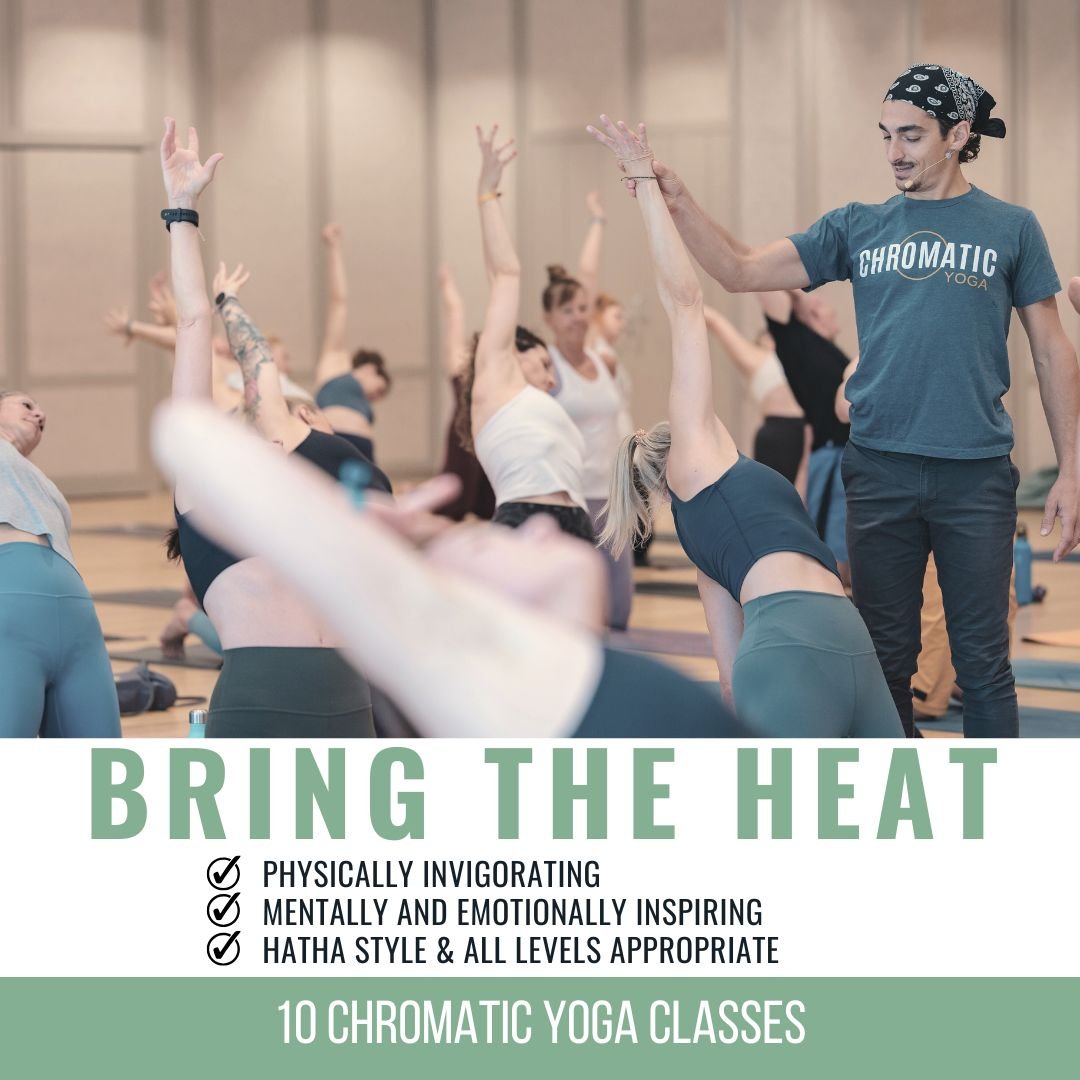
BRING THE HEAT

ENHANCE YOUR POSTURAL PRACTICE

  • 10 Chromatic Yoga practices with founder Matt Giordano
  • Physically Invigorating
  • Each Class is designed to cultivate inner heat from a blend of calculated long holds and vinyasa style flows
  • Meticulously Crafted Experiences to Enhance Your Postural Practice
  • Modern, Non-dogmatic Philosophy to Inspire and Motivate You into Action that Serves You.
  • 4 Dedicated Core Classes!
  • All Levels Appropriate Full length 75 minute Classes
  • Non-dogmatic, Anatomy informed Alignment
  • The Perfect Blend of Knowledge and Practice
  • A Heavy Emphasis on Technique for the Poses Everyone Expects You to Know but Non One Teaches
  • 12 Continuing Education hours with Yoga Alliance and American Yoga Council
  • 12 Accredited Practice Hours with the Chromatic School of Yoga
  • Step-by-Step instruction for increased accessibility
  • Sweat, Breath, Strengthen, Stretch and Feel Amazing!

GET THE MECHANICS DOWN

Matt begins with a simple yet revealing wall drill. With the forearms placed at shoulder height, hands at forehead height, we practice retraction and protraction.  This involves drawing the shoulder blades together, then pushing them apart. At this stage, the focus is precision, not power. The goal is to feel how the shoulder blades glide and wrap around the rib cage. This movement builds heat and sets the foundation for proper shoulder mechanics before any weight is added. By refining this awareness early on, we prepare our joints for stability and longevity in arm balances. Protraction becomes not just a motion, but a habit of intelligent movement that protects the shoulders from strain.

WATCH THE VIDEO

PERFECT PROTRACTION FOR CROW POSE: 2 SHOULDER ACTIONS FOR INCREASED ELEVATION

CHATURANGA & CROW PRACTICE

Translating this awareness into action, Matt layers in Chaturanga and Crow drills. In Chaturanga, we spread the fingers wide, slightly turn the hands out, and push down and in to fire up the serratus and pectoralis. This prevents the shoulders from collapsing forward and maintains lift through the upper back.
To reinforce this pattern, he takes us to the floor for Chaturanga on the back, using blocks or weights. Here, gravity works in reverse, and we feel how the scapulae widen as we “press up.” The transition from Chaturanga to Crow on the back trains the same coordination, knees hug in, tailbone tucks, and the upper body maintains protraction. These drills establish neuromuscular connection before Crow Pose ever touches the ground.
200 Hour Online Teacher Training Certification

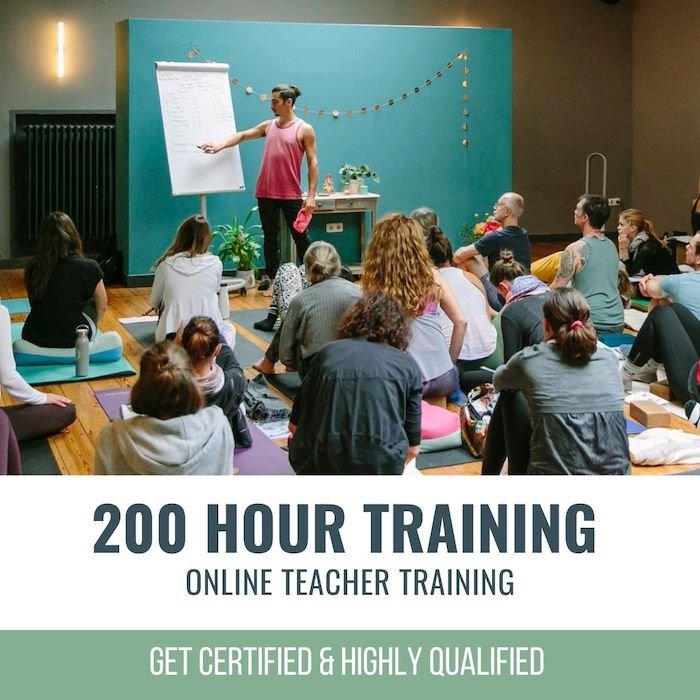
200 HOUR ONLINE TEACHER TRAINING

GET CERTIFIED & DEEPEN YOUR YOGA PRACTICE

  • Deepen your yoga practice
  • Build confidence speaking in front of groups in person and online
  • Learn foundational class structures and templates
  • Learn techniques for a wide range of yoga postures
  • Get certified and highly qualified to teach yoga
  • Yoga Alliance Globally Recognized Certification Program

CROW POSE ON BLOCKS

Now, the mechanics meet the mat. Placing the feet on blocks removes the fear of balance so we can focus purely on shoulder control. Knees squeeze in, elbows hug inward, and hips lift high. Matt emphasizes that Crow Pose shouldn’t be just a head bob from the elbows; it’s a full body integration that begins with elevation of the hips and scapular movement.
We move through retraction and protraction at the top of the shape, feeling the difference between sinking and lifting. As we lean forward, the protraction deepens, allowing the shoulders to stay stable and light. A soft cushion in front provides peace of mind, but the real support comes from the strength of the serratus anterior; it’s the engine behind the lift.
300 hour teacher training online

300 HOUR ONLINE TEACHER TRAINING

GET 500 HOUR CERTIFIED AS A MASTER TEACHER

Master your skill set as a teacher through refined techniques, anatomy, biomechanics, sequencing, philosophy, meditation techniques, theming, yoga business, and much more!

  • Get 500 hour certified
  • Learn anatomy, biomechanics, asana techniques
  • Expand your teaching skills
  • Masterful sequencing and verbal delivery
  • Learn meditation and breathwork techniques
  • Transformative tools: theming, dharma talks, satsang

PRACTICE OVER PERFECTION

Crow Pose mastery comes not from muscling through but from cultivating awareness in the shoulder stabilizers, core, and breath. Each layer, the wall drill, the Chaturanga sequence, and the block practice creates a more refined relationship between effort and control. Protraction is not a static position but an active expression of power that evolves with consistent attention.
In this “perfect protraction for Crow Pose” approach, success lies in understanding mechanics, not chasing shape. With repetition and focus, the shoulders learn to support the lift, transforming Crow Pose from something heavy to something that truly flies.

To break unhelpful patterns in the body, we need to train with intention. Matt’s upcoming online Bring the Heat immersion does just that; each practice blends mindful repetition with fire-building techniques that rewire strength, mobility, and endurance from the inside out.

The 200 Hr. Teacher Training: Click Here to See the Next Start Date

The 300 Hr. Advanced Teacher Training: Click Here to See the Next Start Date

Article by Trish Curling

Video Extracted From: Shoulder Mobility Immersion
lotus pose online yoga classes

ONLINE ANATOMY COURSE

  • Accessible, exciting, and easy to learn
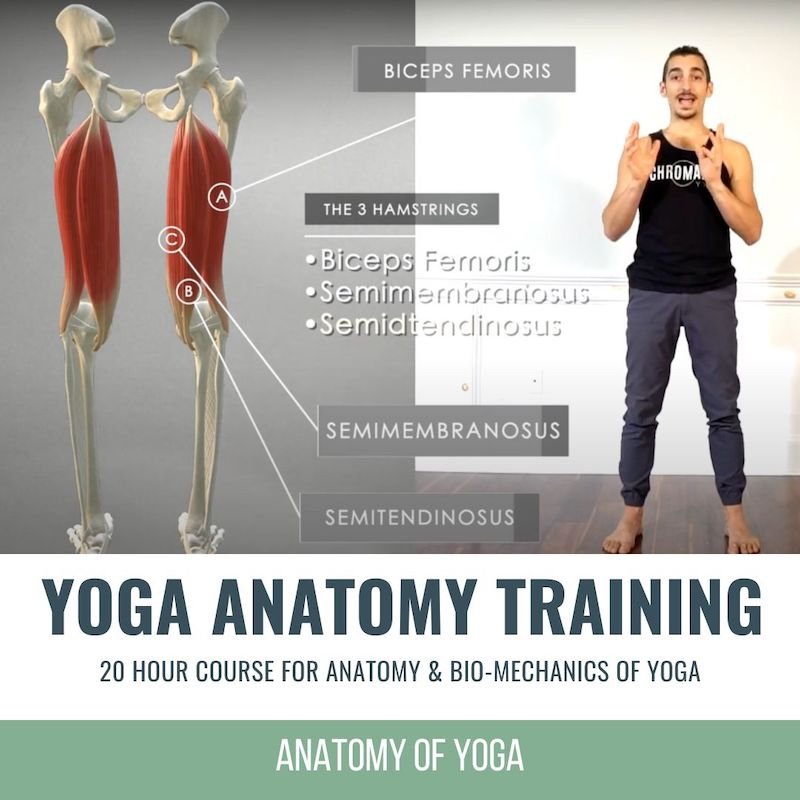
  • Anatomy and biomechanics for yoga
  • Appropriate for both teachers and students
  • Learn joint alignment vs pose alignment
  • Demystify yoga poses and transitions
  • Release aches and pains
  • Learn how to avoid common injuries
  • Caters to all levels with modifications and props
  • 20 hours Continued Education Credits with Yoga Alliance
  • 20 hours toward Chromatic Yoga Certification and 300 Hour
  • Lifetime access

Continue Learning

Eight Angle Pose

Eight Angle Pose

Eight Angle PoseASTAVAKRASANAEIGHT ANGLE POSE Sometimes we think arm balances are about getting higher, but Matt reframes Eight Angle pose as a mechanics workshop. This posture thrives when we test rotation, pelvic placement, and upper-body stability as interconnected...

read more
Approachable Arm Balances

Approachable Arm Balances

Approachable Arm BalancesPARSVA BAKASANAAPPROACHABLE ARM BALANCES Approachable arm balances aren’t about fearlessness; they’re about informed action. When we understand the mechanics behind the posture, we gain the power to shape our own outcomes. Rather than jumping...

read more
Perfect Protraction For Crow Pose

Perfect Protraction For Crow Pose

Perfect Protraction For Crow PoseBAKASANAPERFECT PROTRACTION FOR CROW POSE When working toward perfect protraction for Crow Pose, it’s essential to understand the role of the serratus anterior, the “fingertip” muscles that wrap around the rib cage and attach to the...

read more
Help For Hamstrings

Help For Hamstrings

Help For HamstringsFLEXIBILITYHELP FOR HAMSTRINGS “Yoga butt” or high hamstring tendonitis can be a literal pain where the sit bones meet the hamstrings and glutes. This area is prone to overuse injuries, especially when repetitive forward folds overstretch rather...

read more
Pelvic Floor and Groin Support

Pelvic Floor and Groin Support

Pelvic Floor & Groin SupportCOREPELVIC FLOOR AND GROIN SUPPORT Pelvic floor instability can quietly influence how we move and how safe we feel in our practice. Weakness or imbalance here may lead to groin strains, hip discomfort, or even low-back issues....

read more
Pain In The Neck

Pain In The Neck

Pain In The NeckSTABILITYPAIN IN THE NECK A pain in the neck can be more than just an annoyance.  It can ripple into the shoulders, spine, and even the jaw, creating discomfort that affects the whole body. Often, this pain stems from subtle misalignments: a chin that...

read more

THE FREE TECHNIQUE PACK

When You Subscribe, You Will Get Instant Access to

  • the Technique Pack: 15 yoga pose breakdowns
  • exclusive online course discounts
  • exclusive blogs and videos
  • This field is for validation purposes and should be left unchanged.

Crow Pose Drills

Crow Pose Drills

bakasana

CROW POSE DRILLS

If we’re attempting to balance in a posture like Crow pose, then the understanding of the way in which we balance our weight is crucial.  When we achieve this, not only will we find more confidence and comfort in executing the posture, but we’ll also be able to utilize this new knowledge and patterning to assist in the weight transfer that is imperative for a posture like Handstand.  This of course doesn’t happen overnight.  Establishing discipline and the right training ground will inform our experience.  Implementing Crow pose drills into our practice is an excellent step.  It’s not just about doing random drills we come across online or anywhere else, but it’s always about being intentional.  The Crow pose drills Matt shares come from a lifetime of dedication and research in understanding the human body (anatomy and biomechanics), and arguably more importantly, the human psyche.

chromatic yoga 15 hour immersion

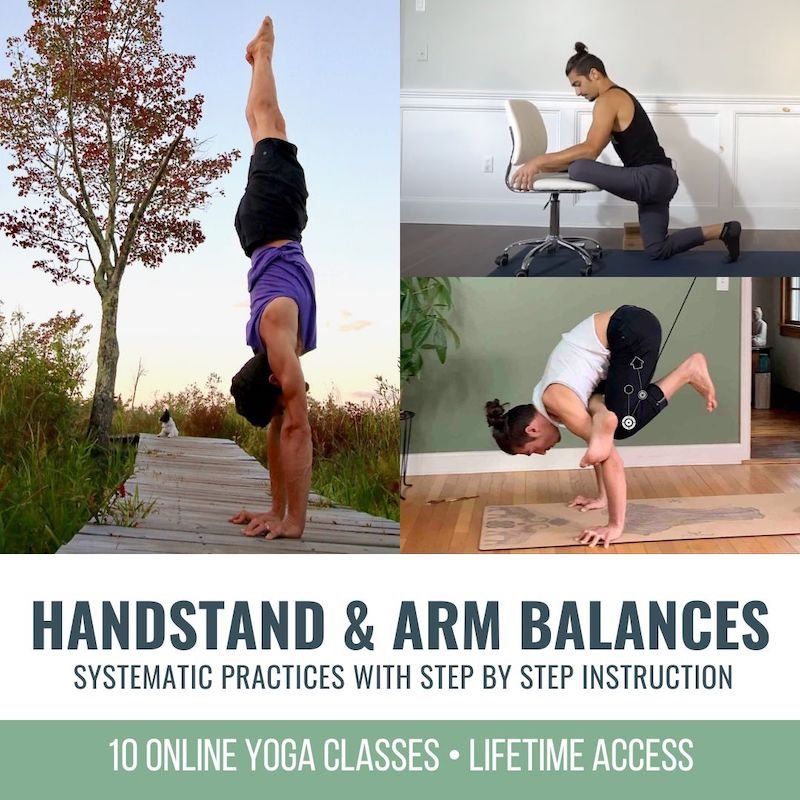
HANDSTAND AND ARM BALANCES

REGISTRATION NOW OPEN

  • 10 Chromatic Yoga practices with founder Matt Giordano
  • Full length 75 minute classes
  • Each Yoga class includes handstand drills and 1 arm balance breakdown
  • Each class includes warm ups, sun salutations, standing postures and preparatory postures for the selected arm balance of the day
  • Improve your body awareness and advance your practice
  • Technique, biomechanics, and alignment at the forefront
  • 12 Continuing Education hours with Yoga Alliance
  • 12 Accredited Hours with the Chromatic School of Yoga
  • Step-by-Step instruction for increased accessibility
  • Improve strength, balance, flexibility, and proprioception
  • Appropriate variations and modifications for all levels

HANDSTAND CROW DRILL

The first Crow pose drill Matt shares, shows us how to explore the shifting of weight, in the posture. We’re not meant to balance here.  It can be scary to think about falling in Crow if we can’t find our balance.  After the demonstration of this drill in the full class, Matt discusses how we can train ourselves psychologically to overcome our fear by actually holding ourselves back from attempting to balance.  This removes the temptation to go overboard and then ultimately end up falling, which is the very thing we fear.

That first drill is a great precursor to the second drill which is a “Handstand” Crow drill.  Again, if we’re scared to balance, it’s great because we go from the bottom up (our head on the ground and then push away).  This also serves to strengthen the flexors of the wrist, which is essential for Handstand.

WATCH THE VIDEO

CROW POSE DRILLS: THE KEYS TO BALANCING YOUR WEIGHT

LEAPFROG DRILL

Hollow Body Hops are a great building block that can be implemented as an extension from Matt’s Handstand Prep position #1.  What we improve upon here is our ability to shift our weight more into the hands and away from our feet and hips.  In fact, we pop off of the feet and start to create a longer hold of balanced weight into the hands.

Here, we place our hands more forward than we would in Handstand Prep #1.  Instead of just lifting the heels we do a slight hop off of the feet to propel ourselves more forward in order to bring the feet closer between the hands once again.

In the video Matt demonstrates how to go both forward and backwards in these hops.

200 Hour Online Teacher Training Certification

200 HOUR ONLINE TEACHER TRAINING

GET CERTIFIED & DEEPEN YOUR YOGA PRACTICE

  • Deepen your yoga practice
  • Build confidence speaking in front of groups in person and online
  • Learn foundational class structures and templates
  • Learn techniques for a wide range of yoga postures
  • Get certified and highly qualified to teach yoga
  • Yoga Alliance Globally Recognized Certification Program

START FROM THE BOTTOM

An effective way to find balance in Crow pose and to understand where the weight shift needs to occur, is to start from the bottom.  Having explored it in the previous Handstand Crow pose drill is helpful in now attempting to cultivate more control in this approach.

Matt demonstrates it in two ways.  In the first, we have the support of a cushion underneath the head and the next, we remove the cushion/bolster.  The latter of course comes with more confidence and may take some time.  One of the keys to finding our way up to balance is actively pulling the pubic bone and solar plexus together.  This will help to flex the spine to achieve the desired shape and of course will help to pull ourselves up from the headstand position into Crow.

    300 hour teacher training online

    300 HOUR ONLINE TEACHER TRAINING

    GET 500 HOUR CERTIFIED AS A MASTER TEACHER

    Master your skill set as a teacher through refined techniques, anatomy, biomechanics, sequencing, philosophy, meditation techniques, theming, yoga business, and much more!

    • Get 500 hour certified
    • Learn anatomy, biomechanics, asana techniques
    • Expand your teaching skills
    • Masterful sequencing and verbal delivery
    • Learn meditation and breathwork techniques
    • Transformative tools: theming, dharma talks, satsang

    YOUR PATH, YOUR WAY

    It’s in our nature to resist challenge, but it’s also in our nature to pursue reward and pleasure.  Now, this doesn’t necessarily mean that when we achieve arm balances like Crow pose or even Handstand that it is the only reward.  It’s the road in “pursuit” of these postures where we truly achieve reward.  When we cultivate the ability to discern what our own path is, what comes is a strong sense of accomplishment and reward.  We may never “achieve” Crow pose or Handstand, but what we achieve is a healthier sense of self.  We’ve contributed to strength in body and mind.  Within the exploration of these drills we develop strength.  The exploration formulates the path and provides direction. 

    Matt’s current online immersion Handstand and Arm Balances is the perfect step towards the achievement of our highest potential.

    The 200 Hr. Teacher Training: Click Here to See the Next Start Date

    The 300 Hr. Advanced Teacher Training: Click Here to See the Next Start Date

    Article by Trish Curling

    Video Extracted From: Handstand And Arm Balances

    lotus pose online yoga classes

    ONLINE ANATOMY COURSE

    • Accessible, exciting, and easy to learn
    • Anatomy and biomechanics for yoga
    • Appropriate for both teachers and students
    • Learn joint alignment vs pose alignment
    • Demystify yoga poses and transitions
    • Release aches and pains
    • Learn how to avoid common injuries
    • Caters to all levels with modifications and props
    • 20 hours Continued Education Credits with Yoga Alliance
    • 20 hours toward Chromatic Yoga Certification and 300 Hour
    • Lifetime access

    Continue Learning

    Eight Angle Pose

    Eight Angle Pose

    Eight Angle PoseASTAVAKRASANAEIGHT ANGLE POSE Sometimes we think arm balances are about getting higher, but Matt reframes Eight Angle pose as a mechanics workshop. This posture thrives when we test rotation, pelvic placement, and upper-body stability as interconnected...

    read more
    Approachable Arm Balances

    Approachable Arm Balances

    Approachable Arm BalancesPARSVA BAKASANAAPPROACHABLE ARM BALANCES Approachable arm balances aren’t about fearlessness; they’re about informed action. When we understand the mechanics behind the posture, we gain the power to shape our own outcomes. Rather than jumping...

    read more
    Perfect Protraction For Crow Pose

    Perfect Protraction For Crow Pose

    Perfect Protraction For Crow PoseBAKASANAPERFECT PROTRACTION FOR CROW POSE When working toward perfect protraction for Crow Pose, it’s essential to understand the role of the serratus anterior, the “fingertip” muscles that wrap around the rib cage and attach to the...

    read more
    Help For Hamstrings

    Help For Hamstrings

    Help For HamstringsFLEXIBILITYHELP FOR HAMSTRINGS “Yoga butt” or high hamstring tendonitis can be a literal pain where the sit bones meet the hamstrings and glutes. This area is prone to overuse injuries, especially when repetitive forward folds overstretch rather...

    read more
    Pelvic Floor and Groin Support

    Pelvic Floor and Groin Support

    Pelvic Floor & Groin SupportCOREPELVIC FLOOR AND GROIN SUPPORT Pelvic floor instability can quietly influence how we move and how safe we feel in our practice. Weakness or imbalance here may lead to groin strains, hip discomfort, or even low-back issues....

    read more
    Pain In The Neck

    Pain In The Neck

    Pain In The NeckSTABILITYPAIN IN THE NECK A pain in the neck can be more than just an annoyance.  It can ripple into the shoulders, spine, and even the jaw, creating discomfort that affects the whole body. Often, this pain stems from subtle misalignments: a chin that...

    read more

    THE FREE TECHNIQUE PACK

    When You Subscribe, You Will Get Instant Access to

    • the Technique Pack: 15 yoga pose breakdowns
    • exclusive online course discounts
    • exclusive blogs and videos
    • This field is for validation purposes and should be left unchanged.

    Mastering Bakasana

    Mastering Bakasana

    Crow Pose

    MASTERING BAKASANA

    We may never truly master a posture, but as we go on a journey of exploration towards our greatest potential within our asana practice, we most definitely become masters of our own awareness—cultivating the ability to discern where to go throughout the next phases of our journey, both on and off the mat.

    As we delve into a posture like Bakasana, we become aware very quickly that we must gain a sense of our proprioception in the posture. Proprioception is essentially the understanding of where our bodies are in space. Because this is not necessarily easy, investigating the posture in different planes can assist with this understanding. In addition, applying technique is the ticket to the elevation of our abilities. The marriage between technique and proprioception will help us realize our potential in Bakasana. 

    chromatic yoga 15 hour immersion

    ITALY RETREAT

    REGISTRATION NOW OPEN

    • Spa & Yoga Retreat
    • Close to the coast line and beaches
    • 2 spa days included (sauna, hot tub, Turkish bath)
    • Morning and early-evening yoga with Matt
    • Daytime free for adventures or to enjoy Ayurvedic massage and treatments
    • Connect with incredible yogis from around the world!
    • ALL LEVELS and all ages 18-85 appropriate
    • Skillfully guided experience: yoga, meditation, breathwork
    • Biomechanics and inspirational philosophy
    • Welcoming and communal group of yogis!

    MALASANA POSE POSITIONING

    In today’s video, Matt demonstrates variations of Bakasana with techniques that help prepare our bodies for this challenging arm balance. The first variation we see is in a Malasana Pose position, which is essentially Bakasana in a squatted position. As Matt always teaches, such variations take some of the complexity out of the posture and help up home in on the foundations.  

    Here, we focus on placing the knees onto the outer arms and squeezing the knees in. Now, the element that can become more difficult when we implement the balance is the necessary spinal flexion. In this Malasana position, we practice rounding the back and extending the arms into the arm balance position, being mindful to keep the forearms parallel to the ground. This is how we begin to get more comfortable with proprioception.

    WATCH THE VIDEO

    MASTERING BAKASANA: PROPRIOCEPTION & ARM BALANCE TECHNIQUES

    BAKASANA ON YOUR BACK

    Bakasana on our back begins to promote increased activation in the body. Matt teaches that the objective here is to get the head and buttocks off of the ground. We are still squeezing the inner thighs into the outer arms in order to activate the adductors.

    The benefit of practicing this variation is a better understanding of the tension and strength required for the balanced variation; Bakasana on our back is the next stepping stone in developing stability and control. As we move into the balanced variation, we rely on this strength and patterning.

    200 Hour Online Teacher Training Certification

    200 HOUR ONLINE TEACHER TRAINING

    GET CERTIFIED & DEEPEN YOUR YOGA PRACTICE

    • Deepen your yoga practice
    • Build confidence speaking in front of groups in person and online
    • Learn foundational class structures and templates
    • Learn techniques for a wide range of yoga postures
    • Get certified and highly qualified to teach yoga
    • Yoga Alliance Globally Recognized Certification Program

    GET LIGHTER

    When we start to implement the balance in Bakasana, we feel the heaviness of supporting our body weight. What we need to strive for is a lightness in the posture, which we access by starting with the foundation.  

    With the elevation of blocks under the feet, we can maneuver the body into deeper spinal flexion, with knees outside the upper arms and shoulders. Once the shape is created and we squeeze the legs in, we shift our weight forward. If we don’t have a good sense of proprioception, this is when the pose can fall apart. Matt brings our attention to shifting the weight out of our feet and into our hands. From here, we grip the hands more, which helps us feel more secure when leaning forward. This is where the lightness is achieved.

    300 hour teacher training online

    300 HOUR ONLINE TEACHER TRAINING

    GET 500 HOUR CERTIFIED AS A MASTER TEACHER

    Master your skill set as a teacher through refined techniques, anatomy, biomechanics, sequencing, philosophy, meditation techniques, theming, yoga business, and much more!

    • Get 500 hour certified
    • Learn anatomy, biomechanics, asana techniques
    • Expand your teaching skills
    • Masterful sequencing and verbal delivery
    • Learn meditation and breathwork techniques
    • Transformative tools: theming, dharma talks, satsang

    KNOW EXACTLY WHERE YOU ARE

    “Knowing exactly where we are” can be interpreted in many ways. It can easily refer to our own understanding of where we are on the journey of Bakasana, in other words, to knowing which variation we need to grasp before we move towards the next. As we progress through the course of exploration, it definitely also refers to proprioception: We need to know where we are in space in order to find the lift and lightness required for this arm balance.

    Awareness enables us to adjust and refine with greater precision. With this understanding, we embrace the journey of our practice rather than an end goal. It’s through this deepened self-awareness that we can feel the subtle shifts and adjustments that lead to progress. 

    A few spots have opened up in Matt’s 2025 Italy Retreat! Secure your spot here.

    The 200 Hr. Teacher Training: Click Here to See the Next Start Date

    The 300 Hr. Advanced Teacher Training: Click Here to See the Next Start Date

    Article by Trish Curling

    Video Extracted From: Step into the Fire Workshop

    lotus pose online yoga classes

    ONLINE ANATOMY COURSE

    • Accessible, exciting, and easy to learn
    • Anatomy and biomechanics for yoga
    • Appropriate for both teachers and students
    • Learn joint alignment vs pose alignment
    • Demystify yoga poses and transitions
    • Release aches and pains
    • Learn how to avoid common injuries
    • Caters to all levels with modifications and props
    • 20 hours Continued Education Credits with Yoga Alliance
    • 20 hours toward Chromatic Yoga Certification and 300 Hour
    • Lifetime access

    Continue Learning

    Eight Angle Pose

    Eight Angle Pose

    Eight Angle PoseASTAVAKRASANAEIGHT ANGLE POSE Sometimes we think arm balances are about getting higher, but Matt reframes Eight Angle pose as a mechanics workshop. This posture thrives when we test rotation, pelvic placement, and upper-body stability as interconnected...

    read more
    Approachable Arm Balances

    Approachable Arm Balances

    Approachable Arm BalancesPARSVA BAKASANAAPPROACHABLE ARM BALANCES Approachable arm balances aren’t about fearlessness; they’re about informed action. When we understand the mechanics behind the posture, we gain the power to shape our own outcomes. Rather than jumping...

    read more
    Perfect Protraction For Crow Pose

    Perfect Protraction For Crow Pose

    Perfect Protraction For Crow PoseBAKASANAPERFECT PROTRACTION FOR CROW POSE When working toward perfect protraction for Crow Pose, it’s essential to understand the role of the serratus anterior, the “fingertip” muscles that wrap around the rib cage and attach to the...

    read more
    Help For Hamstrings

    Help For Hamstrings

    Help For HamstringsFLEXIBILITYHELP FOR HAMSTRINGS “Yoga butt” or high hamstring tendonitis can be a literal pain where the sit bones meet the hamstrings and glutes. This area is prone to overuse injuries, especially when repetitive forward folds overstretch rather...

    read more
    Pelvic Floor and Groin Support

    Pelvic Floor and Groin Support

    Pelvic Floor & Groin SupportCOREPELVIC FLOOR AND GROIN SUPPORT Pelvic floor instability can quietly influence how we move and how safe we feel in our practice. Weakness or imbalance here may lead to groin strains, hip discomfort, or even low-back issues....

    read more
    Pain In The Neck

    Pain In The Neck

    Pain In The NeckSTABILITYPAIN IN THE NECK A pain in the neck can be more than just an annoyance.  It can ripple into the shoulders, spine, and even the jaw, creating discomfort that affects the whole body. Often, this pain stems from subtle misalignments: a chin that...

    read more

    THE FREE TECHNIQUE PACK

    When You Subscribe, You Will Get Instant Access to

    • the Technique Pack: 15 yoga pose breakdowns
    • exclusive online course discounts
    • exclusive blogs and videos
    • This field is for validation purposes and should be left unchanged.

    Arm Balance Transitions

    Arm Balance Transitions

    kakasana

    ARM BALANCE TRANSITIONS

    Arm balance postures can be challenging enough without attempting to layer on a smooth transition in and out of them. However, fluid transitions are a natural progression in our yoga practice; they also provide another way to challenge our potential and our body control between postures. In particular, the road to executing a transition in and out of Crow Pose may at first appear daunting, but when armed with the right tools, techniques, and beliefs, we quickly learn to appreciate the process itself. The education we receive from today’s video helps us incrementally break down the steps of each transition in and out of Crow Pose. This aids not only our individual practice but also in how we might guide our students if we are yoga teachers.

    chromatic yoga 15 hour immersion

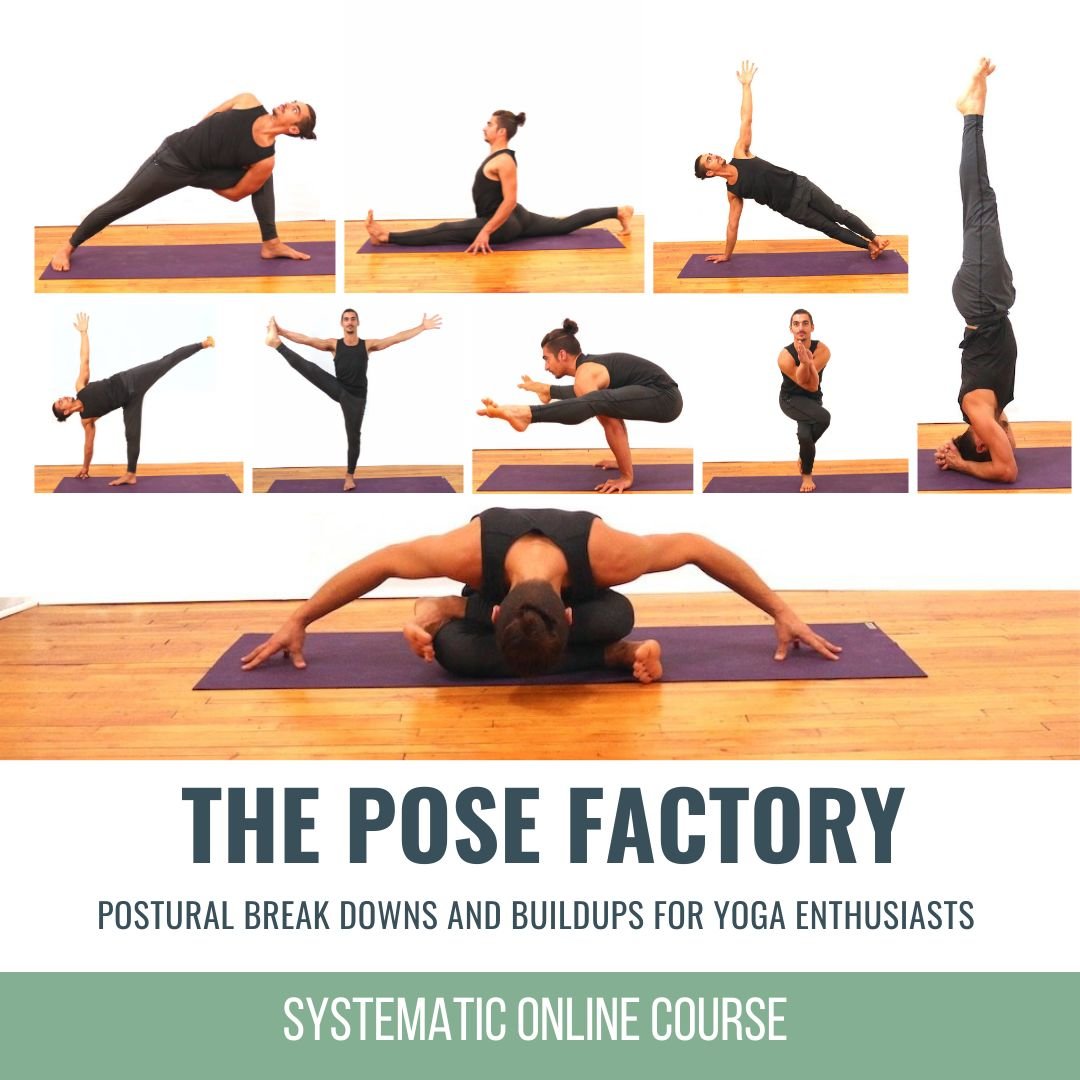
    THE POSE FACTORY

    WAITLIST NOW OPEN

    • Dogmatic alignment versus functional alignment
    • Learn popular postural pitfalls
    • Myths versus truth
    • Formulaic approach for comprehensive learning
    • Excellent guide for yoga enthusiasts
    • Must-have for yoga teachers
    • Joint-health awareness
    • Muscle integrity, range of motion
    • Props for accessibity
    • Alignment alterations in the case of injuries

    SLIDE INTO CROW

    When sliding from Plank to Crow (the first transition), we start on all fours. First, we protract the shoulder blades and round the spine. Once this is set up, we alternate by pulling each  knee towards the outside of the triceps. These actions provide a good reading of the hip flexors in order to see if we have enough range of motion. If this is limited, more strength is required.  

    After range of motion is established, we can explore further. An example would be to maintain a lift of the knees off of the ground during the drill, eventually moving the legs back further into a Plank position and finally balancing Crow.

    It’s the finer details, however, that make a large impact. Leaning forward as the legs go back and forth is imperative. In addition, activating the adductors by hugging the knees into the triceps will make Crow more accessible. 

    WATCH THE VIDEO

    ARM BALANCE TRANSITIONS : CULTIVATE PROFICIENCY IN CROW POSE SLIDES

    CROW TO CHATURANGA

    Even though the transition from Crow to Chaturanga is a “jump back,” Matt teaches us to still treat it like a slide. He demonstrates how this will encourage more control and ease. He also mentions that this transition may even be easier than the more common transition from Uttanasana to Chaturanga. This may be because the feet are already elevated (if we’re balancing Crow), so we simply straighten the legs and slide back. It makes sense then that even if we are not elevating the feet, but our bodies are in the shape of Crow with the toes pointed, we can still slide back, making the “jump back” more graceful and refined. Beyond sliding back, it is essential to keep the weight in the hands and allow the chest to go forward as the feet are gliding back.

    200 Hour Online Teacher Training Certification

    200 HOUR ONLINE TEACHER TRAINING

    GET CERTIFIED & DEEPEN YOUR YOGA PRACTICE

    • Deepen your yoga practice
    • Build confidence speaking in front of groups in person and online
    • Learn foundational class structures and templates
    • Learn techniques for a wide range of yoga postures
    • Get certified and highly qualified to teach yoga
    • Yoga Alliance Globally Recognized Certification Program

    DOWNWARD DOG, PLANK, CROW, CHATURANGA

    As it is the Chromatic way to break things down into a digestible, step-by-step approach, Matt dials back the “jump forward” transition into Crow. In this dissection, we go from Downward Dog to Plank to Crow, and then floating back to Chaturanga. One of the most important things about the Chromatic approach is our attention to the process. Exploring in this way helps us learn more about our bodies and guide our next steps. If we adopt an attitude of playfulness, we’re more inclined to stay present and release the pressure of a results-oriented attitude. To be clear, this doesn’t mean that we don’t see results; it’s just that the results may not be what we expect. For example, if we don’t balance in Crow after the transition, we are still strengthening the physical body and training the nervous system, which cultivates an imprint for transformation.

    300 hour teacher training online

    300 HOUR ONLINE TEACHER TRAINING

    GET 500 HOUR CERTIFIED AS A MASTER TEACHER

    Master your skill set as a teacher through refined techniques, anatomy, biomechanics, sequencing, philosophy, meditation techniques, theming, yoga business, and much more!

    • Get 500 hour certified
    • Learn anatomy, biomechanics, asana techniques
    • Expand your teaching skills
    • Masterful sequencing and verbal delivery
    • Learn meditation and breathwork techniques
    • Transformative tools: theming, dharma talks, satsang

    JUMP IN

    Armed with more playfulness, we offer ourselves the permission to jump into further action. We will only take this next step of exploring this transition if we already have the ability to confidently balance in Crow.  

    In this final transition, we are literally jumping into Crow straight from Downward Dog. We see in the video that we are still encouraged to take a “step back” in preparation. Matt demonstrates that this is done by shortening the distance between the feet and hands in Downward Dog and then proceeding to jump forward. Maintaining the mechanics of keeping the feet low while maintaining a “sliding” energy during the transition will help us refine our skills.

    Click here to be added to the waiting list for Matt’s next online course, The Pose Factory, if you’re interested in further refining your foundational skills.

    The 200 Hr. Teacher Training: Click Here to See the Next Start Date

    The 300 Hr. Advanced Teacher Training: Click Here to See the Next Start Date

    Article by Trish Curling

    Video Extracted From: MOVE Immersion 

    lotus pose online yoga classes

    ONLINE ANATOMY COURSE

    • Accessible, exciting, and easy to learn
    • Anatomy and biomechanics for yoga
    • Appropriate for both teachers and students
    • Learn joint alignment vs pose alignment
    • Demystify yoga poses and transitions
    • Release aches and pains
    • Learn how to avoid common injuries
    • Caters to all levels with modifications and props
    • 20 hours Continued Education Credits with Yoga Alliance
    • 20 hours toward Chromatic Yoga Certification and 300 Hour
    • Lifetime access

    Continue Learning

    Eight Angle Pose

    Eight Angle Pose

    Eight Angle PoseASTAVAKRASANAEIGHT ANGLE POSE Sometimes we think arm balances are about getting higher, but Matt reframes Eight Angle pose as a mechanics workshop. This posture thrives when we test rotation, pelvic placement, and upper-body stability as interconnected...

    read more
    Approachable Arm Balances

    Approachable Arm Balances

    Approachable Arm BalancesPARSVA BAKASANAAPPROACHABLE ARM BALANCES Approachable arm balances aren’t about fearlessness; they’re about informed action. When we understand the mechanics behind the posture, we gain the power to shape our own outcomes. Rather than jumping...

    read more
    Perfect Protraction For Crow Pose

    Perfect Protraction For Crow Pose

    Perfect Protraction For Crow PoseBAKASANAPERFECT PROTRACTION FOR CROW POSE When working toward perfect protraction for Crow Pose, it’s essential to understand the role of the serratus anterior, the “fingertip” muscles that wrap around the rib cage and attach to the...

    read more
    Help For Hamstrings

    Help For Hamstrings

    Help For HamstringsFLEXIBILITYHELP FOR HAMSTRINGS “Yoga butt” or high hamstring tendonitis can be a literal pain where the sit bones meet the hamstrings and glutes. This area is prone to overuse injuries, especially when repetitive forward folds overstretch rather...

    read more
    Pelvic Floor and Groin Support

    Pelvic Floor and Groin Support

    Pelvic Floor & Groin SupportCOREPELVIC FLOOR AND GROIN SUPPORT Pelvic floor instability can quietly influence how we move and how safe we feel in our practice. Weakness or imbalance here may lead to groin strains, hip discomfort, or even low-back issues....

    read more
    Pain In The Neck

    Pain In The Neck

    Pain In The NeckSTABILITYPAIN IN THE NECK A pain in the neck can be more than just an annoyance.  It can ripple into the shoulders, spine, and even the jaw, creating discomfort that affects the whole body. Often, this pain stems from subtle misalignments: a chin that...

    read more

    THE FREE TECHNIQUE PACK

    When You Subscribe, You Will Get Instant Access to

    • the Technique Pack: 15 yoga pose breakdowns
    • exclusive online course discounts
    • exclusive blogs and videos
    • This field is for validation purposes and should be left unchanged.

    Tripod Headstand To Crow Pose

    Tripod Headstand to Crow for Controlled Access

    inversions

    TRIPOD HEADSTAND TO CROW POSE

    When exploring an inversion like Tripod Headstand, the shoulder muscles become part of the primary focus. Tripod Headstand on its own can be challenging enough, but adding a controlled and safe transition into an arm balance like Crow Pose creates a whole new layer of understanding that must be taken into consideration. 

    The rotator cuff muscles are great stabilizers of the shoulder girdle, so activating these muscles is key in the setup for both postures. Both a deeper grasp of the biomechanics of each posture on its own and an understanding of the specific movements, particularly in the area of the shoulders, help us maintain balance when exploring how to move between the two poses. In today’s video, Matt provides the details and step-by-step cues to master the transition from Tripod Headstand to Crow Pose.

    chromatic yoga 15 hour immersion

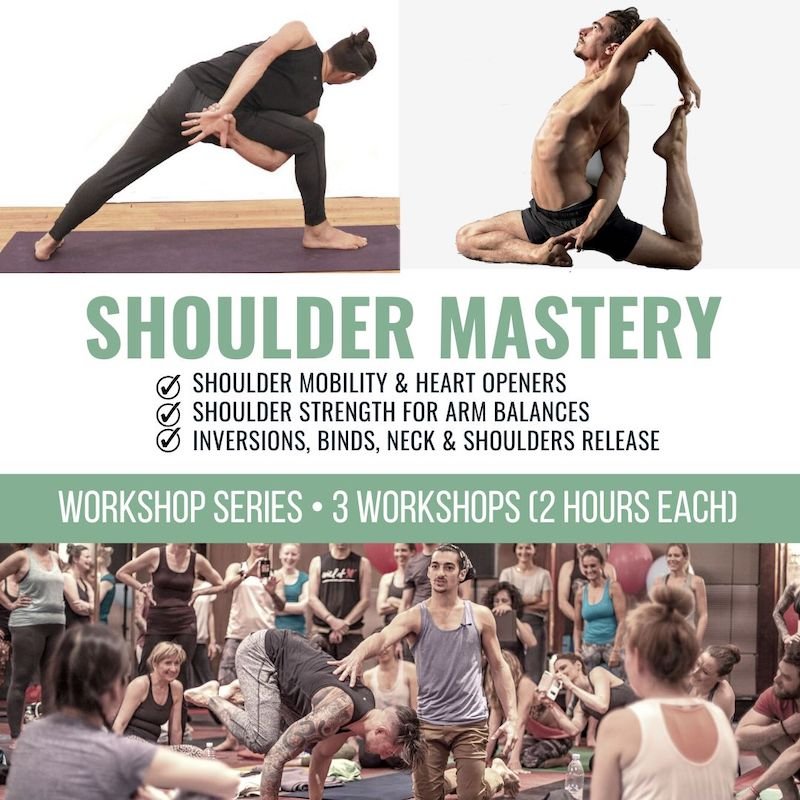
    SHOULDER MASTERY

    WORKSHOP SERIES

      •  3 livestream workshops and replays
      • Nondogmatic and effective alignment
      • Improve low-back health
      • Shoulder mobility + heart openers
      • Shoulder strength + arm balances
      • Inversions, binds, neck & shoulder release
      • 6 hours of continued education
      • Gain strength and stability
      • Increase range of motion, flexibility, and mobility
      • Step-by-step guidance: Everyone can follow and participate
      • Educationally infused: Learn while you embody
      • Livestream optional; all workshops available as livestreams (see dates below) and as on-demand replays for life
      • Automatically receive access to the replays immediately after the livestream

      THE VERY FIRST STEP

      First, it’s simply about understanding what in our bodies we need to target in order to create the required stability for the setup in Tripod Headstand. At the beginning of the video, Matt offers an explanation for why the shoulders are important and how to effectively activate the appropriate muscles. When practicing with Matt, we understand that any time the hands are making contact with our mats, particularly in an inversion or arm balance, “gripping the ground” begins to send the correct channel of energy into the rest of the body. With this understanding, we can begin to see how this action affects what’s required in the shoulders: To activate the rotator cuff muscles, we take that grip of the ground and dial it outwards. This encourages the biceps to turn outwards and the elbows to turn inwards. Once these steps are in place, we can feel the rotator cuff muscles.

      WATCH THE VIDEO

      TRIPOD HEADSTAND TO CROW POSE: SHOULDER TECHNIQUES FOR CONTROLLED  ACCESS

      TRIPOD CROW

      Before the legs go upright in Tripod Headstand, we can explore Tripod Crow, which Matt demonstrates. Although there is no wall behind him in the demonstration, he recommends using a wall in the early stages of exploration.

      Tripod Crow allows us to get comfortable with the hand and head placement. This is important because of the adjustments that are necessary regarding the neck muscles.  

      The hands are roughly shoulder-width apart, and the head is placed down just shy of an equilateral triangle. This way, when we roll onto our heads, it becomes more of that equilateral setup. From here, we switch on the rotator cuff muscles (as described above), and then instead of sending the legs all the way up, we bring the knees onto the outer arms. Sending our gaze towards the floor then turns on the rear neck muscles for additional stability.

      200 Hour Online Teacher Training Certification

      200 HOUR ONLINE TEACHER TRAINING

      GET CERTIFIED & DEEPEN YOUR YOGA PRACTICE

      • Deepen your yoga practice
      • Build confidence speaking in front of groups in person and online
      • Learn foundational class structures and templates
      • Learn techniques for a wide range of yoga postures
      • Get certified and highly qualified to teach yoga
      • Yoga Alliance Globally Recognized Certification Program

      LEAN INTO THE PROGRESSION

      In this next stage, Matt demonstrates the entry into Tripod Headstand along with how to begin transitioning into Crow Pose. First, we can add onto Tripod Crow by hugging the knees in and creating an anterior tilt of the pelvis to then send the legs upwards. The next step allows us to explore the movement towards Crow Pose with some momentum. Instead of pausing, activating, and holding Crow Pose, we can practice “sitting the bum down” on the way out of Headstand and then leaning back to move more quickly towards taking our feet to the ground. Slowly progressing with more “hang time” and a bigger push into Crow will help us master this transition. A new shoulder action is also layered on in order to press into Crow Pose.

      300 hour teacher training online

      300 HOUR ONLINE TEACHER TRAINING

      GET 500 HOUR CERTIFIED AS A MASTER TEACHER

      Master your skill set as a teacher through refined techniques, anatomy, biomechanics, sequencing, philosophy, meditation techniques, theming, yoga business, and much more!

      • Get 500 hour certified
      • Learn anatomy, biomechanics, asana techniques
      • Expand your teaching skills
      • Masterful sequencing and verbal delivery
      • Learn meditation and breathwork techniques
      • Transformative tools: theming, dharma talks, satsang

      PUT IT ALL TOGETHER

      Finally, the shoulder action that brings the final pieces of the puzzle together is the protraction of the scapulae. Once we’ve leaned back and practiced hanging in the longer balances between Tripod Headstand and the initial stages of Crow, we push the floor away, which encourages the protraction. Coupled with the external rotation of the upper arm bones, this action assists in realizing the safe, controlled access and stabilization of Crow. The shoulder actions ultimately dictate the experience we’ll have when working on this transition between the two postures. Moving from Tripod Headstand to Crow Pose requires a steadiness but also involves precise movement.  

      In Matt’s 3-part workshop, Shoulder Mastery, he broke down the vital steps for the shoulders when it comes to arm balances. In the upcoming final phase of the workshop, Matt will focus on inversions and binds. Register here for lifetime access!

      The 200 Hr. Teacher Training: Click Here to See the Next Start Date

      The 300 Hr. Advanced Teacher Training: Click Here to See the Next Start Date

      Article by Trish Curling

      Videos Extracted From: Shoulder Mastery

      lotus pose online yoga classes

      ONLINE ANATOMY COURSE

      • Accessible, exciting, and easy to learn
      • Anatomy and biomechanics for yoga
      • Appropriate for both teachers and students
      • Learn joint alignment vs pose alignment
      • Demystify yoga poses and transitions
      • Release aches and pains
      • Learn how to avoid common injuries
      • Caters to all levels with modifications and props
      • 20 hours Continued Education Credits with Yoga Alliance
      • 20 hours toward Chromatic Yoga Certification and 300 Hour
      • Lifetime access

      Continue Learning

      Eight Angle Pose

      Eight Angle Pose

      Eight Angle PoseASTAVAKRASANAEIGHT ANGLE POSE Sometimes we think arm balances are about getting higher, but Matt reframes Eight Angle pose as a mechanics workshop. This posture thrives when we test rotation, pelvic placement, and upper-body stability as interconnected...

      read more
      Approachable Arm Balances

      Approachable Arm Balances

      Approachable Arm BalancesPARSVA BAKASANAAPPROACHABLE ARM BALANCES Approachable arm balances aren’t about fearlessness; they’re about informed action. When we understand the mechanics behind the posture, we gain the power to shape our own outcomes. Rather than jumping...

      read more
      Perfect Protraction For Crow Pose

      Perfect Protraction For Crow Pose

      Perfect Protraction For Crow PoseBAKASANAPERFECT PROTRACTION FOR CROW POSE When working toward perfect protraction for Crow Pose, it’s essential to understand the role of the serratus anterior, the “fingertip” muscles that wrap around the rib cage and attach to the...

      read more
      Help For Hamstrings

      Help For Hamstrings

      Help For HamstringsFLEXIBILITYHELP FOR HAMSTRINGS “Yoga butt” or high hamstring tendonitis can be a literal pain where the sit bones meet the hamstrings and glutes. This area is prone to overuse injuries, especially when repetitive forward folds overstretch rather...

      read more
      Pelvic Floor and Groin Support

      Pelvic Floor and Groin Support

      Pelvic Floor & Groin SupportCOREPELVIC FLOOR AND GROIN SUPPORT Pelvic floor instability can quietly influence how we move and how safe we feel in our practice. Weakness or imbalance here may lead to groin strains, hip discomfort, or even low-back issues....

      read more
      Pain In The Neck

      Pain In The Neck

      Pain In The NeckSTABILITYPAIN IN THE NECK A pain in the neck can be more than just an annoyance.  It can ripple into the shoulders, spine, and even the jaw, creating discomfort that affects the whole body. Often, this pain stems from subtle misalignments: a chin that...

      read more

      THE FREE TECHNIQUE PACK

      When You Subscribe, You Will Get Instant Access to

      • the Technique Pack: 15 yoga pose breakdowns
      • exclusive online course discounts
      • exclusive blogs and videos
      • This field is for validation purposes and should be left unchanged.
      BLACK FRIDAY: 30% OFF ALL ONLINE IMMERSIONS & WORKSHOPS !
      0
      days
      0
      hours
      0
      minutes
      0
      seconds
      BLACK FRIDAY: 30% OFF ALL ONLINE IMMERSIONS & WORKSHOPS!
      0
      days
      0
      hours
      0
      minutes
      0
      seconds
      BLACK FRIDAY SALE! Congratulations, your 30% discount code has been applied and will be reflected at the bottom of the checkout page. All Immersions & Immersion Bundles are included in this sale. To get more info on each immersion click on the photo. On Demand and Lifetime Access To all
      Overlay Image
      BLACK FRIDAY SALE! Congratulations, your 30% discount code has been applied and will be reflected at the very bottom of the checkout page. All Immersions & Immersion Bundles are included in this sale. To get more info on each immersion click on the photo. On Demand and Lifetime Access To all

      Pin It on Pinterest