Hip Flexor Stretch Mechanics

Hip Flexor Stretch Mechanics

ALIGNMENT

HIP FLEXOR STRETCH MECHANICS

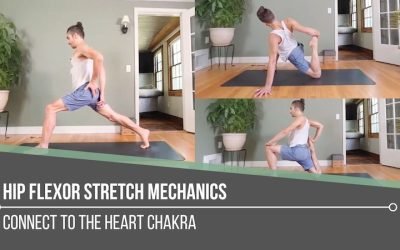
Hip flexor stretch mechanics begins with understanding that stability and length often come from opposing actions. In the first demonstration, Matt cues the back inner thigh to lift upward, which tips the pelvis slightly anterior. Against that motion, the front buttock scoops underneath. He explains that these actions seem to compete, yet they actually cooperate to organize the pelvis and protect the low back. As the back inner thigh lifts and reaches away, the front buttock gently presses down and under, while the front heel grounds into the floor. The result is a stable platform that allows the hip flexors to lengthen without collapsing the lumbar spine. When these mechanics work together, the stretch becomes more intentional and supportive rather than passive. Hip flexor stretch mechanics reminds us that thoughtful muscular engagement often unlocks the most sustainable mobility in our practice.
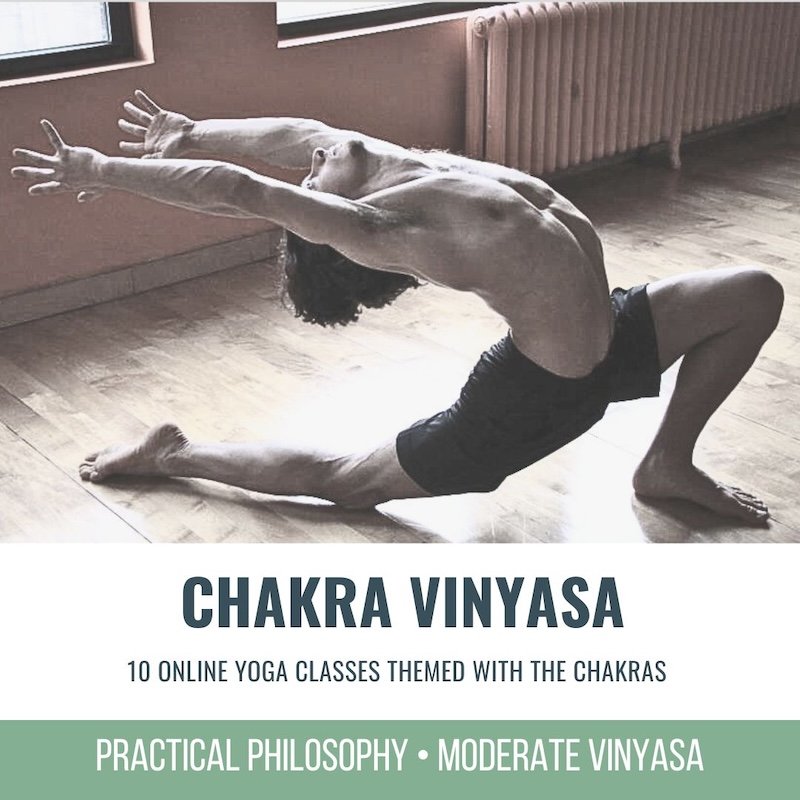
chromatic yoga 15 hour immersion

CHAKRA VINYASA

PRACTICAL PHILOSOPHY MODERATE VINYASA

  • 10 Chromatic Yoga practices with founder Matt Giordano
  • Inspirational and Practical Philosophy
  • Chakra Based Practices
  • ‘Physically Invigorating Yet Accessible
  • Breath Work for Energetic Realignment
  • Meditation for Clarity, Focus, and Grounding
  • Physically Well Rounded: All Postural Categories Will be Addressed
  • Designed as “Your Daily Yoga” 60 Minute Classes
  • Non-dogmatic, Anatomy informed Alignment
  • The Perfect Blend of Knowledge and Practice
  • Chromatic Slow Flow Style: Moderate Vinyasa Pacing Infused with Technique and Non-dogmatic Alignment
  • 10 Continuing Education hours with Yoga Alliance and American Yoga Council
  • 10 Accredited Practice Hours with the Chromatic School of Yoga
  • Step-by-Step instruction for increased accessibility
  • Sweat, Breath, Strengthen, Stretch and Feel Amazing!

TECHNIQUES IN HIGH LUNGE

In High Lunge, Matt refines these same mechanics. The back inner thigh continues to lift and reach backward while the front buttock scoops underneath to steady the pelvis. The heel presses firmly into the mat, reinforcing the length through the back leg. Once that base is organized, the arms reach upward and the chest lifts. Matt suggests gently drawing the abdomen upward, which cues the fascia to respond with a supportive lift through the front body. The low back moves slightly forward as the heart rises upward, creating space rather than compression. Hip flexor stretch mechanics becomes clearer here: the stretch deepens not because we sink further, but because the body organizes upward and outward simultaneously.

WATCH THE VIDEO

HIP FLEXOR STRETCH MECHANICS: CONNECT TO THE HEART CHAKRA

GET MORE FROM MONKEY POSE

When transitioning toward Monkey Pose, Matt keeps the same principles intact. The pelvis continues to balance between the lifting back inner thigh and the grounding action of the front leg. Even as the legs lengthen apart, the focus remains on maintaining structure rather than chasing range. By pressing through the heel and stabilizing the hips, the stretch distributes evenly through the hip flexors and hamstrings. This approach ensures the spine remains supported while the legs explore deeper length. Hip Flexor Stretch Mechanics shows that Monkey Pose becomes more productive when the pelvis remains organized and the legs maintain active participation rather than simply sliding into flexibility.
200 Hour Online Teacher Training Certification

200 HOUR ONLINE TEACHER TRAINING

GET CERTIFIED & DEEPEN YOUR YOGA PRACTICE

  • Deepen your yoga practice
  • Build confidence speaking in front of groups in person and online
  • Learn foundational class structures and templates
  • Learn techniques for a wide range of yoga postures
  • Get certified and highly qualified to teach yoga
  • Yoga Alliance Globally Recognized Certification Program

LENGTH IN ANJANEYASANA 

Length in Anjaneyasana evolves through an added thigh stretch. Matt guides us to bend the back knee and reach for the foot, gently kicking the foot into the hand to activate the quadriceps. The hand resists lightly while the foot presses back with about twenty percent effort. This creates a facilitated stretch rather than a passive pull. As the torso lifts and the abdomen opens, the quads stay engaged and the chest expands. The back knee can subtly pull forward while the foot presses backward into the hand, intensifying the hip flexor length safely. Hip Flexor Stretch Mechanics becomes clearer here: by activating both sides of the joint, the body finds more support and depth without strain.
300 hour teacher training online

300 HOUR ONLINE TEACHER TRAINING

GET 500 HOUR CERTIFIED AS A MASTER TEACHER

Master your skill set as a teacher through refined techniques, anatomy, biomechanics, sequencing, philosophy, meditation techniques, theming, yoga business, and much more!

  • Get 500 hour certified
  • Learn anatomy, biomechanics, asana techniques
  • Expand your teaching skills
  • Masterful sequencing and verbal delivery
  • Learn meditation and breathwork techniques
  • Transformative tools: theming, dharma talks, satsang

CONNECTION TO THE HEART

Connection to the Heart emerges naturally from these mechanics. Matt reminds us that the heart chakra is associated with softness, compassion, and connection beyond the individual self. In this posture, the belly remains soft while the heart lifts upward. That softness allows the front body to open without forcing the stretch. The heart chakra is often described as the bridge between the lower and upper centers of the body, connecting physical grounding with more expansive awareness. As the hip flexors lengthen and the chest opens, the posture invites a broader perspective. Instead of striving for a deeper stretch alone, the practice encourages openness and receptivity. Hip flexor stretch mechanics ultimately supports this idea: when the body organizes with balance and intention, the heart has space to rise and connect outward.

Register for Matt’s upcomiong online yoga immersion Chakra Vinyasa to unveil another layer of your practice. 

The 200 Hr. Teacher Training: Click Here to See the Next Start Date

The 300 Hr. Advanced Teacher Training: Click Here to See the Next Start Date

Article by Trish Curling

Video Extracted From: Chakras & The Elements Immersion
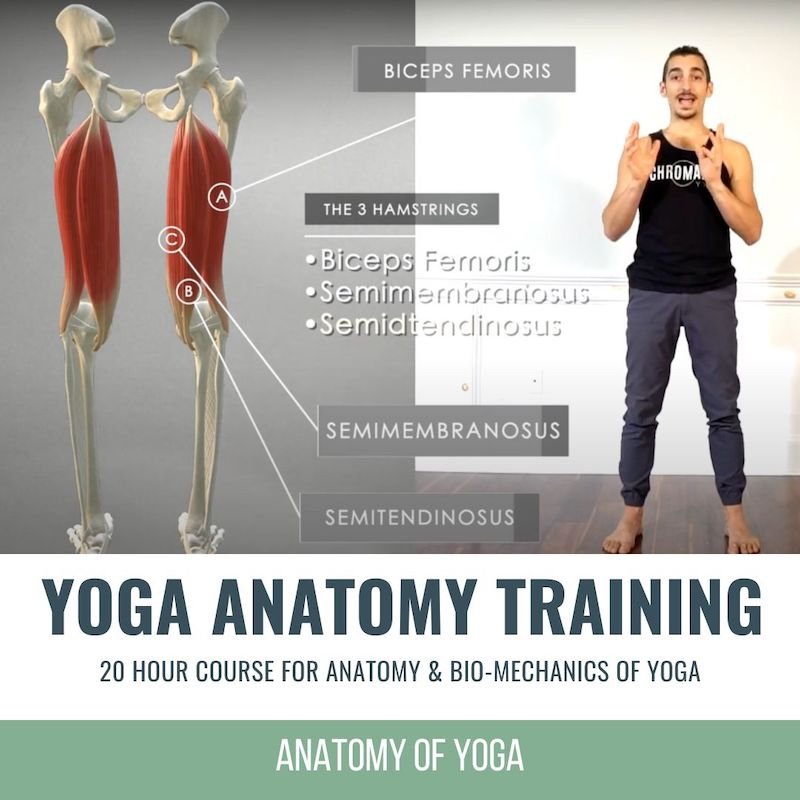
lotus pose online yoga classes

ONLINE ANATOMY COURSE

  • Accessible, exciting, and easy to learn
  • Anatomy and biomechanics for yoga
  • Appropriate for both teachers and students
  • Learn joint alignment vs pose alignment
  • Demystify yoga poses and transitions
  • Release aches and pains
  • Learn how to avoid common injuries
  • Caters to all levels with modifications and props
  • 20 hours Continued Education Credits with Yoga Alliance
  • 20 hours toward Chromatic Yoga Certification and 300 Hour
  • Lifetime access

Continue Learning

Weightless Inversions

Weightless Inversions

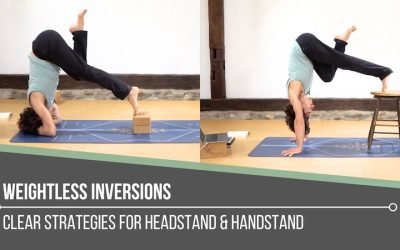
Weightless InversionssirsasanaWEIGHTLESS INVERSIONS Weightless inversions are not about removing effort. They are about redistributing it with awareness. Matt reminds us that when we refine how we place weight through the hands, shoulders, and core, the body begins to...

read more
Opening The Heart Chakra

Opening The Heart Chakra

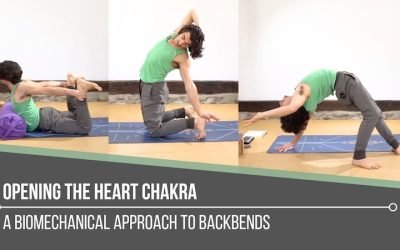
Opening The Heart ChakrabackbendOPENING THE HEART CHAKRA Opening the heart chakra is not simply about reaching deeper into a backbend. Matt reminds us that this space is rooted in love, balance, and connection, both with ourselves and with others. It reflects how we...
read more
5 Visual Demonstration Techniques for Yoga Teachers

5 Visual Demonstration Techniques for Yoga Teachers

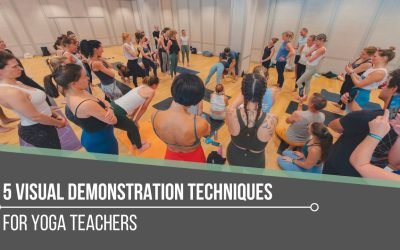
5 Visual Demonstration Techniques for Yoga TeachersYoga TeachersVisual Demonstration This is often confused with “teaching from the mat.” Teaching at the front of the room can be useful at the right time and place, but that is not what we are referring to here. In...
read more
Awakening Solar Plexus Strength

Awakening Solar Plexus Strength

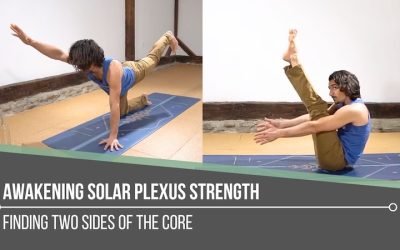
Awakening Solar Plexus Strengththird chakraAWAKENING SOLAR PLEXUS STRENGTH Awakening solar plexus strength invites us into the centre of transformation. Matt reminds us that this third chakra, Manipura, is our fire, our willpower, and our ability to take action. It...
read more
Hip Flexor Stretch Mechanics

Hip Flexor Stretch Mechanics

Hip Flexor Stretch MechanicsALIGNMENTHIP FLEXOR STRETCH MECHANICS Hip flexor stretch mechanics begins with understanding that stability and length often come from opposing actions. In the first demonstration, Matt cues the back inner thigh to lift upward, which tips...
read more
A Yoga Treatment For The Shoulders

A Yoga Treatment For The Shoulders

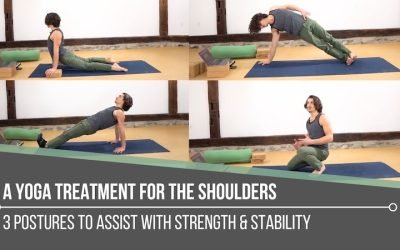
A Yoga Treatment For The ShouldersSTABILITYA YOGA TREATMENT FOR THE SHOULDERS Shoulders tend to speak up when stability is missing. Matt reminds us that building strength isn’t about aesthetics, it’s about support, resilience, and keeping the body working as one...

read more

THE FREE TECHNIQUE PACK

When You Subscribe, You Will Get Instant Access to

  • the Technique Pack: 15 yoga pose breakdowns
  • exclusive online course discounts
  • exclusive blogs and videos
  • This field is for validation purposes and should be left unchanged.

Spinal Freedom In Revolved Low Lunge

Spinal Freedom in Revolved Low Lunge

5-Part Twist Technique

anjaneyasana

REVOLVED LOW LUNGE TECHNIQUE

You’re going to multiply the benefits of twisting postures with this 5-part twist technique. There are already benefits you may knowingly and/or unknowingly receive from incorporating twist postures into your asana practice, but this is going to take it to a new level. This technique is going to show you how you can strengthen your body and be more intentional about how you execute twist postures. In today’s video, Matt breaks down this technique in Revolved Low Lunge. The technique can be applied to other twisting postures in your yoga practice, but Revolved Low Lunge is a great way to explore the technique with a solid base.

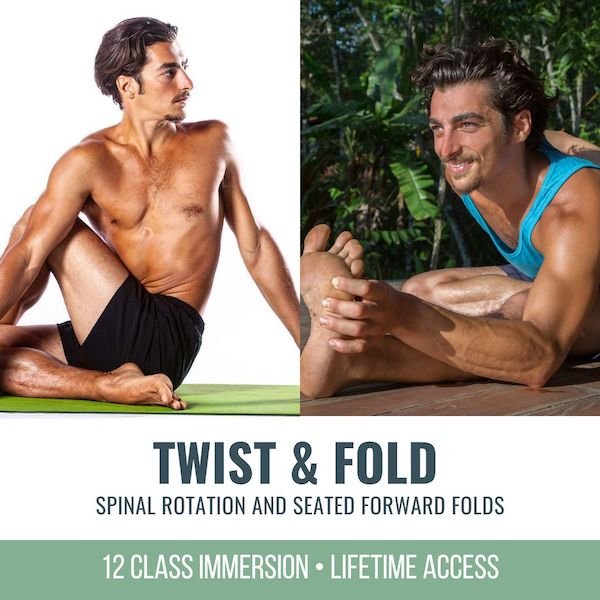
TWISTS & FOLDS

TWISTS & FOLDS

  • Strengthen core muscles of rotation and side bends
  • Improve spinal mobility
  • Improve spinal flexion for seated postures
  • Strengthen your back and deep core
  • Access greater flexibility of the hips for seated postures
  • Classes will bring you to a sweat and back down to a relaxed state
  • 12 Classes: All levels appropriate
  • Lifetime unlimited access to all
  • Attend the livestream OR practice the replays any time that's convenient for you

$168.00 $138.00

THE BENEFITS OF TWIST POSTURES

So, what are some of the benefits of twist postures? At the most basic level, there’s nothing like the “feel good” sensation they provide. Twist postures are often a nice go-to when you are experiencing tension in your back. It’s almost an intuitive response of the body to twist when we want to “get the kinks out,” so to speak. Twists also play a role in increased circulation and mobility. “Twists do affect our mobility (movement of organs in relation to each other) and our motility (movement within an organ),” which also promotes increased circulation. This is not to say that no other factors are involved, but there is a contribution. Twists are an important part of creating a more balanced asana practice.

Kaminoff, Leslie & Matthews, Amy. Yoga Anatomy, Human Kinetics, Champaign, IL 2012

WATCH THE VIDEO

SPINAL FREEDOM: 5-PART TWIST TECHNIQUE

>

SPINAL HEALTH & FREEDOM

“The spine is literally the ‘core’ of the body. It is the deepest, most centrally located structure.” David Keil, in Functional Anatomy of Yoga, goes on to explain that there is a variety of structures in the body that are directly and indirectly attached to the spine. This delineates the importance and weight that the spine carries in your body.  

In order to experience “spinal freedom,” you must have a level of both strength and fluidity in the spine. Your experience on your yoga mat always depends on your intention regarding a particular pose and/or practice. It also depends on what you know about your body. In regard to twists and the 5-part technique he utilizes in Revolved Low Lunge, Matt talks about this approach to the technique. You’ll see in the video (and read in the breakdown) that there are several muscle activations that take place. These activations can be executed to suit your body’s individual needs. Matt details that if you are hypermobile, which he talks about in the full video from which today’s clip is extracted (see below), it may be more appropriate to hold onto each activation as you continue up the ladder of steps. This will help to create more stability. If the opposite is true, then you may perform the activations one at a time, because implementing the activations one at a time helps create more movement. Whether your intention is to stabilize or to create more movement, both are necessary in order to maintain spinal health. 

Keil, David. Functional Anatomy of Yoga: A Guide to Practitioners and Teachers, Lotus Publishing, Chichester, England. 2014

200 Hour Online Teacher Training Certification

200 HOUR ONLINE TEACHER TRAINING

GET CERTIFIED & DEEPEN YOUR YOGA PRACTICE

  • Deepen your yoga practice
  • Build confidence speaking in front of groups in person and online
  • Learn foundational class structures and templates
  • Learn techniques for a wide range of yoga postures
  • Get certified and highly qualified to teach yoga
  • Yoga Alliance Globally Recognized Certification Program

MOVEMENTS OF THE SPINE

Within this twist technique, there is so much more than rotation in order to increase your body’s potential. The technique, demonstrated in Revolved Low Lunge, shows you how to create movement with the strength of the rotators of the spine and the abdominal muscles. Instead of relying on a more passive execution, using the strength and push of the rear deltoids and triceps to deepen the twist, this technique provides an opportunity to create more strength and integrity so as to support spinal stability and freedom of movement. You’ll see in Matt’s demonstration that multiple movements of the spine are implemented in order to fulfill the technique. You’ll also see a degree of axial extension (lifting and lengthening in order to activate the transversus abdominis); spinal flexion (to initiate the twist); a degree of lateral flexion on each side of the body; and lastly, spinal extension in order to create the backbend within the twist. Exploring all of these movements of the spine supports the ambition to create stability, strength, flexibility, and mobility. Let’s break down the steps of this technique in Revolved Low Lunge.

300 hour teacher training online

300 HOUR ONLINE TEACHER TRAINING

GET 500 HOUR CERTIFIED AS A MASTER TEACHER

Master your skill set as a teacher through refined techniques, anatomy, biomechanics, sequencing, philosophy, meditation techniques, theming, yoga business, and much more!

  • Get 500 hour certified
  • Learn anatomy, biomechanics, asana techniques
  • Expand your teaching skills
  • Masterful sequencing and verbal delivery
  • Learn meditation and breathwork techniques
  • Transformative tools: theming, dharma talks, satsang

5-PART TWIST TECHNIQUE

In truth, the technique can probably be broken down into 4 parts, but there’s no getting stronger or going deeper in any yoga posture without setting a foundation and becoming more aware of your breath within each step.

In the video, Matt goes through the steps multiple times to offer a focus on the technique itself, the muscle activations taking place, and the breath-pairing alongside the technique.

Steps in Revolved Low Lunge

(Left foot forward)

  1. Set the foundation—pull your knees together and pull your belly up
  2. Round the upper back and twist
  3. Side bend up to the sky (left waistline shortens)
  4. *Pause and wait, breath in, then side bend back towards the thigh (close the gap—right waistline shortens)
  5. Backbend (with option to open the arms)

Breath-Pairing Steps

  1. Take a breath in and pull the belly in and up as in Cobra; as you exhale, round the upper back and initiate the twist
  2. Inhale, side bend the left ribs up to the sky (you can also hold the side bend for some of the twist)
  3. Inhale in the side bend; on the exhale, the right-side body gets short, so side bend towards the ground
  4. Inhale backbend
  5. Twist more on the exhale

REQUIRE MORE FROM YOUR TWISTS

Approaching twists in this way offers you the opportunity to be in more control of your body, both on the mat and in your everyday functional movement and activities. Moving in this way creates more confidence. It may be more challenging to ask more from your body, but the payoff is extraordinary. Not only will you experience a deeper twist, but the sensations you are left with also reveal the strength and integrity you are creating in your body. The advantage of exploring this twist technique in Revolved Low Lunge is that you can remain closer to the ground, which removes the added balance element. You can safely delve into the technique and then later apply it to more complex twisting postures. Take the opportunity to dive deeper into the possibility of twists in Matt’s December 2022 immersion, Twists & Folds.

See you on the mat!

The 200 Hr. Teacher Training: Click Here to See the Next Start Date

The 300 Hr. Advanced Teacher Training: Click Here to See the Next Start Date

Article by Trish Curling

Video Extracted From: Spinal Awakening

UPCOMING TEACHER TRAININGS

NEXT TRAINING BEGINS FEBRUARY 2024 ENROLLMENT NOW OPEN!

Continue Learning

Weightless Inversions

Weightless Inversions

Weightless InversionssirsasanaWEIGHTLESS INVERSIONS Weightless inversions are not about removing effort. They are about redistributing it with awareness. Matt reminds us that when we refine how we place weight through the hands, shoulders, and core, the body begins to...

read more
Opening The Heart Chakra

Opening The Heart Chakra

Opening The Heart ChakrabackbendOPENING THE HEART CHAKRA Opening the heart chakra is not simply about reaching deeper into a backbend. Matt reminds us that this space is rooted in love, balance, and connection, both with ourselves and with others. It reflects how we...

read more
5 Visual Demonstration Techniques for Yoga Teachers

5 Visual Demonstration Techniques for Yoga Teachers

5 Visual Demonstration Techniques for Yoga TeachersYoga TeachersVisual Demonstration This is often confused with “teaching from the mat.” Teaching at the front of the room can be useful at the right time and place, but that is not what we are referring to here. In...

read more
Awakening Solar Plexus Strength

Awakening Solar Plexus Strength

Awakening Solar Plexus Strengththird chakraAWAKENING SOLAR PLEXUS STRENGTH Awakening solar plexus strength invites us into the centre of transformation. Matt reminds us that this third chakra, Manipura, is our fire, our willpower, and our ability to take action. It...

read more
Hip Flexor Stretch Mechanics

Hip Flexor Stretch Mechanics

Hip Flexor Stretch MechanicsALIGNMENTHIP FLEXOR STRETCH MECHANICS Hip flexor stretch mechanics begins with understanding that stability and length often come from opposing actions. In the first demonstration, Matt cues the back inner thigh to lift upward, which tips...

read more
A Yoga Treatment For The Shoulders

A Yoga Treatment For The Shoulders

A Yoga Treatment For The ShouldersSTABILITYA YOGA TREATMENT FOR THE SHOULDERS Shoulders tend to speak up when stability is missing. Matt reminds us that building strength isn’t about aesthetics, it’s about support, resilience, and keeping the body working as one...

read more

TWISTS & FOLDS

TWISTS & FOLDS

  • Strengthen core muscles of rotation and side bends
  • Improve spinal mobility
  • Improve spinal flexion for seated postures
  • Strengthen your back and deep core
  • Access greater flexibility of the hips for seated postures
  • Classes will bring you to a sweat and back down to a relaxed state
  • 12 Classes: All levels appropriate
  • Lifetime unlimited access to all
  • Attend the livestream OR practice the replays any time that's convenient for you

$168.00 $138.00

THE FREE TECHNIQUE PACK

When You Subscribe, You Will Get Instant Access to

  • the Technique Pack: 15 yoga pose breakdowns
  • exclusive online course discounts
  • exclusive blogs and videos
  • This field is for validation purposes and should be left unchanged.

Pin It on Pinterest