A Yoga Treatment For The Shoulders

A Yoga Treatment For The Shoulders

STABILITY

A YOGA TREATMENT FOR THE SHOULDERS

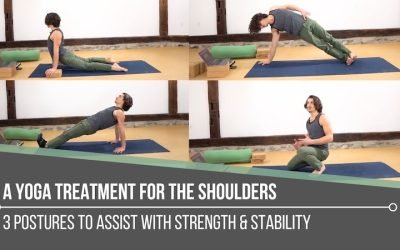
Shoulders tend to speak up when stability is missing. Matt reminds us that building strength isn’t about aesthetics, it’s about support, resilience, and keeping the body working as one integrated system. This practice becomes a yoga treatment for the shoulders by addressing vulnerability with intelligent loading and clear mechanics. What looks simple on the surface asks us to organize the back body, refine scapular placement, and strengthen the muscles that hold us upright. Reverse plank becomes our entry point, activating the rear deltoids, triceps, and upper back while teaching the shoulder heads to roll back into safer alignment. Instead of chasing stretch, we build structure.  When structure improves, health follows, because strong shoulders don’t just move better, they stabilize everything above and below them.
chromatic yoga 15 hour immersion

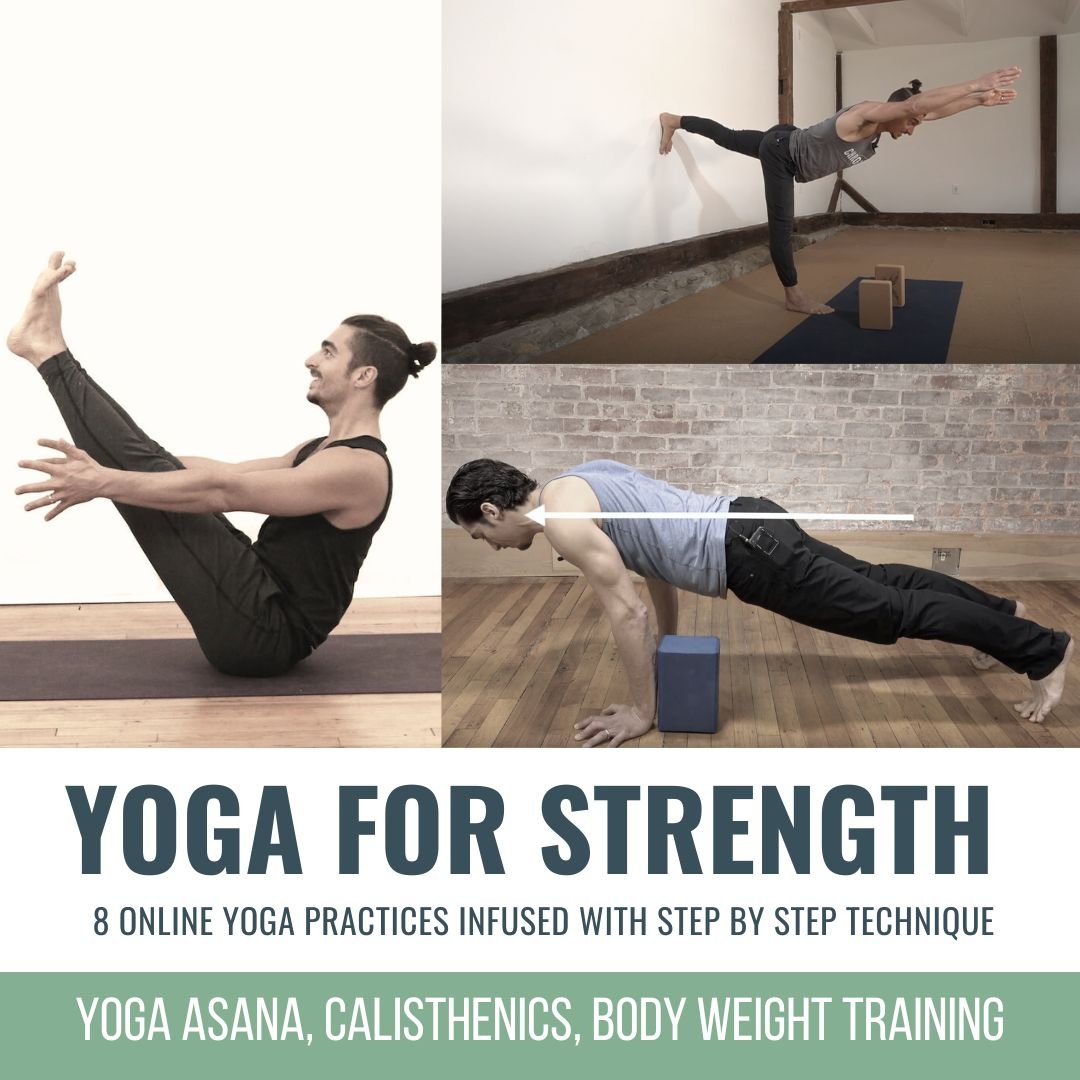
YOGA FOR STRENGTH

YOGA ASANA, CALISTHENICS,  BODY WEIGHT TRAINING

  • 8 Chromatic Yoga practices with founder Matt Giordano
  • Physically Invigorating Yet Accessible
  • Calisthenics and Body Weight Training For Improved Strength and Functionality
  • Improve Joint Integrity, Mobility, Balance, Stability, and Muscular Health
  • All Major Movement Joints
  • Designed as “Your Daily Yoga” 60 Minute Classes
  • Non-dogmatic, Anatomy informed Alignment
  • The Perfect Blend of Knowledge and Practice
  • Chromatic Slow Flow Style: Moderate Vinyasa Pacing Infused with Technique and Non-dogmatic Alignment
  • 8 Continuing Education hours with Yoga Alliance and American Yoga Council
  • 8 Accredited Practice Hours with the Chromatic School of Yoga
  • Step-by-Step instruction for increased accessibility
  • Sweat, Breath, Strengthen, Stretch and Feel Amazing!

TARGET THE REAR DELTOIDS

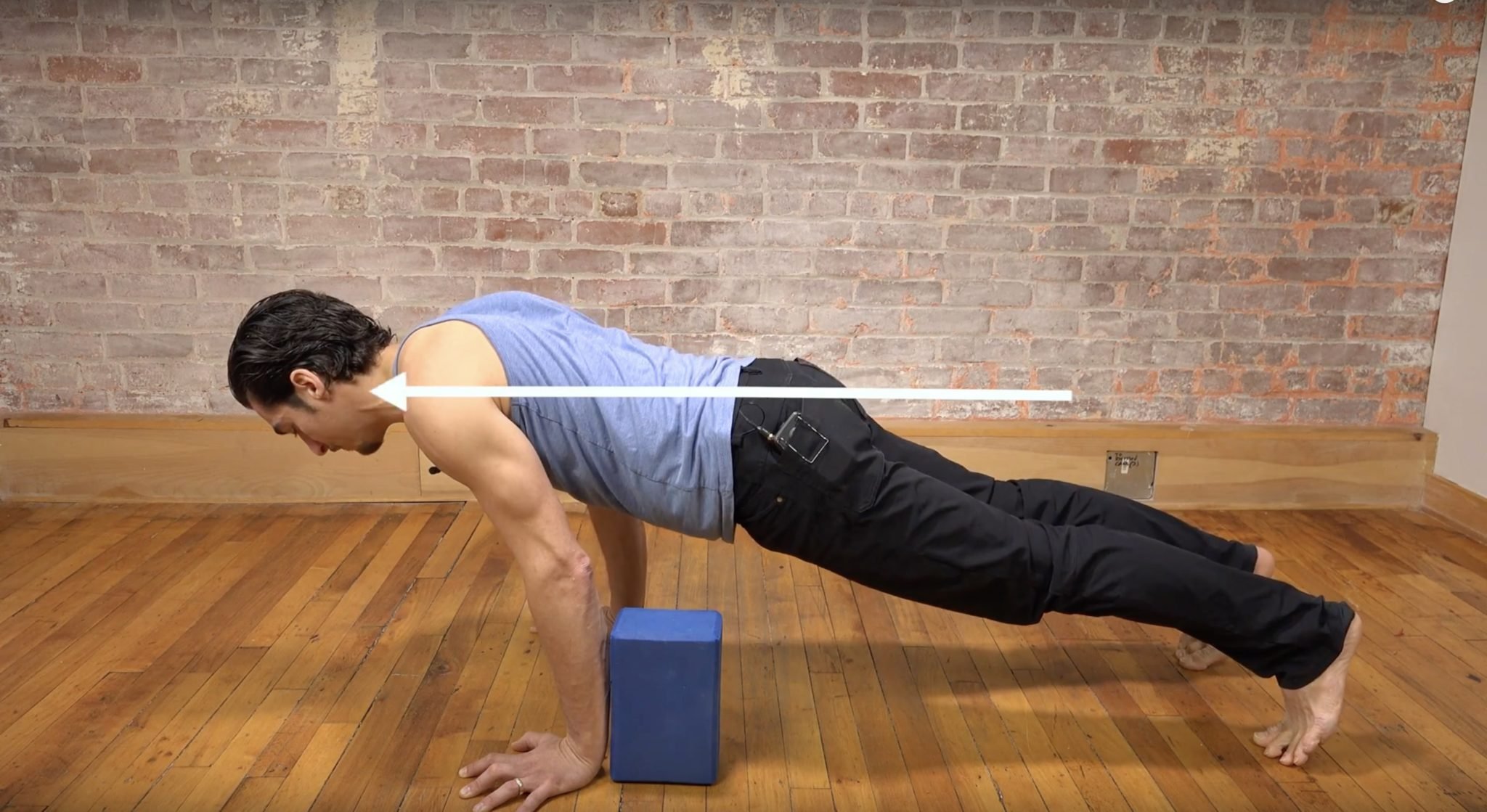
From Reverse Plank, Matt directs us to internally rotate the arms while rolling the shoulder heads back, immediately waking up the posterior shoulder fibers. Pressing the hands down and back engages the triceps and rear deltoids, creating shoulder extension while drawing the shoulder blades toward each other. This is the opposite muscle pattern of plank and that contrast is a vital tool. As hips lift, we actively retract the scapula and feel the back body participate. This portion of a yoga treatment for the shoulders teaches us how pushing backward through the arms creates support through the upper spine. It’s not passive holding, it’s intentional effort that conditions the muscles behind the shoulders to carry load, preparing us for deeper backbends and arm-supported shapes later.

WATCH THE VIDEO

A YOGA TREATMENT FOR THE SHOULDERS: 3 POSTURES TO ASSIST WITH STRENGTH & STABILITY

UPWARD FACING DOG MINI WORKSHOP

Before full Upward Dog, Matt slows everything down. Using blocks, we rehearse shoulder alignment first: shrug up, roll back, then press down through the hands while keeping the chest moving forward. That downward press lights up the posterior shoulders, triceps, and muscles between the shoulder blades. Only then do we add spinal extension. When we move into Upward Dog, knees start further forward so weight transfers clearly into the hands. Pulling the blocks back draws the chest through, lifting the heart without collapsing into the lower back. This phase of a yoga treatment for the shoulders teaches us that Upward Dog isn’t about hanging in flexibility, it’s about pressing, organizing, and letting the shoulders guide safe spinal lift.
200 Hour Online Teacher Training Certification

200 HOUR ONLINE TEACHER TRAINING

GET CERTIFIED & DEEPEN YOUR YOGA PRACTICE

  • Deepen your yoga practice
  • Build confidence speaking in front of groups in person and online
  • Learn foundational class structures and templates
  • Learn techniques for a wide range of yoga postures
  • Get certified and highly qualified to teach yoga
  • Yoga Alliance Globally Recognized Certification Program

ISOMETRIC ROTATIONS

Side plank introduces opposing actions that stabilize the rotator cuff. Matt cues us to externally rotate the upper arm until the shoulder head rolls back, then internally rotate against that action without moving, creating an isometric lock. This co-contraction keeps the joint centered while we push through the hand and stack the feet. The power originates at the scapula and travels through the arm into the palm. He also reminds us to stay engaged as we exit poses, releasing effort only once weight is gone.  This is a key injury prevention habit. These isometric rotations complete a yoga treatment for the shoulders, teaching us how opposing muscle groups work together to protect the joint under load.
300 hour teacher training online

300 HOUR ONLINE TEACHER TRAINING

GET 500 HOUR CERTIFIED AS A MASTER TEACHER

Master your skill set as a teacher through refined techniques, anatomy, biomechanics, sequencing, philosophy, meditation techniques, theming, yoga business, and much more!

  • Get 500 hour certified
  • Learn anatomy, biomechanics, asana techniques
  • Expand your teaching skills
  • Masterful sequencing and verbal delivery
  • Learn meditation and breathwork techniques
  • Transformative tools: theming, dharma talks, satsang

STABILITY YOU CAN CARRY FORWARD

What ties this practice together is awareness under effort. From reverse plank to Upward Dog to side plank, Matt shows us how deliberate activation builds lasting support. Rear deltoids, triceps, rotator cuff, and scapular stabilizers all learn to share responsibility instead of leaving the shoulders vulnerable. This is why framing these actions as a yoga treatment for the shoulders works. It trains coordination, not just muscles. As Matt demonstrates each drill, we see how structure creates freedom: shoulders roll back, hearts lift, and strength becomes functional. These aren’t isolated exercises, they’re transferable skills that show up in backbends, arm balances, and everyday posture. When we move with intention, the shoulders stop compensating and start cooperating.

If you missed it, you can still access Matt’s recent online yoga immersion Yoga For Strength.  Get lifetime access here.


The 200 Hr. Teacher Training: Click Here to See the Next Start Date

The 300 Hr. Advanced Teacher Training: Click Here to See the Next Start Date

Article by Trish Curling

Video Extracted From: Yoga For Strength Immersion
lotus pose online yoga classes

ONLINE ANATOMY COURSE

  • Accessible, exciting, and easy to learn
  • Anatomy and biomechanics for yoga
  • Appropriate for both teachers and students
  • Learn joint alignment vs pose alignment
  • Demystify yoga poses and transitions
  • Release aches and pains
  • Learn how to avoid common injuries
  • Caters to all levels with modifications and props
  • 20 hours Continued Education Credits with Yoga Alliance
  • 20 hours toward Chromatic Yoga Certification and 300 Hour
  • Lifetime access

Continue Learning

A Yoga Treatment For The Shoulders

A Yoga Treatment For The Shoulders

A Yoga Treatment For The ShouldersSTABILITYA YOGA TREATMENT FOR THE SHOULDERS Shoulders tend to speak up when stability is missing. Matt reminds us that building strength isn’t about aesthetics, it’s about support, resilience, and keeping the body working as one...

read more
Reverse Tabletop Strength

Reverse Tabletop Strength

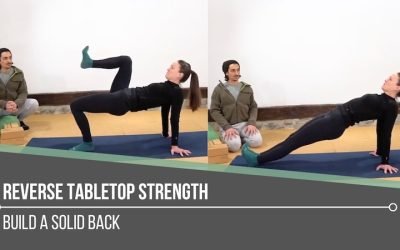
Reverse Tabletop StrengthMECHANICSREVERSE TABLETOP STRENGTH “Solid” implies strength,  yet in yoga, we can easily lose sight of how intentionally building the back body supports everything we do. Reverse Tabletop may look simple, but it asks a lot from the posterior...
read more
Focus On Eagle Pose Legs

Focus On Eagle Pose Legs

Focus On Eagle Pose LegsMECHANICSFOCUS ON EAGLE POSE LEGS When we focus on Eagle Pose legs, it’s tempting to assume the bind is a flexibility test. But this posture quietly reveals something more nuanced: timing, joint mechanics, and how efficiently the legs organize...
read more
Build Connection On The Mat

Build Connection On The Mat

Build Connection On The MatGROUNDINGBUILD CONNECTION ON THE MAT Building connection on the mat starts at the place we tend to overlook: our feet. If we only practice the “shape” of a posture, we can miss the biomechanics that change how the whole pose feels from the...
read more
Flying Revolved Half Lotus

Flying Revolved Half Lotus

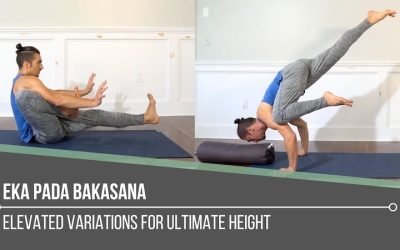
Flying Revolved Half LotusARM BALANCEFLYING REVOLVED HALF LOTUS Some postures don’t arrive through imitation; they arrive through investigation. Flying Revolved Half Lotus is one of those shapes. It borrows familiar ingredients like Side Crow mechanics, hip opening,...
read more
Eka Pada Bakasana

Eka Pada Bakasana

Eka Pada BakasanaSINGLE LEG CROWEKA PADA BAKASANA Eka Pada Bakasana asks us to balance curiosity with patience. This one-legged crow variation isn’t just about lifting a leg, it’s about organizing pressure, timing, and trust in unfamiliar territory. The posture...

read more

THE FREE TECHNIQUE PACK

When You Subscribe, You Will Get Instant Access to

  • the Technique Pack: 15 yoga pose breakdowns
  • exclusive online course discounts
  • exclusive blogs and videos
  • This field is for validation purposes and should be left unchanged.

Deep Dive Into Chaturanga

Deep Dive Into Chaturanga

Shoulder Action Controversy

shoulder stability

DEEP DIVE INTO CHATURANGA

Earlier this week, Matt posted a video on his Instagram page highlighting the shoulder blade movement that takes place in Chaturanga—moving from protraction to retraction. This can be a tricky subject, and it was cause for some discussion in the comments on that video. He goes into more detail here

When we’re taught to do something (such as the execution of a yoga posture) a certain way, it may be difficult to consider an alternative. The Chromatic yoga approach, however, is a nondogmatic one and requires that we create our own understanding through action and being open to new possibilities. There is always room for perspective. Now, Chaturanga can be a challenging posture due to the strength it requires, but in today’s video, we see a breakdown of the steps and gain insight into the anatomy in order to make informed choices in our yoga practice.

chromatic yoga 15 hour immersion

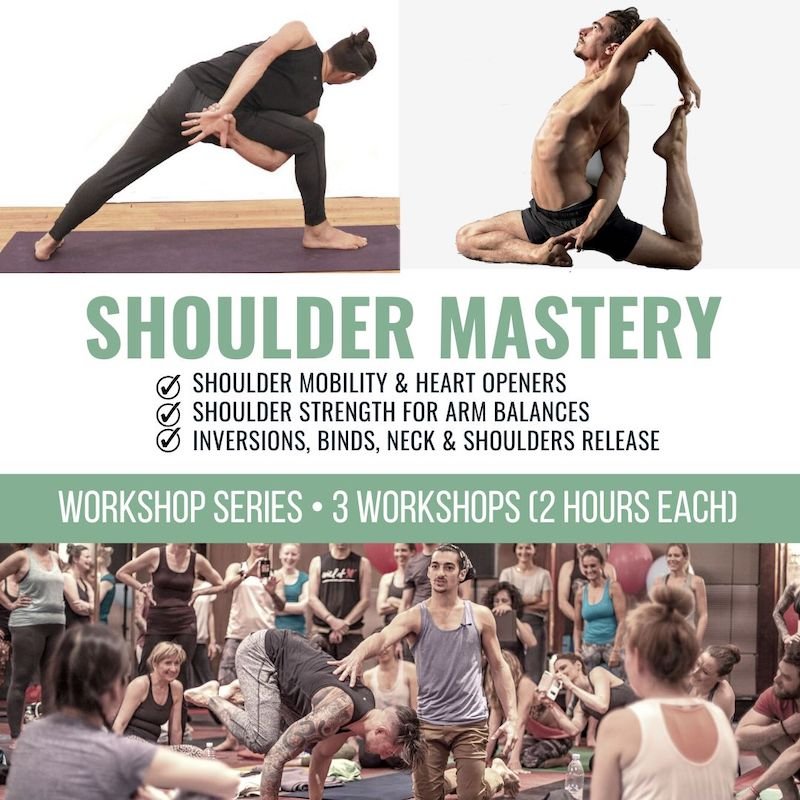
SHOULDER MASTERY

WORKSHOP SERIES

    •  3 livestream workshops and replays
    • Nondogmatic and effective alignment
    • Improve low-back health
    • Shoulder mobility + heart openers
    • Shoulder strength + arm balances
    • Inversions, binds, neck & shoulder release
    • 6 hours of continued education
    • Gain strength and stability
    • Increase range of motion, flexibility, and mobility
    • Step-by-step guidance: Everyone can follow and participate
    • Educationally infused: Learn while you embody
    • Livestream optional; all workshops available as livestreams (see dates below) and as on-demand replays for life
    • Automatically receive access to the replays immediately after the livestream

    SEQUENCING FOR THE SHOULDERS

    The intelligent sequencing offered in a Chromatic yoga class helps us prepare our bodies for optimal positioning in a given posture.

    In Chaturanga, there is a tendency for the scapulae to anterior tilt, causing the shoulders to punch forward into the anterior portion of the shoulder capsule. Over time, this can cause pain and/or increased wear and tear on the joint, not to mention the implications it may have for the neck, shoulders, back, and chest. What’s necessary is a healthy degree of external rotation. Matt demonstrates a few drills with a strap and blocks that help pattern the body in how to create the external rotation required for the pose. Why is this important? These drills teach us how to strengthen the rotator cuff muscles, which will help stabilize the shoulder joint and recruit the serratus anterior for a stronger descent in Chaturanga.

    WATCH THE VIDEO

    DEEP DIVE INTO CHATURANGA: SHOULDER ACTION CONTROVERSY

    STRAP SETUP FOR THE SHOULDERS

    These drills help us understand the foundations of the shoulder mechanics for Chaturanga.

    Pull the Strap Apart

    Here are the four key actions:

    1. Take an underhand grip of the strap.
    2. Pull the strap apart.
    3. Move the shoulder heads back.
    4. Bring the elbows in and forward.

    This drill is not static; when watching the video, we see that there is actually movement back and forth, which will help strengthen the rotator cuff muscles.

    Block in the Palm & Between the Elbow and the Body

    This drill can be done without  a block; however, the block between the body and elbow adds that extra awareness of activation and reminds to keep our elbows more narrow.

    Essentially what’s happening here are movements back and forth between the internal and external rotation of the humerus. Holding the additional block in the supinated palm of the same arm helps emphasize the required external rotation for Chaturanga.

    STRAP SETUP FOR THE SHOULDERS

    These drills help us understand the foundations of the shoulder mechanics for Chaturanga.

    Pull the Strap Apart

    Here are the four key actions:

    1. Take an underhand grip of the strap.
    2. Pull the strap apart.
    3. Move the shoulder heads back.
    4. Bring the elbows in and forward.

    This drill is not static; when watching the video, we see that there is actually movement back and forth, which will help strengthen the rotator cuff muscles.

    Block in the Palm & Between the Elbow and the Body

    This drill can be done without  a block; however, the block between the body and elbow adds that extra awareness of activation and reminds to keep our elbows more narrow.

    Essentially what’s happening here are movements back and forth between the internal and external rotation of the humerus. Holding the additional block in the supinated palm of the same arm helps emphasize the required external rotation for Chaturanga.

    200 Hour Online Teacher Training Certification

    200 HOUR ONLINE TEACHER TRAINING

    GET CERTIFIED & DEEPEN YOUR YOGA PRACTICE

    • Deepen your yoga practice
    • Build confidence speaking in front of groups in person and online
    • Learn foundational class structures and templates
    • Learn techniques for a wide range of yoga postures
    • Get certified and highly qualified to teach yoga
    • Yoga Alliance Globally Recognized Certification Program

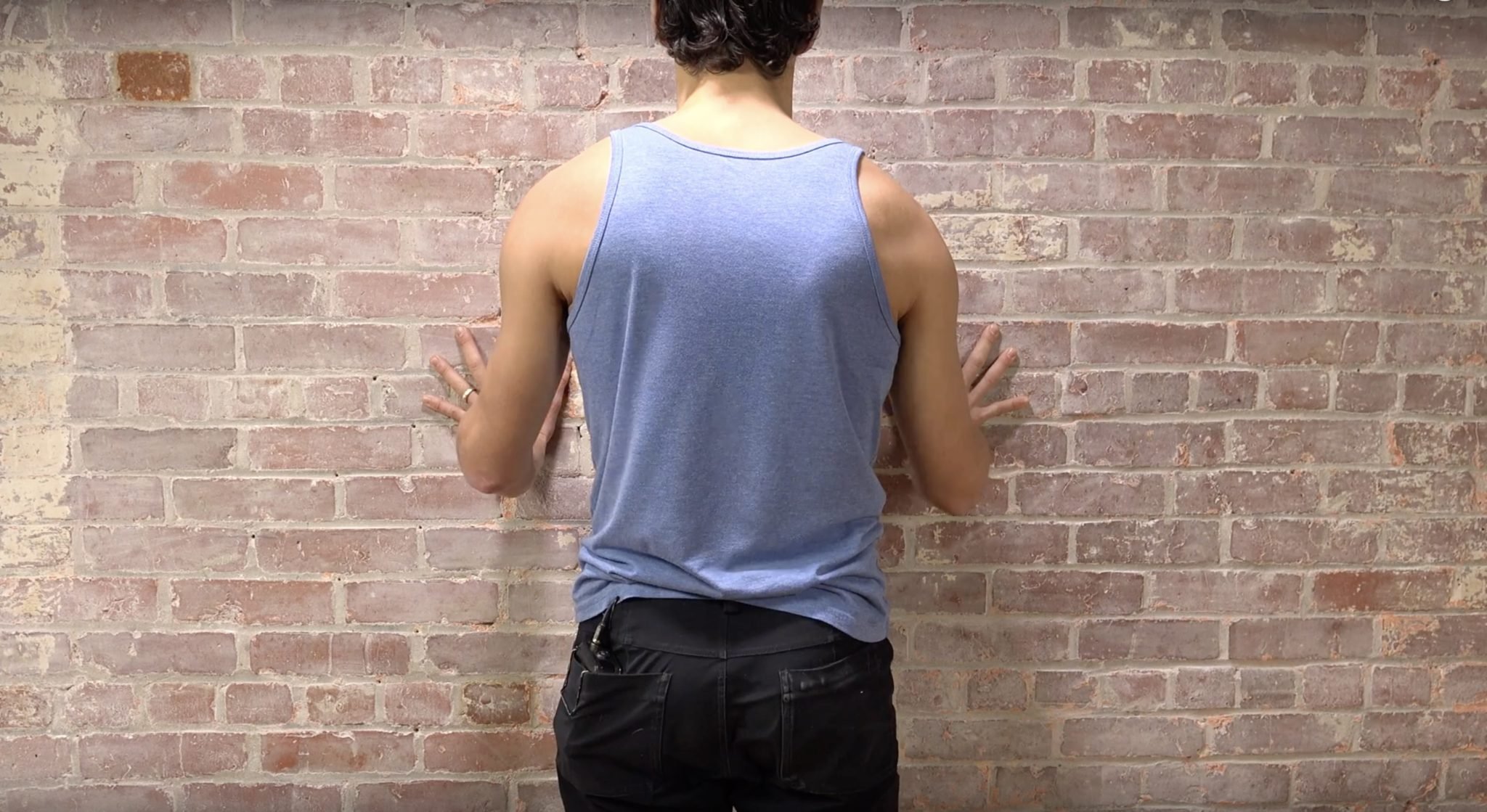
    CHATURANGA AT THE WALL

    Transitioning to Chaturanga at the wall takes us to a closer setup of what position our bodies will be in. Of course, we are perpendicular to the floor in this variation, but we can negotiate hand and shoulder placement without the strength element. Matt has shown us variations at the wall before, and they are always helpful in navigating a posture.

    One of the key points in this variation, however, is the push through the heel of the hands. This action both brings the bottom wing tip of the scapulae through the arm bone, which encourages the head of the humerus to pull back, and it helps recruit the muscles of the serratus anterior. We also gain a “band of stability” in the upper body once this is in place. Once we’ve explored here, it’s time to take Chaturanga to the mat.

    300 hour teacher training online

    300 HOUR ONLINE TEACHER TRAINING

    GET 500 HOUR CERTIFIED AS A MASTER TEACHER

    Master your skill set as a teacher through refined techniques, anatomy, biomechanics, sequencing, philosophy, meditation techniques, theming, yoga business, and much more!

    • Get 500 hour certified
    • Learn anatomy, biomechanics, asana techniques
    • Expand your teaching skills
    • Masterful sequencing and verbal delivery
    • Learn meditation and breathwork techniques
    • Transformative tools: theming, dharma talks, satsang

    WHY PROTRACTION TO RETRACTION?

    In the video, Matt demonstrates how the shoulder blades come in towards one another on the descent portion of Chaturanga. This is what might conjure up some controversy. Matt explains that we’re not just easily allowing them to come together; instead, we’re still trying to resist the retraction in the lowering phase until we’re almost at the ground level. It’s therefore a “fight” between the actions of protraction and retraction of the scapulae.

    Remember the “push through the heel of the hand”? This ignites the protraction. The goal is to allow the shoulder blades to retract at a slow pace. Too often, we find that if there is no retraction, we can fall into the anterior tilt of the scapulae more easily. If there is no movement of the scapulae, it can affect the muscles in the front and the back of the neck by causing more strain.

    ALLOW MOVEMENT TO TAKE PLACE

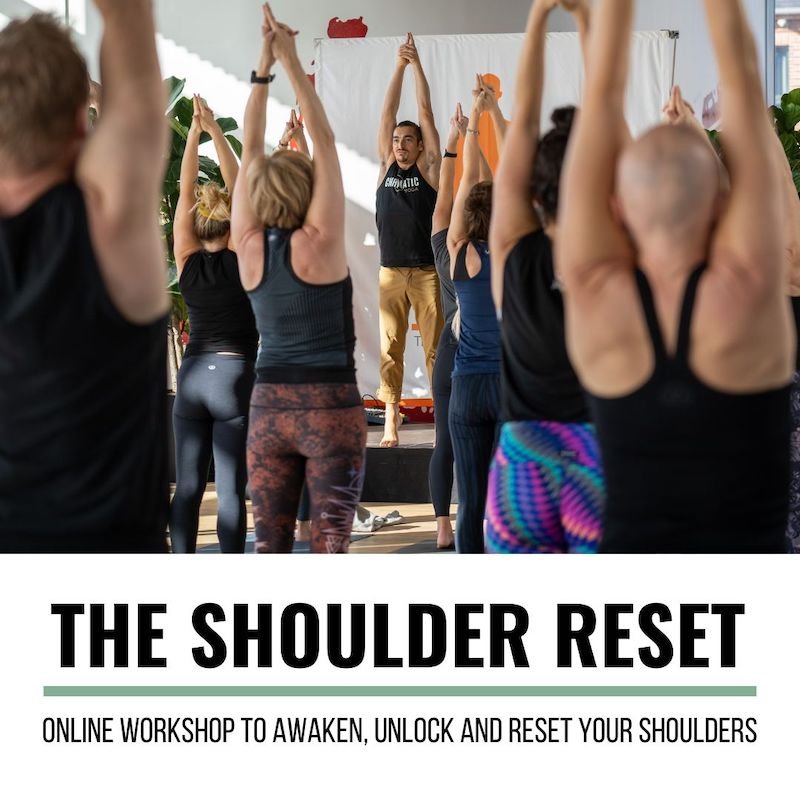
    In this full workshop (The Shoulder Reset), Matt explains that going from protraction to retraction means that we are allowing the shoulder joint to move as it was designed. We are allowing gravity to do its job. When allowing the movement from protraction to retraction to take place, we are creating an eccentric contraction, which will offer a smooth descent. It will also translate into creating lightness and ease in a jump back.

    The good news is that Matt’s offering a 3-part workshop series this month, Shoulder Mastery The education we can look forward to will have a profound effect on our yoga practice overall.  

    Part I is all about shoulder mobility and heart openers, and Part II delves into shoulder strength and arm balances. Part III tackles inversions, binds, and neck & shoulder releases.

    Click Shoulder Mastery to register.

    See you on the mat!

    The 200 Hr. Teacher Training: Click Here to See the Next Start Date

    The 300 Hr. Advanced Teacher Training: Click Here to See the Next Start Date

    Article by Trish Curling

    Videos Extracted From: The Shoulder Reset

    lotus pose online yoga classes

    ONLINE ANATOMY COURSE

    • Accessible, exciting, and easy to learn
    • Anatomy and biomechanics for yoga
    • Appropriate for both teachers and students
    • Learn joint alignment vs pose alignment
    • Demystify yoga poses and transitions
    • Release aches and pains
    • Learn how to avoid common injuries
    • Caters to all levels with modifications and props
    • 20 hours Continued Education Credits with Yoga Alliance
    • 20 hours toward Chromatic Yoga Certification and 300 Hour
    • Lifetime access

    Continue Learning

    A Yoga Treatment For The Shoulders

    A Yoga Treatment For The Shoulders

    A Yoga Treatment For The ShouldersSTABILITYA YOGA TREATMENT FOR THE SHOULDERS Shoulders tend to speak up when stability is missing. Matt reminds us that building strength isn’t about aesthetics, it’s about support, resilience, and keeping the body working as one...

    read more
    Reverse Tabletop Strength

    Reverse Tabletop Strength

    Reverse Tabletop StrengthMECHANICSREVERSE TABLETOP STRENGTH “Solid” implies strength,  yet in yoga, we can easily lose sight of how intentionally building the back body supports everything we do. Reverse Tabletop may look simple, but it asks a lot from the posterior...

    read more
    Focus On Eagle Pose Legs

    Focus On Eagle Pose Legs

    Focus On Eagle Pose LegsMECHANICSFOCUS ON EAGLE POSE LEGS When we focus on Eagle Pose legs, it’s tempting to assume the bind is a flexibility test. But this posture quietly reveals something more nuanced: timing, joint mechanics, and how efficiently the legs organize...

    read more
    Build Connection On The Mat

    Build Connection On The Mat

    Build Connection On The MatGROUNDINGBUILD CONNECTION ON THE MAT Building connection on the mat starts at the place we tend to overlook: our feet. If we only practice the “shape” of a posture, we can miss the biomechanics that change how the whole pose feels from the...

    read more
    Flying Revolved Half Lotus

    Flying Revolved Half Lotus

    Flying Revolved Half LotusARM BALANCEFLYING REVOLVED HALF LOTUS Some postures don’t arrive through imitation; they arrive through investigation. Flying Revolved Half Lotus is one of those shapes. It borrows familiar ingredients like Side Crow mechanics, hip opening,...

    read more
    Eka Pada Bakasana

    Eka Pada Bakasana

    Eka Pada BakasanaSINGLE LEG CROWEKA PADA BAKASANA Eka Pada Bakasana asks us to balance curiosity with patience. This one-legged crow variation isn’t just about lifting a leg, it’s about organizing pressure, timing, and trust in unfamiliar territory. The posture...

    read more

    THE FREE TECHNIQUE PACK

    When You Subscribe, You Will Get Instant Access to

    • the Technique Pack: 15 yoga pose breakdowns
    • exclusive online course discounts
    • exclusive blogs and videos
    • This field is for validation purposes and should be left unchanged.

    Awaken Your Rotator Cuff Muscles

    Awaken Your Rotator Cuff Muscles

    6 Exercises for a More Stable Side Plank

    BELIEF

    AWAKEN YOUR ROTATOR CUFF MUSCLES

    The rotator cuff muscles carry a great deal of responsibility. When healthy and strong, they help to keep the head of the humerus inside of the glenoid fossa, the cavity of the joint. Because it’s a ball and socket joint, the shoulder joint can be quite vulnerable, so awareness of its positioning in postures that require stability is essential. On the mat, there are many opportunities to bear weight on the shoulders, which can prove challenging if we don’t know how to stabilize in postures that require this type of support. Moreover, if we neglect to maintain activation where necessary, we miss opportunities to build strength.  

    A posture like Vashistasana, Side Plank, requires a vast amount of stability and strength. In today’s video, Matt demonstrates 6 essential exercises that help strengthen our rotator cuff muscles for maximum stability.

    chromatic yoga 15 hour immersion

    THE SHOULDER RESET

    2-HOUR LIVESTREAM WORKSHOP!

      • Technique-infused 2-hour workshop
      • Non-dogmatic alignment awareness
      • Chest/heart flexibility
      • Increase active range of motion of the shoulder
      • Learn shoulder anatomy as you practice
      • Strengthen rotator cuff for stability and shoulder health
      • Gain access to shoulder-focused postures
      • Debunk popular alignment
      • Skillfully guided sequence by the founder of Chromatic Yoga, Matt Giordano

      ROTATOR CUFF: GET IN TOUCH WITH THE ANATOMY

      There are 5 muscles in the rotator cuff group: the subscapularis, supraspinatus, infraspinatus, teres major, and teres minor. These are the muscles of internal and external rotation and of abduction.

      The subscapularis and teres major are responsible for internal rotation, while the teres minor and infraspinatus are both external rotators. The last muscle, supraspinatus, contributes to the abduction of the arms.

      When all of these muscles are co-activated, they suction and secure the head of the humerus into the shoulder socket. In the full class, Matt explains that these muscles are often stretched during our asana practice. For yoga practitioners, it’s therefore vital to create opportunities to strengthen these muscles for overall function, health, and longevity. This can be integrated into our practice on the mat, particularly if we understand the anatomy involved in performing a given exercise to strengthen the rotator cuff muscles.

      WATCH THE VIDEO

      AWAKEN YOUR ROTATOR CUFF MUSCLES: 6 EXERCISES FOR A MORE STABLE SIDE PLANK

      6 EXERCISES FOR STRENGTH

      Strengthen with a Strap

      1. Matt demonstrates ways to strengthen the infraspinatus and teres minor by pulling the strap apart into external rotation of the humerus, along with some retraction of the shoulder blades.  
      2. Adding extra rotation and resistance will uplevel the activation.

      Towel Rotations

      1. In Tabletop position, drawing circles with a towel under one hand will immediately activate the rotator cuff muscles due to the weight-bearing nature of the exercise.
      2. Here, understanding the difference between rotation at the radioulnar joint and the upper arm bone is key in connecting to the rotator cuff.

      Block Raises

      1. Supraspinatus goes to work while holding yoga blocks and abducting your arms in slight internal rotation.
      2. Pushing the blocks back behind us while hugging in will again help activate the infraspinatus and teres major and minor.

      200 Hour Online Teacher Training Certification

      200 HOUR ONLINE TEACHER TRAINING

      GET CERTIFIED & DEEPEN YOUR YOGA PRACTICE

      • Deepen your yoga practice
      • Build confidence speaking in front of groups in person and online
      • Learn foundational class structures and templates
      • Learn techniques for a wide range of yoga postures
      • Get certified and highly qualified to teach yoga
      • Yoga Alliance Globally Recognized Certification Program

      STABILIZE YOUR SIDE PLANK

      There are articulations and joint alignments that are essential in creating healthy stability in Side Plank. In this variation, Matt demonstrates Extended Side Plank, utilizing a wall as a prop. The wall creates feedback that helps us better negotiate where and how to align the wrist and shoulder and to determine the distance between the standing hand and the feet.

      In order to create stability in this posture, it’s imperative to retract the shoulder blade and externally rotate the humerus, which activates the infraspinatus and teres minor. Moving our hips (and thus more weight) towards the wall takes the shoulder away from directly stacking over the wrist, which helps to reduce the load on the shoulder joint. Once the foundation is set, expanding into the rest of the posture becomes more accessible.

      300 hour teacher training online

      300 HOUR ONLINE TEACHER TRAINING

      GET 500 HOUR CERTIFIED AS A MASTER TEACHER

      Master your skill set as a teacher through refined techniques, anatomy, biomechanics, sequencing, philosophy, meditation techniques, theming, yoga business, and much more!

      • Get 500 hour certified
      • Learn anatomy, biomechanics, asana techniques
      • Expand your teaching skills
      • Masterful sequencing and verbal delivery
      • Learn meditation and breathwork techniques
      • Transformative tools: theming, dharma talks, satsang

      AWARENESS AND FOCUS FOR STRENGTH

      If resistance bands or weights are unavailable, strengthening of the rotator cuff muscles can still take place with a variety of yoga props.

      The exercises Matt demonstrates might appear to be simple in nature, but my goodness will they be a challenge! When executed with accuracy, they exhaust the muscles, which breaks them down in order for them to renew with increased strength.  

      It’s the well-placed effort (Abhyasa) that will inform our experience and translate into larger movements and postures like (Extended) Side Plank. Yes, it’s possible to strengthen the rotator cuff muscles with a variety of different tools and exercises, but when we apply technique and focus, our true potential unfolds.  

      Register for Matt’s upcoming Shoulder Reset workshop to learn and refine techniques to create strong, healthy shoulders.

      The 200 Hr. Teacher Training: Click Here to See the Next Start Date

      The 300 Hr. Advanced Teacher Training: Click Here to See the Next Start Date

      Article by Trish Curling

      Videos Extracted From: Anatomy In Motion

      lotus pose online yoga classes

      ONLINE ANATOMY COURSE

      • Accessible, exciting, and easy to learn
      • Anatomy and biomechanics for yoga
      • Appropriate for both teachers and students
      • Learn joint alignment vs pose alignment
      • Demystify yoga poses and transitions
      • Release aches and pains
      • Learn how to avoid common injuries
      • Caters to all levels with modifications and props
      • 20 hours Continued Education Credits with Yoga Alliance
      • 20 hours toward Chromatic Yoga Certification and 300 Hour
      • Lifetime access

      Continue Learning

      A Yoga Treatment For The Shoulders

      A Yoga Treatment For The Shoulders

      A Yoga Treatment For The ShouldersSTABILITYA YOGA TREATMENT FOR THE SHOULDERS Shoulders tend to speak up when stability is missing. Matt reminds us that building strength isn’t about aesthetics, it’s about support, resilience, and keeping the body working as one...

      read more
      Reverse Tabletop Strength

      Reverse Tabletop Strength

      Reverse Tabletop StrengthMECHANICSREVERSE TABLETOP STRENGTH “Solid” implies strength,  yet in yoga, we can easily lose sight of how intentionally building the back body supports everything we do. Reverse Tabletop may look simple, but it asks a lot from the posterior...

      read more
      Focus On Eagle Pose Legs

      Focus On Eagle Pose Legs

      Focus On Eagle Pose LegsMECHANICSFOCUS ON EAGLE POSE LEGS When we focus on Eagle Pose legs, it’s tempting to assume the bind is a flexibility test. But this posture quietly reveals something more nuanced: timing, joint mechanics, and how efficiently the legs organize...

      read more
      Build Connection On The Mat

      Build Connection On The Mat

      Build Connection On The MatGROUNDINGBUILD CONNECTION ON THE MAT Building connection on the mat starts at the place we tend to overlook: our feet. If we only practice the “shape” of a posture, we can miss the biomechanics that change how the whole pose feels from the...

      read more
      Flying Revolved Half Lotus

      Flying Revolved Half Lotus

      Flying Revolved Half LotusARM BALANCEFLYING REVOLVED HALF LOTUS Some postures don’t arrive through imitation; they arrive through investigation. Flying Revolved Half Lotus is one of those shapes. It borrows familiar ingredients like Side Crow mechanics, hip opening,...

      read more
      Eka Pada Bakasana

      Eka Pada Bakasana

      Eka Pada BakasanaSINGLE LEG CROWEKA PADA BAKASANA Eka Pada Bakasana asks us to balance curiosity with patience. This one-legged crow variation isn’t just about lifting a leg, it’s about organizing pressure, timing, and trust in unfamiliar territory. The posture...

      read more

      THE FREE TECHNIQUE PACK

      When You Subscribe, You Will Get Instant Access to

      • the Technique Pack: 15 yoga pose breakdowns
      • exclusive online course discounts
      • exclusive blogs and videos
      • This field is for validation purposes and should be left unchanged.

      Crow Pose On Blocks

      Crow Pose on Blocks

      Take Your Shoulder Stability to New Heights

      STABILITY

      CROW POSE 

      It’s not unusual to have a healthy amount of fear and hesitation when it comes to finding balance in crow pose: Will I fall? Am I strong enough? Will I hurt myself? One of the most amazing things about an asana practice, however, is how we learn so much about our bodies. We learn through exploration. When you have a teacher like Matt, he not only provides inspiration to explore, but through his extensive knowledge of the body, he offers a myriad of specific actions for you to experiment with that allow you to move towards a desired result. In today’s video, Matt demonstrates the dual action for you to take for improved shoulder stability in Crow Pose. The use of yoga blocks in this variation of the pose serves as an excellent support to take your shoulder stability to new heights.

      SHOULDER MOBILITY

      Access Your Active Range of Motions

      • Increase strength and flexibility
      • Decrease risk of injury
      • Release shoulder tension
      • Learn anatomy and biomechanics
      • Access a wider range of postures
      • Stabilize the rotator cuff muscles
      • Learn binds, heart openers, and arm balances
      • 12 all-levels, 75-minute online classes
      • Lifetime unlimited access to all

      HYPERMOBILE VS. HYPOMOBILE

      Whether you are hypermobile or hypomobile, working on stability in your yoga practice is a must. What’s the difference between the two?  “Joint hypermobility is a clinical condition in which the joints move beyond the expected physiological range of motion.” When this is the case, understanding your body and knowing your individual “end range” can help you know when to pull back in order to minimize instability and possible injury. On the other hand, hypomobility means that there is a decrease and a significant limitation in the range of motion that is actually possible within a specific joint. When it comes to the shoulders, both states are common, and both have the potential to result in pain. It may seem counterintuitive to work on stability when hypomobile, because you may associate the toughness or rigidity with stability. Stability is just part of the equation when developing healthy muscle tissue, but it is an important part of the equation.  

      Atici A, Aktas I, Akpinar P, Ozkan FU. The relationship between joint hypermobility and subacromial impingement syndrome and adhesive capsulitis of the shoulder. North Clin Istanb. 2018 Sep;5(3):232-237. doi: 10.14744/nci.2017.35119. PMID: 30688930; PMCID: PMC6323568.

      WATCH THE VIDEO: CROW POSE ON BLOCKS

      SHOULDER STABILITY

      An essential part of shoulder stability happens when the muscles around the glenohumeral joint (rotator cuff muscles) have the ability to contract and help the head of the humerus (upper arm bone) stay centered and secure in the joint. Having the ability to contract means that these muscles actually have less rigidity; it means that there is a suppleness to the tissues which allows them to contract, expand, move, and glide as they should. An arm balance like Crow Pose requires a sizable amount of shoulder stability.

      200 Hour Online Teacher Training Certification

      200 HOUR ONLINE TEACHER TRAINING

      GET CERTIFIED & DEEPEN YOUR YOGA PRACTICE

      • Deepen your yoga practice
      • Build confidence speaking in front of groups in person and online
      • Learn foundational class structures and templates
      • Learn techniques for a wide range of yoga postures
      • Get certified and highly qualified to teach yoga
      • Yoga Alliance Globally Recognized Certification Program

      THE 2 MAIN ACTIONS

      The actions Matt demonstrates in the video for shoulder stability in Crow Pose are protraction and external rotation. He explains that in scapular protraction, the tendency will be to internally rotate the humerus; however, if you can externally rotate the arm bones while in protraction, it will create a vast amount of shoulder stability in your arm balances. There’s actually a counteraction taking place. The goal is to apply these two actions simultaneously. Matt teaches us that internal rotation is fine—it’s actually something we want—but in the context of this arm balance, if you counteract the protraction with external rotation, there will be a tremendous amount of muscle activation that surrounds the joints. This in turn translates into better stability and better balance.

      300 hour teacher training online

      300 HOUR ONLINE TEACHER TRAINING

      GET 500 HOUR CERTIFIED AS A MASTER TEACHER

      Master your skill set as a teacher through refined techniques, anatomy, biomechanics, sequencing, philosophy, meditation techniques, theming, yoga business, and much more!

      • Get 500 hour certified
      • Learn anatomy, biomechanics, asana techniques
      • Expand your teaching skills
      • Masterful sequencing and verbal delivery
      • Learn meditation and breathwork techniques
      • Transformative tools: theming, dharma talks, satsang

      IMPLEMENT THESE KEY ACTIONS FOR CROW POSE ON BLOCKS

      Executing Crow Pose on blocks is not as simple as only doing the 2 actions (protraction and external rotation) for the shoulders, but bringing your focus and attention here might just be what is missing from actually realizing your full potential in the posture.

      Here are the steps:

      1. Stack 2 blocks horizontally on their first height
      2. Place your hands wide on the ground, just ahead of the blocks
      3. Step onto the blocks 
      4. Lower your hips down towards your heels
      5. Take your knees wide and out to the sides (*The height of the blocks allow you to have a better handle on allowing your shins the space to rest on the upper arms for better support)
      6. Squeeze legs into the chest
      7. Get your fingers active (grip the ground)
      8. Lean forward into fingers
      9. Rotate elbows in (external rotation of the humerus)
      10.  Squeeze knees in towards your midline (activating the adductor muscles)
      11. Push the floor away to protract the scapulae more (round your back more)

      TAKEAWAYS

      What you end up finding out about your body is whether or not your proprioception is accurate: Is your physical body able to respond to the cues so as to follow through with these actions? Do you require more strength? This helps you to map out your next steps and course of action.

      A good step in the right direction is to sign up for Matt’s Shoulder Mobility immersion. In this immersion, you’ll learn more about how to strengthen key muscles of the shoulders. Matt also be teaches techniques that assist in increasing both active and passive range of motion.

      See you on the mat!

      The 200 Hr. Teacher Training: Click Here to See the Next Start Date

      The 300 Hr. Advanced Teacher Training: Click Here to See the Next Start Date

      Article by Trish Curling

      Video Extracted From: Shoulder Revelation Immersion

      UPCOMING TEACHER TRAININGS

      NEXT TRAINING BEGINS FEBRUARY 2024 ENROLLMENT NOW OPEN!
      NEXT TRAINING BEGINS FEBRUARY 2024 ENROLLMENT NOW OPEN!

      Continue Learning

      A Yoga Treatment For The Shoulders

      A Yoga Treatment For The Shoulders

      A Yoga Treatment For The ShouldersSTABILITYA YOGA TREATMENT FOR THE SHOULDERS Shoulders tend to speak up when stability is missing. Matt reminds us that building strength isn’t about aesthetics, it’s about support, resilience, and keeping the body working as one...

      read more
      Reverse Tabletop Strength

      Reverse Tabletop Strength

      Reverse Tabletop StrengthMECHANICSREVERSE TABLETOP STRENGTH “Solid” implies strength,  yet in yoga, we can easily lose sight of how intentionally building the back body supports everything we do. Reverse Tabletop may look simple, but it asks a lot from the posterior...

      read more
      Focus On Eagle Pose Legs

      Focus On Eagle Pose Legs

      Focus On Eagle Pose LegsMECHANICSFOCUS ON EAGLE POSE LEGS When we focus on Eagle Pose legs, it’s tempting to assume the bind is a flexibility test. But this posture quietly reveals something more nuanced: timing, joint mechanics, and how efficiently the legs organize...

      read more
      Build Connection On The Mat

      Build Connection On The Mat

      Build Connection On The MatGROUNDINGBUILD CONNECTION ON THE MAT Building connection on the mat starts at the place we tend to overlook: our feet. If we only practice the “shape” of a posture, we can miss the biomechanics that change how the whole pose feels from the...

      read more
      Flying Revolved Half Lotus

      Flying Revolved Half Lotus

      Flying Revolved Half LotusARM BALANCEFLYING REVOLVED HALF LOTUS Some postures don’t arrive through imitation; they arrive through investigation. Flying Revolved Half Lotus is one of those shapes. It borrows familiar ingredients like Side Crow mechanics, hip opening,...

      read more
      Eka Pada Bakasana

      Eka Pada Bakasana

      Eka Pada BakasanaSINGLE LEG CROWEKA PADA BAKASANA Eka Pada Bakasana asks us to balance curiosity with patience. This one-legged crow variation isn’t just about lifting a leg, it’s about organizing pressure, timing, and trust in unfamiliar territory. The posture...

      read more

      THE FREE TECHNIQUE PACK

      When You Subscribe, You Will Get Instant Access to

      • the Technique Pack: 15 yoga pose breakdowns
      • exclusive online course discounts
      • exclusive blogs and videos
      • This field is for validation purposes and should be left unchanged.

      Chaturanga Alignment Part 2

      Chaturanga Alignment Part 2

      3 Steps to Apply Shoulder Actions

      CHATURANGA

      CHATURANGA: Integrating Shoulder Actions

      Integrating the 3 Necessary Shoulder Actions into your practice can be complicated, so to help you I have come up with 3 Steps to Master your Chaturanga. If you haven’t yet watched Chaturanga Alignment: 3 Necessary Shoulder Actions  then it is best to start there and come back to this afterwards. The 3 step process will help you develop “Muscle Intelligence” or the awareness of how to create specific actions in your body to find less complicated positions which require less strength and give you the space to explore new sensations. If done consecutively, these steps will build the strength over time that will make chaturanga feel light and free.

      Most of us sitting at our computers are not able to get up and start practicing, but if you do have the liberty of doing so, practice along with this video. If not, then simply watch and come back to it at another time so you can practice along. This is meant to help you apply the actions, not just understand them.

      Be patient with yourself as you work through each of the exercises – techniques take time to embody.

      The Intention 

      Perhaps the most confusing thing in the yoga community is the myriad of opinions about how to do each pose. Part of the reason for this is the differences each of us have from body type, to personality, to experience. Additionally, however,  each of us offering a path has a different intention behind our set of alignment cues or muscle actions. It is for this reason that I want to be clear that this is only one approach, and I am happy to provide for you the benefits and the challenges that come with this way. This approach to Chaturanga comes with the intention to build strength in multiple forearm muscles, the seratus anterior, triceps, external rotators of the the humerus, and the pectorals major. With all of these muscles working together to build strength you will inevitably feel more stable and light in your chaturanga and jump back to chaturanga, and also you will be well prepared for arm balances. If you have no intention of building strength in your upper body or practicing arm balances, there might be better ways of practicing Chaturanga. If you have a movement pattern that does not allow you to do protraction without upward tilt of the scapula then you might be better suited to a softer approach for a while. If you are experiencing chronic strain or compression in your wrist joints you may find leaning back in your chaturanga may be either better or worse for you. I mention this not to deter you from fully understanding and integrating this approach to chaturanga, but to help you to understand that there is never and will never be one correct approach to anything. What is good for you now may not be good for you later, and what was good for you yesterday may not be good for you today. This may be hard to grasp but if you try to keep an open mind and let yourself explore various approaches with the utmost attention to detail, you may find a greater sense of mastery in your body than you could ever find by doing one posture “the right way.” If you are ready to build strength, and/or set your self up for arm balances and jump backs, then let’s get started together!

      3 Step Integration

      When learning to integrate new muscle engagements or structural alignments into your practice, it is beneficial to simulate the shape with less stress on the muscles and joints. This usually entails changing your relationship to gravity. In the video and in the 3 steps below, I show you how to do this by doing chaturanga at the wall first, and then on your knees before trying the full posture. Doing these steps often provides a greater proficiency than simply trying it all out right away. This is because your body will always fall into its normal patterns when it’s asked to hold all your weight. We have to shake things up a bit to learn something new.

      Step 1 - Chaturanga at The Wall

      Regardless of your level, doing chaturanga at the wall and applying the three shoulder actions is huge in helping build masterful proprioception. This is the most important step in my eyes, especially since you’ll have plenty of time in class to practice step 2 and 3. Taking all the weight off of your body and just applying the actions until it is fully integrated and completely clear in both mind and body will be the best thing you can do. Mastery is not about halfway getting something, but rather nailing it down so that it will never be forgotten regardless of how long you leave the subject of study. Rock this exercise several times for several days/weeks and you will be well set up for building strength rapidly. Strength builds rapidly when our actions are precise in our body.

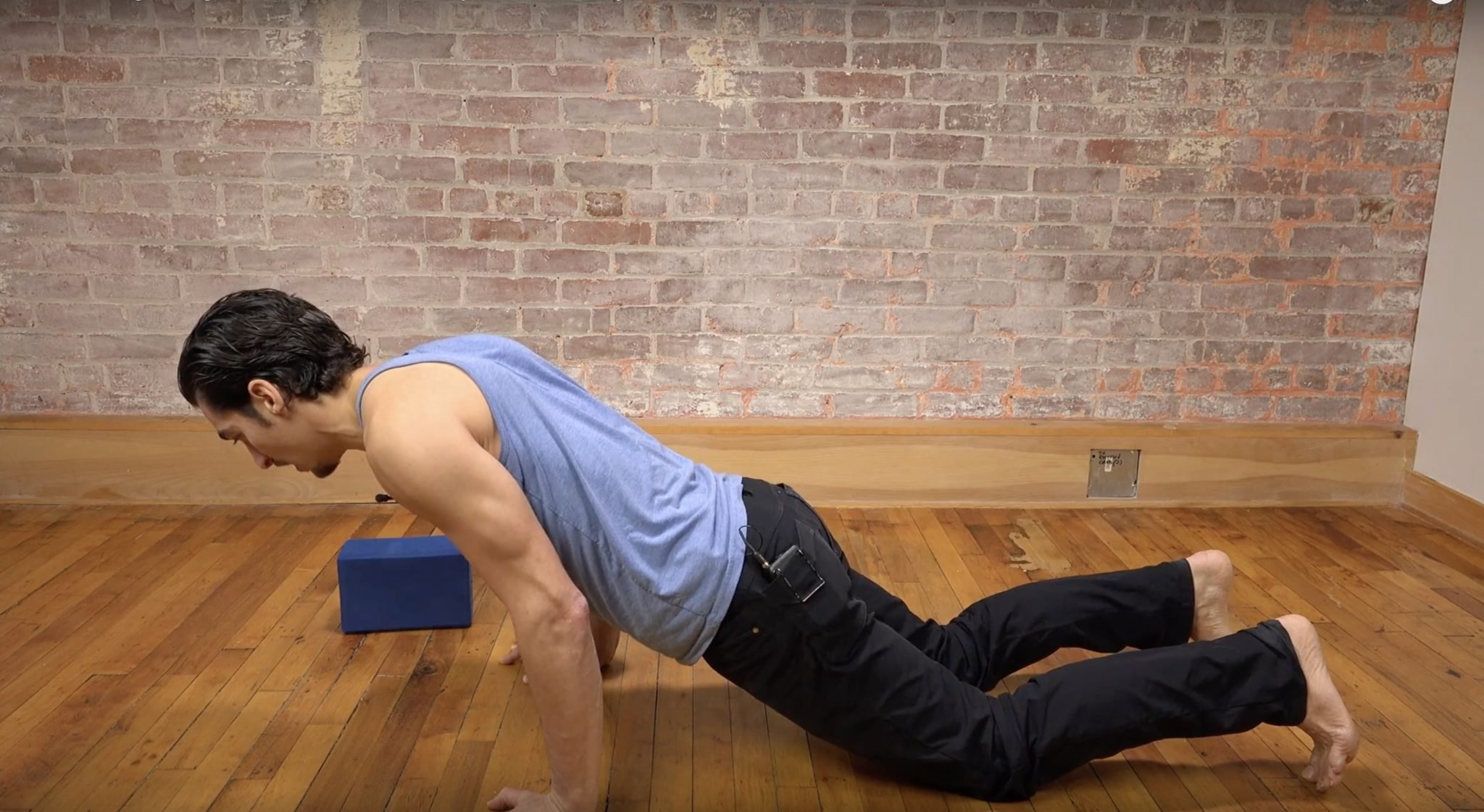
      Step 2: Chaturanga on Knees

      To be honest, when I take a vinyasa class, I do the first 5-10 chaturangas on my knees to get my body and mind linked together prior to floating back. Chaturanga on the knees is a great way to practice the actions with slightly less body weight. This is where you will begin building muscles appropriately, so be as precise and mindful as possible so you are strengthening the muscles required for the 3 shoulder actions. My best advice is start with your shoulders a little bit past the wrists to simulate the leaning forward when coming from plank. With your knees on the ground you can’t actually shift forward so you’ll have to begin by placing your knees closer to your wrists than you normally would. Second, make sure you create one long line from shoulders to knees, without breaking at the hips.

      Step 3: Plank To Chaturanga

      When attempting full chaturanga with a block, it becomes easier to compensate and “fake it” and either over engage in muscles that are not efficient for the actions, or simply getting caught up in compression – placing your bones in the way of the movement in order to slow the movement down – SEE  FIRST VIDEO when I talk about “Upward Tilt” of the scapula.

      Mastering these shoulder actions will not only make your practice of chaturanga easier and more enjoyable, but will open up a whole new world of power and strength in your arm balances.

      If you find yourself struggling to integrate the actions in this version, I highly recommend focusing on the first two options for about 3-5 months and then coming back to this.

      Complexity

      The shoulders are incredibly complex and as a result, it takes quite a lot of self-practice and study to gain any sort of mastery.  I break things down into small steps so that you are able to integrate the actions in your body more easily, however these steps are just the beginning. Let these actions settle into your body over time; rather than forcing them into every chaturanga, pick one action to focus on in your classes and first observe what you are doing before you make changes. Little by little, try to apply the action and notice what it feels like each time. This is a highly effective approach that builds patterns in the body and awareness in the mind. If you are interested in more shoulder strengtheners and stretches check out the Handstand Training. It comes with several videos that directly target the shoulders. Thank you for stopping by. Please share your comments, questions, or requests for other blog topics!

      Hips: Rock & Unlock 'Em

      Get 2 full hours with Matt Giordano focusing on the techniques that increase the range of motion in your hips and provide long lasting freedom. You will have immediate, unlimited access, and can enjoy the benefits today!

      Continue Learning

      A Yoga Treatment For The Shoulders

      A Yoga Treatment For The Shoulders

      A Yoga Treatment For The ShouldersSTABILITYA YOGA TREATMENT FOR THE SHOULDERS Shoulders tend to speak up when stability is missing. Matt reminds us that building strength isn’t about aesthetics, it’s about support, resilience, and keeping the body working as one...

      read more
      Reverse Tabletop Strength

      Reverse Tabletop Strength

      Reverse Tabletop StrengthMECHANICSREVERSE TABLETOP STRENGTH “Solid” implies strength,  yet in yoga, we can easily lose sight of how intentionally building the back body supports everything we do. Reverse Tabletop may look simple, but it asks a lot from the posterior...

      read more
      Focus On Eagle Pose Legs

      Focus On Eagle Pose Legs

      Focus On Eagle Pose LegsMECHANICSFOCUS ON EAGLE POSE LEGS When we focus on Eagle Pose legs, it’s tempting to assume the bind is a flexibility test. But this posture quietly reveals something more nuanced: timing, joint mechanics, and how efficiently the legs organize...

      read more
      Build Connection On The Mat

      Build Connection On The Mat

      Build Connection On The MatGROUNDINGBUILD CONNECTION ON THE MAT Building connection on the mat starts at the place we tend to overlook: our feet. If we only practice the “shape” of a posture, we can miss the biomechanics that change how the whole pose feels from the...

      read more
      Flying Revolved Half Lotus

      Flying Revolved Half Lotus

      Flying Revolved Half LotusARM BALANCEFLYING REVOLVED HALF LOTUS Some postures don’t arrive through imitation; they arrive through investigation. Flying Revolved Half Lotus is one of those shapes. It borrows familiar ingredients like Side Crow mechanics, hip opening,...

      read more
      Eka Pada Bakasana

      Eka Pada Bakasana

      Eka Pada BakasanaSINGLE LEG CROWEKA PADA BAKASANA Eka Pada Bakasana asks us to balance curiosity with patience. This one-legged crow variation isn’t just about lifting a leg, it’s about organizing pressure, timing, and trust in unfamiliar territory. The posture...

      read more

      TOP RECOMMENDATIONS 

      Handstand Training

      Learn the techniques that make Handstand fun, easy and accessible! This 2 part course consists of the top most effective exercises will increase your strength and technique so you can easefully balance a handstand.

      View Details

      SHOULDER REVELATION

      In this 12 class immersion  you will practice specific techniques to strengthen and unlock your shoulders. Each class focuses on a specific joint articulation and muscle group so you gain mastery in the shoulders.

      View Details

      HEART OPENERS

      Finally, a 12 class immersion designed specifically to help you discover the freedom of heart openers. Learn how to avoid uncomfortable compression, and awaken your true range of motion in a step by step manner.

      View Details

      THE FREE TECHNIQUE PACK

      When You Subscribe, You Will Get Instant Access to

      • the Technique Pack: 15 yoga pose breakdowns
      • exclusive online course discounts
      • exclusive blogs and videos
      • This field is for validation purposes and should be left unchanged.

      Pin It on Pinterest