Avoid Shoulder Impingement

Shoulder Impingement

The Yoga Cue That Could be Destroying Your Shoulders


“Relax your shoulders”

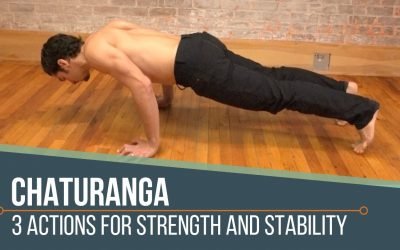
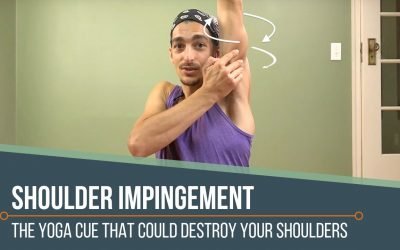
There probably isn’t a single yoga teacher out there, myself included, who hasn’t used the verbal cue “relax your shoulders away from the ears.” This cue can be totally innocent and helpful to point out unconscious patterns related to stress or posture, but it can also lead to some serious shoulder injuries when the arms are overhead. Shoulder Impingement is common amongst dedicated yogis, and many people have blamed chaturanga as the culprit. It has become more and more obvious, however, that downward dog is where most students are creating the issue. To be clear, downward dog is not the issue, it is the way in which many students do the pose that causes shoulder impingement.

When we take one arm up overhead, eventually the shoulder blade and collar bone have to lift and rotate in order to maintain space in the joint. If you pull your shoulders down while your arms go up, you are not allowing the necessary rotation that allows you to maintain space. As a result, you will cause pinching or friction in the joint space where muscles, tendons, and subacromial bursa run through. If you continue to force this action repeatedly you can expect pain or injury.

You are most likely fine in standing poses simply because you’re not likely to force your arm up high enough to create the compression or impingement. Most people unconsciously bend their elbows when they reach up with their arms in poses like tree pose or warrior one – this gives the illusion or feeling that the arms are reaching up vertically while still keeping their shoulders soft.

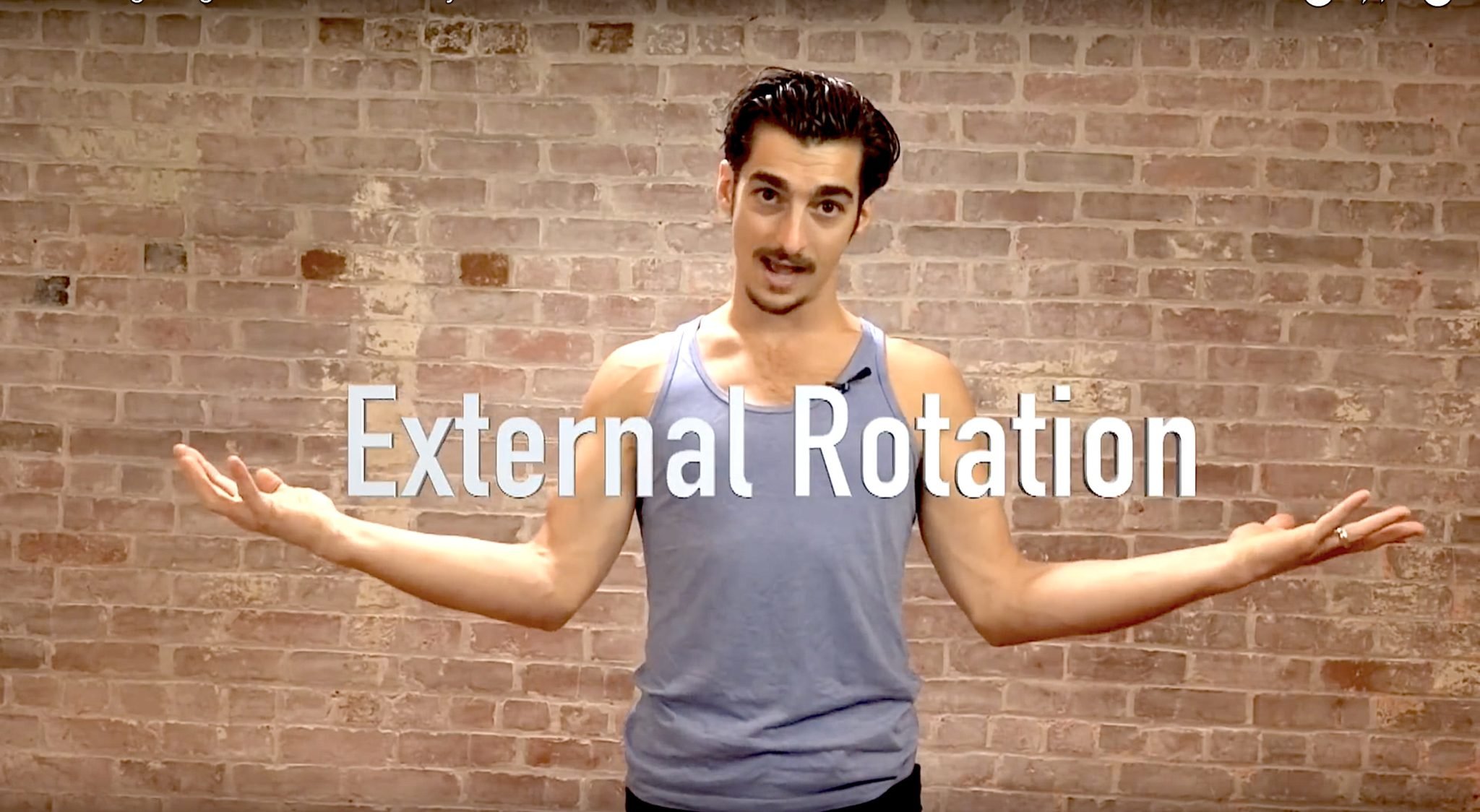
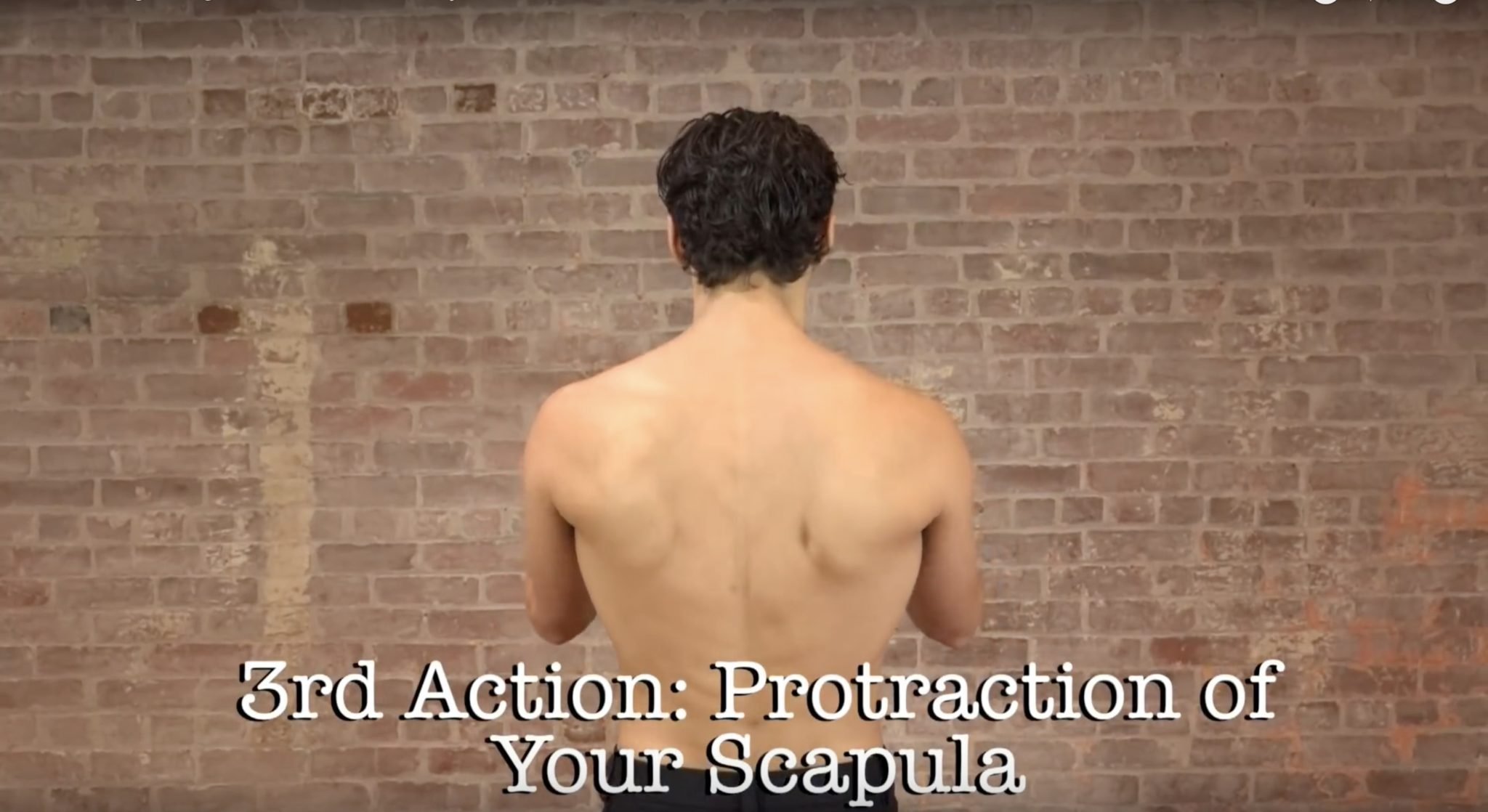
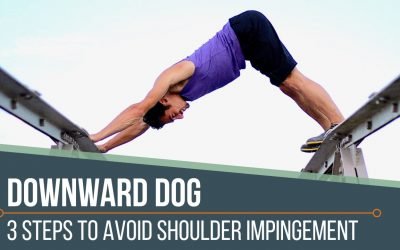
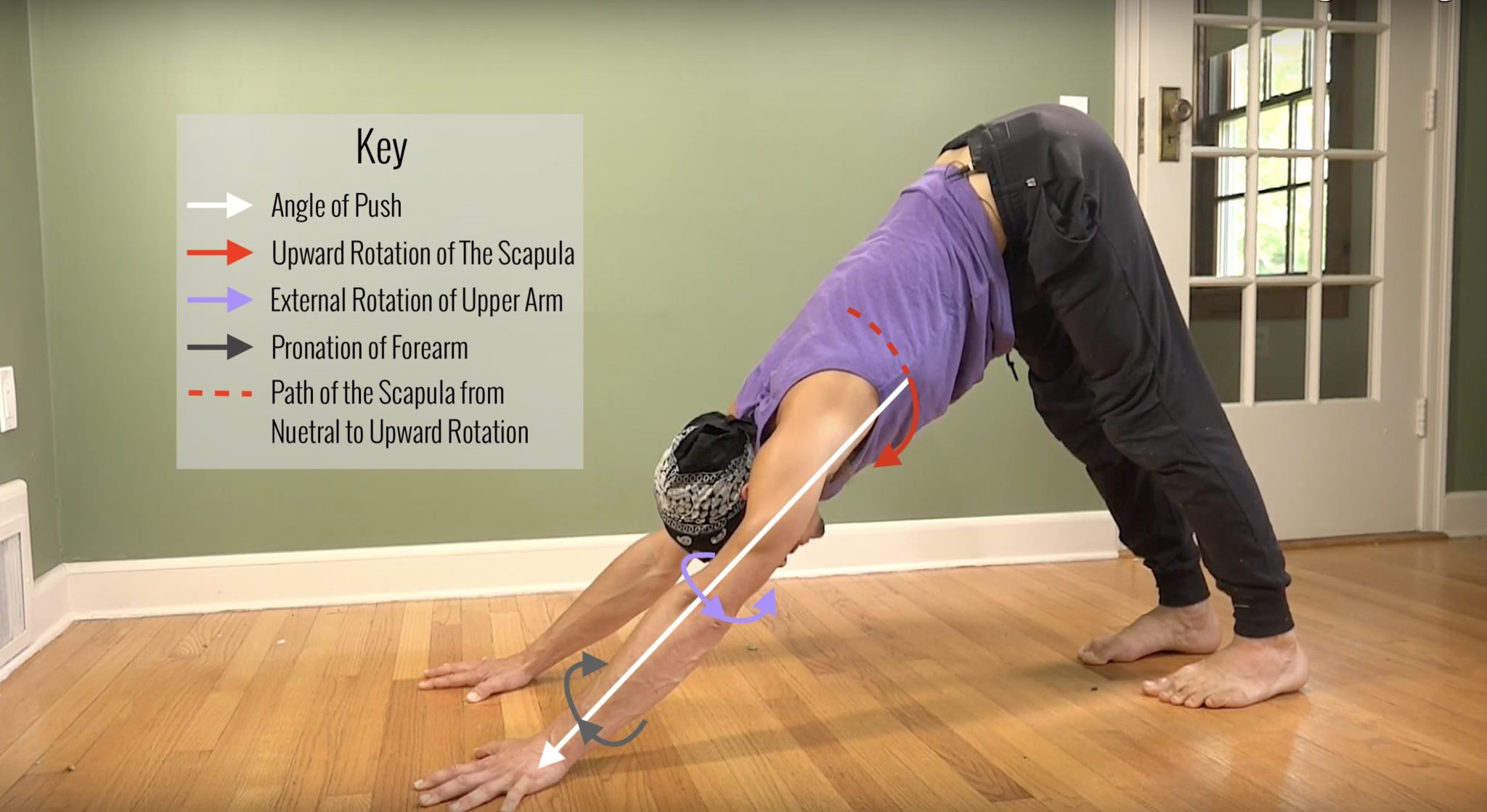
On the other hand, in poses like downward dog, the shape itself in combination with its relationship to gravity makes it challenging to maintain space in the joint unless you understand how to elevate your shoulder blades toward your ears, and protract them away from each other. These two actions in combination with external rotation of the upper arm bone (triceps/armpits turn toward face) will create upward rotation and help to maintain space in the joint. Rather than offering the cue “relax your shoulders”, many yoga teachers give an amazing hands-on adjustment that indirectly creates more space in the shoulders. If you have had your hips pushed up and back or thighs pulled back then you know the feeling, but you probably were sensationally distracted by the stretch in your hamstrings. What actually moves your hips up and back if you don’t have the assistance of your teacher is the elevation of your scapula – think shrugging your shoulders.


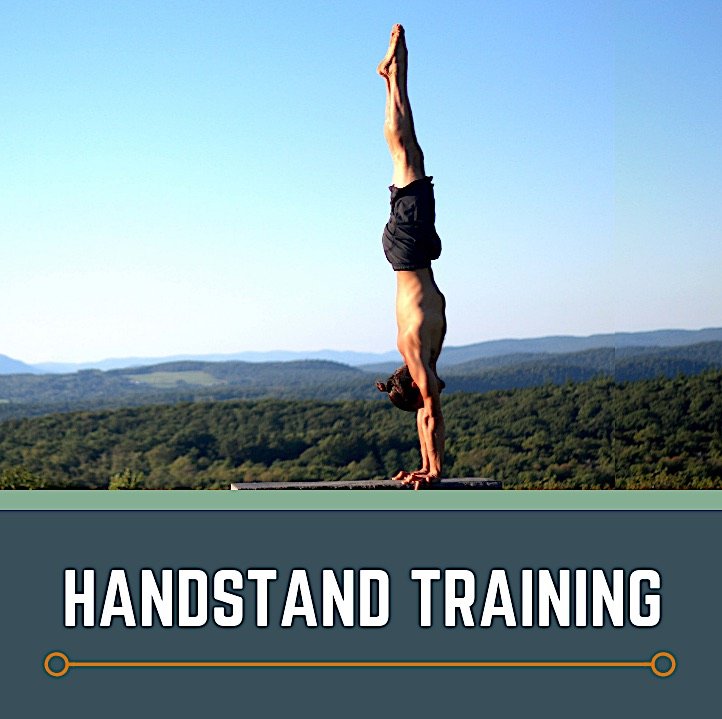
HANDSTAND TRAINING

2 PART COURSE FOR STRENGTH & BALANCE

  • Part 1: Get strong in key areas for Handstand
  • Part 2: Learn to Balance Handstand
  • Techniques, anatomy and drills to gain mastery on your hands
  • Easy to follow, step by step approach
  • Find weak points and make them your strengths
  • The most efficient & effective course to access handstand
  • Option to purchase each course separately or together

CURRENT SALE PRICE FOR BOTH

$298.00 $148.00

When you elevate and upwardly rotate your shoulder blades you will not only bypass impingement, but you will increase your range of motion. This is also the key to getting out of the banana back handstand or forearm stand. With these actions, you give yourself the opportunity to have enough range of motion or “flexibility” that allows for the arms and rib cage to be at the same angle. This is definitely easier said than done. When you are upside down and have the entire weight of your body, you have to be strong enough to elevate your scapula. Picture this, you are standing on your feet, you reach your arms up overhead and then you shrug your shoulders up toward your ears. Then your entire body weight is placed on your hands. Your shoulders would want to fall down. This is basically what it feels like to do a handstand at first. With the right exercises, you will get stronger. If you are looking for exercises to help build strength and awareness in your shoulders I highly recommend The Handstand Strength Training video, which provides amazing exercises to build strength specific to poses with arms overhead.

To sum it up, try allowing your shoulders to rise up whenever you lift your arms overhead. Watch the video above to gain a clearer understanding of these actions

So Why Have I been told to relax my shoulders?

The cue to relax your shoulders is great when we are in postures where the arms are out to the side or lower. In Warrior 2, depressing the shoulder blades down the back can be stabilizing and strengthening. Postures like chaturanga and other various arm balances are also great opportunities to work on the depression of the scapula. When the arms are overhead such as down dog, handstand, and forearm stand there is fairly great risk in pulling your shoulders down, and there is a great opportunity to develop health in the trapezius muscles when you elevate the shoulders upward. 

Other Helpful Muscle Engagements

Research also shows that activating both the biceps and triceps at the same time can actually support creating more space in the glenohumeral joint  (where the arm meets the shoulder socket). You can do this by actively pushing the arms straight, and then try to squeeze your hands toward each other like a bulldog.   It is challenging to do oppositional muscle engagements, so this takes a bit of exploring. First work on straightening the elbows and activating the triceps. When you squeeze your arms toward each other you will also get the added benefit of activating the adductor muscles which can also support more space in the shoulder joint.

Step 1 - Externally Rotate the Upper Arm Bone

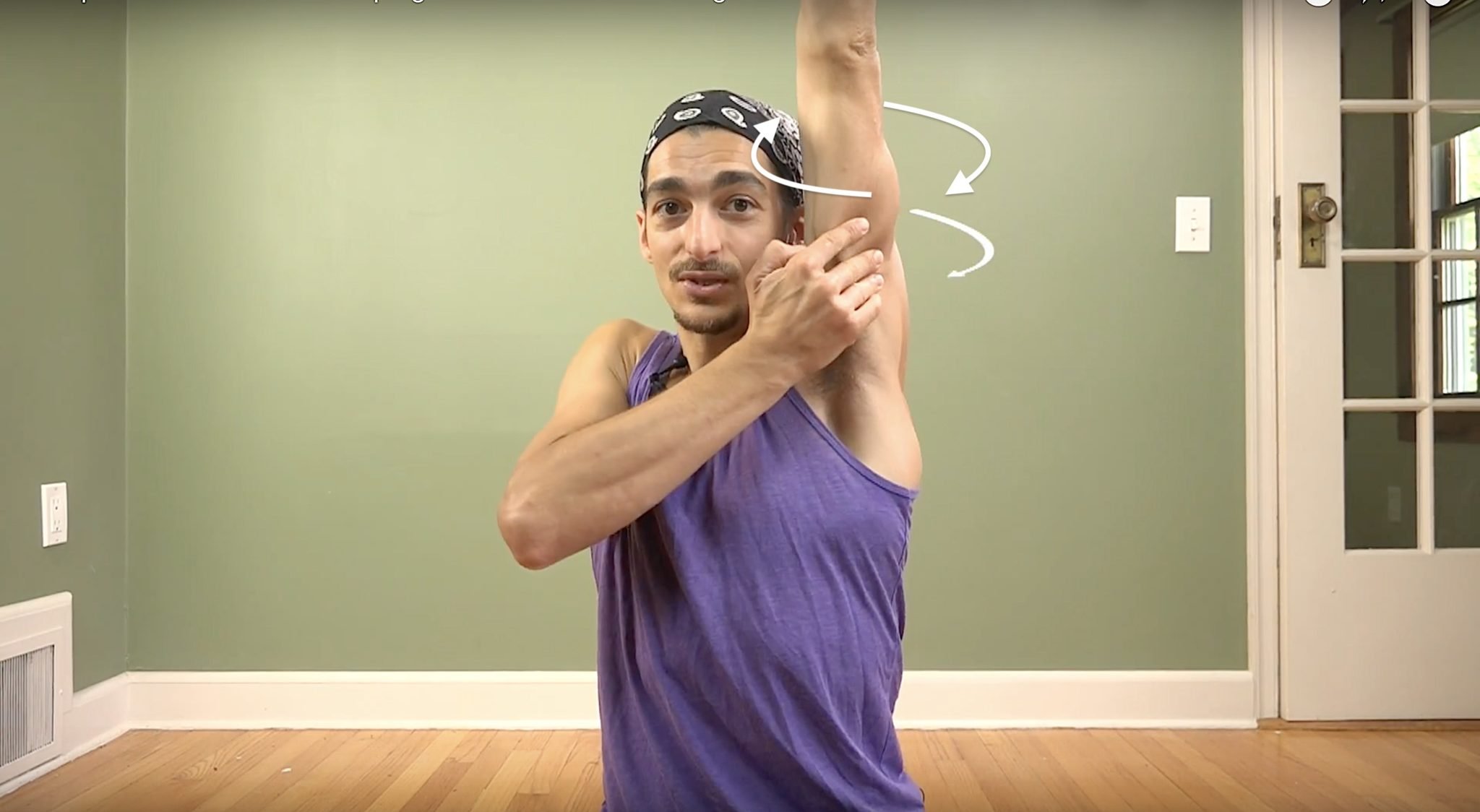
Rotating the humerus externally when the arm goes up overhead can help to avoid the impingement interval in the joint. One of your rotator cuff muscles, the supraspinatus, runs through the glenohumeral joint (under the acromion process and above the head of the humerus). This muscle helps to lift the arms up from tadasana, but because of its location, it is easily pinched if the arms go overhead but the shoulder blades don’t follow the movement. Downward dog is often the culprit- the weight of the body on the shoulders requires that we put effort into the posture to push the ground away however, with cues like “relax your shoulders” and “soften” we often release the appropriate muscular action required to maintain space resulting in shoulder impingement. In plain English – Externally rotate your arms (triceps rotate toward your face) and you will maintain more space in the joint and less potential for impingement.

Step 3: Upward Rotation of The Scapula

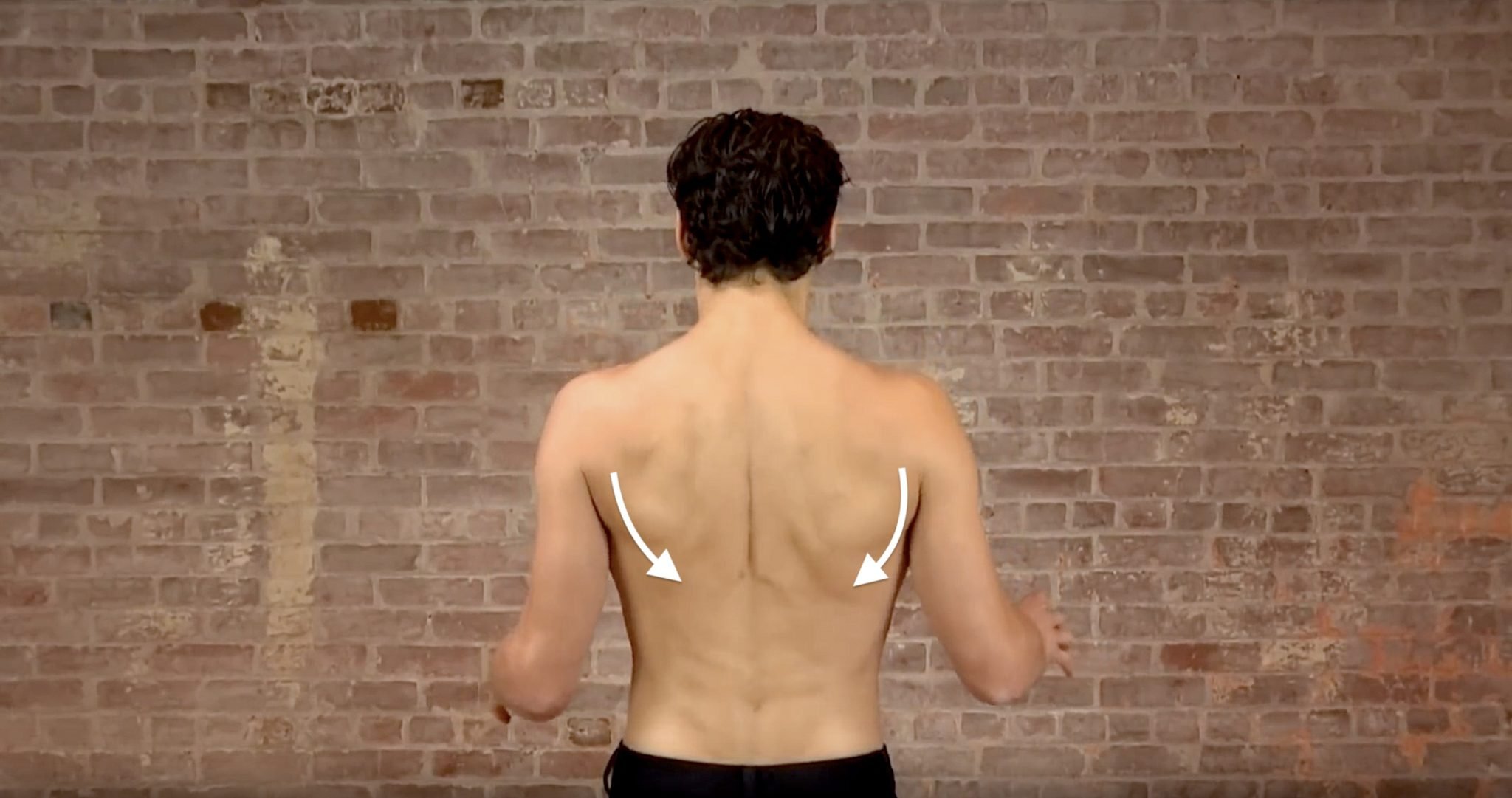
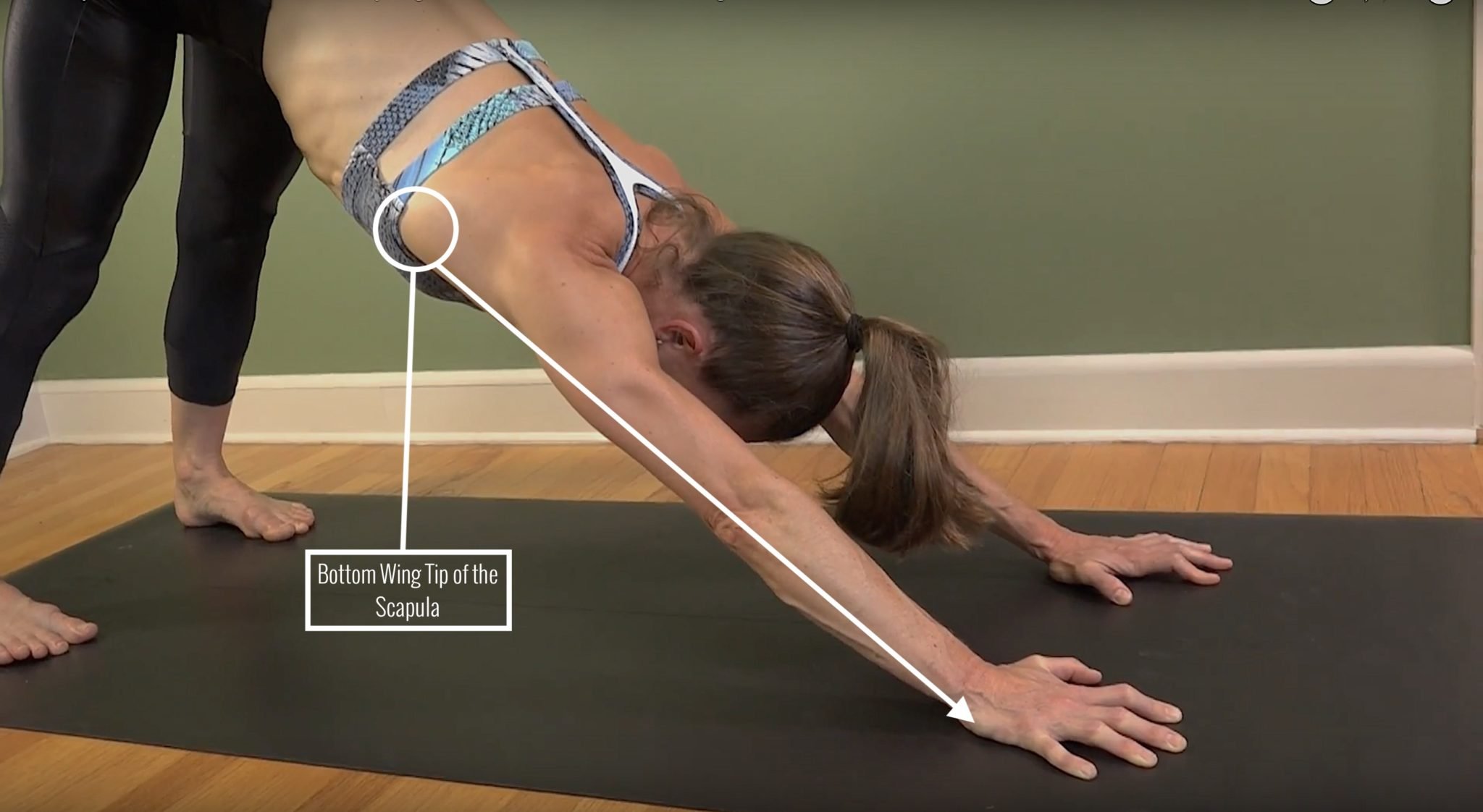
From the outer line of your shoulder blades, press through your hands into the earth. When you elevate your shoulder blades toward the ears from the outside line of the arm, the bottom wingtip of the scapula begins to rotate out and up – this is known as the upward rotation of the scapula. As a result of upward rotation, your shoulder blade rotates and angles itself to allow the arm bone to be overhead without a collision of bones in the joint, creating less possibility of impingement.

Step 2: Pronate the Forearm

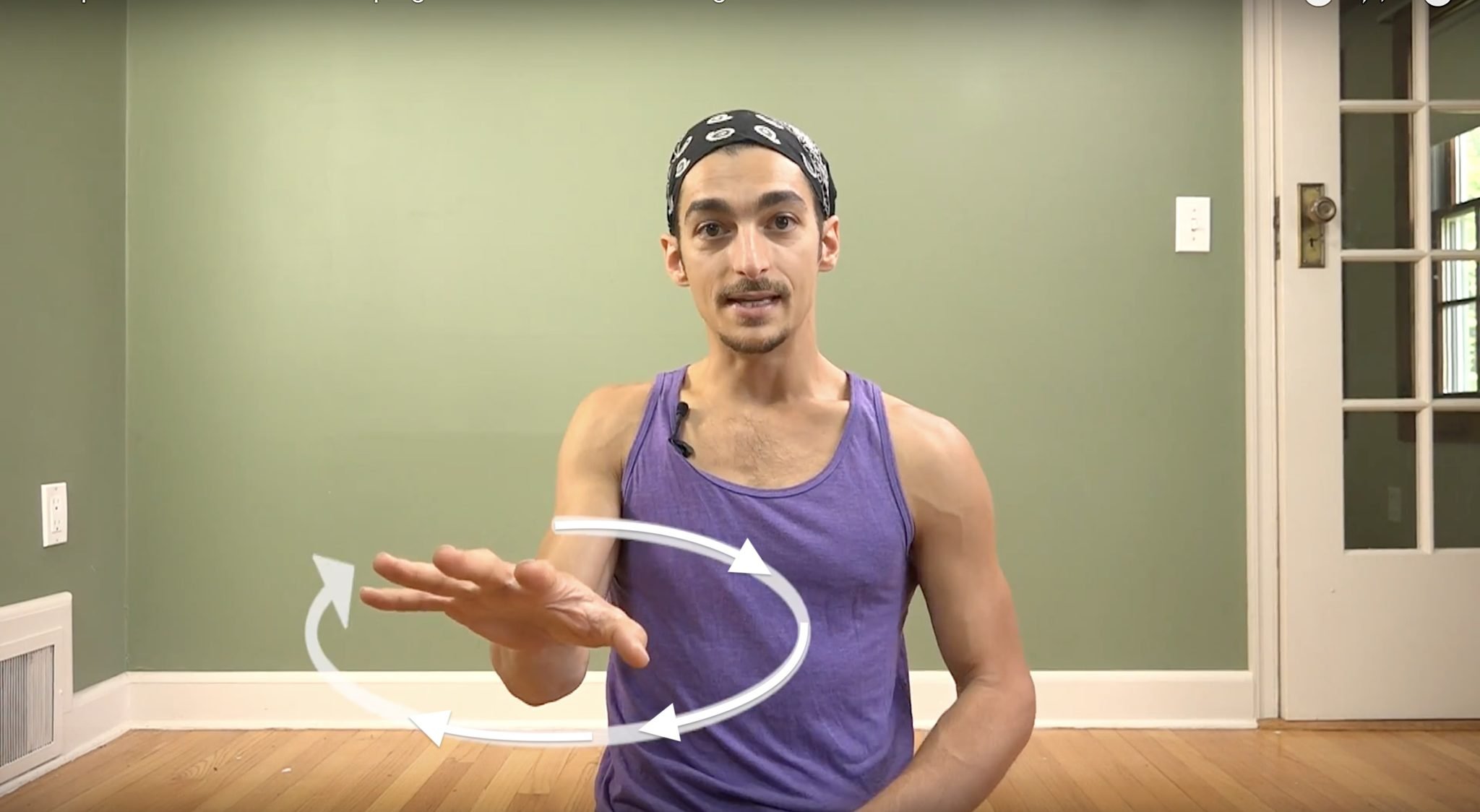
When externally rotating the upper arm bone, you will notice that the lower arm (forearm) will go along for the ride and rotate as well. This results in increased pressure on the outside of the hand and wrist. To evenly distribute the weight to the whole hand, simply pronate your forearm by rotating the inner forearm and hand down toward the ground. Many teachers will stress this by asking you to press your index finger and thumb down. Depending on your range of motion in your radial ulnar joint,  you may not be able to press the inside edge of your hand down and maintain external rotation of the shoulder. My suggestion is to turn the hands slightly outward if this is the case. Learning to rotate the forearm in opposition to the upper arm bone can be challenging but through mindful repetition, you will be able to do it and you will feel increased strength and stability from it. To Strengthen your wrists, I highly recommend Handstand Training

The 3 Actions

While I have broken this down into 3 steps, with time and practice it can be 1 step and the 3 actions can happen all at once. To build muscle coordination it is useful to separate the actions and practice them individually. Though I created a definitive order to follow, know that it is beneficial to mix up the 3 steps and put them out of order. You may find another combination to work better for your body! The dotted red line above indicates the path of the bottom wingtip of the scapula. If you do not push the bottom wing tip, it will wind up closer to the spine. It is helpful to record a video yourself to see where your shoulder blades are on your back.

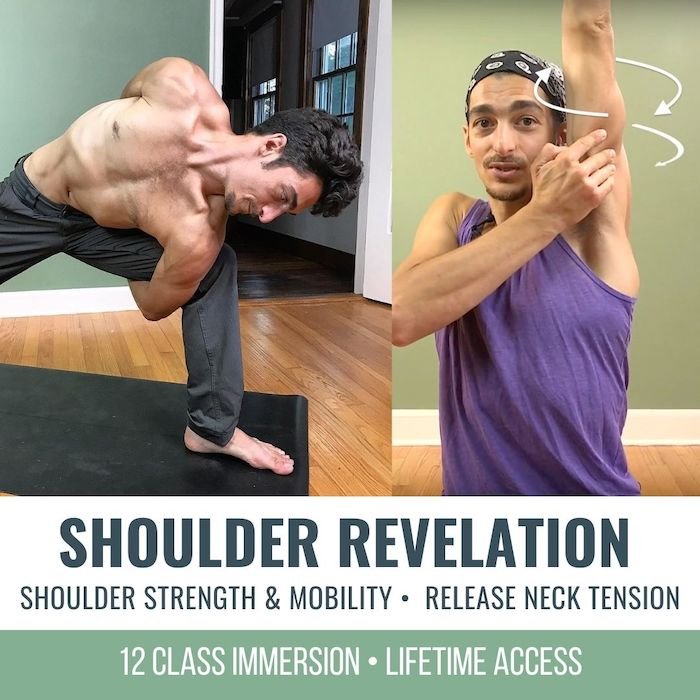
SHOULDER REVELATION

Strength•Mobility•Biomechanics

  • Increase strength and flexibility
  • Decrease risk of injury
  • Release shoulder tension
  • Learn anatomy and biomechanics
  • Access a wider range of postures
  • Stabilize the rotator cuff muscles
  • Learn binds, heart openers, and arm balances
  • 12 all-levels, 75-minute online classes
  • Lifetime unlimited access to all

$198.00 $138.00

Depression of the Scapula

Pulling your shoulders down away from the ears is the opposite of everything I have mentioned in this post, however it is an important action to work on especially for arm balances like side plank because depression creates stability when the arms are at or below shoulder height.

When Can I Relax My Shoulders?

One of the best parts about getting stronger with shoulder elevation (upward rotation) is that the muscles of your upper trapezius will become more supple and be able to relax more easily. Just like after working really hard in a yoga class, when you feel that complete relaxation in your body, each of your muscles experience that after being strengthened. There are plenty of times to relax your shoulders down your back – just not when you reach your arms overhead. So when you are sitting in your chair, you can think shoulders move slightly back and shoulder blades relax downward. When you are in a strong posture like crow pose and your upper arms are not overhead, you can even work on strengthening the muscles of depression of the scapula. My philosophy on the body is that there are no wrong actions or muscle engagements, there are just appropriate and inappropriate times to use them.

A great rule of thumb you can take with you: when in doubt just let your shoulders follow your hands – if the hands go up, let your shoulders go up, if they go down let them go down, if you reach forward let them go forward, etc. Enjoy your exploration, thank you for stopping by!

-Matt


ONLINE TEACHER TRAININGS


GET CERTIFIED AT THE 200 OR 500 HOUR LEVELS

  • 200 Hour Training: Get certified to teach yoga
  • 300 Hour Training: Take your certification to the 500 hour level
  • Recognized globally by Yoga Alliance 
  • Take your practice to the next level
  • All levels, ages, and experience welcomed

TOP RECOMMENDATIONS 

Handstand Training

Learn the techniques that make Handstand fun, easy and accessible! This 2 part course consists of the top most effective exercises will increase your strength and technique so you can easefully balance a handstand.

View Details

SHOULDER REVELATION

In this 12 class immersion  you will practice specific techniques to strengthen and unlock your shoulders. Each class focuses on a specific joint articulation and muscle group so you gain mastery in the shoulders.

View Details

HEART OPENERS

Finally, a 12 class immersion designed specifically to help you discover the freedom of heart openers. Learn how to avoid uncomfortable compression, and awaken your true range of motion in a step by step manner.

View Details

Continue Learning

Avoid Shoulder Impingement

Avoid Shoulder Impingement

 "Relax your shoulders" There probably isn't a single yoga teacher out there, myself included, who hasn't used the verbal cue “relax your shoulders away from the ears.” This cue can be totally innocent and helpful to point out unconscious patterns related to...
read more
The Key To Arm Balances

The Key To Arm Balances

 The Secret is Simple Finding ease in arm balances can seem like a mystery and it can be frustrating to figure them out while struggling to breathe in positions that feel constricting. The secret to arm balances is simple, but it is not always easy to put into...
read more
Arm Balances: Protraction Action

Arm Balances: Protraction Action

 ARM BALANCE STRENGTH BUILDING Most who practice yoga have come to realize that the practice requires a certain physical strength that doesn't necessarily coincide with the image of strength in our head. Every yogi has seen a physically in-shape gym goer walk...

read more
Headstand: Neck Relief

Headstand: Neck Relief

 Intentional Practice For many years I split my yoga asana practice into two parts. On one side I dedicated my learning to the therapeutic qualities and on the other side advancing my practice. It was a while before I realized that they were one and the same and...

read more

THE FREE TECHNIQUE PACK

When You Subscribe, You Will Get Instant Access to

  • the Technique Pack: 15 yoga pose breakdowns
  • exclusive online course discounts
  • exclusive blogs and videos
  • This field is for validation purposes and should be left unchanged.

CONTACT

  • This field is for validation purposes and should be left unchanged.

The Key To Arm Balances

The Key to arm Balances

Learn the secret to balancing on your hands


The Secret is Simple

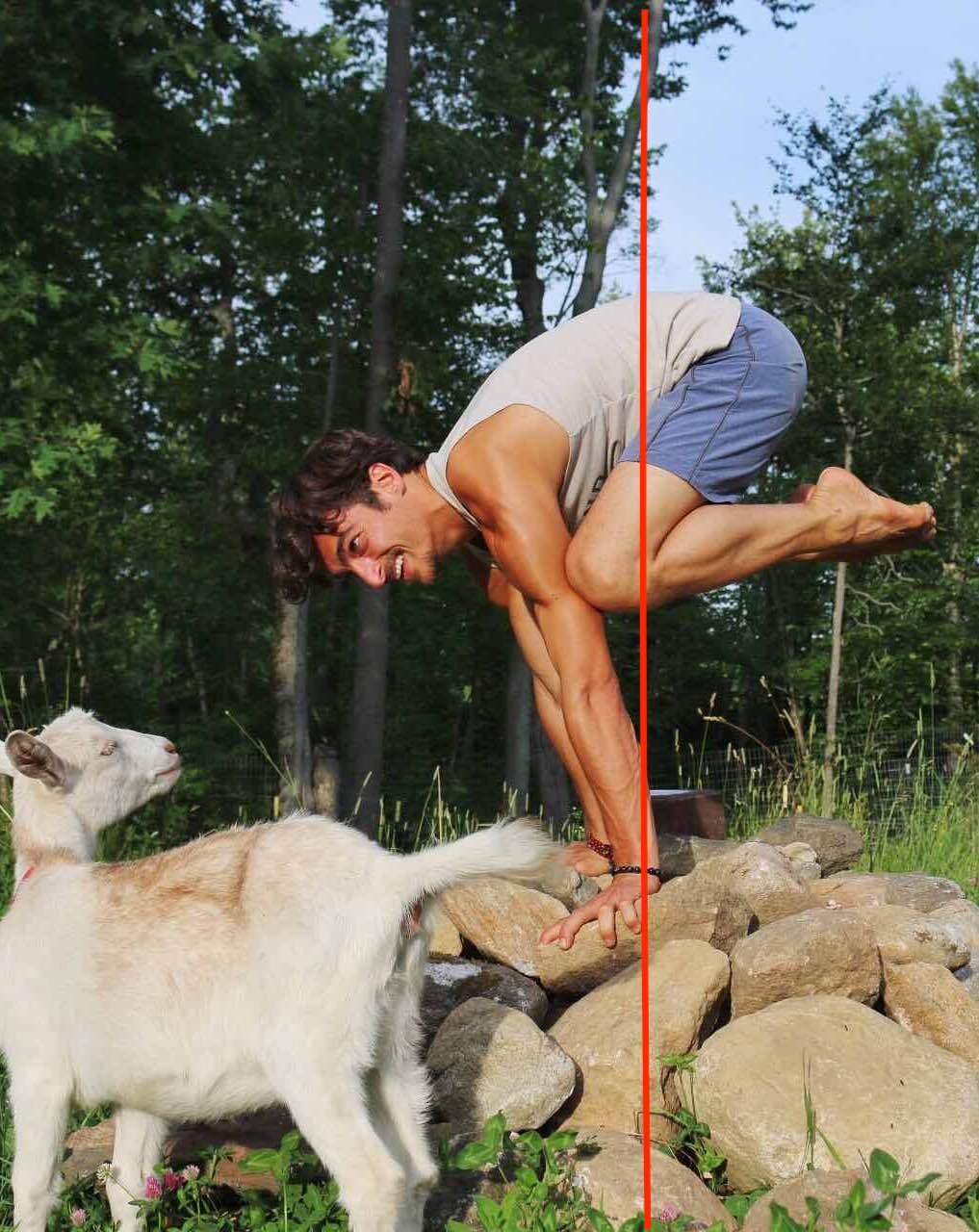
Finding ease in arm balances can seem like a mystery and it can be frustrating to figure them out while struggling to breathe in positions that feel constricting. The secret to arm balances is simple, but it is not always easy to put into action. Picture a balance scale, the old-fashioned kind. When both sides are even, the scale is “balanced.” There is no difference between a balance scale and your body, but it’s visually harder to understand. The center of the scale is where your hand meets your wrists.

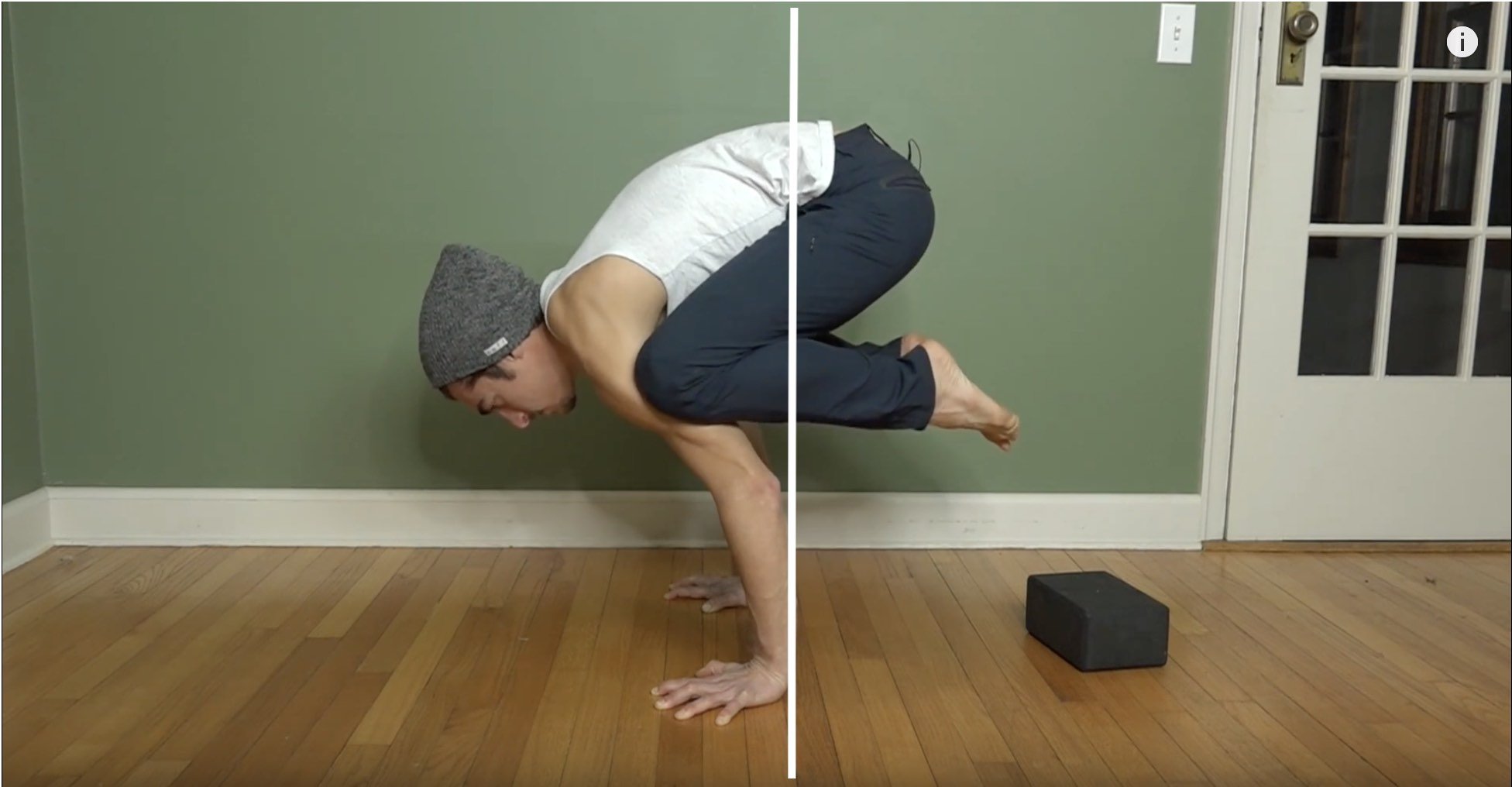
Let’s think about crow pose for a moment. You will see in the picture to the right (or below if you’re on mobile or a tablet) a red line to show you where the shaft of a balance scale would be. I call the hips and legs the “back side” of the pose, and the heart and head the “front side.” In order for the back and front side to be equal we must lean forward quite a bit. This presents a bit of fear for many yogis, and for a good reason! You could easily lean too far, too fast. This is why it’s important to build strength in your fingers and wrists. The primary muscles that stop the body from leaning too far are the flexors of the wrists and fingers. I call these muscles “The Breaks,” and much like driving any vehicle, you will not feel safe without them! For this reason alone it’s super important to strengthen the breaks so that you build trust in yourself. As your trust builds, you will be willing to lean forward more and more into the strength of your wrists.  In my Handstand Training video, I provide some of my top exercises for “the breaks.”

When most people first try to lean forward they actually tend to sink, softening the elbow joints and melting the shoulder blades toward each other. This will make the posture heavy and will actually make it harder to balance. To be sure you aren’t doing this, film yourself or better yet find a teacher or friend to support you with visual coaching.

yoga arm balance with goats
200 Hour Online Teacher Training Certification

200 HOUR ONLINE TEACHER TRAINING

GET CERTIFIED & DEEPEN YOUR YOGA PRACTICE

  • Deepen your yoga practice
  • Build confidence speaking in front of groups in person and online
  • Learn foundational class structures and templates
  • Learn techniques for a wide range of yoga postures
  • Get certified and highly qualified to teach yoga
  • Yoga Alliance Globally Recognized Certification Program
online classes for anatomy of arm balances

ANATOMY OF ARM BALANCES

MAY 2022 Immersion

  • Anatomy of 12+ arm balances
  • Foundational and advanced arm balance techniques
  • Visualize your movements internally
  • Improve balance and proprioception
  • Sensation-based practices
  • Learn empowering modifications
  • Access appropriate variations for your level of practice
  • Active, passive, and isomentric Stretching
  • Improve wrist, core, and shoulder strength
  • ALL LEVELS APPROPRIATE

$168.00

MORE INFORMATION


yoga pose all 4's wrist strengthener

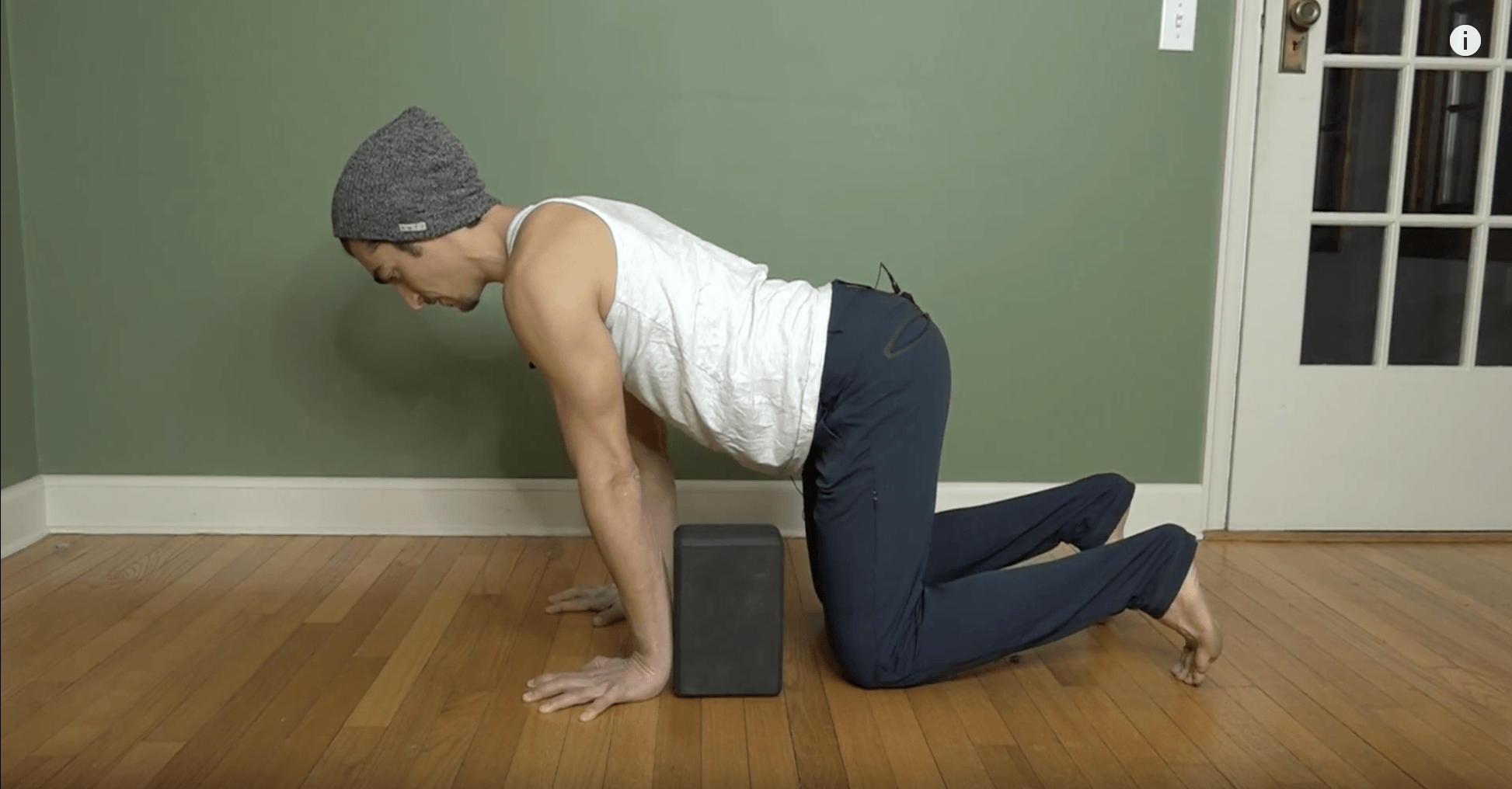
Step 1 - All Fours with a Block

First work with a block behind the forearms on all fours. To be clear this is a deep extension of the wrist, so be mindful. If you feel that your muscles are straining, back the block up an inch. The idea here is to grip the ground with your fingers which will activate the flexor muscles. Because the hand is in extension, the flexor muscles are elongated significantly, so gripping the ground could prove to be challenging.

chaturanga with block for wrist strength

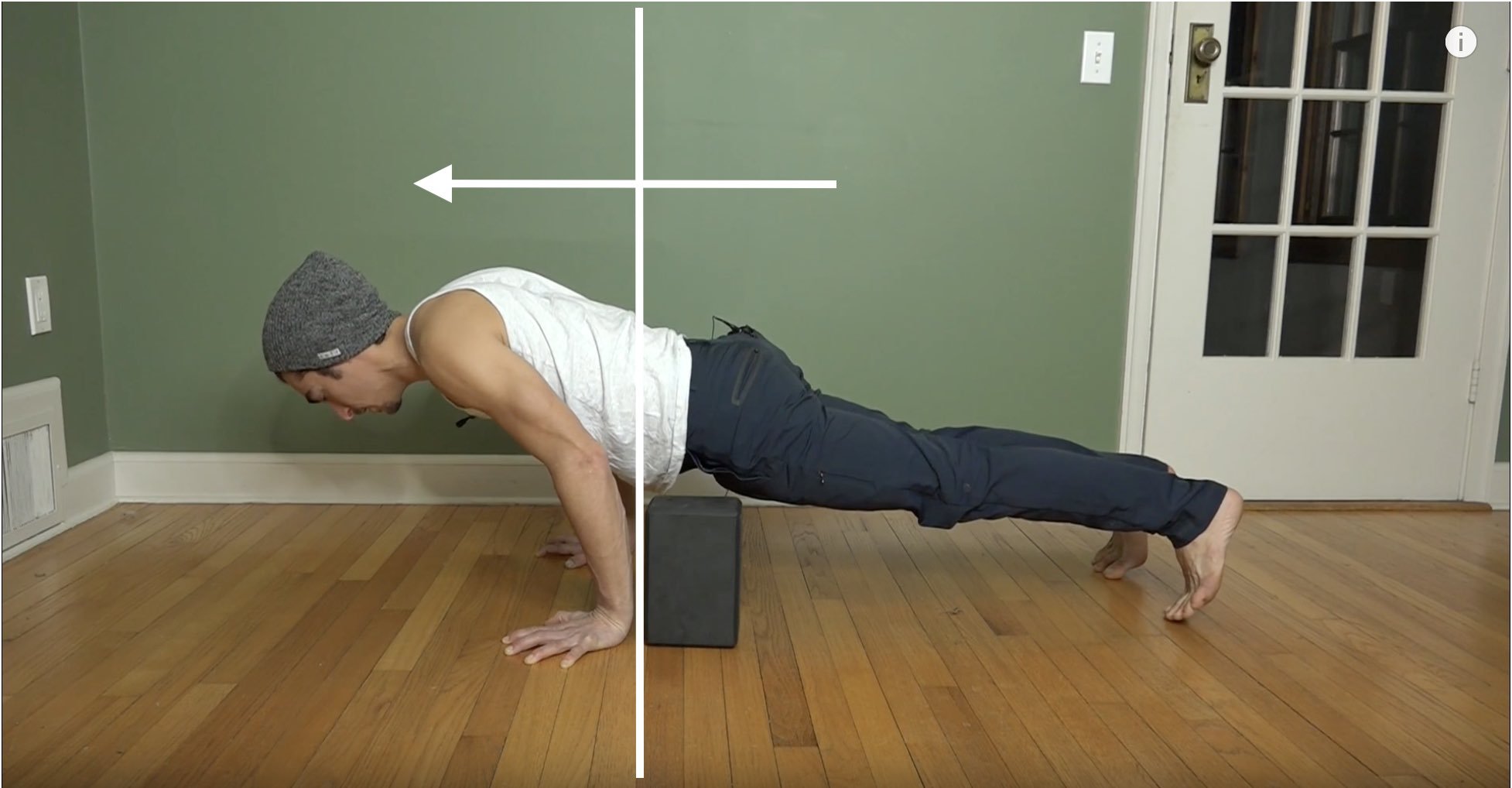
Step 2: Chaturanga with a block

The next step is to work on lowering from plank to chaturanga with the block directly behind the forearm. I recommend only going down a few inches and trying to hold. You will notice that in my chaturanga and crow pose my elbows are only slightly bent. This will make it easier to stay lifted and light. The same is true for the fingers; keep gripping the ground! To Strengthen your wrist, I highly recommend Handstand Training

crow pose wrist strength and balance

Step 3: Crow Pose

Crow pose is significantly more challenging, so if this is new for you be sure to work with a teacher first (and a landing cushion would be an intelligent choice if you ask me). Apply the same action but go slower. Grip the ground and apply the breaks, then lean into that resistance. If you are more proficient in arm balances, you can try this in a posture like Ekapada Koundenyasana 2  or flying pigeon.

300 hour teacher training online

300 HOUR ONLINE TEACHER TRAINING

GET 500 HOUR CERTIFIED & ADVANCE YOUR TEACHING SKILLSETS

  • Learn Anatomy, Bio-Mechanics, and Masterful Postural Techniques
  • Advance Your Teaching Skillsets: Sequencing, Verbal Cuing, Theming
  • Deliver Heart Felt Practices with Philosophy, Meditation, & Pranayama
  • Apply Business Structure's, Marketing, Branding, Social Media
  • Build Confidence Working with Injuries, and More!

Avoiding Wrist Pain

Wrist pain is common when people first start their yoga practice or arm balance practice. That doesn’t mean it’s a good thing, but it probably means the muscles that surround the joint are not strong and probably not balanced. The wrists are not a muscle you can simply work really hard a few times and see positive results. More likely you will strain the muscles if you go that route. Instead spend small amounts of time practicing these exercises but do them often. This is how I train my own wrists and I have had much success with feeling good over the course of 12 plus years of practicing handstands and arm balances.

Thank you for reading and watching! if you have questions, comments or requests please share them here!

-Matt

Handstand Strength Training

Learn the techniques that make Handstand fun, easy, and accessible! This collection of the top 12 most effective exercises will make you rethink how you approach handstand and what is possible so you can finally build the proper strength and awareness it takes to hold a handstand.

Continue Learning

Avoid Shoulder Impingement

Avoid Shoulder Impingement

 "Relax your shoulders" There probably isn't a single yoga teacher out there, myself included, who hasn't used the verbal cue “relax your shoulders away from the ears.” This cue can be totally innocent and helpful to point out unconscious patterns related to...

read more
The Key To Arm Balances

The Key To Arm Balances

 The Secret is Simple Finding ease in arm balances can seem like a mystery and it can be frustrating to figure them out while struggling to breathe in positions that feel constricting. The secret to arm balances is simple, but it is not always easy to put into...

read more
Arm Balances: Protraction Action

Arm Balances: Protraction Action

 ARM BALANCE STRENGTH BUILDING Most who practice yoga have come to realize that the practice requires a certain physical strength that doesn't necessarily coincide with the image of strength in our head. Every yogi has seen a physically in-shape gym goer walk...

read more
Headstand: Neck Relief

Headstand: Neck Relief

 Intentional Practice For many years I split my yoga asana practice into two parts. On one side I dedicated my learning to the therapeutic qualities and on the other side advancing my practice. It was a while before I realized that they were one and the same and...

read more

THE FREE TECHNIQUE PACK

When You Subscribe, You Will Get Instant Access to

  • the Technique Pack: 15 yoga pose breakdowns
  • exclusive online course discounts
  • exclusive blogs and videos
  • This field is for validation purposes and should be left unchanged.

Get in Contact

5 + 4 =

Arm Balances: Protraction Action

arm Balances: Protraction

Finding Ease and Lightness in Arm Balances


ARM BALANCE STRENGTH BUILDING

Most who practice yoga have come to realize that the practice requires a certain physical strength that doesn’t necessarily coincide with the image of strength in our head. Every yogi has seen a physically in-shape gym goer walk into a yoga class and struggle in his/her first down dog. The reason for this is because there are tons of muscles in the body, and all of them have a purpose. The ones you see on the surface are called the superficial muscles, and their job is primarily to create big movements like swinging a baseball bat, jumping, climbing, etc. While many Yoga postures and transitions require the use of these muscles, the Deep muscles or stabilizing muscles are often most used. In this video, I go over the muscle groups that I find are most important for the majority of arm balances.

Serratus Anterior

The muscles I speak of in this video are the Serratus Anterior, and the 4 layers of abdominals (rectus abdominis, external obliques, internal obliques, and transverse abdominis). Serratus Anterior is incredibly important for many arm balances because it creates stability in the shoulder blades and moves the body away from the ground. In the “Handstand Strength Training” video I give exercises in plank pose to help students develop the strength of this muscle. When this muscle is fully engaged in plank the body is further away from the ground. The same is true in arm balances. Further from the ground begins to feel lighter and easier, and as mentioned in the video above, your wrists will feel better as well. The reason you feel lighter and more at ease when the Serratus Anterior is fully engaged is simple- all muscles have an easier time contracting when they are fully shortened. Think of your bicep muscle; isn’t it easier to hold a weight in your hand when your hand is closest to your shoulder vs halfway down at the “holding a tray” position. Part of this is the relationship to gravity but even if you changed the angle of your body that would still be the easiest position for the muscles to be engaged. This is the same reason why it’s easier to do a little tiny pull-up vs going through the full range of motion from straight arms all the way up to bent arms. If you are looking to build strength in the Serratus Anterior I suggest checking out either “The Breakthrough” or “The Chakras and The Elements”. Both immersion focus on strength building for arm balances. 

October Livestream Yoga Classes

THE BREAKTHROUGH

FOCUS: ARM BALANCES & HIP OPENERS

  • Build Upper Body Strength
  • Release Hip Tension
  • Learn Techniques to make hip opening and arm balances more accessible!
  • Experience the revelatory "aha" moments in the postures you struggle with
  • Uncover your range of motion and flexibility
  • Release low back tension through hip opening
  • 12 All Levels Live Asana Classes
  • Lifetime Unlimited Access to All


Arm Balances: The Core

The four abdominals have multiple functions including flexion (rounding) of the spine, twisting, side bending, stabilizing, and compressing/lifting inner organs (primarily the transverse abdominis). Depending on the pose, many arm balances require one or more abdominals to engage because of the shape, and because they have the ability to make the midsection more compact. The more compact you feel, the lighter you will feel because all the extremities tend to pull in closer to the center of gravity when the abdominals engage. What I am not going over in this video is the important role that your legs play within all arm balances. I will be releasing another video on Youtube soon showing you how the legs relate to the core. If you are interested in finding out when that video goes up, subscribe to my newsletter and I will let you know. Developing strength in the abdominals has long been a part of the fitness industry, but until recently it was purely for visual purposes. Most people associate having a six-pack with health, but the reality is that it’s more important to have core intelligence than strength. A little strength and a lot of awareness go a very long way, much further than a lot of strength and little awareness of how to use it. Developing strength through applied actions such as doing handstand, crow pose, or exercises that produce greater intelligence in your body is what I focus on in my handstand and arm balance practice. As a result not only do I feel strong in my asana practice but my back feels great, and I am able to apply the awareness to other activities that require body intelligence. For my favorite core strengtheners you click here, or if you are looking for free ways to learn, simply search youtube for how to strengthen the 4 muscles of the core (searching each muscle separately). Anyone who offers an application for the strength and not just the exercise is likely thinking along the same lines of “muscle intelligence” vs strength. Remember you want to know what the muscle does intellectually and know what it feels like in your body. That combination will make it easier to apply later on to your practice!

October Livestream Yoga Classes

CHAKRAS AND ELEMENTS

FULL BODY AWAKENING

  • Unlock Your Hips!
  • Awakem Your Arm Balance Practice
  • Detailed Ankle and Feet Articulation
  • Develop Low Back and Buttock Strength
  • Strengthen Your Core
  • Release S.I. Joint Pain
  • Release Neck Pain
  • The July Immersion Has it ALL
  • Each Chakra & Element is Paired with an Area of the Body and Muscle Group
  • 12 All Levels Live Asana Classes
  • 4 Live Guided Meditations


arm balance strength for shoulders

Plank at the Wall

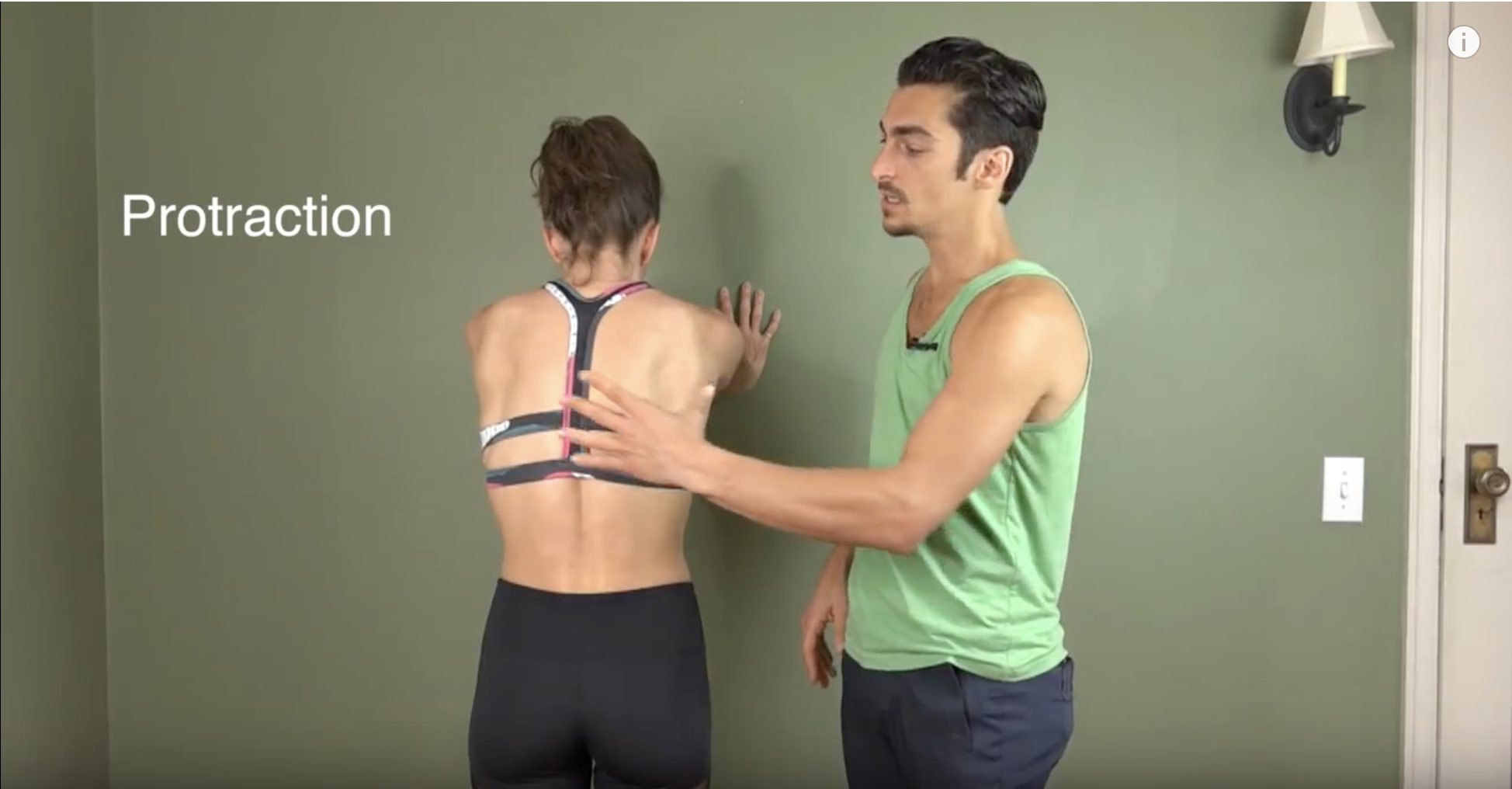
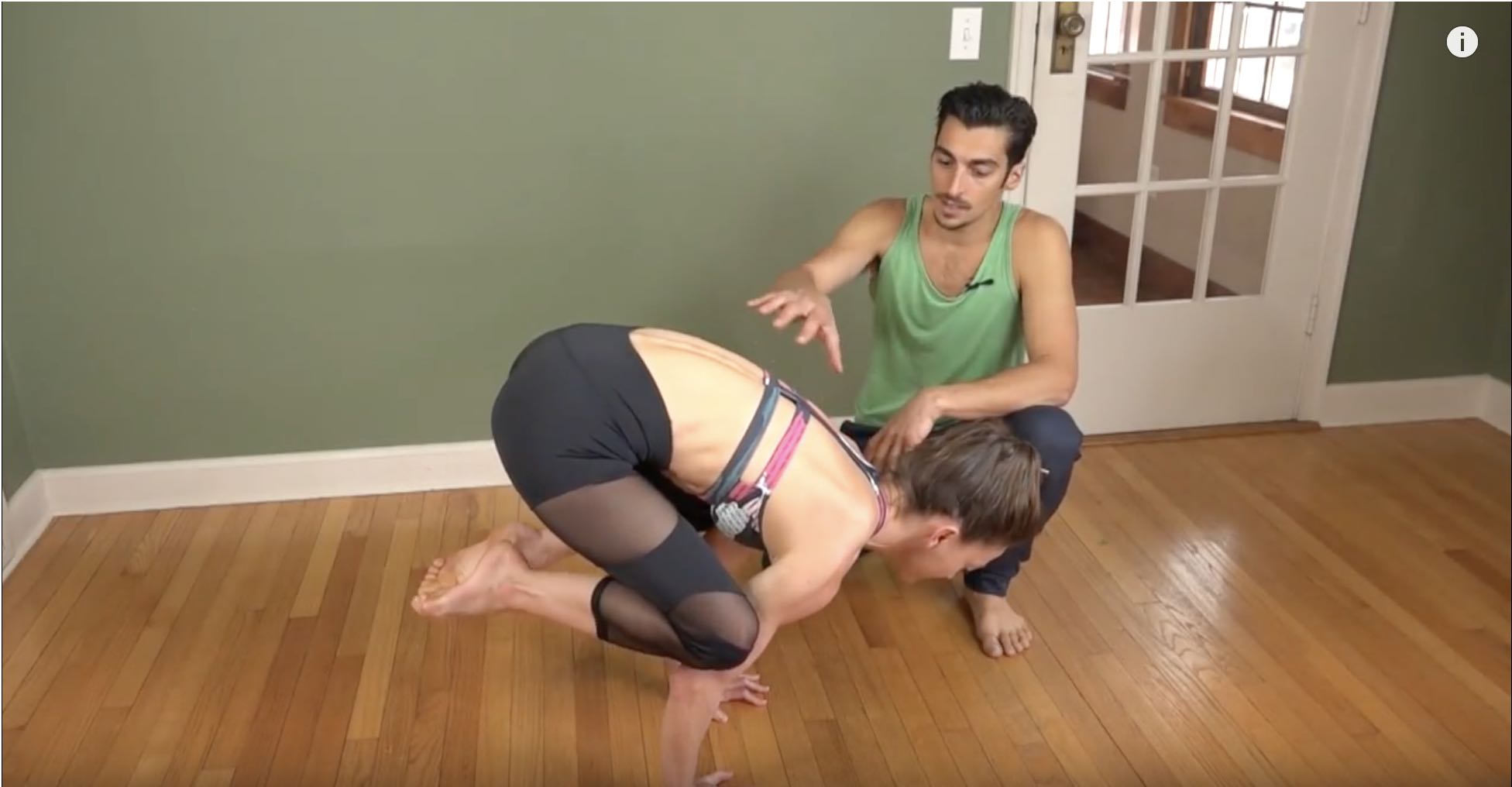
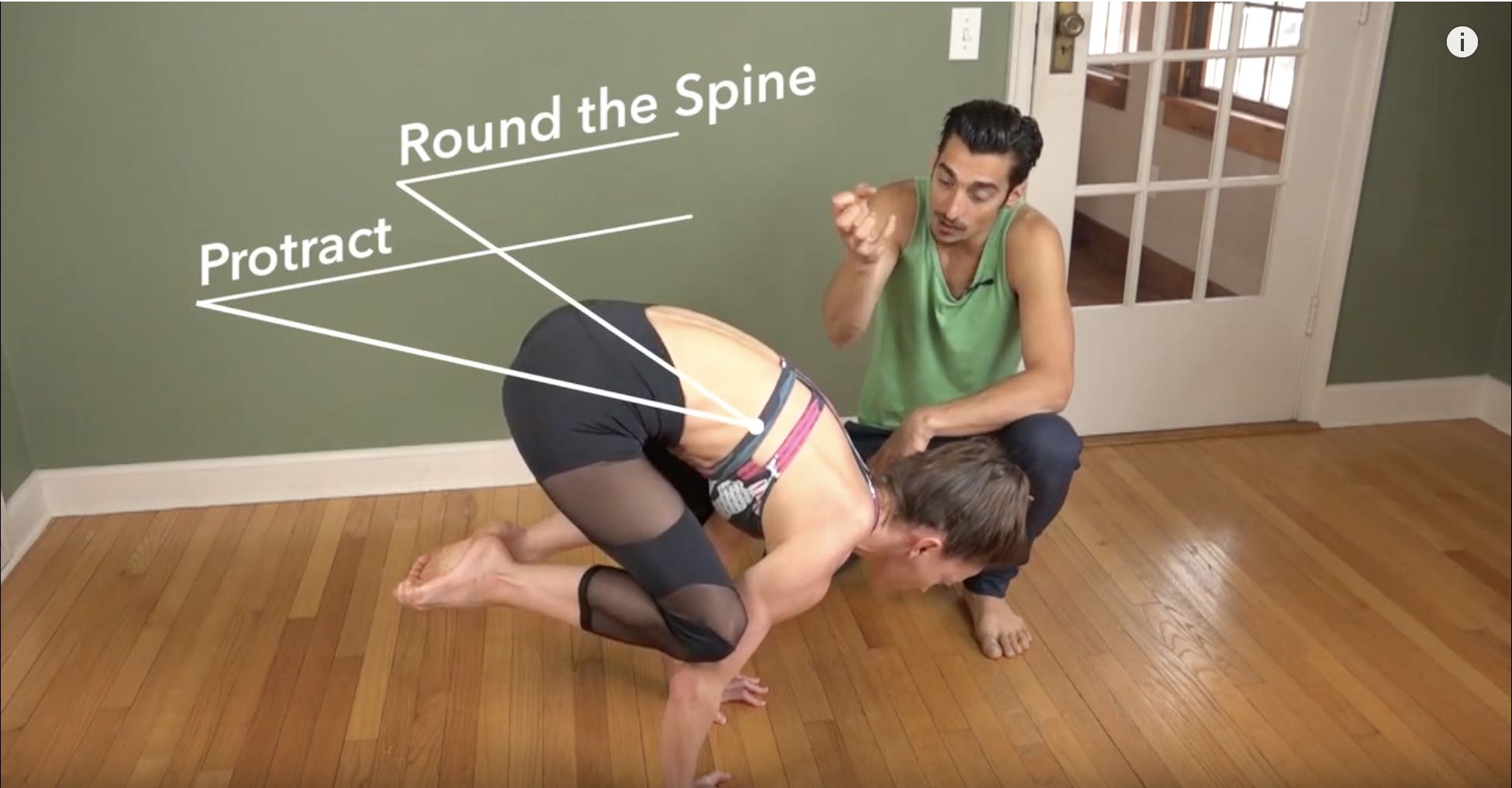
Taking plank at the wall is one of the best ways to truly develop proprioception for protracting the shoulder blades. As mentioned in the video protraction is when you push the shoulder blades apart from one another and they move around your rib cage. This is an activation of the serratus anterior muscles which tend to require strengthening for most people. At the wall, you can focus on the action without the requirement of strength.

arm balance strength for crow pose

Flexion of the Spine

Flexion of the spine in arm balances requires the muscular activation of the rectus abdominals, obliques, and likely the deep core muscles. While it is possible to do arm balances with the core completely relaxed and still hold the postures, it tends to be easier with the recruitment of them. To develop strength in your core, I highly recommend my top exercises on the Handstand Training video. 

arm balance strength of the core

Crow With Protraction and flexion

Putting the two actions together might sound complicated but the two actions actually go hand in hand. Protraction makes spinal flexion easier to access and vice versa. I recommend first trying this in plank posture. If you haven’t yet watched the two blogs on Chaturanga, this is the best place to start integrating protraction into your arm balances. After you’ve worked with chaturanga, if you feel confident balancing crow then you can try applying these actions.

First Awareness, Then Strength.

It’s easy to try and jump ahead and go straight to our most challenging arm balance posture and try to apply new actions to it. This approach is okay but if you find that you are not getting it or not feeling a difference, it’s likely because your body needs to develop an awareness around the action itself before it can build strength. We need to create the feedback loop in our body from thought to action to sensation and back again. Once that feedback loop is established, strength can be built through repetition.

Thanks for joining me here. I hope these tips help with your practice and/or your teaching. Please share your comments, questions, or requests and I will get back to you.

-Matt

Handstand Strength Training

Learn the techniques that make Handstand fun, easy, and accessible! This collection of the top 12 most effective exercises will make you rethink how you approach handstand and what is possible, so you can finally build the proper strength and awareness it takes to hold a handstand.

Continue Learning

Avoid Shoulder Impingement

Avoid Shoulder Impingement

 "Relax your shoulders" There probably isn't a single yoga teacher out there, myself included, who hasn't used the verbal cue “relax your shoulders away from the ears.” This cue can be totally innocent and helpful to point out unconscious patterns related to...

read more
The Key To Arm Balances

The Key To Arm Balances

 The Secret is Simple Finding ease in arm balances can seem like a mystery and it can be frustrating to figure them out while struggling to breathe in positions that feel constricting. The secret to arm balances is simple, but it is not always easy to put into...

read more
Arm Balances: Protraction Action

Arm Balances: Protraction Action

 ARM BALANCE STRENGTH BUILDING Most who practice yoga have come to realize that the practice requires a certain physical strength that doesn't necessarily coincide with the image of strength in our head. Every yogi has seen a physically in-shape gym goer walk...

read more
Headstand: Neck Relief

Headstand: Neck Relief

 Intentional Practice For many years I split my yoga asana practice into two parts. On one side I dedicated my learning to the therapeutic qualities and on the other side advancing my practice. It was a while before I realized that they were one and the same and...

read more

THE FREE TECHNIQUE PACK

When You Subscribe, You Will Get Instant Access to

  • the Technique Pack: 15 yoga pose breakdowns
  • exclusive online course discounts
  • exclusive blogs and videos
  • This field is for validation purposes and should be left unchanged.

Headstand: Neck Relief

Headstand: Neck Relief

No More "Pain in the Neck"


Intentional Practice

For many years I split my yoga asana practice into two parts. On one side I dedicated my learning to the therapeutic qualities and on the other side advancing my practice. It was a while before I realized that they were one and the same and it took longer to realize that “advanced” transition could lead to greater ease and freedom. This video is born out of my understanding of what I used to consider to be just an advanced transition.

Let’s touch briefly on the neck in headstand. I think we all know that putting our entire weight on our neck could obviously have its dangers. There are also many claimed benefits from it, some of which I agree with from my own experience. Headstand can be extremely empowering and freeing on an emotional level, and beyond that, it is a platform to build more strength and stability for the neck. In addition, going upside down in general can increase our proprioception (knowing where our body is in space). To be sure we are gaining all the benefits and not dealing with the potential downfalls of having all our weight on our neck, I find it beneficial to learn how to do headstand with our head off the ground. Some would call this forearm stand, some would argue it’s still headstand arms so it’s headstand…what you call it is not important, but having the strength and awareness definitely is beneficial.

There are two main anatomical actions that I go over in this video:
Elevation of the Scapula: Shoulder blades raise up toward the ears
Extension at the Elbow Joint: The Elbow straightening.

Elevation of the scapula is the main action in relieving neck pressure because when executed with enough strength, the head will lift off of the ground. Once you have the strength and control over the muscles that create elevation (mainly the upper fibers of the trapezius muscles) you will then have the choice of how much weight you place on your head. Trying to extend at the elbow joint can help maintain stability and balance as you elevate your scapula and can assist in rising away from the ground.

The Actions

In the video you will be provided with a visual demonstration of elevating the scapula with headstand arms. While you are reading this you can try elevating your scapula by shrugging your shoulders up by your ears. This action is remarkably easier when the arms are by your side in a resting position than when they are over head and bearing the weight of your body, but awareness of the action makes it a lot easier to attempt once you enter the position. Many yoga teachers will shun the idea of your shoulders rising up by the ears simply because it tends to be an unconscious pattern. Remember this pattern is not necessarily bad or good, it’s the unconscious part that is the problem. Another way to look at it is if we hold an equal and opposite pattern of elevated scapula then our shoulders would be balanced and relaxed. If you are someone whose shoulders rise toward your ears on a daily basis here are some things to consider.
Your stress levels: If your shoulders are tensed up it could be an indication that your emotional body/nervous system is more often in the state of panic and your nervous system is sending signals to your muscles to hold tension because “something bad is going to happen.” There is no short answer for what to do but one-on-one coaching could help. I am happy to connect for a free Skype session to discuss some options with you.
Strengthen the opposite muscles: In this case, do pull-ups and work on strengthening the muscles of depression.
Strengthen to Release: It may sound strange but usually a muscle holding tension is not tense because it is strong, more likely because it is weak. Strengthening it can actually relax it. In this case, elevating your scapula will help strengthen the upper fibers of the trapezius muscles, and therefore could lead to releasing your neck tension!

How to Strengthen

There are multiple ways to strengthen the muscles that elevate the scapula and extend the elbow. In the video I offer a way to do so while approaching the pose. Dolphin pose (Down Dog on Forearms) is a great start for the more beginner practitioner. Check out the video and try the actions to feel it in your body. If you find it helpful and you are looking for more ways to strengthen your inversion practice Click Here to check out my top exercises for the arms, shoulders, wrists, and core!

Want more Free education? Check out Headstand: 3 Ways In

HANDSTAND TRAINING

2 PART COURSE FOR STRENGTH & BALANCE

  • Part 1: Get strong in key areas for Handstand
  • Part 2: Learn to Balance Handstand
  • Techniques, anatomy and drills to gain mastery on your hands
  • Easy to follow, step by step approach
  • Find weak points and make them your strengths
  • The most efficient & effective course to access handstand
  • Option to purchase each course separately or together

CURRENT SALE PRICE FOR BOTH

$298.00 $148.00

1. Elevate Your Scapula

Before going upside down and bearing weight, ensure that you have the range of motion in your shoulders to elevate your scapula with headstand arms – clasped fingers, bent elbows, arms overhead. Lift and lower your shoulders toward and away from your ears several times with your breath to awaken your trapezius and serratus anterior muscles. If this proves to be challenging it could be due to weakness in these muscles or tightness in the opposing muscles.  You could do some down dogs, or do the classic swimmers warm-up of windmilling one arm and then the other, backstroke is my preference. Also, check out the Handstand Training video for strength and mobility exercises for the shoulders.  

3. Dolphin

Take the next step by getting down into dolphin pose and working on elevating your scapula and depressing them a few times. It’s helpful to record yourself to see if you are accurately performing the action. This posture is great to work on tricep engagement. Press the outer wrists down into the ground until your feel the back of your arms tone up.

2. Elbow Extension

Extension of the elbow is seemingly easy when you look at it, and even when you do it without weight-bearing. However it’s not strength that usually stands in the way, but rather the ability to use the muscles for balance. This requires rapid reactivity, and the ability to feel when the body has fallen backward. The triceps in this type of headstand (less weight bearing on the neck) and forearm stand are equivalent to the fingers in a handstand, they are “the breaks” that stop you from falling. Try putting your forearm on a wall like a forearm plank, then push into the wall with the outer edge of your hand and wrist to activate the triceps. Increase the weight by walking your feet back and leaning your body more toward the wall.

4. Tuck Headstand or Prep

If you are confident in balancing a headstand you could then try these actions in a tuck headstand which keeps your center of gravity lower making it easier to maintain balance as you explore new techniques. Please use a wall or teacher for safety – elevating the scapula typically sends people overboard. If you aren’t yet balancing headstand, try the prep with feet on the ground shown above.

ONLINE TEACHER TRAININGS


GET CERTIFIED AT THE 200 OR 500 HOUR LEVELS

  • 200 Hour Training: Get certified to teach yoga
  • 300 Hour Training: Take your certification to the 500 hour level
  • Recognized globally by Yoga Alliance 
  • Take your practice to the next level
  • All levels, ages, and experience welcomed

Neck Relief.

There are two main reasons why elevating the scapula can help relieve the neck in a headstand. It can provide less compression on the cervical (neck) vertebrae, and it can allow for some of the stabilizer neck muscles to relax. That being said there can be benefits to strengthening the stabilizers of the neck, so doing a headstand with less elevation of the scapula isn’t inherently wrong or bad unless you are experience pain or discomfort when doing so.

The approach to headstand relies heavily on the strength of the upper fibers of your trapezius muscles which tend to be tense but also weak in many people. The common question that arises is, “my shoulders are always up by my ears, shouldn’t I relax them?” Of course the answer is yes but there is a time and place for everything. Spend the majority of your day learning to let go of unconscious tension, and a small amount of time you spend in headstand, handstand, or forearm stand focusing on the intentional engagement of these muscles. A healthy trapezius is actually less likely to hold tension. More often than not we hold tension in muscles that we don’t have much awareness of. Tension in the way I am using the word right now is more likely the result of emotional stress than it is of too much strength or activity.

Thank you for stopping by, I hope these tips help. If you have questions, requests, or something you would like to share about your headstand journey please submit a comment.

-Matt

Improve your balance with yoga

BALANCE

INCREASE & AWAKEN YOUR BALANCE

  • Learn over 12 balance postures
  • Muscle strength and reactive patterning
  • Increase proprioception and deliberate weight shifting
  • Tree, Standing Hand-to-Foot variations, Warrior III
  • Half Moon variations, Handstand, Side Plank, Headstand
  • 12 all-levels, 75-minute online classes
  • Lifetime unlimited access to all

$198.00 $128.00

Continue Learning

Avoid Shoulder Impingement

Avoid Shoulder Impingement

 "Relax your shoulders" There probably isn't a single yoga teacher out there, myself included, who hasn't used the verbal cue “relax your shoulders away from the ears.” This cue can be totally innocent and helpful to point out unconscious patterns related to...

read more
The Key To Arm Balances

The Key To Arm Balances

 The Secret is Simple Finding ease in arm balances can seem like a mystery and it can be frustrating to figure them out while struggling to breathe in positions that feel constricting. The secret to arm balances is simple, but it is not always easy to put into...

read more
Arm Balances: Protraction Action

Arm Balances: Protraction Action

 ARM BALANCE STRENGTH BUILDING Most who practice yoga have come to realize that the practice requires a certain physical strength that doesn't necessarily coincide with the image of strength in our head. Every yogi has seen a physically in-shape gym goer walk...

read more
Headstand: Neck Relief

Headstand: Neck Relief

 Intentional Practice For many years I split my yoga asana practice into two parts. On one side I dedicated my learning to the therapeutic qualities and on the other side advancing my practice. It was a while before I realized that they were one and the same and...

read more

THE FREE TECHNIQUE PACK

When You Subscribe, You Will Get Instant Access to

  • the Technique Pack: 15 yoga pose breakdowns
  • exclusive online course discounts
  • exclusive blogs and videos
  • This field is for validation purposes and should be left unchanged.

CONTACT MATT

  • This field is for validation purposes and should be left unchanged.

Pin It on Pinterest