EKA PADA BAKASANA II

EKA PADA BAKASANA II

The Essence of Push & Pull

THE GUNAS

THE GUNASThe essence of push & pull

We’ve all experienced the essence of push and pull in one way or another. Its presence is evident all around and within us. We all experience the rise and fall, the movement of our thoughts in our minds (the vritti). These forces are present during our various emotions, when we’re making decisions, during conflict, when we are challenging ourselves physically and emotionally. Push and pull is undeniable in nature and the environment all around us… You get it. It’s really everywhere. We also experience it in our yoga practice. In the Yoga Sutras, these forces are explained as the Gunas. 

To be more specific, Alan Finger, in Tantra of the Yoga Sutras, explains Yoga Sutra 1.16 (Tat param purusa khyater gunavaitrsnyam) in the following way: 

“The three gunas are rajas, tamas, and sattva. They are considered to be the primary sources of nature that are responsible for all of the change and movement that we experience in life.” 

Finger, Alan. Tantra of the Yoga Sutras, Shambhala Publications, 2018. (pg. 26)

What’s incredible is that we will see how this also applies to our physical yoga practice. Matt breaks down the biomechanics of Eka Pada Bakasana II and shows us how the essence of push and pull exists in both the mind and the body.
    Handstand and meditation online yoga classes

    HANDSTAND & MEDITATION

    ONLINE YOGA IMMERSION

    BREAK THROUGH MENTAL & PHYSICAL BLOCKS

    • Learn the most effective drills to safely build your Handstand
    • Practice essential meditation techniques to break through mental barriers and build confidence
    • Improve focus and breath support right side up and upside down
    • Build strength and the necessary skills for balancing Handstand
    • 12 classes: All levels appropriate
    • Lifetime unlimited access to all
    • Attend livestream OR practice the replays any time that’s convenient for you

    SALE PRICE: $168.00

    MORE INFORMATION

    RAJAS, TAMAS, & SATTVA

    Finger explains how rajas is a more outward, vigorous force, while tamas is a more inward, softer, more restful force. While these 2 energies sit at opposite ends from one another, it’s sattva that sits in the middle and/or is considered the balance between the two. Alan Finger explains that sattva is where we find stillness.

    Being that these forces are ever present and that the circumstances of our lives are constantly shifting, it’s easy to find ourselves leaning more towards one side of the spectrum than the other. It’s our awareness that helps us to recognize when we have gone “too far” over to one side. Now, it’s super important to understand that if we adopt the more contemporary interpretation of the three gunas, then we understand that all of these forces are necessary and very human parts of life. It’s not “bad” to experience one or the other, but it’s your awareness and deeper connection, or knowing of yourself, that helps you experience these states of being without any attachment. 

    When in a more rajasic state, we are in a place of taking action; we are “handling our business,” so to speak. There is no struggle to get out of bed, we might engage in a regular asana practice, we eagerly run through tasks at home and/or at work, etc. On the other side, in a more tamasic state, we surrender to rest, and we tend to go more inward. In this state, we allow ourselves time to replenish and renew.

    If we adopt this more contemporary point of view, there seems to be a comfort and safety present. There is no need to reject what already exists within and around us. Noticing, without judgment, these forces of nature may help us move and flow more freely between each state when necessary. This may be viewed as actually being in a more sattvic state because we are actually experiencing flow, a steady mind, and therefore stillness and balance.  

    HOW DOES THIS APPLY TO YOUR PHYSICAL YOGA PRACTICE?

    Matt teaches a class in the Heart Module in his 300 Hr. Teacher Training called “Push & Pull: Rajas and Tamas. Crow/Half Crow Half Titibhasana” (Eka Bakasana II). There he says, “Sattva is how we feel when the push and pull of rajas and tamas come into a state of equanimity. This leads quite nicely into how we can understand the push and pull in our asana practice as well. In this sense, it’s the actions and activations we take in our bodies.”

    Before we explore this, it’s also essential to understand that even though the gunas are natural forces of nature, we can still find ourselves spending too much time on one end of the spectrum. In this class, Matt explains that when we are way out of balance, a more rajasic state can produce feelings of anger, impatience, even anxiety. If we’re spending too much time in a tamasic state, this is where we may not be attending to necessary tasks and there is loss of energy and lack of motivation.

    Just like our yoga practice, these emotions, actions, or lack of actions are not who we are; they are actually opportunities. They are messages telling us something. They’re sending us messages that something needs to shift. This can be recognized as the development of our discernment. Now this is key, this is actually the juicy part! This collision of philosophy and physical practice is where we really unleash both our emotional and physical potential.

    In today’s video, Matt demonstrates the required push and pull in Eka Pada Bakasana II (Half Crow / Half Titibhasana). We witness the importance of what Matt says: “harnessing the activity of the mind (rajas) to move toward sattva.” This is done with focus and intention. There can only be well-placed effort, continuous well-placed effort, in order to achieve this.

    WATCH THE VIDEO: EKA PADA BAKASANA II
    NEXT TRAINING BEGINS FEBRUARY 2024 ENROLLMENT NOW OPEN!
    NEXT TRAINING BEGINS FEBRUARY 2024 ENROLLMENT NOW OPEN!

    EKA PADA BAKASANA II (HALF CROW, HALF TITIBHASANA)

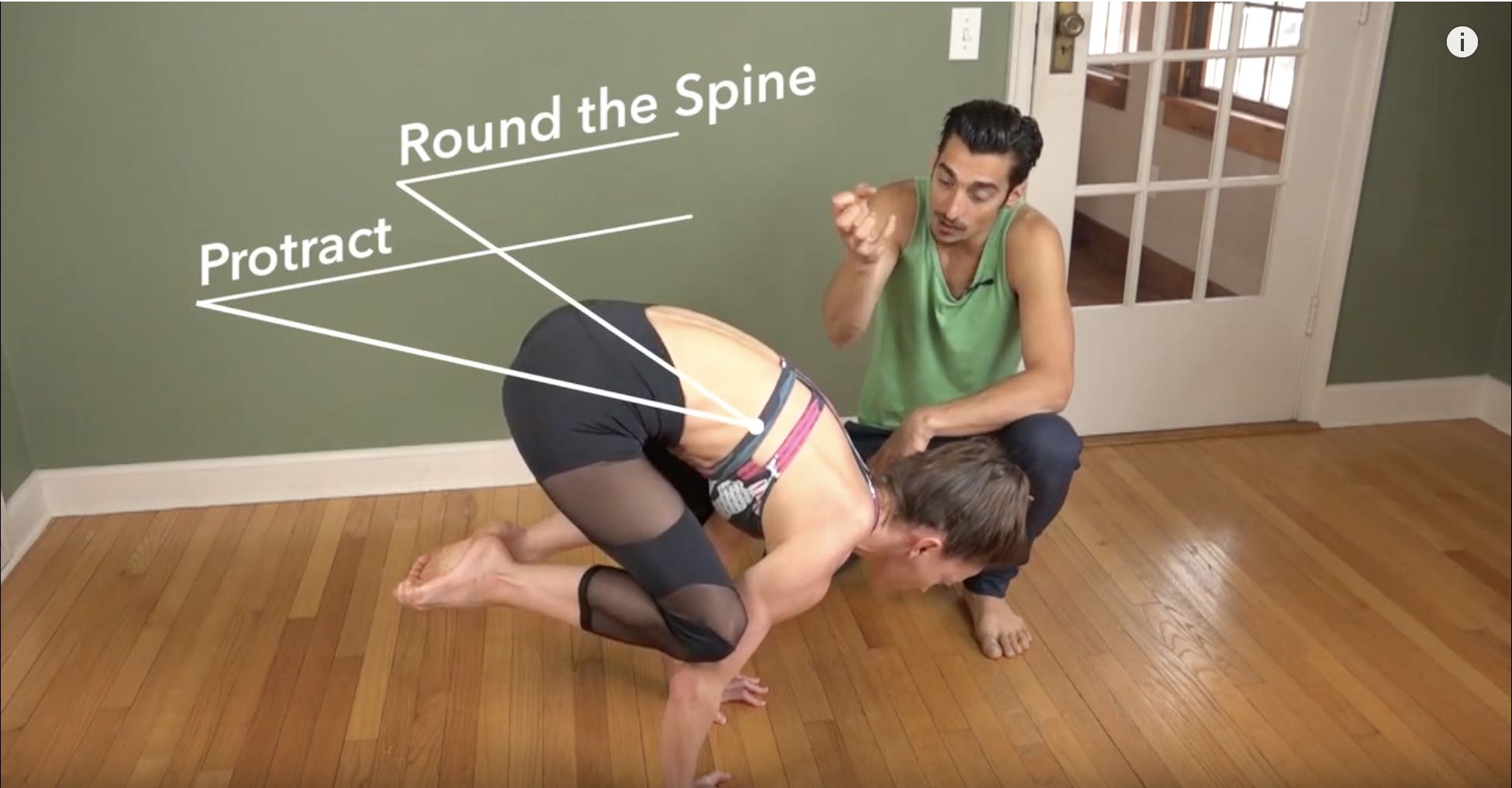
    When it comes to the execution of Eka Pada Bakasana II, the push comes from the upper body, while the pull is in the lower body. There must be equal effort within these opposite actions. This can be interpreted as a “sattvic state in the body.” What I mean by opportunities is that when we feel something “off”  in these actions, we must utilize our discernment. Maybe there is not enough pull/adduction of the legs and/or not enough rounding (protraction) of the upper back due to lack of push with the hands/upper body. Even neglecting the internal rotation of the extended leg can throw things off. This may lead to a loss of stability in the posture, taking us out of balance. 

    We can see more deeply how this is the practice; this is yoga. The process of harnessing the mind to focus and find balance and equanimity in Eka Pada Bakasana II (Half Crow/Half Titibhasana) is completely aligned with our process to move towards sattva in our emotional body. There can be moments of frustration, of uncertainty, but again, these are all beautiful messages for us to receive. They are exquisite opportunities for us to explore and experience without attachment.
    online classes for anatomy of arm balances

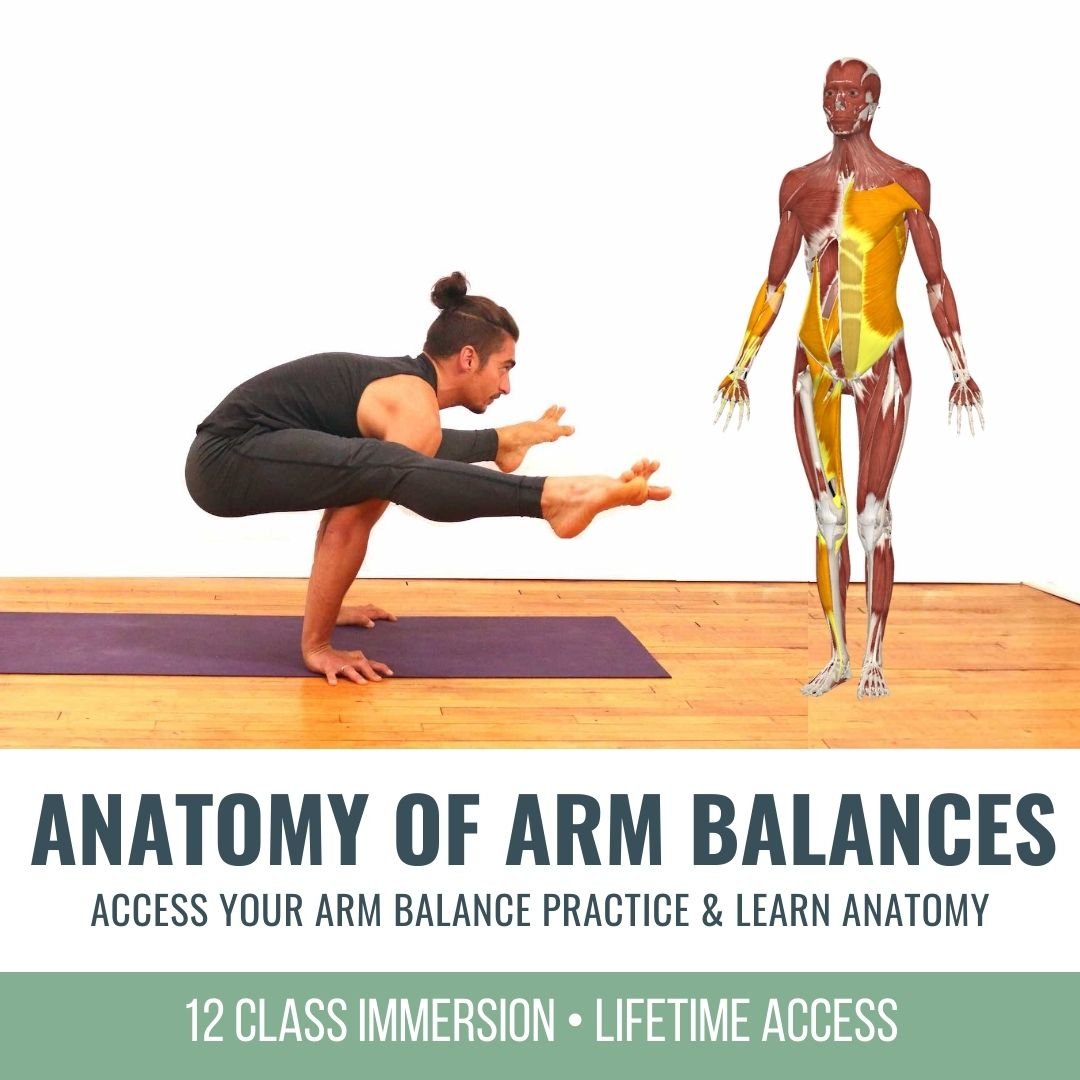
    ANATOMY OF ARM BALANCES

    MAY 2022 Immersion

    • Anatomy of 12+ arm balances
    • Foundational and advanced arm balance techniques
    • Visualize your movements internally
    • Improve balance and proprioception
    • Sensation-based practices
    • Learn empowering modifications
    • Access appropriate variations for your level of practice
    • Active, passive, and isomentric Stretching
    • Improve wrist, core, and shoulder strength
    • ALL LEVELS APPROPRIATE

    $168.00

    MORE INFORMATION


      Take the opportunity to dive deeper into these teachings and the potential of your physical body in Matt’s upcoming 200 & 300 Hr. Teacher Trainings.
      See you on the mat!

    The 200 Hr. Teacher Training: Click Here to See the Next Start Date

    The 300 Hr. Advanced Teacher Training: Click Here to See the Next Start Date

    Article by Trish Curling

    Video Extracted From: 300 Hr. Training

    CHOOSE YOUR PATH

    NEXT TRAINING BEGINS FEBRUARY 2024 ENROLLMENT NOW OPEN!
    NEXT TRAINING BEGINS FEBRUARY 2024 ENROLLMENT NOW OPEN!

    Continue Learning
    King Pigeon Preparation

    King Pigeon Preparation

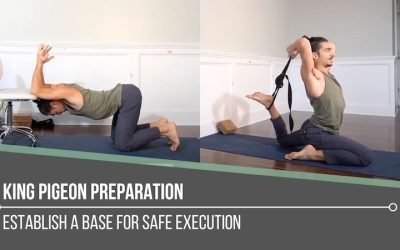
    King Pigeon PreparationHIP OPENINGKING PIGEON PREPARATION King Pigeon demands more than flexibility; it asks us to build carefully and deliberately. Progress comes not from leaping into the deepest version of the posture, but from cultivating strength, control, and...
    read more
    Boat Pose

    Boat Pose

    Boat PoseNAVASANABOAT POSE Our bodies are intelligent and adaptive, often finding ways to compensate when certain muscles are underused. Over time, these patterns can create imbalances, leaving some muscles overdeveloped and others neglected. In yoga, one area often...

    read more
    Scorpion Pose Evolution

    Scorpion Pose Evolution

    Scorpion Pose EvolutionVRISCHIKASANASCORPION POSE EVOLUTION Scorpion Pose, whether practiced in Pincha Mayurasana or in a handstand, blends a backbend with inversion control. It calls for deep opening through the front body, from rib cage to hip flexors and...

    read more
    Side Crow Strategy

    Side Crow Strategy

    Side Crow StrategyPARSVA BAKASANASIDE CROW STRATEGY When we step onto the yoga mat with a strategy, we open ourselves up to a practice that’s both intelligent and transformational. Side Crow is one of those postures that calls for a clear plan, one that breaks down...

    read more
    Build Towards A Bind

    Build Towards A Bind

    Build Towards A BindMOBILITYBUILD TOWARDS A BIND I remember watching a clip on Matt’s Instagram years ago, breaking down how to achieve the bind in Side Angle. At the time, I was chasing the bind the only way I knew how—by trying to get “more open.” I thought the key...

    read more
    Strong Hands For Handstand

    Strong Hands For Handstand

    Strong Hands For HandstandSTABILITYSTRONG HANDS FOR HANDSTAND When it comes to building strength for handstand, it starts at the base: our hands. Developing strong hands means targeting the wrist flexors, the very muscles that help create a trustworthy foundation....

    read more

    THE FREE TECHNIQUE PACK

    When You Subscribe, You Will Get Instant Access to

    • the Technique Pack: 15 yoga pose breakdowns
    • exclusive online course discounts
    • exclusive blogs and videos
    • This field is for validation purposes and should be left unchanged.

    Arm Balances: Protraction Action

    arm Balances: Protraction

    Finding Ease and Lightness in Arm Balances


    ARM BALANCE STRENGTH BUILDING

    Most who practice yoga have come to realize that the practice requires a certain physical strength that doesn’t necessarily coincide with the image of strength in our head. Every yogi has seen a physically in-shape gym goer walk into a yoga class and struggle in his/her first down dog. The reason for this is because there are tons of muscles in the body, and all of them have a purpose. The ones you see on the surface are called the superficial muscles, and their job is primarily to create big movements like swinging a baseball bat, jumping, climbing, etc. While many Yoga postures and transitions require the use of these muscles, the Deep muscles or stabilizing muscles are often most used. In this video, I go over the muscle groups that I find are most important for the majority of arm balances.

    Serratus Anterior

    The muscles I speak of in this video are the Serratus Anterior, and the 4 layers of abdominals (rectus abdominis, external obliques, internal obliques, and transverse abdominis). Serratus Anterior is incredibly important for many arm balances because it creates stability in the shoulder blades and moves the body away from the ground. In the “Handstand Strength Training” video I give exercises in plank pose to help students develop the strength of this muscle. When this muscle is fully engaged in plank the body is further away from the ground. The same is true in arm balances. Further from the ground begins to feel lighter and easier, and as mentioned in the video above, your wrists will feel better as well. The reason you feel lighter and more at ease when the Serratus Anterior is fully engaged is simple- all muscles have an easier time contracting when they are fully shortened. Think of your bicep muscle; isn’t it easier to hold a weight in your hand when your hand is closest to your shoulder vs halfway down at the “holding a tray” position. Part of this is the relationship to gravity but even if you changed the angle of your body that would still be the easiest position for the muscles to be engaged. This is the same reason why it’s easier to do a little tiny pull-up vs going through the full range of motion from straight arms all the way up to bent arms. If you are looking to build strength in the Serratus Anterior I suggest checking out either “The Breakthrough” or “The Chakras and The Elements”. Both immersion focus on strength building for arm balances. 

    October Livestream Yoga Classes

    THE BREAKTHROUGH

    FOCUS: ARM BALANCES & HIP OPENERS

    • Build Upper Body Strength
    • Release Hip Tension
    • Learn Techniques to make hip opening and arm balances more accessible!
    • Experience the revelatory "aha" moments in the postures you struggle with
    • Uncover your range of motion and flexibility
    • Release low back tension through hip opening
    • 12 All Levels Live Asana Classes
    • Lifetime Unlimited Access to All


    Arm Balances: The Core

    The four abdominals have multiple functions including flexion (rounding) of the spine, twisting, side bending, stabilizing, and compressing/lifting inner organs (primarily the transverse abdominis). Depending on the pose, many arm balances require one or more abdominals to engage because of the shape, and because they have the ability to make the midsection more compact. The more compact you feel, the lighter you will feel because all the extremities tend to pull in closer to the center of gravity when the abdominals engage. What I am not going over in this video is the important role that your legs play within all arm balances. I will be releasing another video on Youtube soon showing you how the legs relate to the core. If you are interested in finding out when that video goes up, subscribe to my newsletter and I will let you know. Developing strength in the abdominals has long been a part of the fitness industry, but until recently it was purely for visual purposes. Most people associate having a six-pack with health, but the reality is that it’s more important to have core intelligence than strength. A little strength and a lot of awareness go a very long way, much further than a lot of strength and little awareness of how to use it. Developing strength through applied actions such as doing handstand, crow pose, or exercises that produce greater intelligence in your body is what I focus on in my handstand and arm balance practice. As a result not only do I feel strong in my asana practice but my back feels great, and I am able to apply the awareness to other activities that require body intelligence. For my favorite core strengtheners you click here, or if you are looking for free ways to learn, simply search youtube for how to strengthen the 4 muscles of the core (searching each muscle separately). Anyone who offers an application for the strength and not just the exercise is likely thinking along the same lines of “muscle intelligence” vs strength. Remember you want to know what the muscle does intellectually and know what it feels like in your body. That combination will make it easier to apply later on to your practice!

    October Livestream Yoga Classes

    CHAKRAS AND ELEMENTS

    FULL BODY AWAKENING

    • Unlock Your Hips!
    • Awakem Your Arm Balance Practice
    • Detailed Ankle and Feet Articulation
    • Develop Low Back and Buttock Strength
    • Strengthen Your Core
    • Release S.I. Joint Pain
    • Release Neck Pain
    • The July Immersion Has it ALL
    • Each Chakra & Element is Paired with an Area of the Body and Muscle Group
    • 12 All Levels Live Asana Classes
    • 4 Live Guided Meditations


    arm balance strength for shoulders

    Plank at the Wall

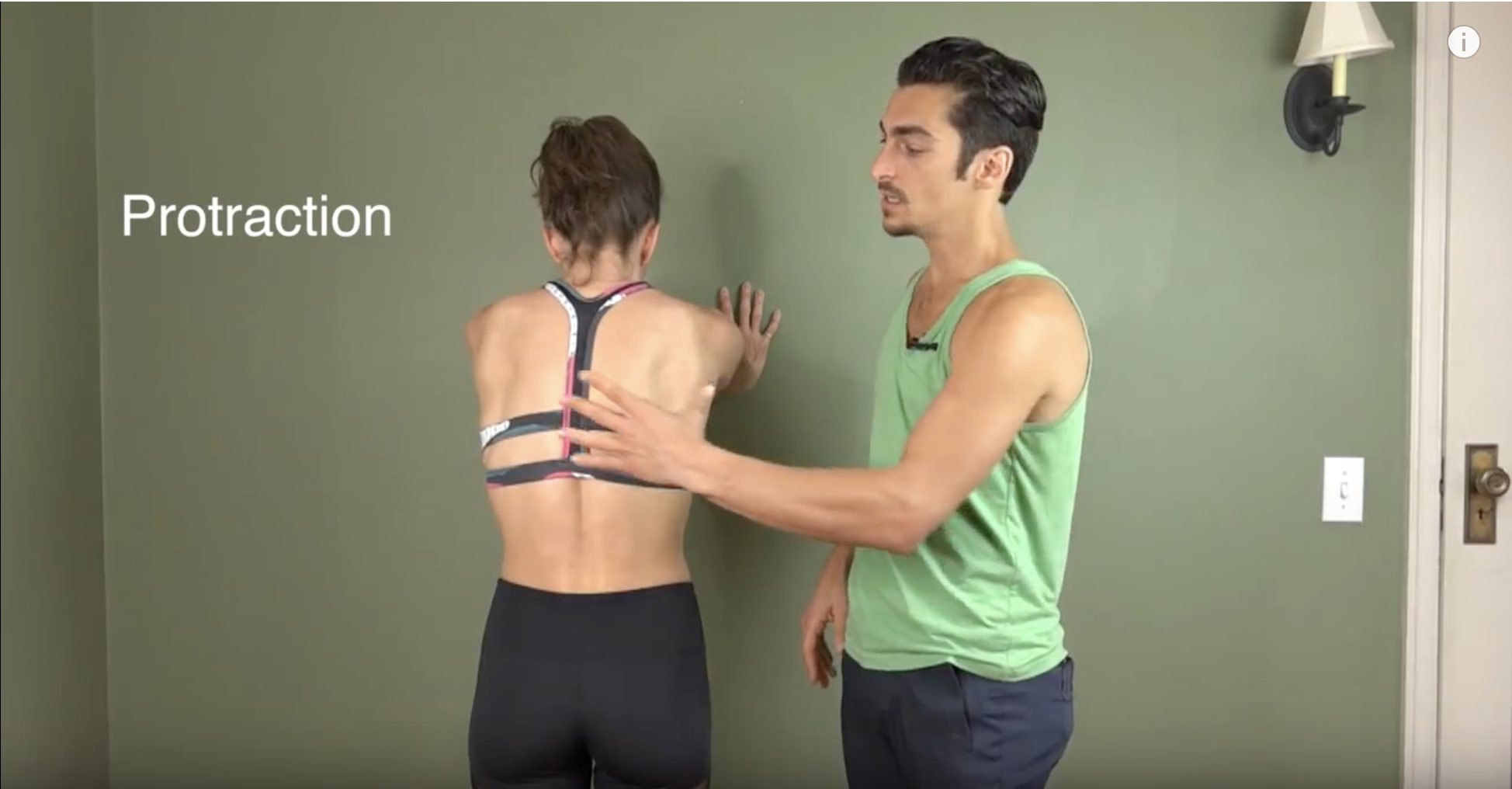
    Taking plank at the wall is one of the best ways to truly develop proprioception for protracting the shoulder blades. As mentioned in the video protraction is when you push the shoulder blades apart from one another and they move around your rib cage. This is an activation of the serratus anterior muscles which tend to require strengthening for most people. At the wall, you can focus on the action without the requirement of strength.

    arm balance strength for crow pose

    Flexion of the Spine

    Flexion of the spine in arm balances requires the muscular activation of the rectus abdominals, obliques, and likely the deep core muscles. While it is possible to do arm balances with the core completely relaxed and still hold the postures, it tends to be easier with the recruitment of them. To develop strength in your core, I highly recommend my top exercises on the Handstand Training video. 

    arm balance strength of the core

    Crow With Protraction and flexion

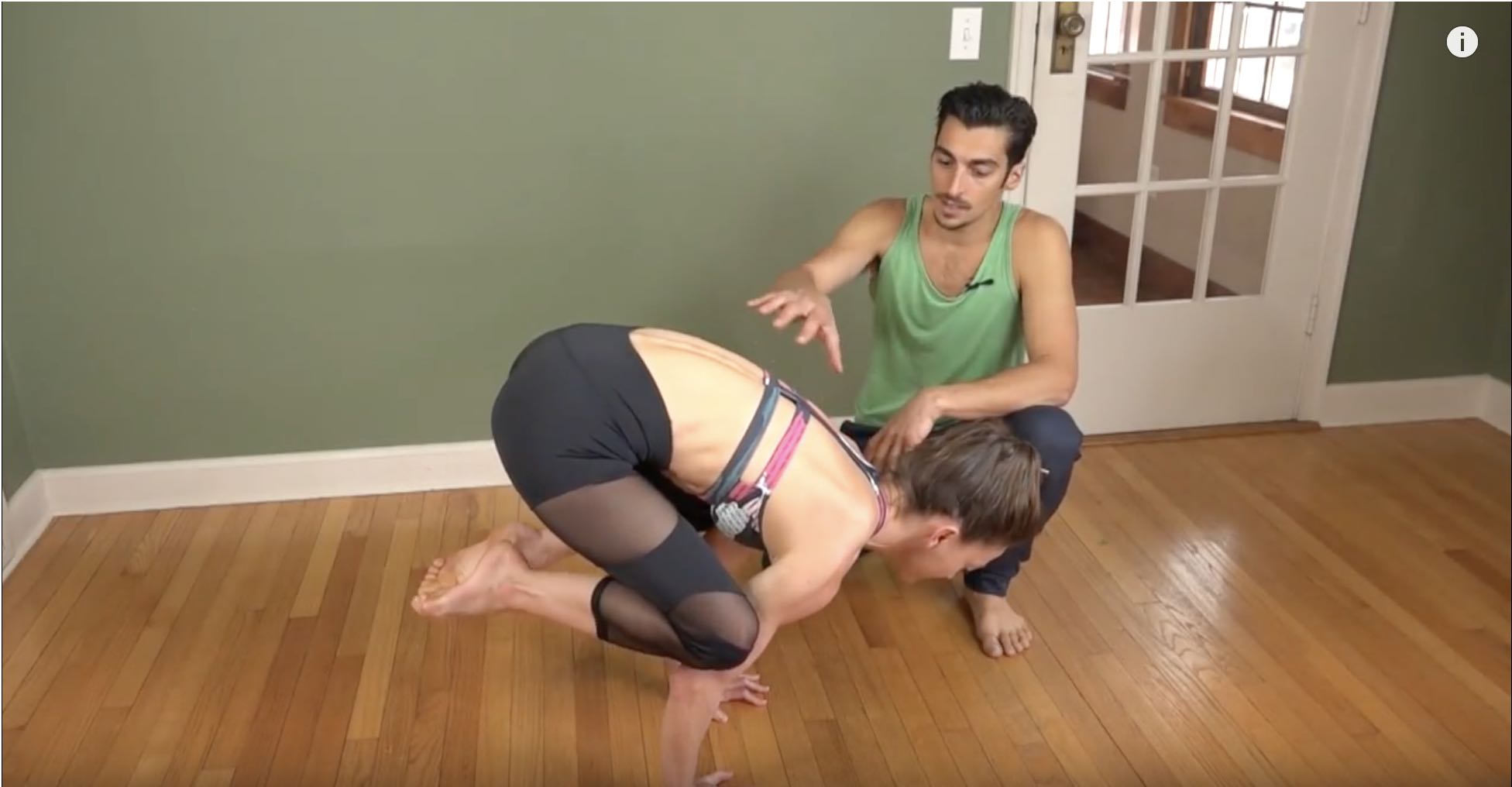
    Putting the two actions together might sound complicated but the two actions actually go hand in hand. Protraction makes spinal flexion easier to access and vice versa. I recommend first trying this in plank posture. If you haven’t yet watched the two blogs on Chaturanga, this is the best place to start integrating protraction into your arm balances. After you’ve worked with chaturanga, if you feel confident balancing crow then you can try applying these actions.

    First Awareness, Then Strength.

    It’s easy to try and jump ahead and go straight to our most challenging arm balance posture and try to apply new actions to it. This approach is okay but if you find that you are not getting it or not feeling a difference, it’s likely because your body needs to develop an awareness around the action itself before it can build strength. We need to create the feedback loop in our body from thought to action to sensation and back again. Once that feedback loop is established, strength can be built through repetition.

    Thanks for joining me here. I hope these tips help with your practice and/or your teaching. Please share your comments, questions, or requests and I will get back to you.

    -Matt

    Handstand Strength Training

    Learn the techniques that make Handstand fun, easy, and accessible! This collection of the top 12 most effective exercises will make you rethink how you approach handstand and what is possible, so you can finally build the proper strength and awareness it takes to hold a handstand.

    Continue Learning

    King Pigeon Preparation

    King Pigeon Preparation

    King Pigeon PreparationHIP OPENINGKING PIGEON PREPARATION King Pigeon demands more than flexibility; it asks us to build carefully and deliberately. Progress comes not from leaping into the deepest version of the posture, but from cultivating strength, control, and...

    read more
    Boat Pose

    Boat Pose

    Boat PoseNAVASANABOAT POSE Our bodies are intelligent and adaptive, often finding ways to compensate when certain muscles are underused. Over time, these patterns can create imbalances, leaving some muscles overdeveloped and others neglected. In yoga, one area often...

    read more
    Scorpion Pose Evolution

    Scorpion Pose Evolution

    Scorpion Pose EvolutionVRISCHIKASANASCORPION POSE EVOLUTION Scorpion Pose, whether practiced in Pincha Mayurasana or in a handstand, blends a backbend with inversion control. It calls for deep opening through the front body, from rib cage to hip flexors and...

    read more
    Side Crow Strategy

    Side Crow Strategy

    Side Crow StrategyPARSVA BAKASANASIDE CROW STRATEGY When we step onto the yoga mat with a strategy, we open ourselves up to a practice that’s both intelligent and transformational. Side Crow is one of those postures that calls for a clear plan, one that breaks down...

    read more
    Build Towards A Bind

    Build Towards A Bind

    Build Towards A BindMOBILITYBUILD TOWARDS A BIND I remember watching a clip on Matt’s Instagram years ago, breaking down how to achieve the bind in Side Angle. At the time, I was chasing the bind the only way I knew how—by trying to get “more open.” I thought the key...

    read more
    Strong Hands For Handstand

    Strong Hands For Handstand

    Strong Hands For HandstandSTABILITYSTRONG HANDS FOR HANDSTAND When it comes to building strength for handstand, it starts at the base: our hands. Developing strong hands means targeting the wrist flexors, the very muscles that help create a trustworthy foundation....

    read more

    THE FREE TECHNIQUE PACK

    When You Subscribe, You Will Get Instant Access to

    • the Technique Pack: 15 yoga pose breakdowns
    • exclusive online course discounts
    • exclusive blogs and videos
    • This field is for validation purposes and should be left unchanged.
    BLACK FRIDAY: 30% OFF ALL ONLINE IMMERSIONS & WORKSHOPS !
    0
    days
    0
    hours
    0
    minutes
    0
    seconds
    BLACK FRIDAY: 30% OFF ALL ONLINE IMMERSIONS & WORKSHOPS!
    0
    days
    0
    hours
    0
    minutes
    0
    seconds
    BLACK FRIDAY SALE! Congratulations, your 30% discount code has been applied and will be reflected at the bottom of the checkout page. All Immersions & Immersion Bundles are included in this sale. To get more info on each immersion click on the photo. On Demand and Lifetime Access To all
    Overlay Image
    BLACK FRIDAY SALE! Congratulations, your 30% discount code has been applied and will be reflected at the very bottom of the checkout page. All Immersions & Immersion Bundles are included in this sale. To get more info on each immersion click on the photo. On Demand and Lifetime Access To all

    Pin It on Pinterest