Strengthen Your “Shelf” For Mayurasana

Strengthen Your “Shelf” for Mayurasana

How to Prepare for This Unique Arm Balance

DELTOIDS

STRENGTHEN YOUR “SHELF” FOR MAYURASANA

Let’s note that muscle groups do not work in isolation: The activation of accessory muscles, although not necessarily the focal point, are an integral part of the execution of a posture. In Mayurasana, the anterior deltoids and rotator cuff muscles may not be part of your first thoughts regarding how to execute this posture, but without considering the role they play, we simply will not be able to create the “shelf” required to create the balance we need in this posture. There is obvious core activation, not to mention strength and activation in the glutes and hamstrings, but the shelf Matt refers to in this class is the ability to hug the elbows in as tightly as possible so as to create an anchor for the pose. The anterior deltoids and rotator cuff muscles offer support, stability, and strength in Mayurasana.
chromatic yoga 15 hour immersion

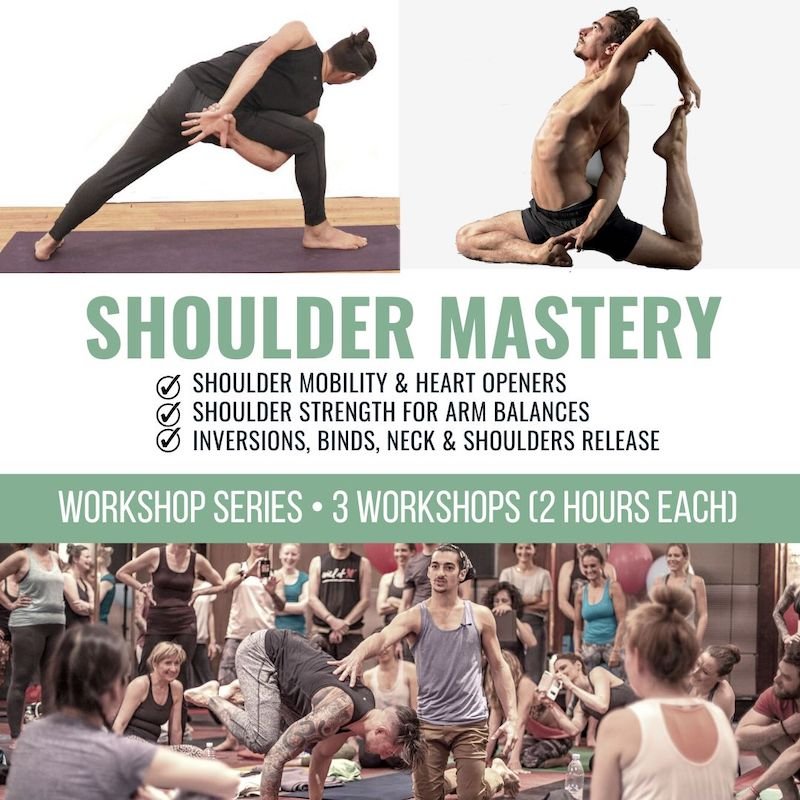
SHOULDER MASTERY

WORKSHOP SERIES

    •  3 livestream workshops and replays
    • Nondogmatic and effective alignment
    • Improve low-back health
    • Shoulder mobility + heart openers
    • Shoulder strength + arm balances
    • Inversions, binds, neck & shoulder release
    • 6 hours of continued education
    • Gain strength and stability
    • Increase range of motion, flexibility, and mobility
    • Step-by-step guidance: Everyone can follow and participate
    • Educationally infused: Learn while you embody
    • Livestream optional; all workshops available as livestreams (see dates below) and as on-demand replays for life
    • Automatically receive access to the replays immediately after the livestream

    BLOCK SQUEEZE DRILL

    In terms of teaching Mayurasana, Matt notes that it’s not an easy pose to sequence towards. Not many other postures mimic the mandatory actions, but there are certainly creative movements and drills we can incorporate into our practice in order to cultivate the inescapable strength required for Mayurasana. Of course, Matt demonstrates the actions we can take to strengthen the appropriate muscle groups. Included in this preparation, in particular for the shelf in Mayurasana, are the biceps, pectoralis muscles, anterior deltoids, and rotator cuff.

    Today’s video starts off with a “block squeeze” drill. The block is squeezed between the forearms with bent elbows, while the arms are externally rotated. Our palms are facing forward, and the upper back is rounded while we “sit” in a Chair Pose position. The pectoralis muscles are engaged, but it’s the external rotation that helps us target the rotator cuff muscles.

    WATCH THE VIDEO

    STRENGTHEN YOUR “SHELF” FOR MAYURASANA: HOW TO PREPARE FOR THIS UNIQUE ARM BALANCE

    MAYURASANA AT THE WALL AND ON YOUR BACK

    Mayurasana at the Wall

    Here, we can practice mimicking what we did in the block drill—squeezing our elbows in towards each other. In addition, the feeling of “trying to pull the wall up” turns on the pectoralis major, the anterior deltoids, and the biceps. We can’t lift our legs here, but we can practice the sensation of pulling our feet back to activate the glutes and hamstrings.

    Mayurasana on Your Back

    By pressing our feet into the ground in this variation, we can get more feedback and activation of the glutes and hamstrings. In the upper body, we practice the shape by rounding the back and placing our arms as if to set up the shelf on top of the rib cage. 
    200 Hour Online Teacher Training Certification

    200 HOUR ONLINE TEACHER TRAINING

    GET CERTIFIED & DEEPEN YOUR YOGA PRACTICE

    • Deepen your yoga practice
    • Build confidence speaking in front of groups in person and online
    • Learn foundational class structures and templates
    • Learn techniques for a wide range of yoga postures
    • Get certified and highly qualified to teach yoga
    • Yoga Alliance Globally Recognized Certification Program

    MAYURASANA “MASTERY”

    In the full class, Matt reminds us that creating the shelf with our arms doesn’t mean that we are resting on top of them. What we’re actually doing is setting up a strong base, our negotiating point for balance. To achieve the final expression of the posture, it’s the angle of the bend at the elbows, the grip of the ground with the fingers, and the strength in the shoulders and upper body that allow us to shift and find the sweet spot that supports the lift of the legs. In today’s video, you’ll see how Matt shifts his weight back and forth before he locks in to the next step, where he finds authentic balance and uses the strength of the core, glutes, and hamstrings to lift his legs. The trust in the foundation that’s been created allows for this masterful execution of Mayurasana.
    300 hour teacher training online

    300 HOUR ONLINE TEACHER TRAINING

    GET 500 HOUR CERTIFIED AS A MASTER TEACHER

    Master your skill set as a teacher through refined techniques, anatomy, biomechanics, sequencing, philosophy, meditation techniques, theming, yoga business, and much more!

    • Get 500 hour certified
    • Learn anatomy, biomechanics, asana techniques
    • Expand your teaching skills
    • Masterful sequencing and verbal delivery
    • Learn meditation and breathwork techniques
    • Transformative tools: theming, dharma talks, satsang

    KEY ACTIONS IN THIS ARM BALANCE

    Here are the 2 key actions Matt outlines for Mayurasana (we’ll find them in most arm balance postures):

    1. Bending the elbows at an open angle (helps to stop us from falling)
    2. Intentionally leaning forward while trying to stop at the same time

    For Mayurasana, more than building strength in the shoulders, biceps, core, glutes, and hamstrings, it’s about how to be very intentional in the drills we implement in our yoga practice. The only way to become masterful is to be informed and guided through drills like these and, of course, to practice the posture itself.

    In Matt’s upcoming 3-part series, Shoulder Mastery, he’ll delve into more about shoulder strength for arm balances, along with a deeper understanding of the shoulders when it comes to inversions, binds, and even releasing the neck.

    Strength without action offers no direction. Register for the workshop series today!

    The 200 Hr. Teacher Training: Click Here to See the Next Start Date

    The 300 Hr. Advanced Teacher Training: Click Here to See the Next Start Date

    Article by Trish Curling

    Videos Extracted From: Anatomy of Arm Balances
    lotus pose online yoga classes

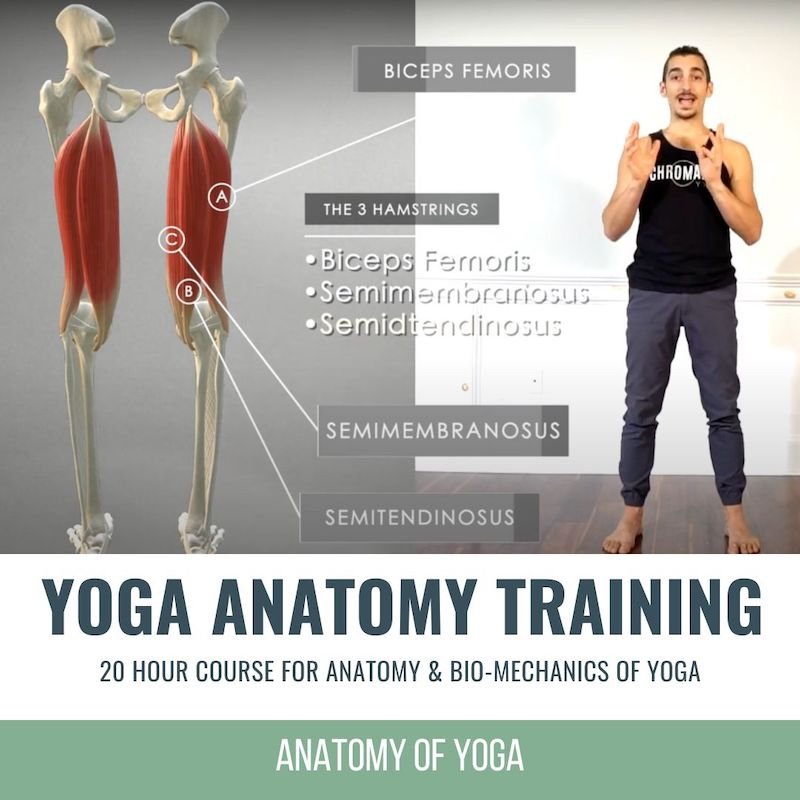
    ONLINE ANATOMY COURSE

    • Accessible, exciting, and easy to learn
    • Anatomy and biomechanics for yoga
    • Appropriate for both teachers and students
    • Learn joint alignment vs pose alignment
    • Demystify yoga poses and transitions
    • Release aches and pains
    • Learn how to avoid common injuries
    • Caters to all levels with modifications and props
    • 20 hours Continued Education Credits with Yoga Alliance
    • 20 hours toward Chromatic Yoga Certification and 300 Hour
    • Lifetime access

    Continue Learning

    Eight Angle Pose

    Eight Angle Pose

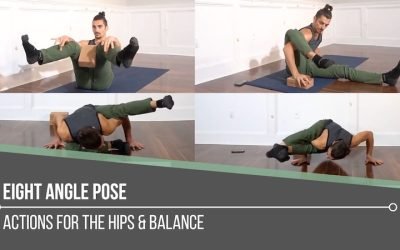
    Eight Angle PoseASTAVAKRASANAEIGHT ANGLE POSE Sometimes we think arm balances are about getting higher, but Matt reframes Eight Angle pose as a mechanics workshop. This posture thrives when we test rotation, pelvic placement, and upper-body stability as interconnected...

    read more
    Approachable Arm Balances

    Approachable Arm Balances

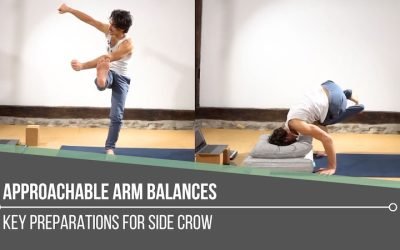
    Approachable Arm BalancesPARSVA BAKASANAAPPROACHABLE ARM BALANCES Approachable arm balances aren’t about fearlessness; they’re about informed action. When we understand the mechanics behind the posture, we gain the power to shape our own outcomes. Rather than jumping...
    read more
    Perfect Protraction For Crow Pose

    Perfect Protraction For Crow Pose

    Perfect Protraction For Crow PoseBAKASANAPERFECT PROTRACTION FOR CROW POSE When working toward perfect protraction for Crow Pose, it’s essential to understand the role of the serratus anterior, the “fingertip” muscles that wrap around the rib cage and attach to the...
    read more
    Help For Hamstrings

    Help For Hamstrings

    Help For HamstringsFLEXIBILITYHELP FOR HAMSTRINGS “Yoga butt” or high hamstring tendonitis can be a literal pain where the sit bones meet the hamstrings and glutes. This area is prone to overuse injuries, especially when repetitive forward folds overstretch rather...
    read more
    Pelvic Floor and Groin Support

    Pelvic Floor and Groin Support

    Pelvic Floor & Groin SupportCOREPELVIC FLOOR AND GROIN SUPPORT Pelvic floor instability can quietly influence how we move and how safe we feel in our practice. Weakness or imbalance here may lead to groin strains, hip discomfort, or even low-back issues....
    read more
    Pain In The Neck

    Pain In The Neck

    Pain In The NeckSTABILITYPAIN IN THE NECK A pain in the neck can be more than just an annoyance.  It can ripple into the shoulders, spine, and even the jaw, creating discomfort that affects the whole body. Often, this pain stems from subtle misalignments: a chin that...

    read more

    THE FREE TECHNIQUE PACK

    When You Subscribe, You Will Get Instant Access to

    • the Technique Pack: 15 yoga pose breakdowns
    • exclusive online course discounts
    • exclusive blogs and videos
    • This field is for validation purposes and should be left unchanged.

    Reverse Plank Pose

    Reverse Plank Pose

    Scapular Retraction for Back Strength

    PURVOTTANASANA

    REVERSE PLANK POSE

    Asymmetry is a common issue when it comes to our asana practice. Opportunities to work on strengthening muscles in the back body are much less frequent than opportunities to strengthen our front body. Improving mobility and strength in the shoulders for a posture like Reverse Plank Pose has a direct influence on strengthening the back body. Reverse Plank Pose is easily neglected, but as Matt stresses in today’s video, it’s probably one of the most important postures we can include in our asana practice.  

    It’s easy to spend a considerable amount of time in Plank Pose and/or use it as a transition in a given asana practice, but we don’t necessarily flip it very often. Flipping the pose upside down and incorporating Reverse Plank Pose into our practice can create extremely therapeutic effects.

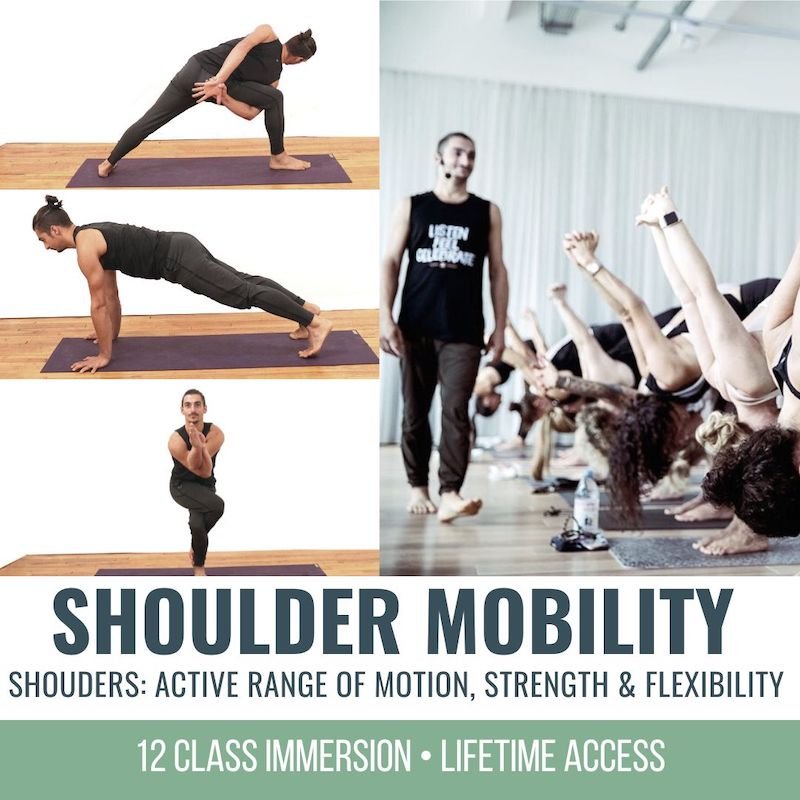
    SHOULDER MOBILITY

    Access Your Active Range of Motions

    • Increase strength and flexibility
    • Decrease risk of injury
    • Release shoulder tension
    • Learn anatomy and biomechanics
    • Access a wider range of postures
    • Stabilize the rotator cuff muscles
    • Learn binds, heart openers, and arm balances
    • 12 all-levels, 75-minute online classes
    • Lifetime unlimited access to all

    THERAPEUTIC OUTCOMES

    If you spend a lot of time with a rounded spine, it’s easy to default into that shape on a regular basis. Even if you attempt to offset your body positioning to open up the chest and come into a more upright or even a backbend position, it can feel abnormal and/or hard to sustain. When this is the case, it can lead to things like chronic neck and back pain.

    In the very first class from the Shoulder Mobility immersion, Matt explains how the muscles of the back body are commonly underused. We can see this not only in our yoga practice but also in everyday activities off the yoga mat. Increasing attention and action in this area of the body can help us reap the therapeutic benefits that are available. 

    WATCH THE VIDEO: REVERSE PLANK POSE FOR BACK STRENGTH

    WHY BACK STRENGTH IS IMPORTANT

    Seems like common sense to know that any type of strength development in the body is not only important but essential. Unfortunately, we don’t always seek or develop balanced strength within our bodies when it comes to our asana practice. It’s human nature to resist things that bring challenge, and engaging the muscles in the back body can be tiring and difficult. The action of drawing the shoulder blades together feels good because it offsets forward shoulder-rounding and increases the stretch in the pectoral muscles. The pectoral muscles spend a lot of time in a shortened position, so retraction of the scapulae in poses like Reverse Plank Pose creates the desired length and stretch in the front body.

    Retraction of the scapulae will help strengthen the rhomboid muscles and the middle fibers of the trapezius. This is important because it informs the quality of your daily posture.

    200 Hour Online Teacher Training Certification

    200 HOUR ONLINE TEACHER TRAINING

    GET CERTIFIED & DEEPEN YOUR YOGA PRACTICE

    • Deepen your yoga practice
    • Build confidence speaking in front of groups in person and online
    • Learn foundational class structures and templates
    • Learn techniques for a wide range of yoga postures
    • Get certified and highly qualified to teach yoga
    • Yoga Alliance Globally Recognized Certification Program

    HAND VARIATIONS IN REVERSE PLANK POSE

    In the video, Matt offers both Reverse Side Plank and Reverse Tabletop. In exploring these variations, you’ll find different ways to place your hands. The reason this is so important is that a specific hand position might be more suitable for your current state of shoulder mobility. It also provides opportunities for you to retract the scapulae from both internal and external rotation of the upper arm bones (humeri). This can help you better understand how to isolate the area of the rhomboids and trapezius. Specific actions, like pulling the hands towards one another and/or apart, can help activate the rear deltoids as well.  

    300 hour teacher training online

    300 HOUR ONLINE TEACHER TRAINING

    GET 500 HOUR CERTIFIED AS A MASTER TEACHER

    Master your skill set as a teacher through refined techniques, anatomy, biomechanics, sequencing, philosophy, meditation techniques, theming, yoga business, and much more!

    • Get 500 hour certified
    • Learn anatomy, biomechanics, asana techniques
    • Expand your teaching skills
    • Masterful sequencing and verbal delivery
    • Learn meditation and breathwork techniques
    • Transformative tools: theming, dharma talks, satsang

    REVERSE PLANK POSE SETUP

    1. Find a seated position, with legs stretched out ahead of you and fingers pointing towards heels (internal rotation of upper arm bone)
    2. Lift shoulders up to the ears 
    3. Pull shoulders back
    4. Move chest forward (increases activation of back muscles)
    5. Flex or point feet
    6. Press down through heels (using glute, back, and shoulder muscles to lift up into Plank)

    You can see that Matt goes into great detail with each action, helping you maximize the benefit of generating strength in your back. If you’d like to actually see a difference in your posture and a reduction of pain, retraction of the scapulae is much more than just pulling your shoulder blades together.

    Matt’s Shoulder Mobility immersion continues for the month of November. Register now and you’ll be able to practice live for the rest of the month, or else practice the classes in your own time. You’ll have lifetime access to all 12 classes once complete.

    See you on the mat!

    The 200 Hr. Teacher Training: Click Here to See the Next Start Date

    The 300 Hr. Advanced Teacher Training: Click Here to See the Next Start Date

    Article by Trish Curling

    Video Extracted From: Shoulder Mobility

    UPCOMING TEACHER TRAININGS

    NEXT TRAINING BEGINS FEBRUARY 2024 ENROLLMENT NOW OPEN!
    NEXT TRAINING BEGINS FEBRUARY 2024 ENROLLMENT NOW OPEN!

    Continue Learning

    Eight Angle Pose

    Eight Angle Pose

    Eight Angle PoseASTAVAKRASANAEIGHT ANGLE POSE Sometimes we think arm balances are about getting higher, but Matt reframes Eight Angle pose as a mechanics workshop. This posture thrives when we test rotation, pelvic placement, and upper-body stability as interconnected...

    read more
    Approachable Arm Balances

    Approachable Arm Balances

    Approachable Arm BalancesPARSVA BAKASANAAPPROACHABLE ARM BALANCES Approachable arm balances aren’t about fearlessness; they’re about informed action. When we understand the mechanics behind the posture, we gain the power to shape our own outcomes. Rather than jumping...

    read more
    Perfect Protraction For Crow Pose

    Perfect Protraction For Crow Pose

    Perfect Protraction For Crow PoseBAKASANAPERFECT PROTRACTION FOR CROW POSE When working toward perfect protraction for Crow Pose, it’s essential to understand the role of the serratus anterior, the “fingertip” muscles that wrap around the rib cage and attach to the...

    read more
    Help For Hamstrings

    Help For Hamstrings

    Help For HamstringsFLEXIBILITYHELP FOR HAMSTRINGS “Yoga butt” or high hamstring tendonitis can be a literal pain where the sit bones meet the hamstrings and glutes. This area is prone to overuse injuries, especially when repetitive forward folds overstretch rather...

    read more
    Pelvic Floor and Groin Support

    Pelvic Floor and Groin Support

    Pelvic Floor & Groin SupportCOREPELVIC FLOOR AND GROIN SUPPORT Pelvic floor instability can quietly influence how we move and how safe we feel in our practice. Weakness or imbalance here may lead to groin strains, hip discomfort, or even low-back issues....

    read more
    Pain In The Neck

    Pain In The Neck

    Pain In The NeckSTABILITYPAIN IN THE NECK A pain in the neck can be more than just an annoyance.  It can ripple into the shoulders, spine, and even the jaw, creating discomfort that affects the whole body. Often, this pain stems from subtle misalignments: a chin that...

    read more

    THE FREE TECHNIQUE PACK

    When You Subscribe, You Will Get Instant Access to

    • the Technique Pack: 15 yoga pose breakdowns
    • exclusive online course discounts
    • exclusive blogs and videos
    • This field is for validation purposes and should be left unchanged.

    Crow Pose On Blocks

    Crow Pose on Blocks

    Take Your Shoulder Stability to New Heights

    STABILITY

    CROW POSE 

    It’s not unusual to have a healthy amount of fear and hesitation when it comes to finding balance in crow pose: Will I fall? Am I strong enough? Will I hurt myself? One of the most amazing things about an asana practice, however, is how we learn so much about our bodies. We learn through exploration. When you have a teacher like Matt, he not only provides inspiration to explore, but through his extensive knowledge of the body, he offers a myriad of specific actions for you to experiment with that allow you to move towards a desired result. In today’s video, Matt demonstrates the dual action for you to take for improved shoulder stability in Crow Pose. The use of yoga blocks in this variation of the pose serves as an excellent support to take your shoulder stability to new heights.

    SHOULDER MOBILITY

    Access Your Active Range of Motions

    • Increase strength and flexibility
    • Decrease risk of injury
    • Release shoulder tension
    • Learn anatomy and biomechanics
    • Access a wider range of postures
    • Stabilize the rotator cuff muscles
    • Learn binds, heart openers, and arm balances
    • 12 all-levels, 75-minute online classes
    • Lifetime unlimited access to all

    HYPERMOBILE VS. HYPOMOBILE

    Whether you are hypermobile or hypomobile, working on stability in your yoga practice is a must. What’s the difference between the two?  “Joint hypermobility is a clinical condition in which the joints move beyond the expected physiological range of motion.” When this is the case, understanding your body and knowing your individual “end range” can help you know when to pull back in order to minimize instability and possible injury. On the other hand, hypomobility means that there is a decrease and a significant limitation in the range of motion that is actually possible within a specific joint. When it comes to the shoulders, both states are common, and both have the potential to result in pain. It may seem counterintuitive to work on stability when hypomobile, because you may associate the toughness or rigidity with stability. Stability is just part of the equation when developing healthy muscle tissue, but it is an important part of the equation.  

    Atici A, Aktas I, Akpinar P, Ozkan FU. The relationship between joint hypermobility and subacromial impingement syndrome and adhesive capsulitis of the shoulder. North Clin Istanb. 2018 Sep;5(3):232-237. doi: 10.14744/nci.2017.35119. PMID: 30688930; PMCID: PMC6323568.

    WATCH THE VIDEO: CROW POSE ON BLOCKS

    SHOULDER STABILITY

    An essential part of shoulder stability happens when the muscles around the glenohumeral joint (rotator cuff muscles) have the ability to contract and help the head of the humerus (upper arm bone) stay centered and secure in the joint. Having the ability to contract means that these muscles actually have less rigidity; it means that there is a suppleness to the tissues which allows them to contract, expand, move, and glide as they should. An arm balance like Crow Pose requires a sizable amount of shoulder stability.

    200 Hour Online Teacher Training Certification

    200 HOUR ONLINE TEACHER TRAINING

    GET CERTIFIED & DEEPEN YOUR YOGA PRACTICE

    • Deepen your yoga practice
    • Build confidence speaking in front of groups in person and online
    • Learn foundational class structures and templates
    • Learn techniques for a wide range of yoga postures
    • Get certified and highly qualified to teach yoga
    • Yoga Alliance Globally Recognized Certification Program

    THE 2 MAIN ACTIONS

    The actions Matt demonstrates in the video for shoulder stability in Crow Pose are protraction and external rotation. He explains that in scapular protraction, the tendency will be to internally rotate the humerus; however, if you can externally rotate the arm bones while in protraction, it will create a vast amount of shoulder stability in your arm balances. There’s actually a counteraction taking place. The goal is to apply these two actions simultaneously. Matt teaches us that internal rotation is fine—it’s actually something we want—but in the context of this arm balance, if you counteract the protraction with external rotation, there will be a tremendous amount of muscle activation that surrounds the joints. This in turn translates into better stability and better balance.

    300 hour teacher training online

    300 HOUR ONLINE TEACHER TRAINING

    GET 500 HOUR CERTIFIED AS A MASTER TEACHER

    Master your skill set as a teacher through refined techniques, anatomy, biomechanics, sequencing, philosophy, meditation techniques, theming, yoga business, and much more!

    • Get 500 hour certified
    • Learn anatomy, biomechanics, asana techniques
    • Expand your teaching skills
    • Masterful sequencing and verbal delivery
    • Learn meditation and breathwork techniques
    • Transformative tools: theming, dharma talks, satsang

    IMPLEMENT THESE KEY ACTIONS FOR CROW POSE ON BLOCKS

    Executing Crow Pose on blocks is not as simple as only doing the 2 actions (protraction and external rotation) for the shoulders, but bringing your focus and attention here might just be what is missing from actually realizing your full potential in the posture.

    Here are the steps:

    1. Stack 2 blocks horizontally on their first height
    2. Place your hands wide on the ground, just ahead of the blocks
    3. Step onto the blocks 
    4. Lower your hips down towards your heels
    5. Take your knees wide and out to the sides (*The height of the blocks allow you to have a better handle on allowing your shins the space to rest on the upper arms for better support)
    6. Squeeze legs into the chest
    7. Get your fingers active (grip the ground)
    8. Lean forward into fingers
    9. Rotate elbows in (external rotation of the humerus)
    10.  Squeeze knees in towards your midline (activating the adductor muscles)
    11. Push the floor away to protract the scapulae more (round your back more)

    TAKEAWAYS

    What you end up finding out about your body is whether or not your proprioception is accurate: Is your physical body able to respond to the cues so as to follow through with these actions? Do you require more strength? This helps you to map out your next steps and course of action.

    A good step in the right direction is to sign up for Matt’s Shoulder Mobility immersion. In this immersion, you’ll learn more about how to strengthen key muscles of the shoulders. Matt also be teaches techniques that assist in increasing both active and passive range of motion.

    See you on the mat!

    The 200 Hr. Teacher Training: Click Here to See the Next Start Date

    The 300 Hr. Advanced Teacher Training: Click Here to See the Next Start Date

    Article by Trish Curling

    Video Extracted From: Shoulder Revelation Immersion

    UPCOMING TEACHER TRAININGS

    NEXT TRAINING BEGINS FEBRUARY 2024 ENROLLMENT NOW OPEN!
    NEXT TRAINING BEGINS FEBRUARY 2024 ENROLLMENT NOW OPEN!

    Continue Learning

    Eight Angle Pose

    Eight Angle Pose

    Eight Angle PoseASTAVAKRASANAEIGHT ANGLE POSE Sometimes we think arm balances are about getting higher, but Matt reframes Eight Angle pose as a mechanics workshop. This posture thrives when we test rotation, pelvic placement, and upper-body stability as interconnected...

    read more
    Approachable Arm Balances

    Approachable Arm Balances

    Approachable Arm BalancesPARSVA BAKASANAAPPROACHABLE ARM BALANCES Approachable arm balances aren’t about fearlessness; they’re about informed action. When we understand the mechanics behind the posture, we gain the power to shape our own outcomes. Rather than jumping...

    read more
    Perfect Protraction For Crow Pose

    Perfect Protraction For Crow Pose

    Perfect Protraction For Crow PoseBAKASANAPERFECT PROTRACTION FOR CROW POSE When working toward perfect protraction for Crow Pose, it’s essential to understand the role of the serratus anterior, the “fingertip” muscles that wrap around the rib cage and attach to the...

    read more
    Help For Hamstrings

    Help For Hamstrings

    Help For HamstringsFLEXIBILITYHELP FOR HAMSTRINGS “Yoga butt” or high hamstring tendonitis can be a literal pain where the sit bones meet the hamstrings and glutes. This area is prone to overuse injuries, especially when repetitive forward folds overstretch rather...

    read more
    Pelvic Floor and Groin Support

    Pelvic Floor and Groin Support

    Pelvic Floor & Groin SupportCOREPELVIC FLOOR AND GROIN SUPPORT Pelvic floor instability can quietly influence how we move and how safe we feel in our practice. Weakness or imbalance here may lead to groin strains, hip discomfort, or even low-back issues....

    read more
    Pain In The Neck

    Pain In The Neck

    Pain In The NeckSTABILITYPAIN IN THE NECK A pain in the neck can be more than just an annoyance.  It can ripple into the shoulders, spine, and even the jaw, creating discomfort that affects the whole body. Often, this pain stems from subtle misalignments: a chin that...

    read more

    THE FREE TECHNIQUE PACK

    When You Subscribe, You Will Get Instant Access to

    • the Technique Pack: 15 yoga pose breakdowns
    • exclusive online course discounts
    • exclusive blogs and videos
    • This field is for validation purposes and should be left unchanged.

    Serratus Push Ups Tutorial

    Serratus Push-Ups Tutorial

    Variations for Strength

    strength

    What Is The Importance of Serratus Anterior Push-Ups?

    When you hear the term “boxer muscles,” you most likely know that it’s referring to the serratus anterior. However you refer to it, it’s an important part of creating both stability and strength for your shoulders. A great way to strengthen the serratus anterior is by doing “serratus push-ups.” There is a variety of different ways in which to approach them. In today’s serratus push-ups tutorial video, Matt demonstrates 4 variations that help you tap into the strength required for greater access to postures that require the use of these “push” muscles. 

    Why Are They Relevant To Your Yoga Practice?

    Serratus push-ups are also commonly referred to as scapula push-ups. They are a wonderful and necessary part of your toolkit for both increased strength of your shoulders and mobility of the scapulae. The serratus anterior facilitates upward rotation of the scapulae whenever you take your arms into a position over your head. Upward rotation of the scapulae is necessary to take some of the work away from the trapezius. It also helps reduce the possibility of hypermobility in the glenohumeral joint.

    In your physical yoga practice, this is relevant in postures like Downward-Facing Dog, Chair Pose, Crescent Lunge, and Handstand (just to name a few). Upward rotation of the scapulae is also helpful in your everyday life. Having the awareness to utilize the movement of the shoulder blades when reaching for objects overhead, for example, offers the same result. You maintain greater health and movement of the shoulder because you are recruiting the use of the serratus anterior muscles to create movement of the scapula.


    Handstand and meditation online yoga classes

    HANDSTAND & MEDITATION

    ONLINE YOGA IMMERSION

    BREAK THROUGH MENTAL & PHYSICAL BLOCKS

    • Learn the most effective drills to safely build your Handstand
    • Practice essential meditation techniques to break through mental barriers and build confidence
    • Improve focus and breath support right side up and upside down
    • Build strength and the necessary skills for balancing Handstand
    • 12 classes: All levels appropriate
    • Lifetime unlimited access to all
    • Attend livestream OR practice the replays any time that’s convenient for you

    SALE PRICE: $168.00

    MORE INFORMATION

    SERRATUS ANTERIOR MUSCLES

    These muscles run underneath your scapulae, then around to the ribcage: “The serratus anterior is ‘multi-headed’ and forms the lateral part of the chest wall, giving it a ‘serrated’ appearance.” Contracting these muscles creates the movement of the scapulae around your ribs (protraction). 

    Long, Ray. The Key Muscles of Yoga. Bandha Yoga Publications, 2005. Pg. 162

    WATCH THE VIDEO: SERRATUS PUSH-UPS TUTORIAL

    NEXT TRAINING BEGINS FEBRUARY 2024 ENROLLMENT NOW OPEN!
    NEXT TRAINING BEGINS FEBRUARY 2024 ENROLLMENT NOW OPEN!

    THE 2 MAIN ACTIONS

    In a serratus push-up, the 2 main actions are retraction and protraction of the scapulae.  

    Retraction of the Scapulae

    When you are performing one of the serratus push-up variations, it’s really your torso that moves towards the surface beneath you in order to create the retraction. In this case, the scapulae are not creating the movement. The focus here is the “push,” when you actually “push the floor away” in order to move into the next action in the movement (protraction).

    Protraction of the Scapulae

    Protraction creates a great deal of stability in your shoulder joint. When you take your arms overhead in your yoga practice, it’s likely that you will default into retraction (drawing your shoulder blades towards one another). If this is your intention, that’s fine, but let’s consider what that means in the context of Handstand. If the goal is to be straight up and down and stable in the posture, of course it requires a great deal of strength. It’s important then to be extremely intentional about creating protraction of the scapulae (pushing your shoulder blades away from one another). It’s in this “push” action that you recruit and rely on the serratus anterior muscles to support and align your body for the greatest amount of stability.

    STRENGTH

    ONLINE YOGA IMMERSION

    Yoga for Strength: Strengthen Your Weaknesses • Maximize Your Physical Potential

    • 12 classes: Each class targets a specific muscle group
    • Strengthen your core, back, hips, shoulders, wrists, ankles, legs, and arms
    • Learn creative ways to strength train within the context of a yoga practice
    • Increase mobility by balancing your strength with oppositional muscle groups
    • Joyful accountability to help you reach your practice goals

    SALE PRICE: $138.00 $128.00

    MORE INFORMATION

    SERRATUS PUSH-UPS: 4 VARIATIONS FOR STRENGTH

    There are specific cues for each scapular push-up variation that help you to maximize your potential to create strength.

    Variation (Level 1)

    1. Place the forearms on the floor with your knees stacked under your hips
    2. Let the chest sink into the retracted scapulae
    3. Push the elbows into the ground until scapulae push apart (creating the 2nd phase of the push-up)

    Variation (Level 2)

    1. Take your knees further away (more into a plank-like position)
    2. Execute the serratus push-ups 

    Variation (Level 3)

    1. Plank on forearms with toes tucked
    2. Execute serratus push-ups

    Variation (Level 4)

    1. Plank on forearms with toes pointed
    2. Round your back
    3. Bring ankle bones together
    4. Execute serratus push-ups

    A SIMPLE FORMULA FOR STRENGTH

    Consistency and progression are the winners here. It’s important to explore all 4 of these serratus push-up variations to find out what is most suitable for you. Matt suggests a conservative number of repetitions while you maintain integrity in your form. Once you feel like you are able to increase the number of repetitions, you may progress to the next level or variation (doing only a conservative amount) in order to become aware of whether or not you wish to return to the previous level, possibly increasing the number of repetitions. Exploring in this way over time is a recipe for increased strength in the serratus anterior and increased stability of the scapulae.

    There is still time to explore more of this in Matt’s current immersion, Handstand & Meditation.

    See you on the mat!

    The 200 Hr. Teacher Training: Click Here to See the Next Start Date

    The 300 Hr. Advanced Teacher Training: Click Here to See the Next Start Date

    Article by Trish Curling

    Video Extracted From: Handstand & Meditation Immersion

    CHOOSE YOUR PATH

    NEXT TRAINING BEGINS FEBRUARY 2024 ENROLLMENT NOW OPEN!
    NEXT TRAINING BEGINS FEBRUARY 2024 ENROLLMENT NOW OPEN!

    Continue Learning

    Eight Angle Pose

    Eight Angle Pose

    Eight Angle PoseASTAVAKRASANAEIGHT ANGLE POSE Sometimes we think arm balances are about getting higher, but Matt reframes Eight Angle pose as a mechanics workshop. This posture thrives when we test rotation, pelvic placement, and upper-body stability as interconnected...

    read more
    Approachable Arm Balances

    Approachable Arm Balances

    Approachable Arm BalancesPARSVA BAKASANAAPPROACHABLE ARM BALANCES Approachable arm balances aren’t about fearlessness; they’re about informed action. When we understand the mechanics behind the posture, we gain the power to shape our own outcomes. Rather than jumping...

    read more
    Perfect Protraction For Crow Pose

    Perfect Protraction For Crow Pose

    Perfect Protraction For Crow PoseBAKASANAPERFECT PROTRACTION FOR CROW POSE When working toward perfect protraction for Crow Pose, it’s essential to understand the role of the serratus anterior, the “fingertip” muscles that wrap around the rib cage and attach to the...

    read more
    Help For Hamstrings

    Help For Hamstrings

    Help For HamstringsFLEXIBILITYHELP FOR HAMSTRINGS “Yoga butt” or high hamstring tendonitis can be a literal pain where the sit bones meet the hamstrings and glutes. This area is prone to overuse injuries, especially when repetitive forward folds overstretch rather...

    read more
    Pelvic Floor and Groin Support

    Pelvic Floor and Groin Support

    Pelvic Floor & Groin SupportCOREPELVIC FLOOR AND GROIN SUPPORT Pelvic floor instability can quietly influence how we move and how safe we feel in our practice. Weakness or imbalance here may lead to groin strains, hip discomfort, or even low-back issues....

    read more
    Pain In The Neck

    Pain In The Neck

    Pain In The NeckSTABILITYPAIN IN THE NECK A pain in the neck can be more than just an annoyance.  It can ripple into the shoulders, spine, and even the jaw, creating discomfort that affects the whole body. Often, this pain stems from subtle misalignments: a chin that...

    read more

    THE FREE TECHNIQUE PACK

    When You Subscribe, You Will Get Instant Access to

    • the Technique Pack: 15 yoga pose breakdowns
    • exclusive online course discounts
    • exclusive blogs and videos
    • This field is for validation purposes and should be left unchanged.

    Headstand: Neck Relief

    Headstand: Neck Relief

    No More "Pain in the Neck"


    Intentional Practice

    For many years I split my yoga asana practice into two parts. On one side I dedicated my learning to the therapeutic qualities and on the other side advancing my practice. It was a while before I realized that they were one and the same and it took longer to realize that “advanced” transition could lead to greater ease and freedom. This video is born out of my understanding of what I used to consider to be just an advanced transition.

    Let’s touch briefly on the neck in headstand. I think we all know that putting our entire weight on our neck could obviously have its dangers. There are also many claimed benefits from it, some of which I agree with from my own experience. Headstand can be extremely empowering and freeing on an emotional level, and beyond that, it is a platform to build more strength and stability for the neck. In addition, going upside down in general can increase our proprioception (knowing where our body is in space). To be sure we are gaining all the benefits and not dealing with the potential downfalls of having all our weight on our neck, I find it beneficial to learn how to do headstand with our head off the ground. Some would call this forearm stand, some would argue it’s still headstand arms so it’s headstand…what you call it is not important, but having the strength and awareness definitely is beneficial.

    There are two main anatomical actions that I go over in this video:
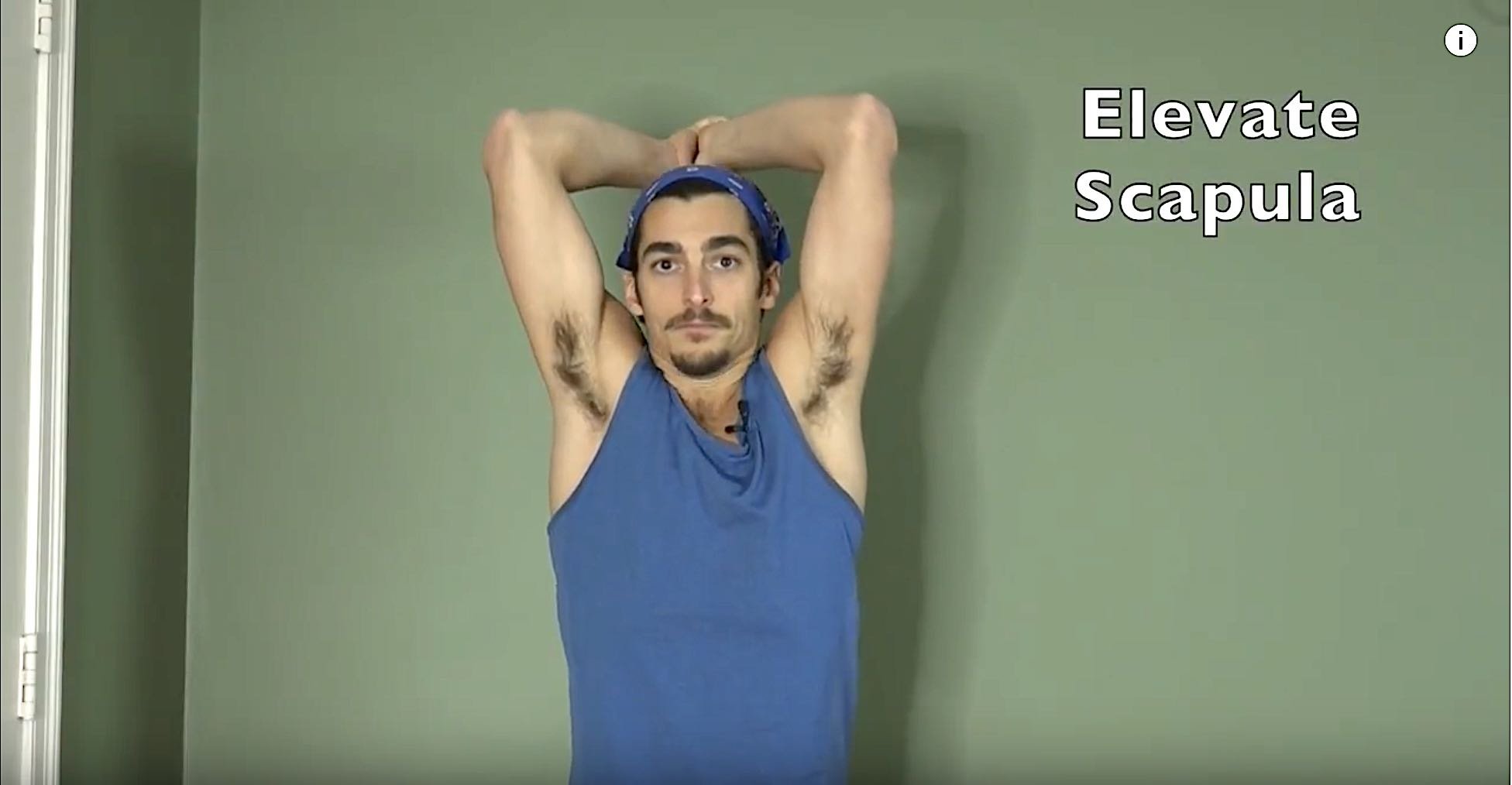
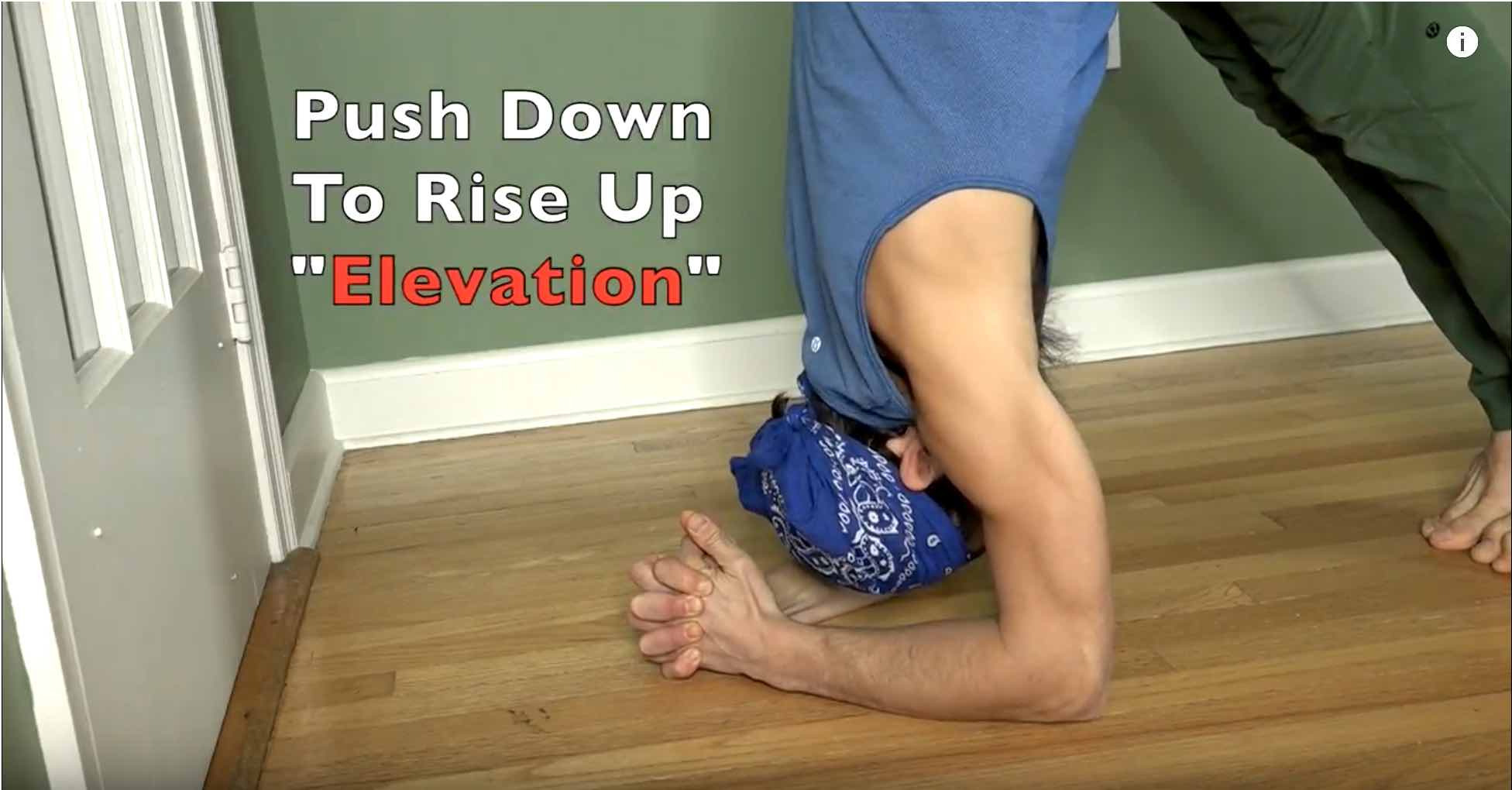
    Elevation of the Scapula: Shoulder blades raise up toward the ears
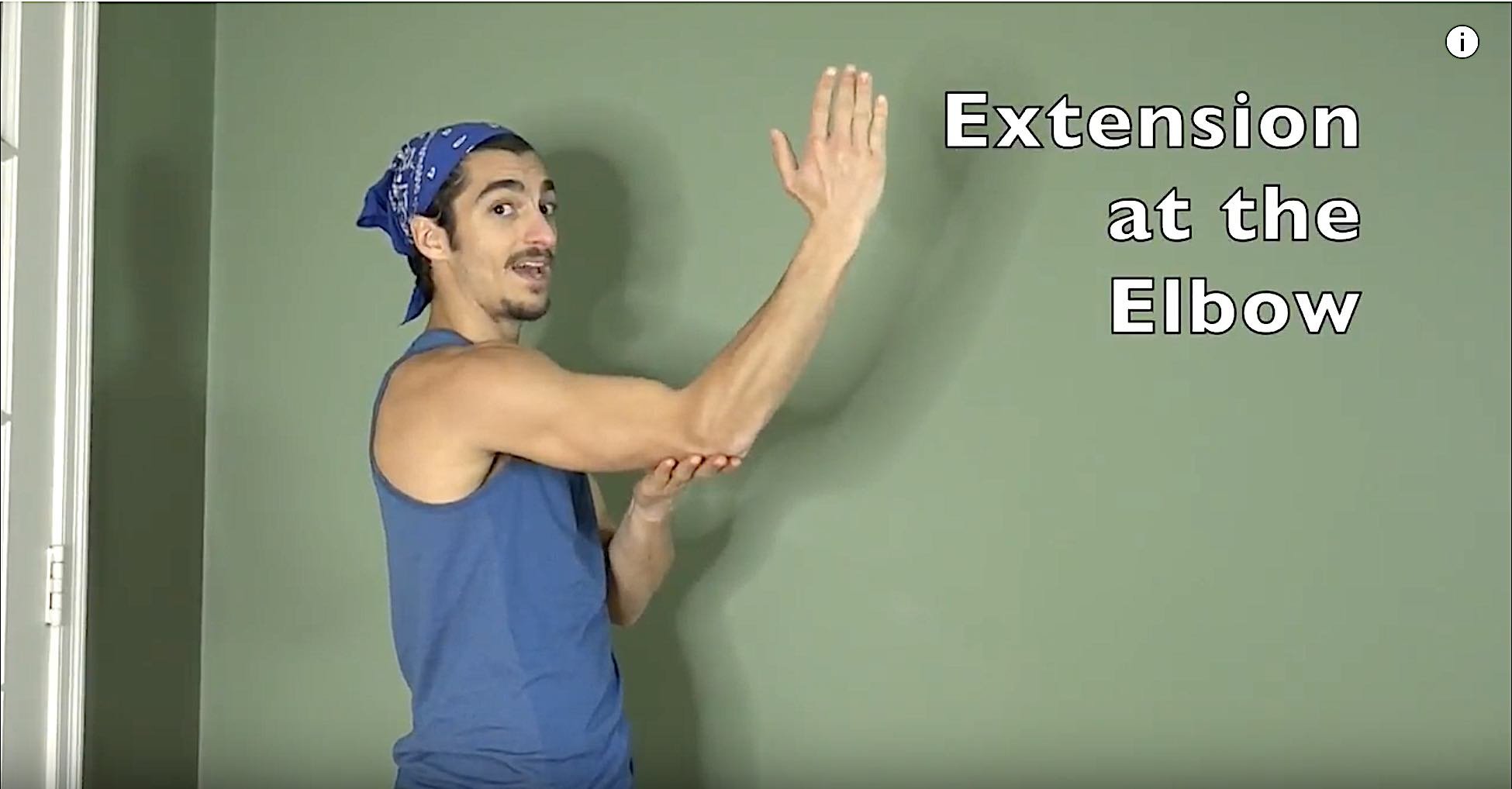
    Extension at the Elbow Joint: The Elbow straightening.

    Elevation of the scapula is the main action in relieving neck pressure because when executed with enough strength, the head will lift off of the ground. Once you have the strength and control over the muscles that create elevation (mainly the upper fibers of the trapezius muscles) you will then have the choice of how much weight you place on your head. Trying to extend at the elbow joint can help maintain stability and balance as you elevate your scapula and can assist in rising away from the ground.

    The Actions

    In the video you will be provided with a visual demonstration of elevating the scapula with headstand arms. While you are reading this you can try elevating your scapula by shrugging your shoulders up by your ears. This action is remarkably easier when the arms are by your side in a resting position than when they are over head and bearing the weight of your body, but awareness of the action makes it a lot easier to attempt once you enter the position. Many yoga teachers will shun the idea of your shoulders rising up by the ears simply because it tends to be an unconscious pattern. Remember this pattern is not necessarily bad or good, it’s the unconscious part that is the problem. Another way to look at it is if we hold an equal and opposite pattern of elevated scapula then our shoulders would be balanced and relaxed. If you are someone whose shoulders rise toward your ears on a daily basis here are some things to consider.
    Your stress levels: If your shoulders are tensed up it could be an indication that your emotional body/nervous system is more often in the state of panic and your nervous system is sending signals to your muscles to hold tension because “something bad is going to happen.” There is no short answer for what to do but one-on-one coaching could help. I am happy to connect for a free Skype session to discuss some options with you.
    Strengthen the opposite muscles: In this case, do pull-ups and work on strengthening the muscles of depression.
    Strengthen to Release: It may sound strange but usually a muscle holding tension is not tense because it is strong, more likely because it is weak. Strengthening it can actually relax it. In this case, elevating your scapula will help strengthen the upper fibers of the trapezius muscles, and therefore could lead to releasing your neck tension!

    How to Strengthen

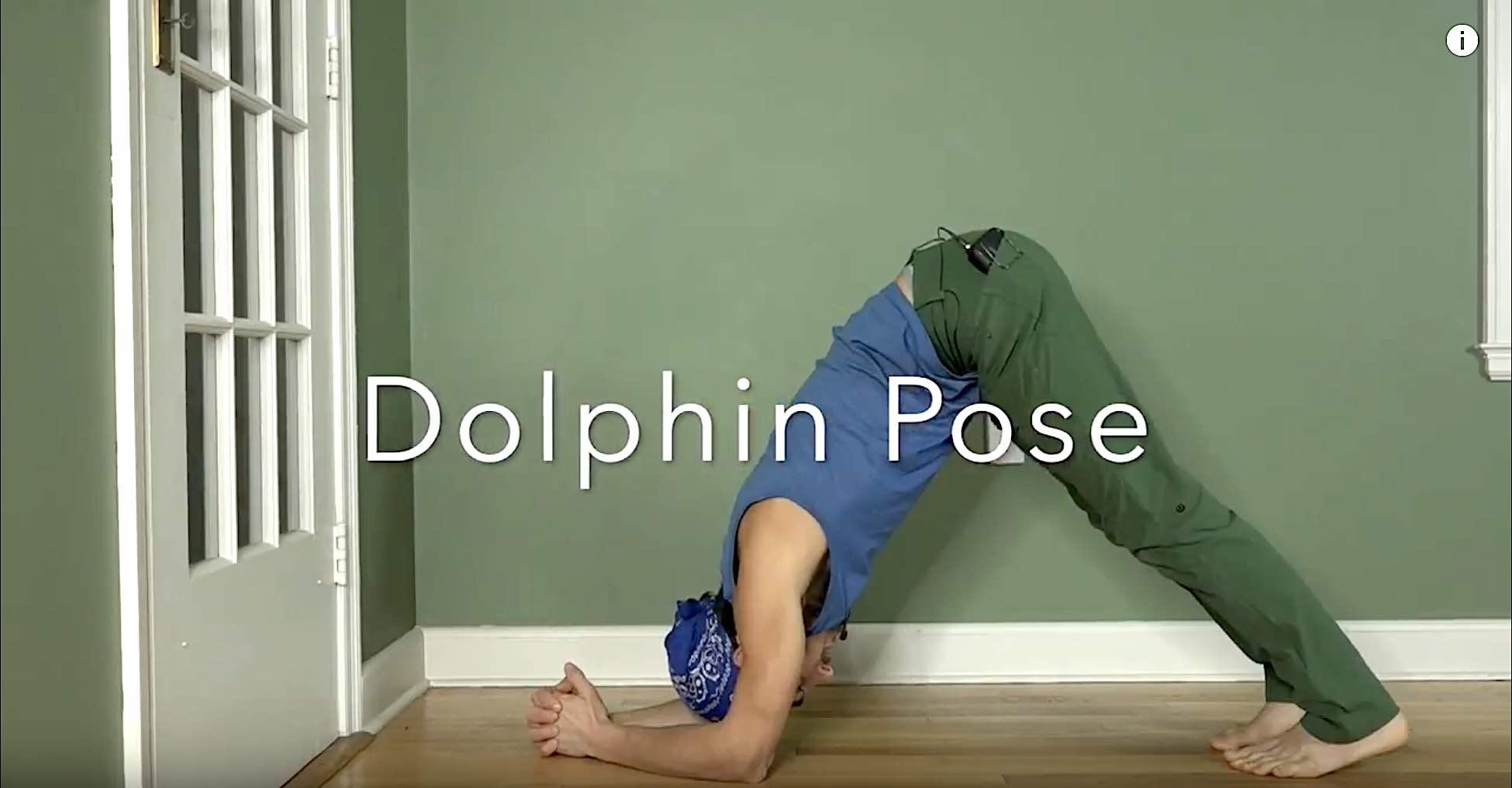
    There are multiple ways to strengthen the muscles that elevate the scapula and extend the elbow. In the video I offer a way to do so while approaching the pose. Dolphin pose (Down Dog on Forearms) is a great start for the more beginner practitioner. Check out the video and try the actions to feel it in your body. If you find it helpful and you are looking for more ways to strengthen your inversion practice Click Here to check out my top exercises for the arms, shoulders, wrists, and core!

    Want more Free education? Check out Headstand: 3 Ways In

    HANDSTAND TRAINING

    2 PART COURSE FOR STRENGTH & BALANCE

    • Part 1: Get strong in key areas for Handstand
    • Part 2: Learn to Balance Handstand
    • Techniques, anatomy and drills to gain mastery on your hands
    • Easy to follow, step by step approach
    • Find weak points and make them your strengths
    • The most efficient & effective course to access handstand
    • Option to purchase each course separately or together

    CURRENT SALE PRICE FOR BOTH

    $298.00 $148.00

    1. Elevate Your Scapula

    Before going upside down and bearing weight, ensure that you have the range of motion in your shoulders to elevate your scapula with headstand arms – clasped fingers, bent elbows, arms overhead. Lift and lower your shoulders toward and away from your ears several times with your breath to awaken your trapezius and serratus anterior muscles. If this proves to be challenging it could be due to weakness in these muscles or tightness in the opposing muscles.  You could do some down dogs, or do the classic swimmers warm-up of windmilling one arm and then the other, backstroke is my preference. Also, check out the Handstand Training video for strength and mobility exercises for the shoulders.  

    3. Dolphin

    Take the next step by getting down into dolphin pose and working on elevating your scapula and depressing them a few times. It’s helpful to record yourself to see if you are accurately performing the action. This posture is great to work on tricep engagement. Press the outer wrists down into the ground until your feel the back of your arms tone up.

    2. Elbow Extension

    Extension of the elbow is seemingly easy when you look at it, and even when you do it without weight-bearing. However it’s not strength that usually stands in the way, but rather the ability to use the muscles for balance. This requires rapid reactivity, and the ability to feel when the body has fallen backward. The triceps in this type of headstand (less weight bearing on the neck) and forearm stand are equivalent to the fingers in a handstand, they are “the breaks” that stop you from falling. Try putting your forearm on a wall like a forearm plank, then push into the wall with the outer edge of your hand and wrist to activate the triceps. Increase the weight by walking your feet back and leaning your body more toward the wall.

    4. Tuck Headstand or Prep

    If you are confident in balancing a headstand you could then try these actions in a tuck headstand which keeps your center of gravity lower making it easier to maintain balance as you explore new techniques. Please use a wall or teacher for safety – elevating the scapula typically sends people overboard. If you aren’t yet balancing headstand, try the prep with feet on the ground shown above.

    ONLINE TEACHER TRAININGS


    GET CERTIFIED AT THE 200 OR 500 HOUR LEVELS

    • 200 Hour Training: Get certified to teach yoga
    • 300 Hour Training: Take your certification to the 500 hour level
    • Recognized globally by Yoga Alliance 
    • Take your practice to the next level
    • All levels, ages, and experience welcomed

    Neck Relief.

    There are two main reasons why elevating the scapula can help relieve the neck in a headstand. It can provide less compression on the cervical (neck) vertebrae, and it can allow for some of the stabilizer neck muscles to relax. That being said there can be benefits to strengthening the stabilizers of the neck, so doing a headstand with less elevation of the scapula isn’t inherently wrong or bad unless you are experience pain or discomfort when doing so.

    The approach to headstand relies heavily on the strength of the upper fibers of your trapezius muscles which tend to be tense but also weak in many people. The common question that arises is, “my shoulders are always up by my ears, shouldn’t I relax them?” Of course the answer is yes but there is a time and place for everything. Spend the majority of your day learning to let go of unconscious tension, and a small amount of time you spend in headstand, handstand, or forearm stand focusing on the intentional engagement of these muscles. A healthy trapezius is actually less likely to hold tension. More often than not we hold tension in muscles that we don’t have much awareness of. Tension in the way I am using the word right now is more likely the result of emotional stress than it is of too much strength or activity.

    Thank you for stopping by, I hope these tips help. If you have questions, requests, or something you would like to share about your headstand journey please submit a comment.

    -Matt

    Improve your balance with yoga

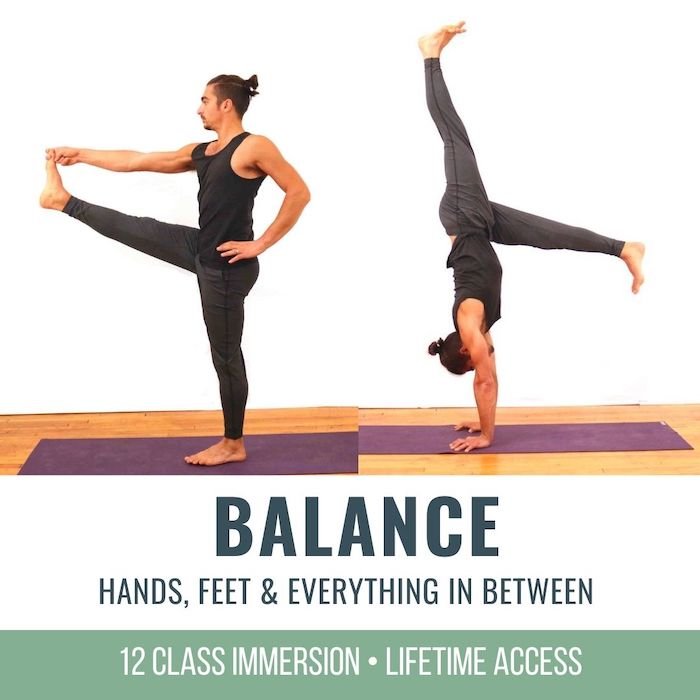
    BALANCE

    INCREASE & AWAKEN YOUR BALANCE

    • Learn over 12 balance postures
    • Muscle strength and reactive patterning
    • Increase proprioception and deliberate weight shifting
    • Tree, Standing Hand-to-Foot variations, Warrior III
    • Half Moon variations, Handstand, Side Plank, Headstand
    • 12 all-levels, 75-minute online classes
    • Lifetime unlimited access to all

    $198.00 $128.00

    Continue Learning

    Eight Angle Pose

    Eight Angle Pose

    Eight Angle PoseASTAVAKRASANAEIGHT ANGLE POSE Sometimes we think arm balances are about getting higher, but Matt reframes Eight Angle pose as a mechanics workshop. This posture thrives when we test rotation, pelvic placement, and upper-body stability as interconnected...

    read more
    Approachable Arm Balances

    Approachable Arm Balances

    Approachable Arm BalancesPARSVA BAKASANAAPPROACHABLE ARM BALANCES Approachable arm balances aren’t about fearlessness; they’re about informed action. When we understand the mechanics behind the posture, we gain the power to shape our own outcomes. Rather than jumping...

    read more
    Perfect Protraction For Crow Pose

    Perfect Protraction For Crow Pose

    Perfect Protraction For Crow PoseBAKASANAPERFECT PROTRACTION FOR CROW POSE When working toward perfect protraction for Crow Pose, it’s essential to understand the role of the serratus anterior, the “fingertip” muscles that wrap around the rib cage and attach to the...

    read more
    Help For Hamstrings

    Help For Hamstrings

    Help For HamstringsFLEXIBILITYHELP FOR HAMSTRINGS “Yoga butt” or high hamstring tendonitis can be a literal pain where the sit bones meet the hamstrings and glutes. This area is prone to overuse injuries, especially when repetitive forward folds overstretch rather...

    read more
    Pelvic Floor and Groin Support

    Pelvic Floor and Groin Support

    Pelvic Floor & Groin SupportCOREPELVIC FLOOR AND GROIN SUPPORT Pelvic floor instability can quietly influence how we move and how safe we feel in our practice. Weakness or imbalance here may lead to groin strains, hip discomfort, or even low-back issues....

    read more
    Pain In The Neck

    Pain In The Neck

    Pain In The NeckSTABILITYPAIN IN THE NECK A pain in the neck can be more than just an annoyance.  It can ripple into the shoulders, spine, and even the jaw, creating discomfort that affects the whole body. Often, this pain stems from subtle misalignments: a chin that...

    read more

    THE FREE TECHNIQUE PACK

    When You Subscribe, You Will Get Instant Access to

    • the Technique Pack: 15 yoga pose breakdowns
    • exclusive online course discounts
    • exclusive blogs and videos
    • This field is for validation purposes and should be left unchanged.

    CONTACT MATT

    • This field is for validation purposes and should be left unchanged.

    Pin It on Pinterest