Fire Hydrant Pose: Hip Technique

Fire Hydrant Pose: Hip Technique

Stability & Mobility Unleashed

hip mobility

FIRE HYDRANT POSE: HIP TECHNIQUE

Part of the equation for improved function and mobility of the hips is building and creating strength, but first you have to understand how to actually do so. It’s not just about knowing which postures to include in your physical yoga practice; it’s really about the execution. Understanding how to implement specific anatomical techniques will help you go beyond what you may believe your body is capable of. This Fire Hydrant Pose hip technique is the perfect example of how to more fully understand your body and know exactly how to unleash stability and mobility in your hips.
 

Online Yoga for Hip Openers and Flexibility

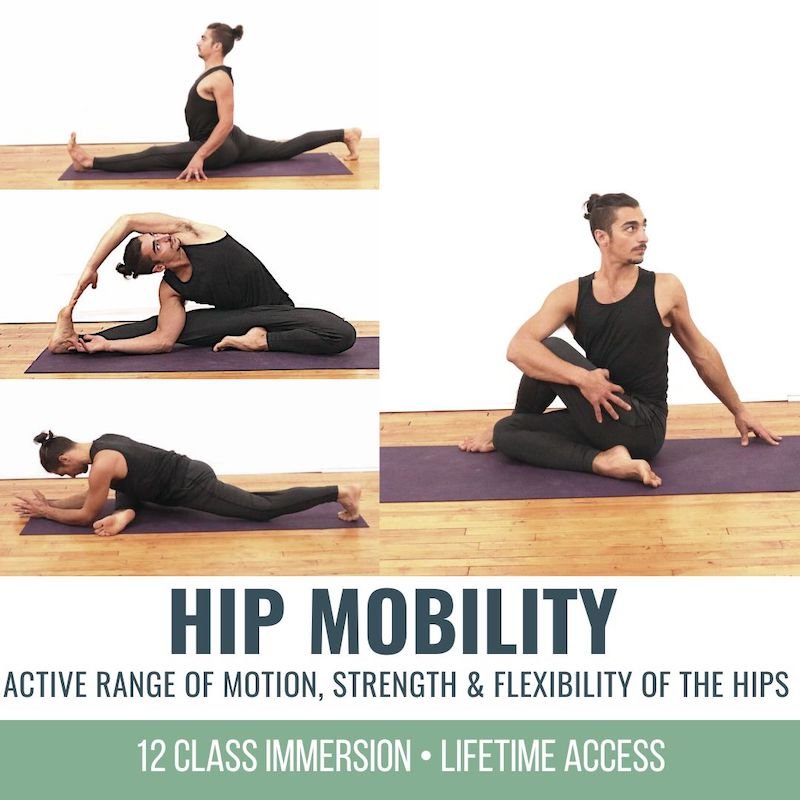
HIP MOBILITY

October 2022 Immersion

  • Strengthen and lengthen your hips
  • Increase active and passive range of motion
  • Learn anatomical techniques to improve functionality
  • Access a wider range of seated postures and hip openers
  • 12 Classes: All levels appropriate
  • Lifetime unlimited access to all
  • Attend the livestream OR practice the replays any time that’s convenient for you

$148.00

MORE INFORMATION

HIP ABDUCTION

There are 4 main muscles that work together to create hip abduction, which is what creates the shape of Fire Hydrant Pose. These muscles are the tensor fasciae latae (TFL) and the gluteus maximus, medius, and minimus. It’s not as simple as just lifting your leg away from your midline. Lateral rotation of the hip also plays a significant role in unlocking the strength that creates increased stability and mobility in the hips. In order to more deeply grasp this, we must understand a few things.

In the posture itself, we maximize its benefits by executing specific articulations. Knowing the anatomy is extremely helpful because you get a better mental picture of what is happening as you are engaging in these movements/articulations. This strengthens the neuromuscular connection.

WATCH THE VIDEO: FIRE HYDRANT POSE: HIP TECHNIQUE

CONCENTRIC VS. ISOMETRIC CONTRACTION

The action of lifting one leg out to the side (abduction) in Fire Hydrant Pose creates a concentric contraction in the glute muscles. A concentric contraction causes muscles to shorten through movement. In a different way, this is also happening in the standing leg: In this case, it’s the lateral tilt of the pelvis. Although the standing leg is fixed, in order to get a greater range of motion in the lifted leg, the “hugging in” of the hip of the standing leg also creates a shortening of the glute muscles. Once you are fixed in your variation of the posture, maintaining the contractions/activations without movement is what creates an isometric contraction. This sets the foundation for stability, but how can you take it to the next level?
NEXT TRAINING BEGINS FEBRUARY 2024 ENROLLMENT NOW OPEN!

HIP STABILITY

The gluteus maximus and TFL attach to the iliotibial band, and when they co-activate, they help to abduct the hip joint. This doesn’t discount the other muscles that contribute here; glute medius and minimus also play a major role. These muscles are known as the abductor group, but they also stabilize the pelvis. For stability to occur, there must be an equal or balanced amount of co-activation from the muscles that surround the hip.  

You’ll see in today’s video the specific anatomical techniques and articulations that Matt takes you through so as to take this experience to the next level.

FIRE HYDRANT POSE PREPARATION

Here are the steps:

  1. Bend your knees like in Chair Pose and place your hands on your right knee
  2. Hips go back, and bum tilts up
  3. Left foot out to the side, turning thigh bone in (internal rotation)
  4. Keep internal rotation and lift up through the heel (more concentric contraction is occurring to lift the left leg; once static, you are in isometric contraction)
  5. Meanwhile, squeeze right hip in (the abductors of the right hip are activating to allow the pelvis to open up)

It’s the internal rotation that helps to activate the TFL. When your upper thigh bone is internally rotated, you can more easily lift through your heels. This is how to execute the co-activation that’s so important in creating more integrity and health in your hip joint. You’re now recruiting more muscle groups that surround the hip in order to create more stability. Increased hip stability (along with flexibility) establishes increased hip mobility.
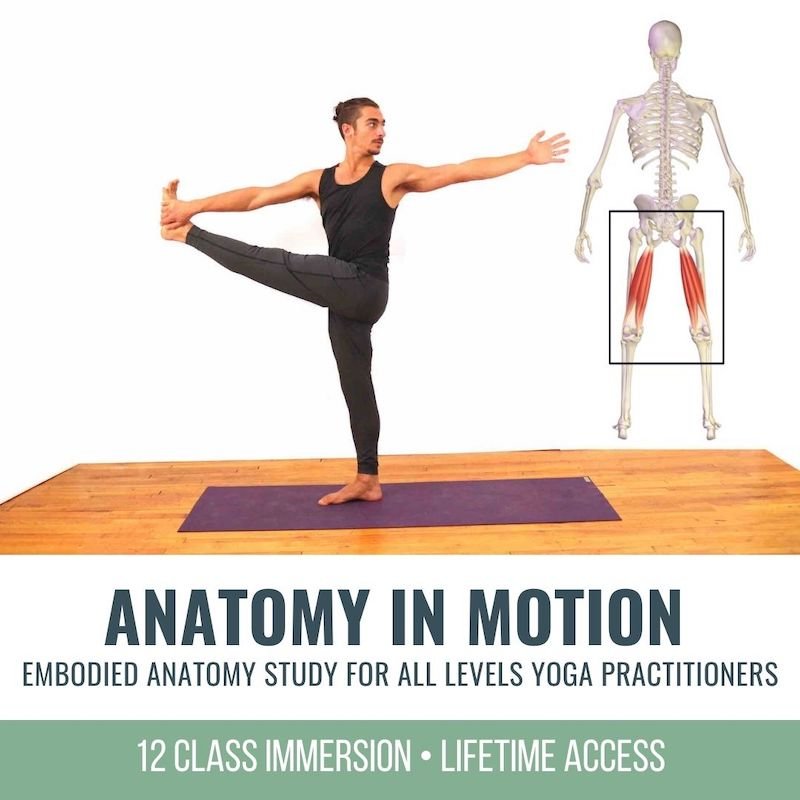
12 Online Yoga classes to Learn Anatomy

ANATOMY IN MOTION

APRIL 2022 Immersion

  • Embody anatomy
  • Learn key muscles, bones, and joints
  • Visualize your movements internally
  • Improve proprioception
  • Sensation-based practices
  • Unlock and strengthen major muscle groups
  • Active, passive, and isometric stretching
  • Improve mobility and stability
  • Get VERY geeky

$168.00


HIP MOBILITY

This Fire Hydrant Pose hip technique gives you an opportunity to flex your “hip mobility muscles.” Mobility is the ability to find better range in the joint with more control and strength, and these techniques provide just that. Better hip mobility means better function in your everyday life. In the context of your yoga practice, this means greater confidence on your mat during transitions and the execution of specific postures.  

In Matt’s Hip Mobility immersion, you’ll come away with a better understanding of your hips and of what you need to focus on specifically in your yoga practice to take you to new heights.

See you on the mat!

The 200 Hr. Teacher Training: Click Here to See the Next Start Date

The 300 Hr. Advanced Teacher Training: Click Here to See the Next Start Date

Article by Trish Curling

Video Extracted From: Anatomy In Motion Immersion

CHOOSE YOUR PATH

NEXT TRAINING BEGINS FEBRUARY 2024 ENROLLMENT NOW OPEN!

Continue Learning
Handstand Actions

Handstand Actions

Handstand ActionsLEAN, GRIP, PUSHHANDSTAND ACTIONS Handstand isn’t something we conquer in a single class, it’s a layered process that demands repetition and refinement. There are certain key handstand actions that are non-negotiable: lifting the shoulders up to the...

read more
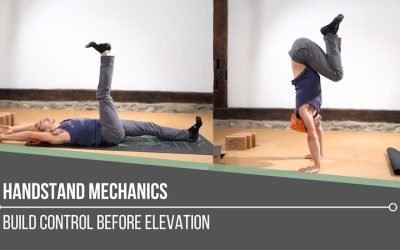
Handstand Mechanics

Handstand Mechanics

Handstand MechanicsINVERSIONHANDSTAND MECHANICS Stability, strength, and coordination come together in the pursuit of mastering handstand mechanics. One of the most critical foundations is internal rotation at the hip joints, which can aid with certain entries and...
read more
Stable Sirsasana

Stable Sirsasana

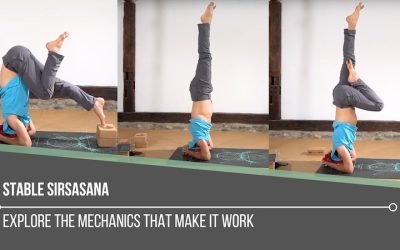
Stable SirsasanaHEADSTANDSTABLE SIRSASANA Creating a stable Sirsasana is less about the final pose and more about the mechanics that lead us there. From weight transfer and spinal alignment to hamstring flexibility and shoulder engagement, each layer matters. Unlike...
read more
Explore Hip Rotation

Explore Hip Rotation

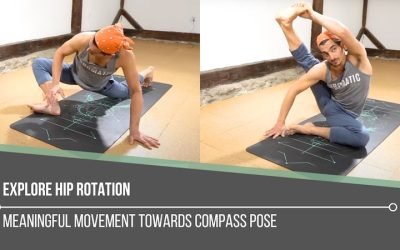
Explore Hip RotationSURYA YANTRASANAEXPLORE HIP ROTATION Hip rotation isn’t just an anatomical concept—it’s an open invitation to become more intimate with our body’s story. In yoga, we often live in lateral (external) rotation, especially in hip-opening postures....
read more
Step Up Your Side Plank

Step Up Your Side Plank

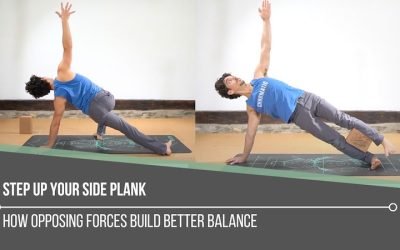
Step Up Your Side PlankVASISTHASANASTEP UP YOUR SIDE PLANK Side Plank might look simple, but true proficiency starts in the details. One of the keys to refining the posture is learning how opposing muscle groups create an isometric contraction—a subtle engagement that...
read more
Headstand and Side Crow Transitions

Headstand and Side Crow Transitions

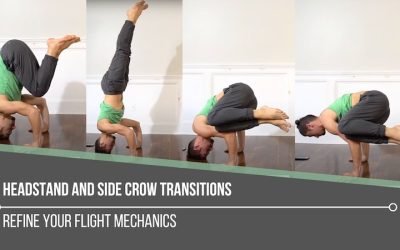
Headstand and Side Crow TransitionsPARSVA BAKASANAHEADSTAND AND SIDE CROW TRANSITIONS Mastery begins with mechanics, especially when it comes to headstand and side crow transitions. Each posture on its own demands control, coordination, and a deep understanding of...

read more

THE FREE TECHNIQUE PACK

When You Subscribe, You Will Get Instant Access to

  • the Technique Pack: 15 yoga pose breakdowns
  • exclusive online course discounts
  • exclusive blogs and videos
  • This field is for validation purposes and should be left unchanged.

full side plank and modifications

FULL SIDE PLANK WITH MODIFICATIONS

STEP-BY-STEP VASHISTHASANA BREAKDOWN

FULL SIDE PLANK

FULL SIDE PLANK AND MODIFICATIONS: VASHISTHASANA

USING THE WALL AS A PROP

Full Side Plank (Vashisthasana) has many modification options and variations to help make it more accessible or more challenging. I love teaching this posture with a foot on the wall to increase stability and provide a frame of reference for shifting the weight out of the hand and into the foot. 

Some people avoid props, thinking of them as a “crutch.” For sure, they can be used as a way to avoid challenges if that is your intention, but they can also be used to increase body awareness and help you develop technique. Props are neither good nor bad; it’s just a matter of how and why you are using them. Is it that you want to avoid challenge or that you want to face challenge intelligently and appropriately?

In the video tutorial below, I show how to modify side plank by placing your top foot on the wall. This reduces the required balance and will allow you to focus on the foundations of the posture, like the strength of your hand and wrist. Press your thumb and pinky fingers into the ground. Then focus on your bottom foot, pressing the instep of your foot into the wall. Eventually, you will be able to place the whole standing foot on the ground, which will give you strength and the power to lift the hips up. Lastly, keep your shoulder externally rotating, as indicated in the video.

Arm Balances Online Yoga Classes

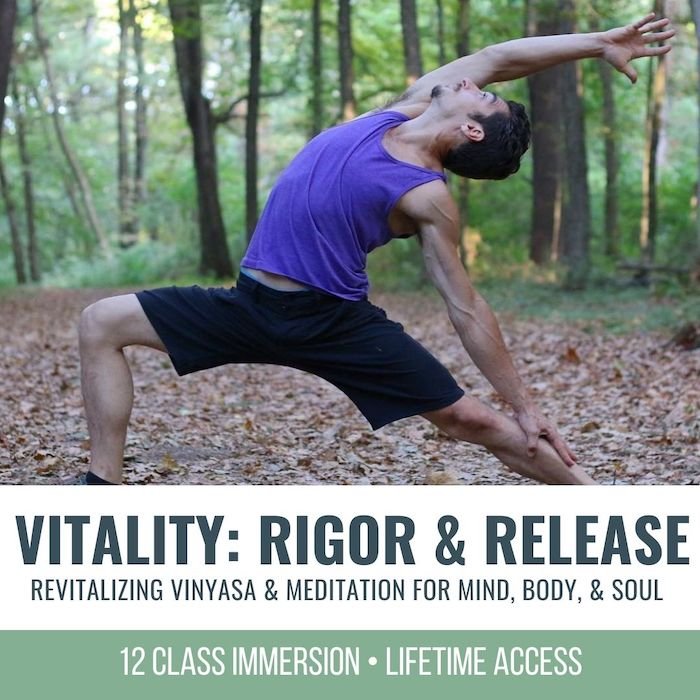
VITALITY: RIGOR & RELEASE

Get back to feeling energized and alive — 12 all-levels vinyasa & meditation classes to increase your energy, focus, and mental clarity


  • GET BACK TO FEELING ENERGIZED
  • ALL-LEVELS VINYASA CLASSES
  • HIPS, TWISTS, HEART, SHOULDERS, NECK, AND CORE
  • GUIDED MEDITATIONS TO DE-STRESS, INCREASE FOCUS, AND GAIN MENTAL CLARITY

Full Side Plank & Modifications • Vashisthasana at the Wall

This Side Plank tutorial footage is taken from the July 2021 Immersion, titled BALANCE

Full Side Plank Setup

What I don’t discuss in this particular clip is how the setup of this posture is exactly like Wild Thing. This means your pelvis is more open toward the sky, while in standard Side Plank, your feet are stacked. The spine is in a backbend as well, unlike the standard variation, where the spine is neutral.

There are other alignments you could explore, but these will tend to give you the greatest access to the full Side Plank variation where you grab the top foot and extend the leg. If you want to practice the full class, be sure to check out Class #9 of the July 2021 Immersion, called Balance


300 hour teacher training online

300 HOUR ONLINE TEACHER TRAINING

GET 500 HOUR CERTIFIED AS A MASTER TEACHER

Master your skill set as a teacher through refined techniques, anatomy, biomechanics, sequencing, philosophy, meditation techniques, theming, yoga business, and much more!

  • Get 500 hour certified
  • Learn anatomy, biomechanics, asana techniques
  • Expand your teaching skills
  • Masterful sequencing and verbal delivery
  • Learn meditation and breathwork techniques
  • Transformative tools: theming, dharma talks, satsang

Three Full Side Plank Modifications and Variations

  1. Foot on the Wall: Once you rise up into Wild Thing, place the back foot on the wall and push your weight toward the wall, even if it means both knees are bent. This is not only okay but an indication that you are doing it properly.
  2. Tree Pose: The next step is infinitely more challenging because it requires greater balance and flexibility. Take the foot off the wall, similar to Tree Pose but without placing the foot on your inner thigh (though that is also another variation). I suggest pushing your knee into your hand to get your hip flexors active. Hip flexor strength becomes key when you attempt to straighten the leg. Often the tension of the hamstrings is too much and people have to let go of the foot. If your hip flexors are strong and used to engaging in this position, then they can help out by keeping the top leg closer to your upper body, lessening the chances that you’ll have to let go of the foot when extending the leg up to the sky.
  3. Full Side Plank or “Extended Vashisthasana”: Pull your knee in as tight as possible in order to grab your foot. Either stay as a modification or begin to kick the foot to the sky, straightening the top leg. Pro tip: It’s helpful to keep the bottom, weight-bearing leg bent while extending the top leg upward. 
Arm Balances Online Yoga Classes

VITALITY: RIGOR & RELEASE

Get back to feeling energized and alive with 12 all-levels vinyasa & meditation classes to increase your energy, focus, and mental clarity.


  • GET BACK TO FEELING ENERGIZED
  • ALL-LEVELS VINYASA CLASSES
  • HIPS, TWISTS, HEART, SHOULDERS, NECK, AND CORE
  • GUIDED MEDITATIONS TO DE-STRESS, INCREASE FOCUS, AND GAIN MENTAL CLARITY

Can’t Straighten Your Legs?

This is normal and really shouldn’t be your focus. This is an incredibly physically demanding posture that requires extreme flexibility. Even with slightly bent knees, the posture is still visually stunning and, I would argue, even more biomechanically sound because bent knees typically trigger more muscle engagement.


Edited by 300-hour Chromatic yoga teacher, Donna Morin.


TOP RELEVANT RECOMMENDATIONS

1. Balance Immersion: 12 Classes Focused on Balance (video above is taken from this immersion) 

2. Arm Balance Immersion: 12 Classes – 12 Arm Balances

MORE WAYS TO DEVELOP YOUR PRACTICE

  1. Live Immersions: 3 classes per week
  2. 200 Hour Training: Get certified
  3. 300 Hour Online Training: Get 500hr certified
Arm Balances

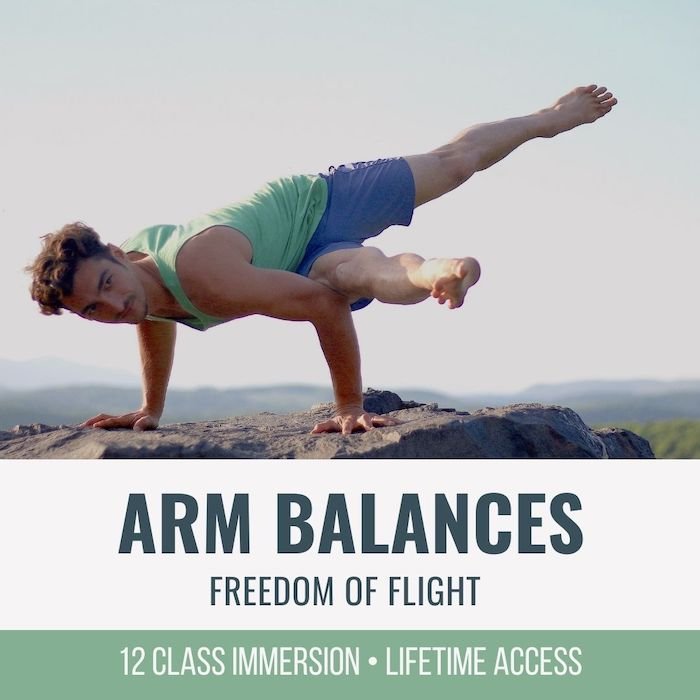
ARM BALANCES

Learn 12+ arm balances while expanding your knowledge of the body and increasing your body awareness. All classes are 75 minutes and ALL-levels appropriate 

  • Crow Pose, Side Crow, and variations
  • Flying Pigeon, Koundinyasana 1 & 2
  • Titibhasana, Bhujapidasana
  • Handstand, Forearm Stand, and many more!


SALE PRICE: $198.00 $128.00

Continue Learning

Handstand Actions

Handstand Actions

Handstand ActionsLEAN, GRIP, PUSHHANDSTAND ACTIONS Handstand isn’t something we conquer in a single class, it’s a layered process that demands repetition and refinement. There are certain key handstand actions that are non-negotiable: lifting the shoulders up to the...

read more
Handstand Mechanics

Handstand Mechanics

Handstand MechanicsINVERSIONHANDSTAND MECHANICS Stability, strength, and coordination come together in the pursuit of mastering handstand mechanics. One of the most critical foundations is internal rotation at the hip joints, which can aid with certain entries and...

read more
Stable Sirsasana

Stable Sirsasana

Stable SirsasanaHEADSTANDSTABLE SIRSASANA Creating a stable Sirsasana is less about the final pose and more about the mechanics that lead us there. From weight transfer and spinal alignment to hamstring flexibility and shoulder engagement, each layer matters. Unlike...

read more
Explore Hip Rotation

Explore Hip Rotation

Explore Hip RotationSURYA YANTRASANAEXPLORE HIP ROTATION Hip rotation isn’t just an anatomical concept—it’s an open invitation to become more intimate with our body’s story. In yoga, we often live in lateral (external) rotation, especially in hip-opening postures....

read more
Step Up Your Side Plank

Step Up Your Side Plank

Step Up Your Side PlankVASISTHASANASTEP UP YOUR SIDE PLANK Side Plank might look simple, but true proficiency starts in the details. One of the keys to refining the posture is learning how opposing muscle groups create an isometric contraction—a subtle engagement that...

read more
Headstand and Side Crow Transitions

Headstand and Side Crow Transitions

Headstand and Side Crow TransitionsPARSVA BAKASANAHEADSTAND AND SIDE CROW TRANSITIONS Mastery begins with mechanics, especially when it comes to headstand and side crow transitions. Each posture on its own demands control, coordination, and a deep understanding of...

read more

THE FREE TECHNIQUE PACK

When You Subscribe, You Will Get Instant Access to

  • the Technique Pack: 15 yoga pose breakdowns
  • exclusive online course discounts
  • exclusive blogs and videos
  • This field is for validation purposes and should be left unchanged.

Eagle Pose technique how to double wrap the legs

GARUDASANA – EAGLE POSE

How to Double Wrap the Legs

Eagle Pose

GARUDASANA – EAGLE POSE

Why is it hard to double wrap the leg?

Garudasana, known as Eagle Pose, is a challenging hip opener and hip strengthener. It’s useful in developing balance, but for many people, double wrapping the leg is not accessible. For sure, some people have no trouble at all, but others are completely perplexed.

There are three reasons why it would be challenging for you or your students to double wrap:


  1. Lack of flexibility of the abductor muscles (outer hip muscles). These are the muscles that are lengthened when we cross our legs.
  2. Lack of strength of the standing hip abductor muscles. This is a bit confusing unless you watch the video below. The standing hip abductors help to elevate the opposite side of the pelvis, making it more possible to cross the top leg over the bottom leg.
  3. Lack of technique and timing. In most cases, if you are not applying deliberate technique while moving into a pose, you will be entering the pose the hard way, which means you will only be able to do the postures that match your set of physical muscular patterns. This is a disservice, not because you will miss out on the poses but because you will miss out on the opportunity to change your muscle patterns. In the video below, you will see the timing and techniques for getting into Eagle Pose with double-wrapped legs.
yoga backbend techniques: 12 classes [backbend technique to relieve back pain "bowing the spine']

HIPS & HAMSTRINGS IMMERSION

  • Increase range of motion of your hips and hamstrings
  • Learn techniques such as facilitated stretching
  • Release stress patterns, discomfort, or pain in your hips, back, and knees
  • Twelve 75-minute classes, all levels appropriate
  • Learn postures: Pigeon, Lizard Variations, Lotus, Eagle, Hanuman, Fire Log, Seated Straddle Splits, and more!
  • Lifetime unlimited access to all

How to Increase Flexibility of the Abductors — Outer Hips

If flexibility is inhibiting you from accessing Garudasana and you want to find ways to access your greater range of motion of the outer hip muscles, there are a couple postures you can work with. Any posture that includes crisscrossed legs will be useful and effective in increasing abductor flexibility. Although there aren’t many traditional postures, aside from Eagle Pose itself, one that comes to mind is Gomukhasana, Cow-Faced Pose. However, I would say that Eagle Pose should usually precede Gomukhasana because Eagle Pose requires less flexibility. The posture that I use in the Hips and Hamstrings immersion to prepare for Eagle is a straight single-leg forward fold with crisscrossed legs.


How to Get into the Straight-Leg Crisscrossed Forward Fold

  1. Start in Lunge Pose with your right foot forward.
  2. Heel-toe (move) your right foot to the left side of the mat.
  3. Step your back left foot to the right side of the mat so that both legs are crisscrossed.
  4. I suggest using block under both hands prior to the last step.
  5. Straighten your legs to a degree where you are stretching without strain.

IMPORTANT KEY ACTION: Wag your tail bone to the left to increase the stretch along the outer hip and IT band. If that’s too intense, wag your tail to the right to decrease the outer-hip stretch.

the best yoga teacher training for alignment

300 HOUR ONLINE TEACHER TRAINING

GET 500 HOUR CERTIFIED AS A MASTER TEACHER

Master your skillset as a teacher through refined techniques, anatomy, biomechanics, sequencing, philosophy, meditation techniques, theming, yoga business, and much more!

WHY LACK OF ABDUCTOR STRENGTH HOLDS YOU BACK IN EAGLE POSE

Strength of the abductor group (outer hip muscles) is super important for two reasons. First, the standing hip abductors are what lift the opposite side of your pelvis, which allows you to cross your top leg over. Second, without outer hip strength on the standing leg, you would struggle to balance the pose! Outer hip muscles play a major role in balancing any single leg pose. If you find it challenging to balance Garudasana, then you will want to start with a strength-training routine for the abductors. We focus in on strengthening these muscles in the Hips and Hamstrings Immersion

FREE VIDEO TUTORIAL: HOW TO DOUBLE WRAP LEGS IN GARUDASANA, EAGLE POSE

This video clip was taken from Class #3 in the  Hips and Hamstrings: 12 Class Immersion

HOW TO DOUBLE WRAP THE LEGS


    Notice in the video that I am focused on squeezing the outer standing hip inward and lifting the opposite side of the pelvis upward as a result. This allows the thigh bone to more easily cross the midline of the body. You will also notice that my thighs are significantly rotated inward; this helps to access the wrapping of the legs as well. In the class leading up to this tutorial, we used a wall to eliminate the necessity to balance while working with these actions. In this video, I joke about the use of a wall, but I highly recommend you try it that way.
yoga backbend techniques: 12 classes [backbend technique to relieve back pain "bowing the spine']

GET CERTIFIED & HIGHLY QUALIFIED TO TEACH

  • Deepen your practice of yoga
  • Learn to share the practice with others
  • Build your confidence in speaking
  • Learn postures, biomechanics, alignment, and techniques
  • Learn how to structure a class and sequence postures

HOW DO I INCREASE FLEXIBILITY OF MY HIPS FOR OTHER YOGA POSTURES?

The easy answer to this is to practice in such a way that you are deliberately strengthening each muscle group around the hips. To learn more about what muscle groups are involved in hip opening, check out the article I wrote on The 4 Quadrants of The Hips, where I share my methodology and approach for my personal practice and in my teaching. Once you understand which muscles surround the hip joints, the next step is to begin strengthening each muscle group. Strengthening one muscle group through range of motion will increase the flexibility of the opposing muscle group. This is the magic of an educated and deliberate practice — we take the guesswork out, and efforts are more effective in achieving intended results.

To increase your strength and flexibility of the hips, you can join the Hips and Hamstrings Immersion,which will take you through twelve 75-minute online yoga classes, each focused on a different pose and the relevant muscle group(s). I take you through creative ways of strengthening, then I provide you with effective techniques for stretching and accessing various yoga postures.

yoga backbend techniques: 12 classes [backbend technique to relieve back pain "bowing the spine']

HIPS & HAMSTRINGS IMMERSION

  • Increase range of motion of your hips and hamstrings
  • Learn techniques such as facilitated stretching
  • Release stress patterns, discomfort, or pain in your hips, back, and knees
  • Twelve 75-minute classes, all levels appropriate
  • Learn postures: Pigeon, Lizard Variations, Lotus, Eagle, Hanuman, Fire Log, Seated Straddle Splits, and more!
  • Lifetime unlimited access to all

Continue Learning

Handstand Actions

Handstand Actions

Handstand ActionsLEAN, GRIP, PUSHHANDSTAND ACTIONS Handstand isn’t something we conquer in a single class, it’s a layered process that demands repetition and refinement. There are certain key handstand actions that are non-negotiable: lifting the shoulders up to the...

read more
Handstand Mechanics

Handstand Mechanics

Handstand MechanicsINVERSIONHANDSTAND MECHANICS Stability, strength, and coordination come together in the pursuit of mastering handstand mechanics. One of the most critical foundations is internal rotation at the hip joints, which can aid with certain entries and...

read more
Stable Sirsasana

Stable Sirsasana

Stable SirsasanaHEADSTANDSTABLE SIRSASANA Creating a stable Sirsasana is less about the final pose and more about the mechanics that lead us there. From weight transfer and spinal alignment to hamstring flexibility and shoulder engagement, each layer matters. Unlike...

read more
Explore Hip Rotation

Explore Hip Rotation

Explore Hip RotationSURYA YANTRASANAEXPLORE HIP ROTATION Hip rotation isn’t just an anatomical concept—it’s an open invitation to become more intimate with our body’s story. In yoga, we often live in lateral (external) rotation, especially in hip-opening postures....

read more
Step Up Your Side Plank

Step Up Your Side Plank

Step Up Your Side PlankVASISTHASANASTEP UP YOUR SIDE PLANK Side Plank might look simple, but true proficiency starts in the details. One of the keys to refining the posture is learning how opposing muscle groups create an isometric contraction—a subtle engagement that...

read more
Headstand and Side Crow Transitions

Headstand and Side Crow Transitions

Headstand and Side Crow TransitionsPARSVA BAKASANAHEADSTAND AND SIDE CROW TRANSITIONS Mastery begins with mechanics, especially when it comes to headstand and side crow transitions. Each posture on its own demands control, coordination, and a deep understanding of...

read more

THE FREE TECHNIQUE PACK

When You Subscribe, You Will Get Instant Access to

  • the Technique Pack: 15 yoga pose breakdowns
  • exclusive online course discounts
  • exclusive blogs and videos
  • This field is for validation purposes and should be left unchanged.

find your seat

3 BEST SEATED MEDITATION POSTURES

Find Your Seat: 3 Ways to Sit without Knee, Hip or Back Pain!

Find Your Seat

Let’s go over the 3 best seated meditation postures and find out which one is right for you. The deep benefits of seated meditation are well known to have been experienced by many. On the other hand, people around the world find the practice to be inaccessible because they can’t sit comfortably for more than a minute. This is true for me, even to this day! No matter how open my hips are, or how strong my core and back are, if I try and sit on the ground for an extended period of time one of my legs will fall asleep or I will at the least just be uncomfortable. If you have the same experience, you will find these particular postures to be very supportive!

THE CHALLENGES

Why is it challenging to sit? There are a host of reasons why we might find it difficult to sit on the ground – perhaps primarily because we just don’t do it. Sitting in a chair does not allow our hips to go through their full range of motion each day and as a result, our back and hip flexors don’t develop the strength needed to keep us upright. Yoga can serve as an amazing practice to redevelop the capacity to sit more efficiently although it won’t happen overnight – which is why it’s necessary to check out the 3 postures in the video and photos below, so you can sit comfortably on the ground while you are working on the long term hip-opening journey.

Trying to re-pattern our body takes repetitive practice. As with any other skill, you can only learn from doing it. That is why I created a 12 class immersion to help you feel better, sit better, and establish a meditation practice. MOVE•BREATHE•RELEASE helps you increase flexibility of the hips, strengthen your back muscles for better posture, teach you breathwork techniques, and gives you the tools for mental and emotional clarity and freedom. Meditation requires guidance just like yoga, and I guide you in all 12 classes so you feel safe, confident, and inspired with each practice.

MOVE•BREATHE•RELEASE

12 Class Package for Yoga, Pranayama, and Meditation

  • Breathe better with pranayama “breathwork” exercises
  • Release Hip Tension with asana practice
  • Increase Flexibility & Strength
  • Increase Focus and Clarity
  • Decrease Stress
  • Unwind physical & Emotional Tension
  • Move more freely
  • Release low back tension through hip opening
  • 12 All Levels Live Asana Classes
  • Lifetime Unlimited Access to All  

Is Meditation Calming?

When Most people begin a meditation practice they expect it to have the results that everyone preaches; calm mind, relaxing, stress reducing. While some people do experience these results right away, others may experience the opposite. In weight lifting you must build a foundation of strength before you can move on to heavy compound movements, and establishing this foundation can at times be challenging and discouraging. Meditation is very much the same, the practice of it might feel like you are lifting heavy weights for your mind and as a result, you might initially only experience the challenge of it. With repetition, your mind will get stronger. You will be able to focus longer and the results will come faster!

On top of it, if you are physically uncomfortable when practicing meditation you are not likely to magically walk away feeling calmer. This is why it’s important to find a seat by selecting from one of the 3 best seated meditation postures.

VIDEO TO FIND YOUR SEAT

CHOOSE FROM THE 3 BEST SEATED MEDITATION POSTURES

Assess your hips

Each of us has our own movement patterns which cause some muscles to be stronger, some weaker, some are tight, some are not, etc. We also have different bone structures that will make some positions easier than others. Finding a comfortable seat is one of the most important aspects of a seated meditation posture. If you are uncomfortable, it is very hard to move the mind beyond the discomfort of the body. This is why I have provided three options for seated meditation postures. Go through each and ask yourself which one is most sustainable. Keep in mind there is no perfect seated posture for meditation, there is only the best one for you and that is the one you feel most comfortable in and that also allows you to stay awake and present.

“3 Best Seated Meditation Postures” Detailed Break Down

best seated meditation posture

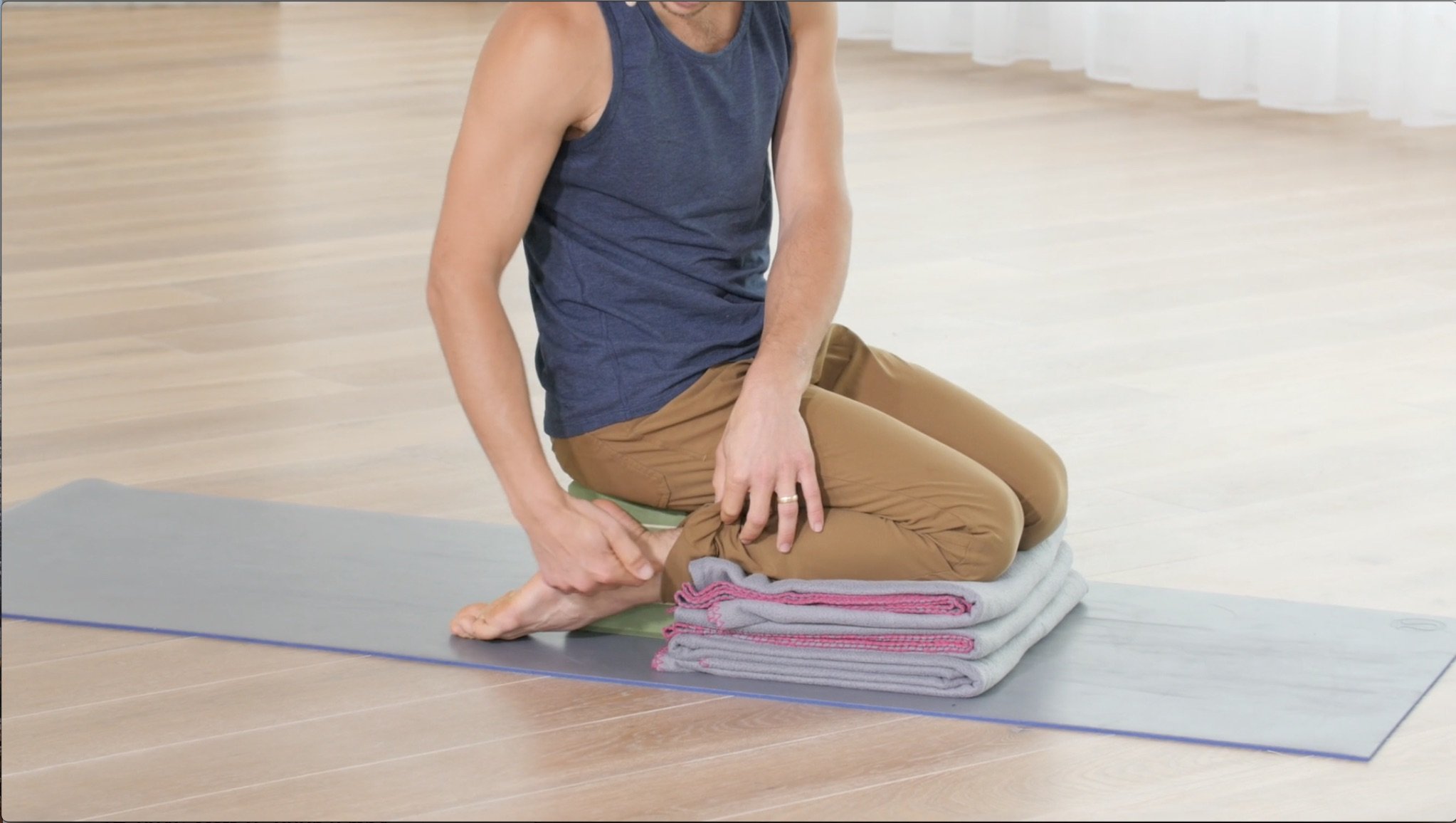
Option 1 - Bhadrasana (Hero's Pose)

My personal favorite seated posture for those who have tighter outer hips and inner thighs as it requires little flexibility in these areas. It presents a challenge for those with tight quads and shin muscles. Using blankets and blocks can help alleviate these challenges. I would suggest warming up and stretching the thighs and ankles prior to working on this posture. In the above video, I go over a twisted thigh stretch and a seated posture on heels. If these postures prove to be too challenging after a warm-up, then this posture is likely to cause discomfort during a seated meditation.

best cross legged seated meditation posture

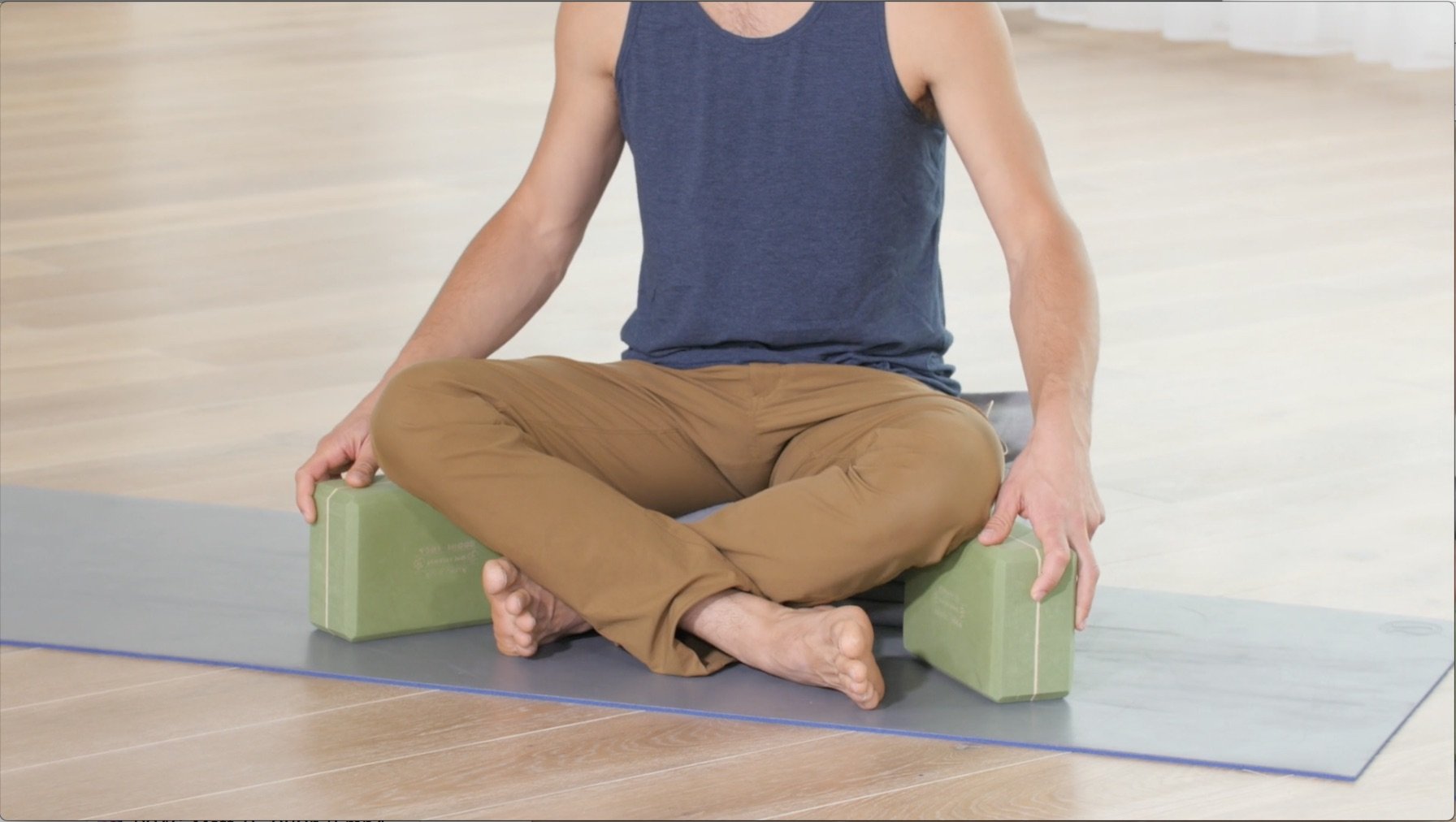
Option 2: Cross Legged

Sukhasana, the so-called “easy seat” – an ironic title, as it can be incredibly misleading. For those with open inner thighs, hip flexors, and outer hips this can be an easy posture indeed, but if that is not the case for you then you’ll definitely want to use props. Using the right amount of blankets and block support can make this posture easier and more accessible.

seated meditation posture on chair with props

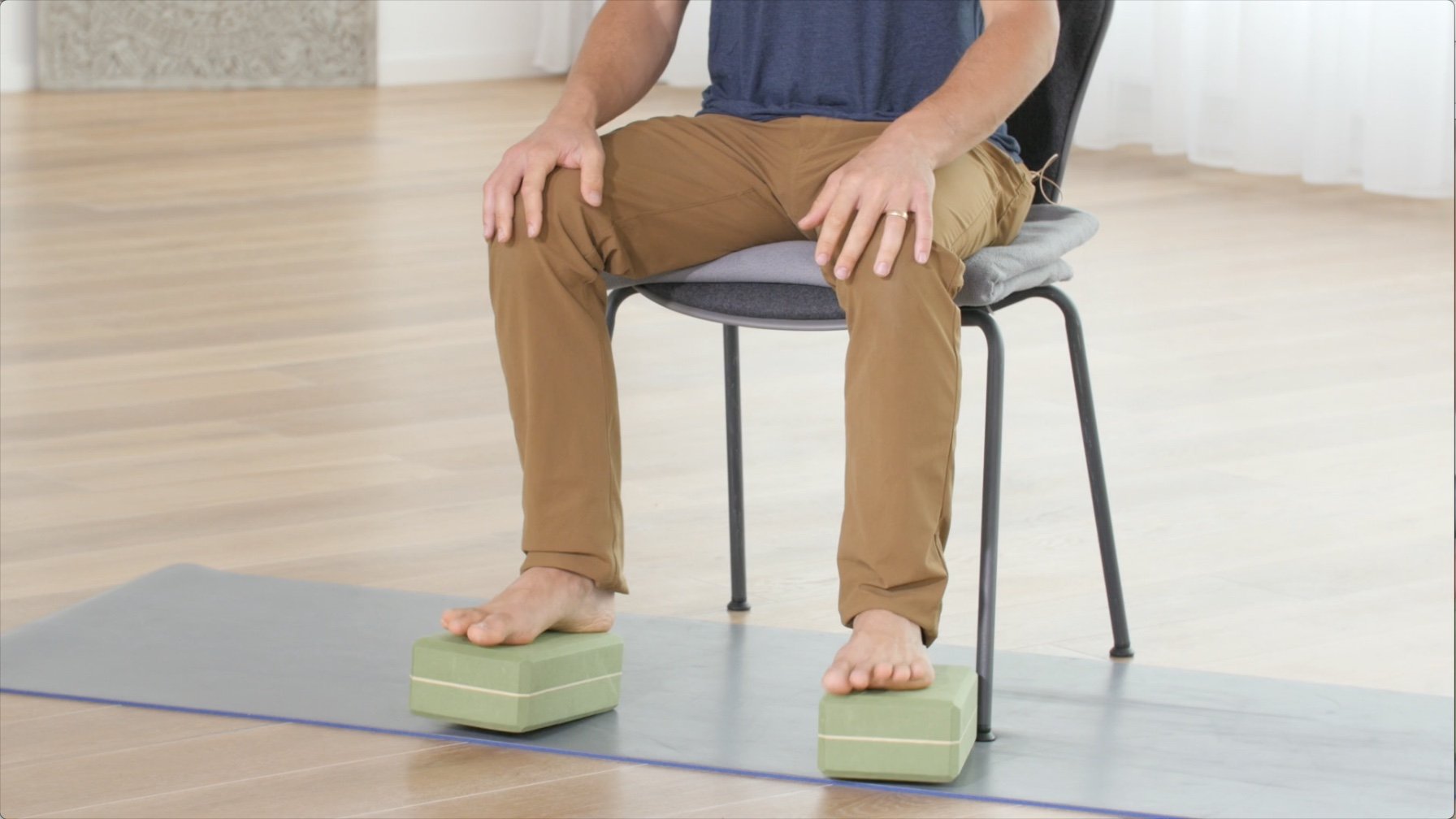
Option 3: On Chair with Blocks

In the video I show a seated option call sidasana, however, I wanted to offer one other one here. Sitting in a chair can seem like cheating, as it can be incredibly easy to get too relaxed in it. Here you will notice how I prepare the chair with blocks and a blanket and I sit on the edge of the seat so that I still used my back and hip flexors to keep me upright. Some level of muscle engagement is important to stay awake and present when meditating.

MOVE•BREATHE•RELEASE

12 Class Package for Yoga, Pranayama, and Meditation

  • Breathe better with pranayama “breathwork” exercises
  • Release Hip Tension with asana practice
  • Increase Flexibility & Strength
  • Increase Focus and Clarity
  • Decrease Stress
  • Unwind physical & Emotional Tension
  • Move more freely
  • Release low back tension through hip opening
  • 12 All Levels Live Asana Classes
  • Lifetime Unlimited Access to All  

How to Start Meditation

The best way to practice meditation, like anything else, is to have guidance. When I was younger, I struggled for years to meditate without the support of a teacher and mostly I became frustrated and lost in my thoughts. When I stumbled upon my teacher “Rudrani” she helped provide me with the tools and guidance to make meditation accessible and enjoyable. This is why I created the MOVE•BREATHE•RELEASE  to share with you the techniques that produce the intended results that so many talk about; peace of mind, inner freedom, focus, mental clarity, joy, equanimity, balance, etc.

From Body to Mind

One thing I noticed early on in my meditation practice was the discomfort of my body. I couldn’t focus my mind on anything when I was seated because I was distracted by my back, my knee, my neck, and so on. This realization led me to the physical practice of yoga. Through the yoga practice, I gained a heightened sense of awareness of my body. At first, this was almost a curse because I could feel everything – including my discomfort! Over time and practice, I gained a bit of mastery in my body, in that I could feel the discomfort and choose postures to better accommodate myself and release it. I suggest you choose from one of the 3 best seated meditation postures above and use it for now as your “go-to pose”. I also recommend you get to know the other two poses as well because you will find that on some days your “go-to” is just not the appropriate one for you.

The seated meditation practice became so much more enjoyable for me when I could extend my attention beyond the physical, knowing that I wasn’t causing damage by forcing myself to sit through knee or back pain. While I do believe that some pain in the body can be a result of mental projection, I also know firsthand that placing love and attention on the body can support the health of the mind.  There really isn’t a divide between brain and body – the mind is a collective of all our physical and emotional experiences. For sound mental health to be our primary state of being we must get to know ourselves on all levels and develop our awareness.

OTHER HELPFUL PRACTICES

Hips: Rock & Unlock 'Em

Get 2 full hours with Matt Giordano focusing on the techniques that increase the range of motion in your hips and provide long lasting freedom. You will have immediate, unlimited access, and can enjoy the benefits today!

Elements of Mastery Online

Get the immersion that is offered around the world now in the comfort of your own home. Practice on your own time, when you want, and where you want. Re-watch, study, read, take notes, get into your body, free your mind, and advance your practice with this in depth online immersion

Continue Learning

Handstand Actions

Handstand Actions

Handstand ActionsLEAN, GRIP, PUSHHANDSTAND ACTIONS Handstand isn’t something we conquer in a single class, it’s a layered process that demands repetition and refinement. There are certain key handstand actions that are non-negotiable: lifting the shoulders up to the...

read more
Handstand Mechanics

Handstand Mechanics

Handstand MechanicsINVERSIONHANDSTAND MECHANICS Stability, strength, and coordination come together in the pursuit of mastering handstand mechanics. One of the most critical foundations is internal rotation at the hip joints, which can aid with certain entries and...

read more
Stable Sirsasana

Stable Sirsasana

Stable SirsasanaHEADSTANDSTABLE SIRSASANA Creating a stable Sirsasana is less about the final pose and more about the mechanics that lead us there. From weight transfer and spinal alignment to hamstring flexibility and shoulder engagement, each layer matters. Unlike...

read more
Explore Hip Rotation

Explore Hip Rotation

Explore Hip RotationSURYA YANTRASANAEXPLORE HIP ROTATION Hip rotation isn’t just an anatomical concept—it’s an open invitation to become more intimate with our body’s story. In yoga, we often live in lateral (external) rotation, especially in hip-opening postures....

read more
Step Up Your Side Plank

Step Up Your Side Plank

Step Up Your Side PlankVASISTHASANASTEP UP YOUR SIDE PLANK Side Plank might look simple, but true proficiency starts in the details. One of the keys to refining the posture is learning how opposing muscle groups create an isometric contraction—a subtle engagement that...

read more
Headstand and Side Crow Transitions

Headstand and Side Crow Transitions

Headstand and Side Crow TransitionsPARSVA BAKASANAHEADSTAND AND SIDE CROW TRANSITIONS Mastery begins with mechanics, especially when it comes to headstand and side crow transitions. Each posture on its own demands control, coordination, and a deep understanding of...

read more

THE FREE TECHNIQUE PACK

When You Subscribe, You Will Get Instant Access to

  • the Technique Pack: 15 yoga pose breakdowns
  • exclusive online course discounts
  • exclusive blogs and videos
  • This field is for validation purposes and should be left unchanged.

Pigeon Without Knee Pain

Pigeon Pose

without Knee Pain

Why Stretching your hips might cause knee pain

Pigeon Pose is one of the most widely beloved postures in the yoga practice across a multitude of styles. This is for good reason. However, the issue I see most often with this posture is that it comes with little guidance as to how to activate your muscles and align your bones and joints, and as a result many people experience pain in their knees or quite simply never find an increase in hip mobility.  In this video I share my top three steps to a deep stretch in the hips without compromising the knee joint.

In my most recent online workshop, “Hips: Rock and Unlock Em” I go over some key actions in detail, and guide students into one of my favorite variations of pigeon posture – so if you like what you get in this video, definitely check out that full 2 hour workshop that goes over all you need to know about hip opening.

The key point that I go over in the video below and in the online workshop is that some of the hip muscles cross both the hip joint AND the knee joint, and so when we stretch the hips we are also stretching the knee. In addition, many hip stretches require putting pressure on the knee joint in order to rotate the thigh bone in the hip joint. One of the techniques I personally use is something called a facilitated stretch in order to target the belly (middle) of the muscles rather than the attachment points near each joint. Facilitated Stretch simply means an activation of the same muscles that are stretching. In the case of pigeon, I aim for the activation of the buttock muscles.

The Gluteus Maximus in particular is my focus because it feeds into the IT band, and the IT band connects to the knee joint. Any stretch of the buttocks could result in a straining of the knee. I find it incredibly helpful to activate the buttocks in order to ground and stabilize the knee joint. In addition, I also offer an activation from the other surrounding joint – the ankle. By activating certain muscles of the ankle I have found more access to spaciousness in the knee.

To be fair, nothing is fool proof. I have, however, tested these techniques among various body types over the past ten years and I have found it to be incredibly effective for most students. The result is deeper stretch in the hips and less or no strain or pain at all in the knee. That being said, this is your body and you have the greatest understanding of it when you tune in to how you feel and what you feel. The online Hips workshop is designed to help you with exactly that – Learn to feel your body on a more specific and nuanced level. Enjoy this free tutorial and as always let me know if you have questions about your body or your practice. If the video is helpful please share it!

Facilitated Stretching

Increases your range of motion while maintaining muscle integrity. Facilitated stretching is the activation or engagement of the muscles that are stretching. Activating the muscle while stretching causes the Golgi tendon organ to send a signal to the spinal column, and the spinal column speaks back, telling the muscles to relax.

yoga backbend techniques: 12 classes [backbend technique to relieve back pain "bowing the spine']

HIPS & HAMSTRINGS

ONLINE YOGA IMMERSION

  • 12 classes to increase flexibility of the hips and hamstrings
  • Maximize your strength through range of motion
  • Access your pose potential
  • Release tension of hips and back
  • Sensation-based practices
  • Unlock and strengthen major muscle groups
  • Active, passive, and isometric stretching
  • Improve mobility and stability
  • So much more!

$148.00 $128.00

MORE INFORMATION

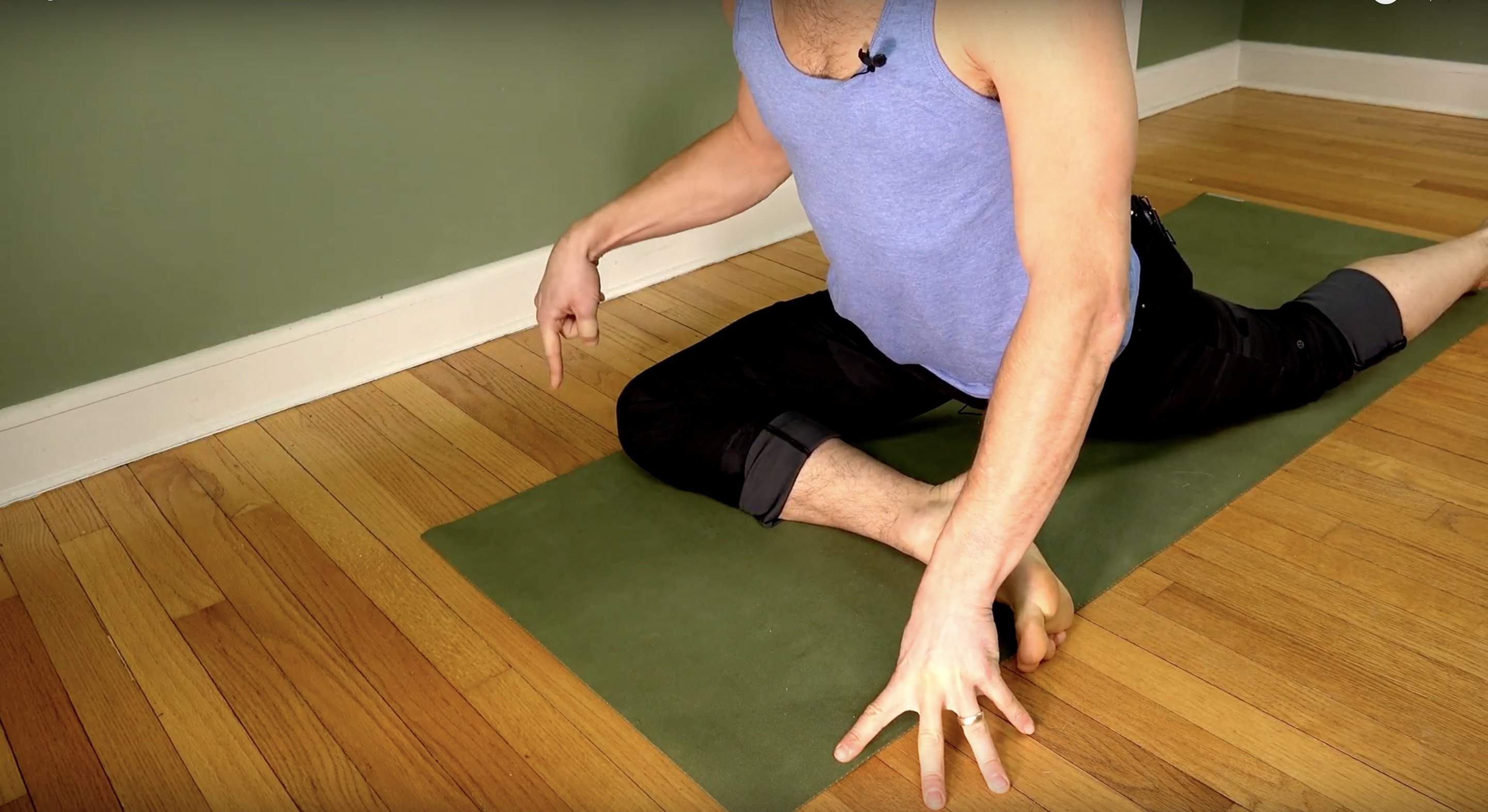
3 Steps for Pigeon Pose

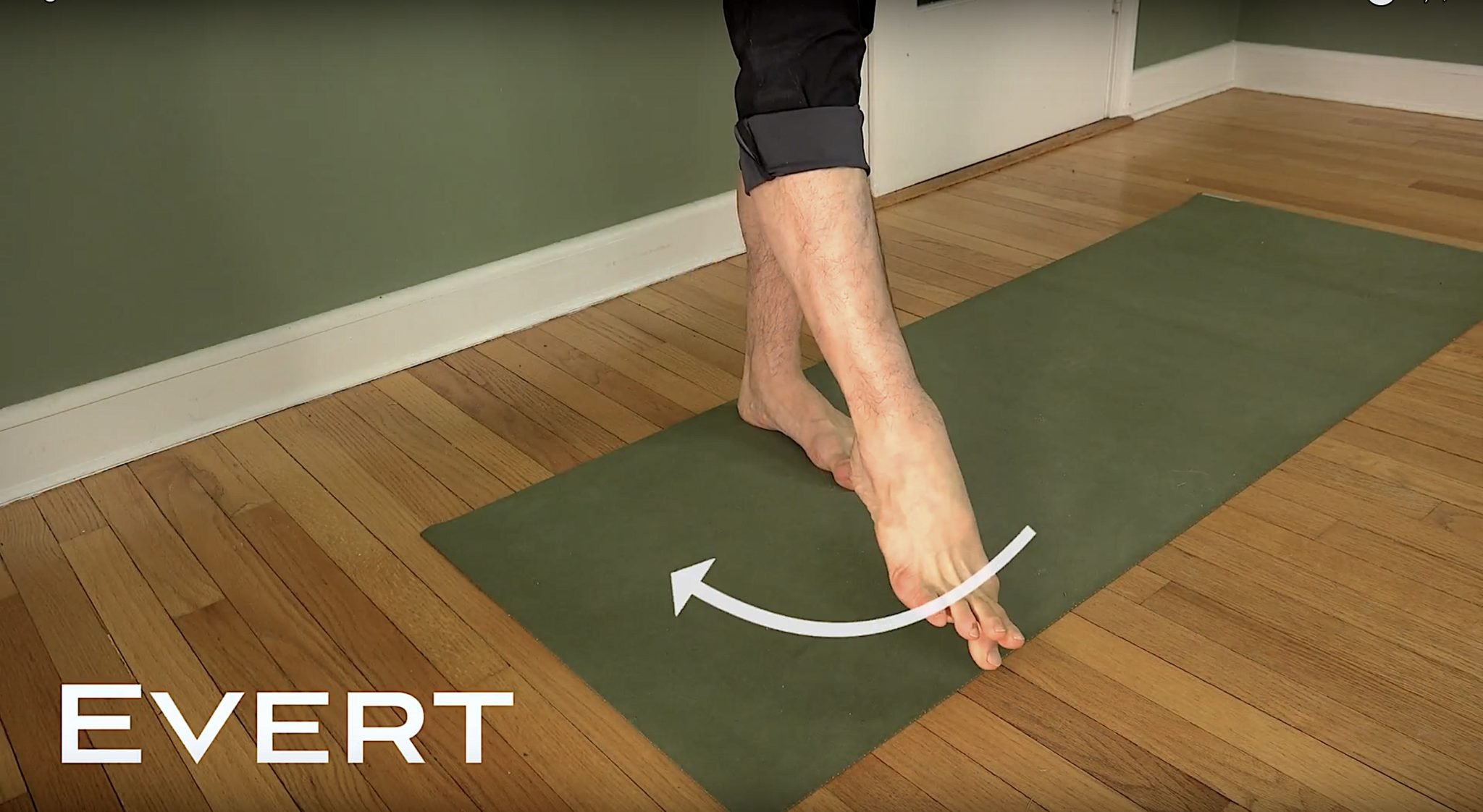
Step 1 - Evert the ankle

Everting at the ankle joint aligns the shin at the knee joint, and activates the outer shin muscles (fibularis muscles). In addition, when in pigeon pose, it supports the external rotation at the femur bone (front leg) in the hip socket. When everting, you can try rolling the calf muscle forward toward the front of your mat to initiate external rotation at the knee. This can help to open the inner portion of the knee.

Step 2: Press outer Front knee Down

From your buttock muscles, press the outer front knee down and as a result, you should feel your hips lift up a little bit. If you don’t feel this you may have to think about pulling your front knee toward the back knee. Once you get your buttocks to activate, your femur (thigh bone) will begin to externally rotate. This action supports more congruency (more space) at the knee, and begins a facilitated stretch.

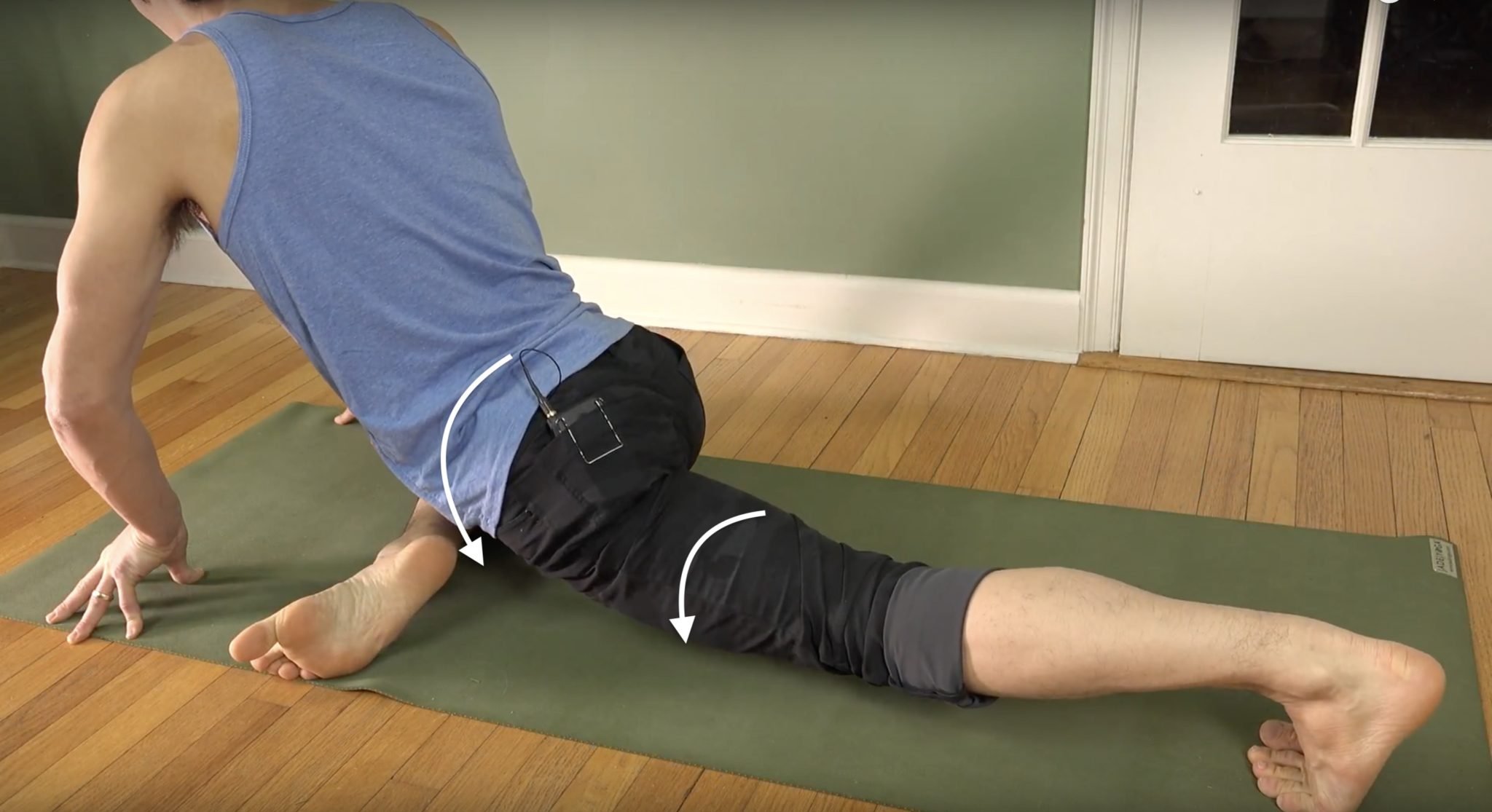
Step 3: Rotate The back Hip inward

Rotating the back thigh bone will help to rotate the pelvis toward the earth. Because the muscles of the front hip are connected to the pelvis, if you rotate the pelvis it lengthens the muscles causing a deeper stretch. I only recommend this if you are feeling at ease in the front knee. If so, go slow because it is very easy to lose what you have already created in step 1 and 2.

ONLINE TEACHER TRAININGS


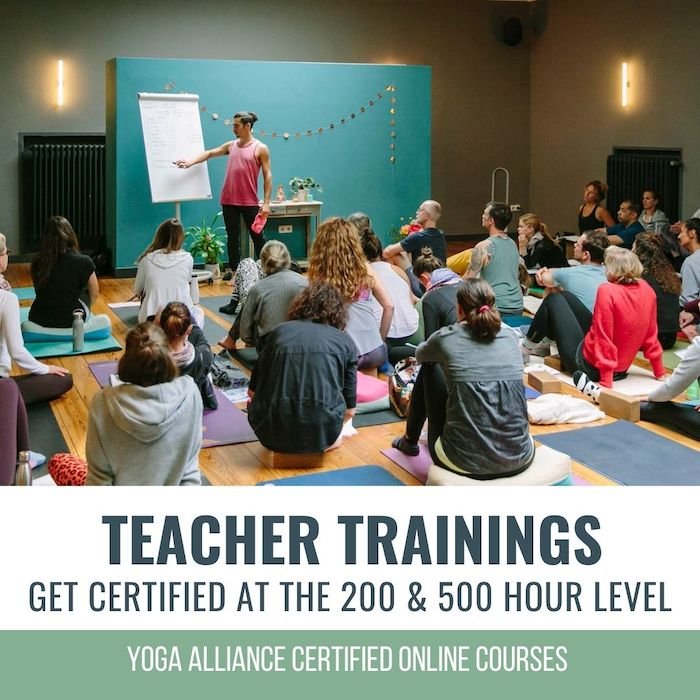
GET CERTIFIED AT THE 200 OR 500 HOUR LEVELS

  • 200 Hour Training: Get certified to teach yoga
  • 300 Hour Training: Take your certification to the 500 hour level
  • Recognized globally by Yoga Alliance 
  • Take your practice to the next level
  • All levels, ages, and experience welcomed

Sit, Stand, Walk.

Keeping the buttock muscles healthy and supple can really help in finding comfort when sitting, standing, or walking. Since most of our day is spent doing one of these three things, I highly recommend taking the time to do postures like pigeon pose, and do them well.

Listen To Your Body

Alignment cues and muscle engagements can be highly beneficial, so take the time to feel how they land in your body. There is no magic action or alignment for everyone, so I really encourage you to explore these actions while truly listening to your body. This particular set of cues might be what creates an “aha” moment for you, or it could be the complete opposite, so try them and ask yourself what you feel and what your experience is. Try to dissociate feeling bad with effort, and good with doing nothing. They sometimes correlate and sometimes not. If these actions wound up being right for you then I recommend practicing them whenever you are doing pigeon, and always maintain awareness of what your body is feeling. Through deep focus and exploration you will be able to collect the right actions for you.  If you found this useful, please share this post and if you are wanting to increase strength and flexibility of your hips and hamstrings check out the Hips & Hamstrings Immersion

Continue Learning

Handstand Actions

Handstand Actions

Handstand ActionsLEAN, GRIP, PUSHHANDSTAND ACTIONS Handstand isn’t something we conquer in a single class, it’s a layered process that demands repetition and refinement. There are certain key handstand actions that are non-negotiable: lifting the shoulders up to the...

read more
Handstand Mechanics

Handstand Mechanics

Handstand MechanicsINVERSIONHANDSTAND MECHANICS Stability, strength, and coordination come together in the pursuit of mastering handstand mechanics. One of the most critical foundations is internal rotation at the hip joints, which can aid with certain entries and...

read more
Stable Sirsasana

Stable Sirsasana

Stable SirsasanaHEADSTANDSTABLE SIRSASANA Creating a stable Sirsasana is less about the final pose and more about the mechanics that lead us there. From weight transfer and spinal alignment to hamstring flexibility and shoulder engagement, each layer matters. Unlike...

read more
Explore Hip Rotation

Explore Hip Rotation

Explore Hip RotationSURYA YANTRASANAEXPLORE HIP ROTATION Hip rotation isn’t just an anatomical concept—it’s an open invitation to become more intimate with our body’s story. In yoga, we often live in lateral (external) rotation, especially in hip-opening postures....

read more
Step Up Your Side Plank

Step Up Your Side Plank

Step Up Your Side PlankVASISTHASANASTEP UP YOUR SIDE PLANK Side Plank might look simple, but true proficiency starts in the details. One of the keys to refining the posture is learning how opposing muscle groups create an isometric contraction—a subtle engagement that...

read more
Headstand and Side Crow Transitions

Headstand and Side Crow Transitions

Headstand and Side Crow TransitionsPARSVA BAKASANAHEADSTAND AND SIDE CROW TRANSITIONS Mastery begins with mechanics, especially when it comes to headstand and side crow transitions. Each posture on its own demands control, coordination, and a deep understanding of...

read more

TOP RECOMMENDATIONS 

Handstand Training

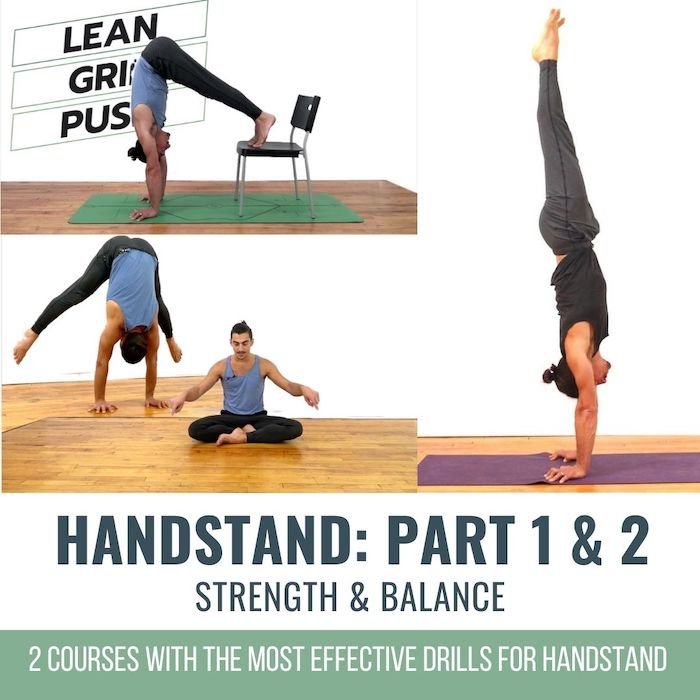
Learn the techniques that make Handstand fun, easy and accessible! This 2 part course consists of the top most effective exercises will increase your strength and technique so you can easefully balance a handstand.

View Details

SHOULDER REVELATION

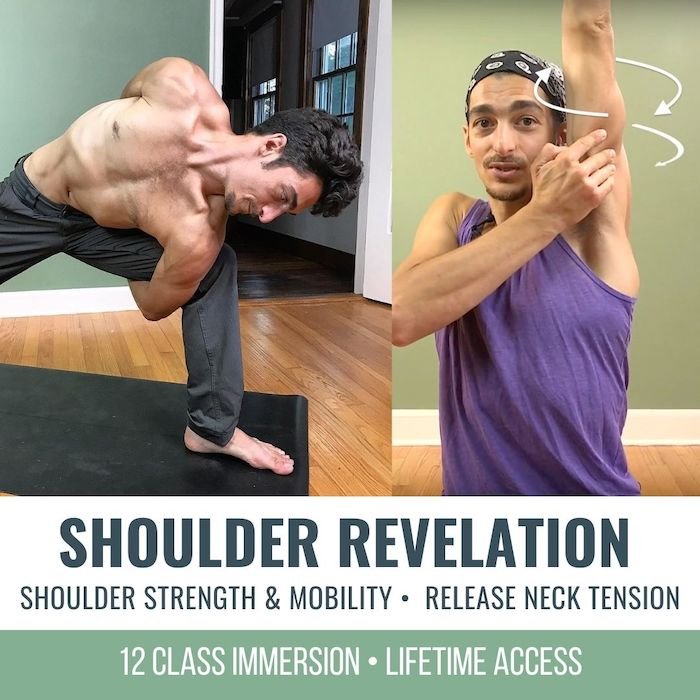
In this 12 class immersion  you will practice specific techniques to strengthen and unlock your shoulders. Each class focuses on a specific joint articulation and muscle group so you gain mastery in the shoulders.

View Details

HEART OPENERS

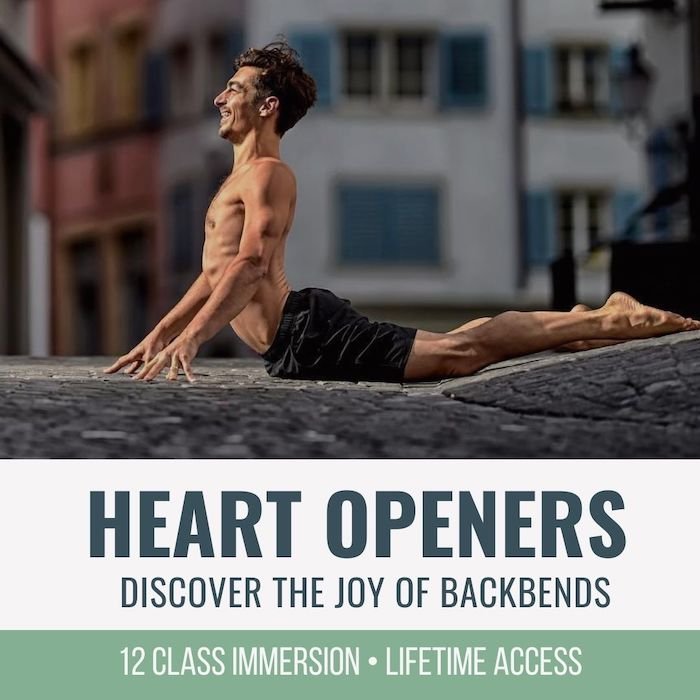
Finally, a 12 class immersion designed specifically to help you discover the freedom of heart openers. Learn how to avoid uncomfortable compression, and awaken your true range of motion in a step by step manner.

View Details

THE FREE TECHNIQUE PACK

When You Subscribe, You Will Get Instant Access to

  • the Technique Pack: 15 yoga pose breakdowns
  • exclusive online course discounts
  • exclusive blogs and videos
  • This field is for validation purposes and should be left unchanged.

Contact Matt

  • This field is for validation purposes and should be left unchanged.

Pin It on Pinterest