The Transformation Equation

The Transformation Equation


A.C.T.

Deep inside every one of us there exists a desire to be the best we can be during this short time that we have here in this life. It may be covered up by insecurities, shame, guilt, or the business of our day-to-day. You owe it to yourself to live a life that feels amazing and has a positive impact on everyone around you. Reading this means you are already stepping in the right direction. Only those called toward a path of self-awareness would get excited enough at the word “transformation.” Most would be terrified of the word and back away entirely. Acknowledge your courage and continue seeking the tools that support your growth.

A.C.T. is the acronym I use for the Transformation Equation. It stands for Awareness + Conscious Action = Transformation. Before we go over what I mean by this, let’s first get clear on one thing. Transformation in the spiritual sense of the word is not the same as change. Change is inevitable, it’s happening all around us, within us, and it is unstoppable. Try to take control and stop change and you will always lose as it is a law of life. On the other hand, Transformation is a choice. While everyone longs to transform their lives and live at their highest potential, few are willing to risk the comforts of the known over the adventure of the unknown. Stepping into your potential is not without risk. You can try and calculate it but ultimately you have no idea what lies ahead. All you can control is what you do with the time that you have. Do you choose to face the challenges that are required for you to step up to your potential, or do you sit back living in the known stagnancy of day-to-day tasks?

Dance With The Flames

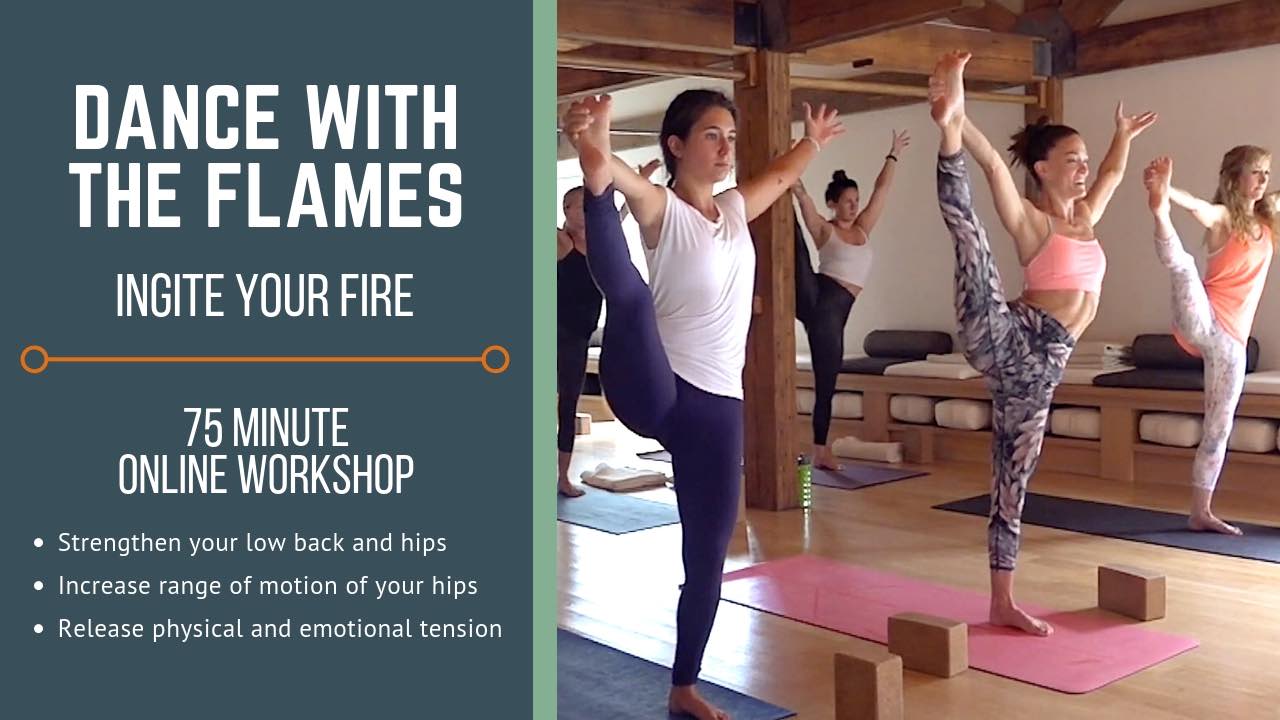
Do you struggle with tight or weak hips, low back discomfort, or emotional stress? This workshop will provide you with a step-by-step approach to increase flexibility,  strength, and peace of mind. Evoke your inner fire and dance through life, the journey starts now!

AWARENESS + CONSCIOUS ACTION = TRANSFORMATION

    Step 1. Awareness

    Awareness is required before action if you want your efforts to produce positive outcomes. Action without awareness will still be productive but as we know, it often causes burn out and unfavorable results. Awareness can only be built through routine exercises of self-inquiry and observation. Self-inquiry is focused contemplation, asking yourself the questions to better understand your patterns of behavior. Most people are terrified of self-awareness simply because they don’t want to see all the aspects of themselves that they do not like. While it is true that you will see the darkness of who you are, you will also grow to see your amazing light that permeates every cell of your body. You cannot see your inner magnificence without cleaning off the lens that you see yourself through, which means you’ll have to be willing to see aspects of yourself that you are not proud of. No matter how much we each deny it, we all want to be the best we can be, and that requires facing our internal challenges, cleaning our lens of perception, and inquiring about who we are and why. Self-inquiry takes tremendous courage but as a result, we become self-aware, grateful for the person that we are, relaxed in our being, confident, filled with love to give, able to receive, more productive, less burnt out, more joyful, and so on.

    Step 2: Conscious action

    Action in alignment with awareness leads to profound results. Conscious Action requires awareness in every step, re-evaluation, and clear communication with anyone you are carrying out the actions with. Awareness produces a clarity inside of who you are and what you want to create with the time you have in this body. However, without Conscious Action, you can never grow into your potential. Potential is a trajectory, a path that you walk not a destination. Your potential could simply be to become a kind-hearted, loving human being, or it might be bigger than that: to become one who pulls others around them into their potential. Your potential will always grow as you take steps toward it – stay in tune through self-inquiry, and Consciously take action in alignment with it.

    Result: Transformation

    Transformation is the inevitable result of your awareness and actions. The choice to transform your current life for the person you are becoming is one that very few people take in this life. Transformation can not happen without Awareness because without seeing your own magnificence you can never expand upon it. If all you see is your self-doubt and insecurities, and you spend your energy hiding them from the majority of people you connect with, you will never have the energy to move forward. Do you choose to hide or do you choose to get courageous, see and share yourself, and expand into the person you are becoming? Watch the video below to see more about how to make use of the transformation equation and build the courage to step into your magnificence potential. You deserve it. 

    Create a Life You Love

    Place your energy on what you want to create in your life so that the short life that you get to live is filled with love! If you are looking to go deeper, I taught and recorded a workshop live called Dance with the Flames which uses the theme of stepping into the fire of transformation in order to live the life you deserve. I sincerely hope you make use of the transformation equation and that it serves you for the many years to come! Please share your comments, questions, and experiences. I look forward to hearing from you.

    DANCE WITH THE FLAMES

    A rare and exciting experience that will take you through an incredible adventure in both body and mind.  If you are looking to step into the fire of transformation so you can joyfully dance with the flames, this is the perfect workshop. It was filmed live to bring you the fullness of energy!

    Continue Learning

    Vishvamitrasana At The Wall

    Vishvamitrasana At The Wall

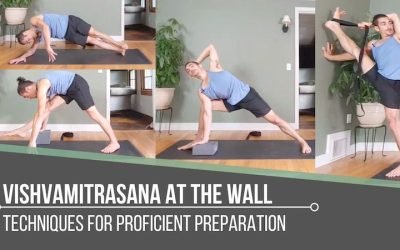
    Vishvamitrasana at the Wall Techniques for Proficient Preparationsage visvamitraVISHVAMITRASANA AT THE WALL There are many stops along the way to a peak posture, but without being empowered by effective steps and techniques to implement, you are left with untapped...
    read more
    Strengthen For Splits

    Strengthen For Splits

    Strengthen for Splits Variations for Increased FlexiblityhanumanasanaSTRENGTHEN FOR SPLITS If the Splits (Hanumanasana) had a personality, it might be one of the most vocal in the room. Aesthetically, it’s quite bold. The shape of the posture makes it evident that it...
    read more
    Prepare For Lotus

    Prepare For Lotus

    Prepare for Lotus Standing Postures for Deep Hip OpeningflexibilityPREPARE FOR LOTUS There are multiple ways to prepare for Lotus Pose. The 5 standing postures and the techniques that are highlighted today are from a portion of a sequence Matt shares in the first...

    read more
    Half Lotus Explorations

    Half Lotus Explorations

    Half Lotus Explorations Articulations for Your Hips, Knees, and Ankleship mobilityHALF LOTUS POSE EXPLORATIONS Lotus Pose may become accessible at different phases of your practice, but it might not ever become attainable. Half Lotus Pose and variations are a great...

    read more
    Fire Log Pose

    Fire Log Pose

    Fire Log Pose 3 Actions for Increased Hip MobilityagnistambhasanaFIRE LOG POSE There’s such a joyous feeling when you’re unwrapping a gift and caught up in the anticipation of finding out what’s inside. This can be similar to the process of exploring a specific yoga...

    read more
    Lotus Pose Variations

    Lotus Pose Variations

    Lotus Pose Variations Is There a Safer Option?padmasanaLOTUS POSE VARIATIONS One of my favorite episodes of Three’s Company is when John Ritter’s character (Jack) laughs at Joyce Dewitt ( Janet) and Suzanne Somers (Chrissy) when they are doing Lotus Pose during a yoga...

    read more

    TOP RECOMMENDATIONS 

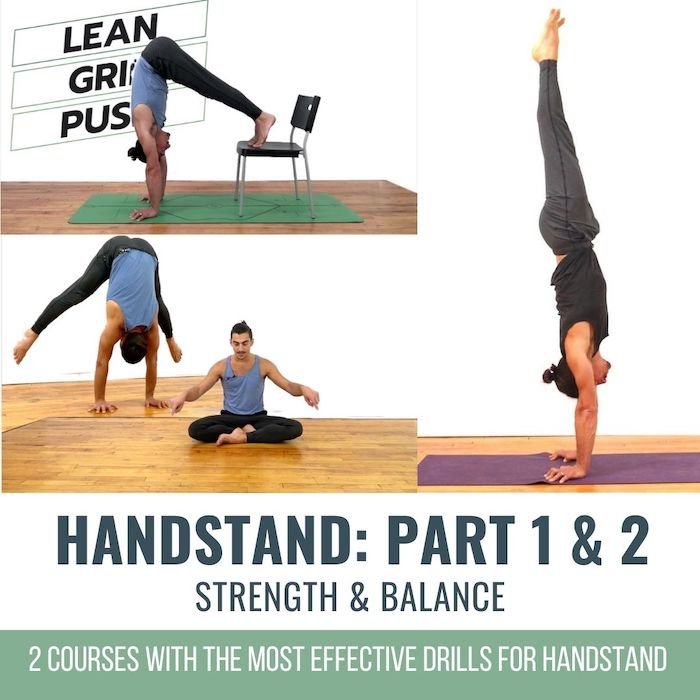
    Handstand Training

    Learn the techniques that make Handstand fun, easy and accessible! This 2 part course consists of the top most effective exercises will increase your strength and technique so you can easefully balance a handstand.

    View Details

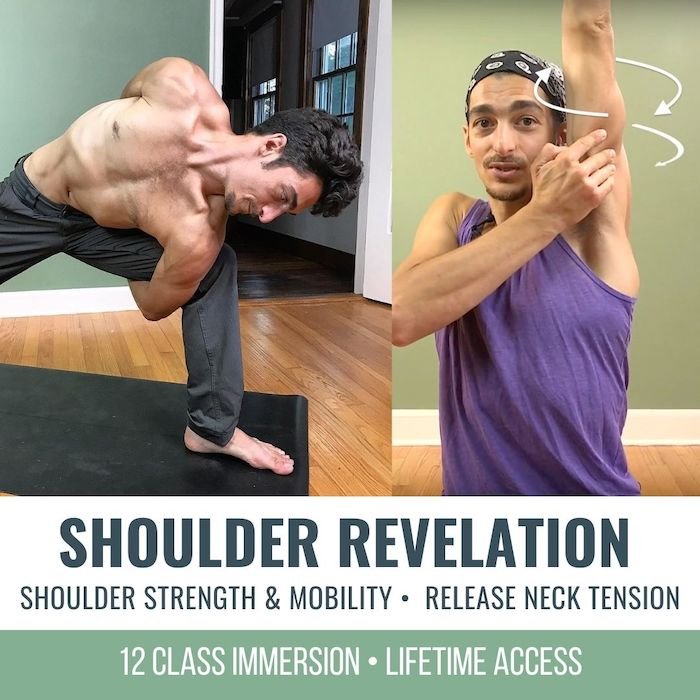
    SHOULDER REVELATION

    In this 12 class immersion  you will practice specific techniques to strengthen and unlock your shoulders. Each class focuses on a specific joint articulation and muscle group so you gain mastery in the shoulders.

    View Details

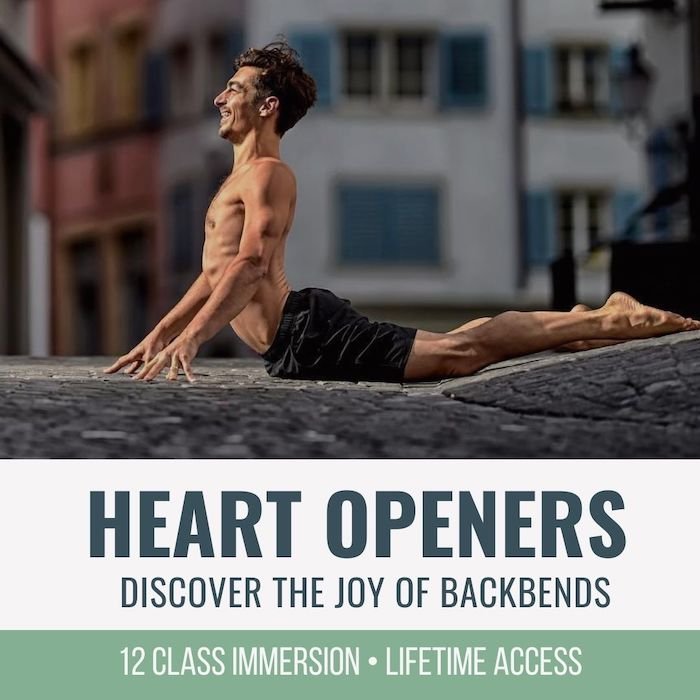
    HEART OPENERS

    Finally, a 12 class immersion designed specifically to help you discover the freedom of heart openers. Learn how to avoid uncomfortable compression, and awaken your true range of motion in a step by step manner.

    View Details

    THE FREE TECHNIQUE PACK

    When You Subscribe, You Will Get Instant Access to

    • the Technique Pack: 15 yoga pose breakdowns
    • exclusive online course discounts
    • exclusive blogs and videos
    • This field is for validation purposes and should be left unchanged.

    Still Have Questions? Email Matt Directly

    • This field is for validation purposes and should be left unchanged.

    UNLOCK YOUR HIPS

    UNLOCK YOUR HIPS

     OUTER HIP STRENGTH AND FLEXIBILITY FOR THE LOW BACK AND S.I. JOINT


    THE LOW BACK AND S.I. JOINT

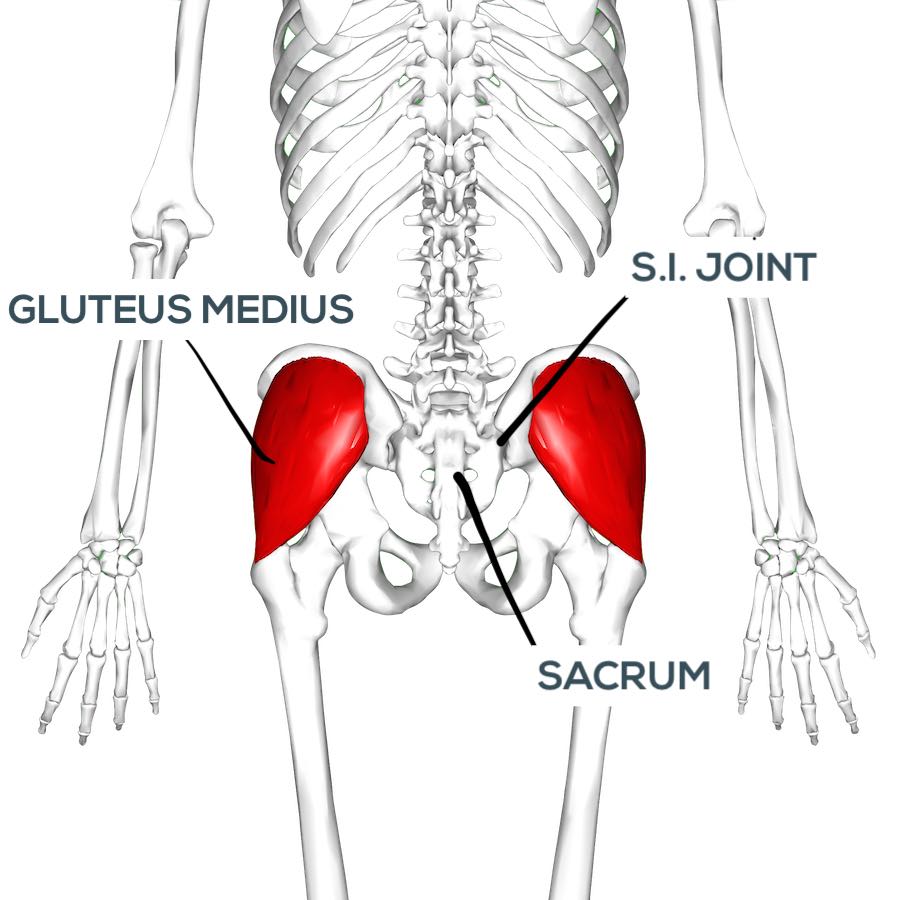
    Low back pain or S.I. Joint instability are quite common for many people and the cause seems to be a mystery. What most people don’t realize is that pain is usually the result of weak or underdeveloped muscles resulting in the overcompensation by other muscles. In other words, the body develops patterns that are perhaps not the best when it comes to our well-being. Why does it develop patterns? All of nature adapts to the environment. As beings of nature, we do exactly the same thing – the body adapts to what we give it. If we give it a shape and hold that shape for the majority of the day then it will develop patterns of elongated muscles and shortened muscles. Some of the muscles that tend to cause problems for the low back that are often overlooked are the ABDUCTORS of the Hips. 3 of the muscles that make up the abductors are the Gluteus medius, Gluteus Minimus and T.F.L. You can see in the photo to the right (or below if you’re on mobile) that the gluteus medius attaches to each side of the pelvis and to the top of the thigh bone. 

    LOW BACK PAIN

    The two sides of the pelvis are actually independently mobile structures due to the sacrum that lies in the middle which has a joint on either side that is called the S.I. Joint. This joint allows the pelvis on each side to move. This is a blessing but could also be a curse if the abductor muscles are out of balance. If one side is tight and the other flexible this could cause the pelvis to tilt, potentially resulting in low back discomfort or scoliosis. This was the case for me.

    Growing up, I played hockey which strengthens the abductors. Unfortunately, I favored my right leg significantly which caused an over development and shortening of the musculature on the right side resulting in scoliosis and back pain throughout high school and college until about a year into yoga when I finally learned how to unlock my hips!

    S.I JOINT

    Now for other people, the low back isn’t affected but the S.I. Joint is. This seems to be most common amongst women, especially those that have had children – the ligaments tend to be more lax and so the sacrum can move inside the two sides of the pelvis resulting in pain on the back of the pelvis or radiating through the lower back near the pelvis and sacrum.

    THE SOLUTION

    There are many muscles that surround the pelvis that can pull on either side of the ilium or sacrum which could create pain, so where do we begin? Often times it can be overwhelming and ineffective to target all the hip and back muscles every yoga practice, so it is useful to focus on one area per practice. In the video below I share with you ways of working on the Abductor group for strength and range of motion. You may find that one side is not as strong as the other – if this is the case I recommend strengthening the weaker side which will help bring the abductors into balance.

    I do have a workshop called Hips: Rock and Unlock Em that I created as a way to target as many of these muscles within one practice. You could start there to get a feel for what areas of your hips are underdeveloped or out of balance.

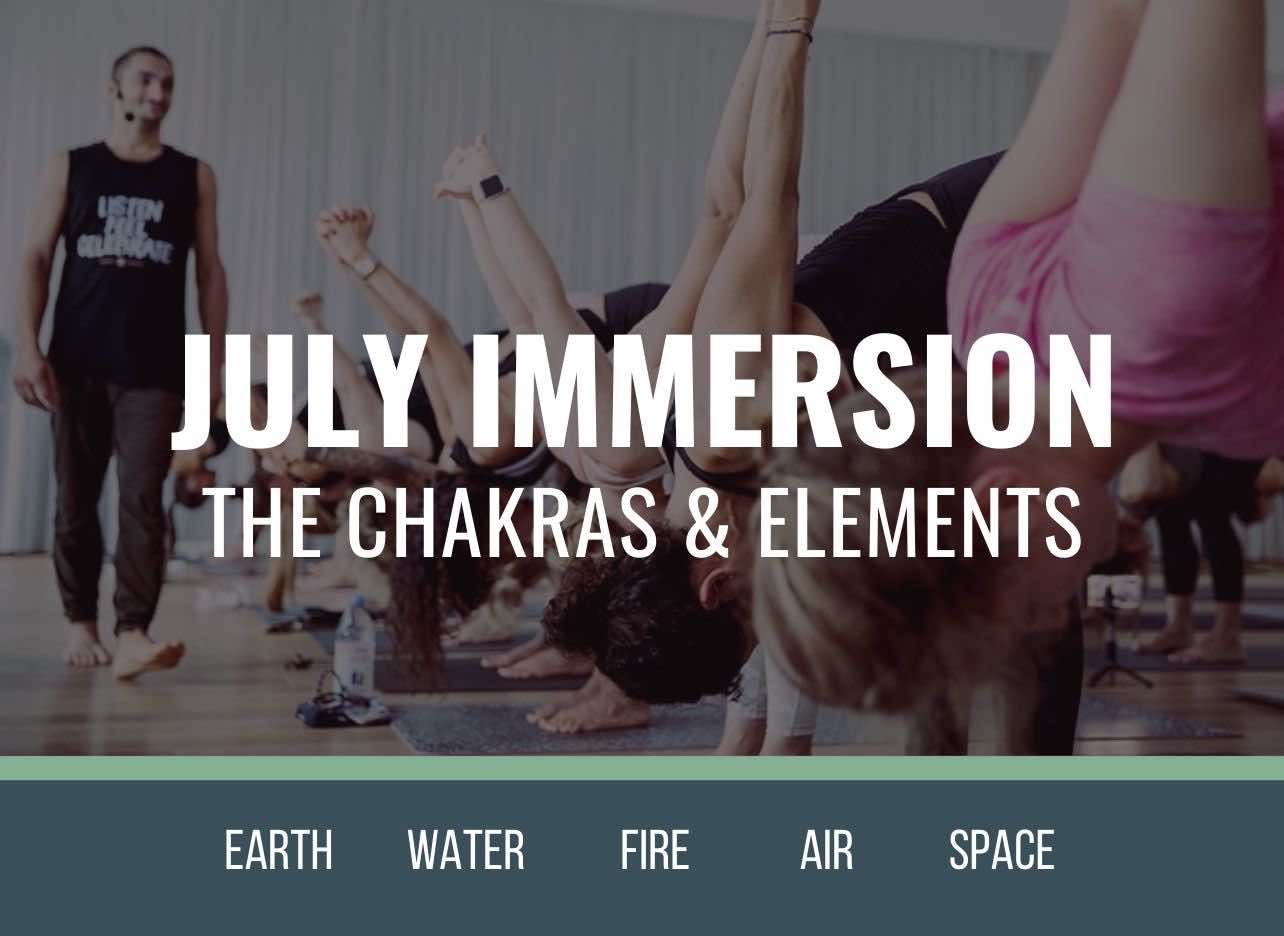
    In addition, I highly recommend the JULY IMMERSION which focuses on the Chakras. The first 5 practices of that immersion will awaken your strength, flexibility and awareness of the muscles that surround the hips.

    OPEN YOUR HIPS AND HEART

    The July Immersion takes you on a 12 Class Journey through the Chakras and the elements, to develop your strength, flexibility, and awareness of each energy center and the corresponding muscles. There is a heavy focus on the Hips in the Earth, & Water classes, and the Back in the Water and Air classes, balanced by Core strengthening in the Fire section.

    THE STEP BY STEP APPROACH

    “Dream big, start small, then connect the dots.” This quote from Dan Millman’s Wisdom of the Peaceful Warrior has been the foundation of my yoga practice from the moment I stepped on the yoga mat. It was that book that led my to yoga in the first place, and that line that became a mantra in my head from that moment on. How does it apply to the asana practice? Most people come into the yoga practice and feel something magnificent and of course they want to come back. At some point, regardless of how egoless we believe ourselves to be, we become attracted to the external postures of the yoga practice. It’s typically innocent of course, we associate a feeling with certain postures, on a subtle level we believe that when we attain them we will feel strong, powerful, fearless, light, free, at peace, worthy of love, kindness, etc. On an intellectual level, we usually know that this is not reality but we get pulled into it anyway. The beautiful thing is that we are being pulled into practice and the practice reveals what we need to learn. So I wouldn’t ridicule this process, but rather as you walk the path remind yourself that everything you wish to feel already exists within you, and rather than expecting yoga to do the practice for you, step into the feeling you crave and let that amplify your practice. This is what it means to practice with intention.  

    All that being said while we are living in this body we want to take care of it and allow it to reach its highest potential which includes movement practices, stability practices, diet, hygiene, mental health, creative expression, and so on. When I say highest potential, I don’t mean an end result or destination but rather a trajectory that gets us to walk the path. The purpose of this blog is to support your physical well-being in regard to your body. Asana is the practice that cultivates our body awareness, but most of us focus on the postures instead of our body and as a result we are left with thousands of shapes and alignment cues. A shortcut to body awareness is to put your body first, and the pose second! What does that mean? There are only a few major joints to learn in the body, and each has a few movements available to it. There are muscles that surround each joint that create this movement. If you use your asana practice to become aware, proficient, or even masterful in each movement then you will no longer be perplexed when you see a new pose, you will know exactly what is needed to put your body in that shape. You will grow to understand your limitations and your abilities, becoming your own best teacher.  

    THE CHROMATIC SYSTEM 

    I created Chromatic Yoga based on this concept of small steps toward our potential. Each month we have a focus in our classes, a Physical Through-Line (PTL), and a Thematic Through-Line (TTL).  The PTL is the one muscle group or joint action that we pull through an entire class, or workshop, while the TTL is similar but for building awareness of the mind and subtle energies of life. Because I encourage Chromatic Teachers to be authentic with how they teach, each will have their own way of creatively sharing the PTL and TTL. This month PTL – Abductors of the hip, is the focus of the video below. These are just a few ways to strengthen and become aware of the muscles.

    To find a Chromatic Yoga Teacher near you be sure to visit us at www.ChromaticYoga.com 

    3 Steps to Master the Abductors

    1. Awareness: learn the sensation of activating the abductors
    2. Strengthen: the muscle group through various postures in your yoga practice.
    3. Practice: activate the abductors over the course of time, through as many yoga postures as possible until you can easily activate them on command in any posture!

    Step 1. Awareness

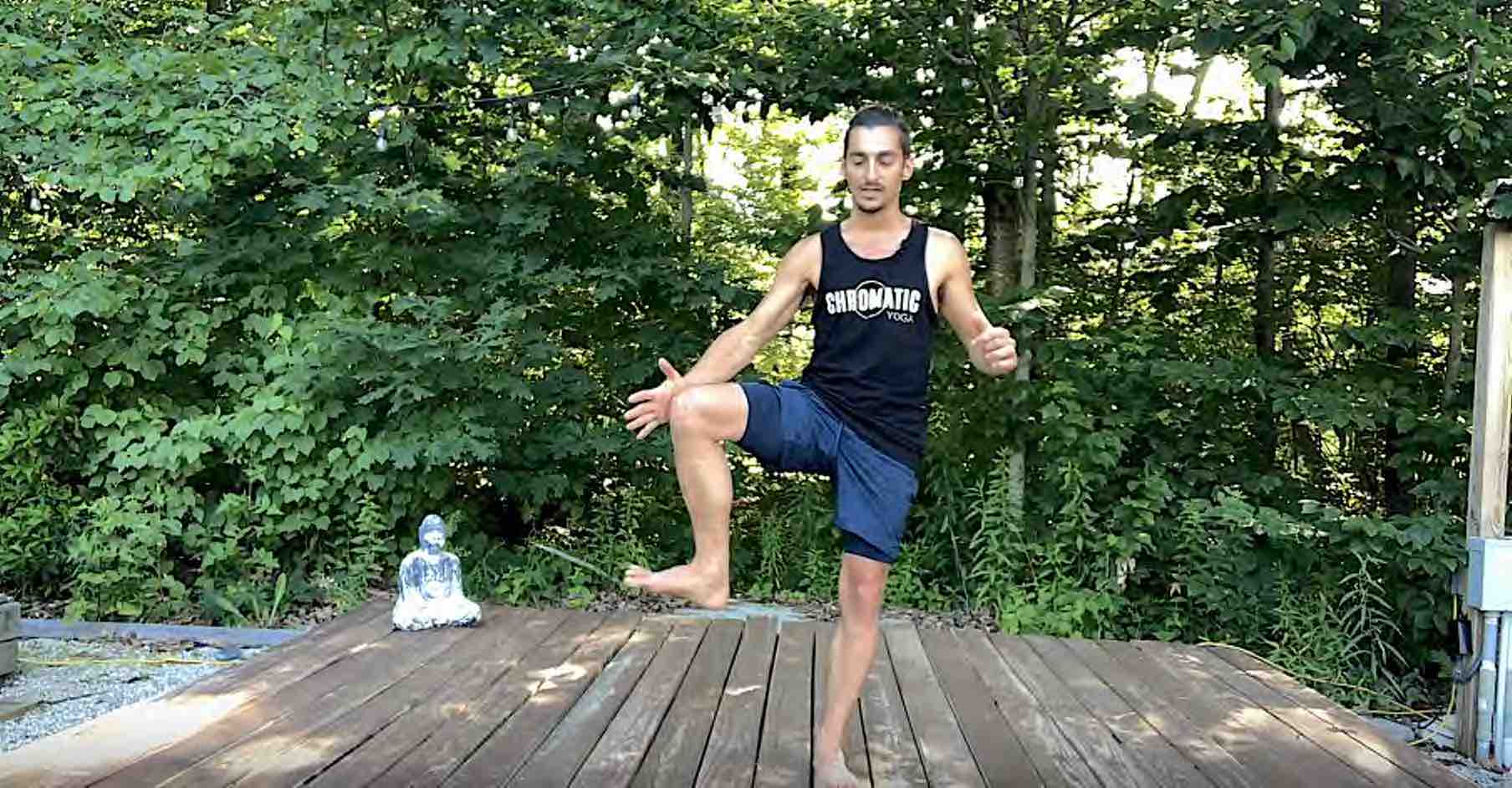
    The first step to building awareness of any muscle is to intellectually understand where it exists in the body. The abductor group is generally located in the outer hip/pelvic region. In addition to the intellectual understanding, you must learn what it feels like to activate this muscle. For this, it’s typically easiest to “create a boundary” and press into it. So here I have placed a hand outside the knee and I press into the hand which creates the action of abduction and engages the abductors.

    Step 2: strengthen

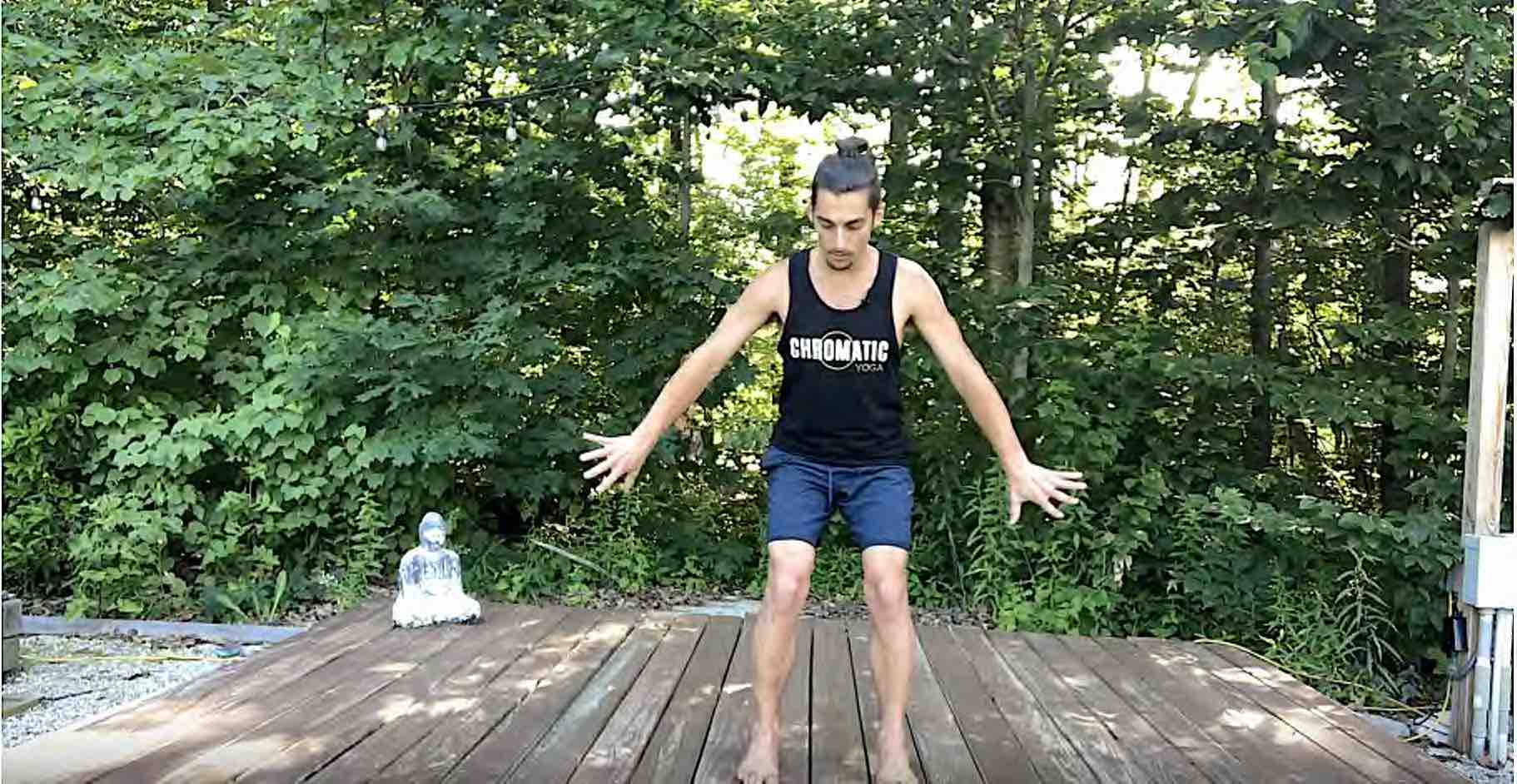
    Next, you will want to develop strength in accessible postures. Typically choosing static postures for “isometric” engagement is a safe and stable way to strength. Isometric means activate the muscle without movement of the joints. For this video, I chose Chair pose to share with you. With feet about hip-width apart, push your yoga mat apart with your heels while keeping your knees pointing straight forward. Note: if your pelvis is tucked under you may not be able to access the abductors, stick your buttocks upward.

    Step 3: Practice

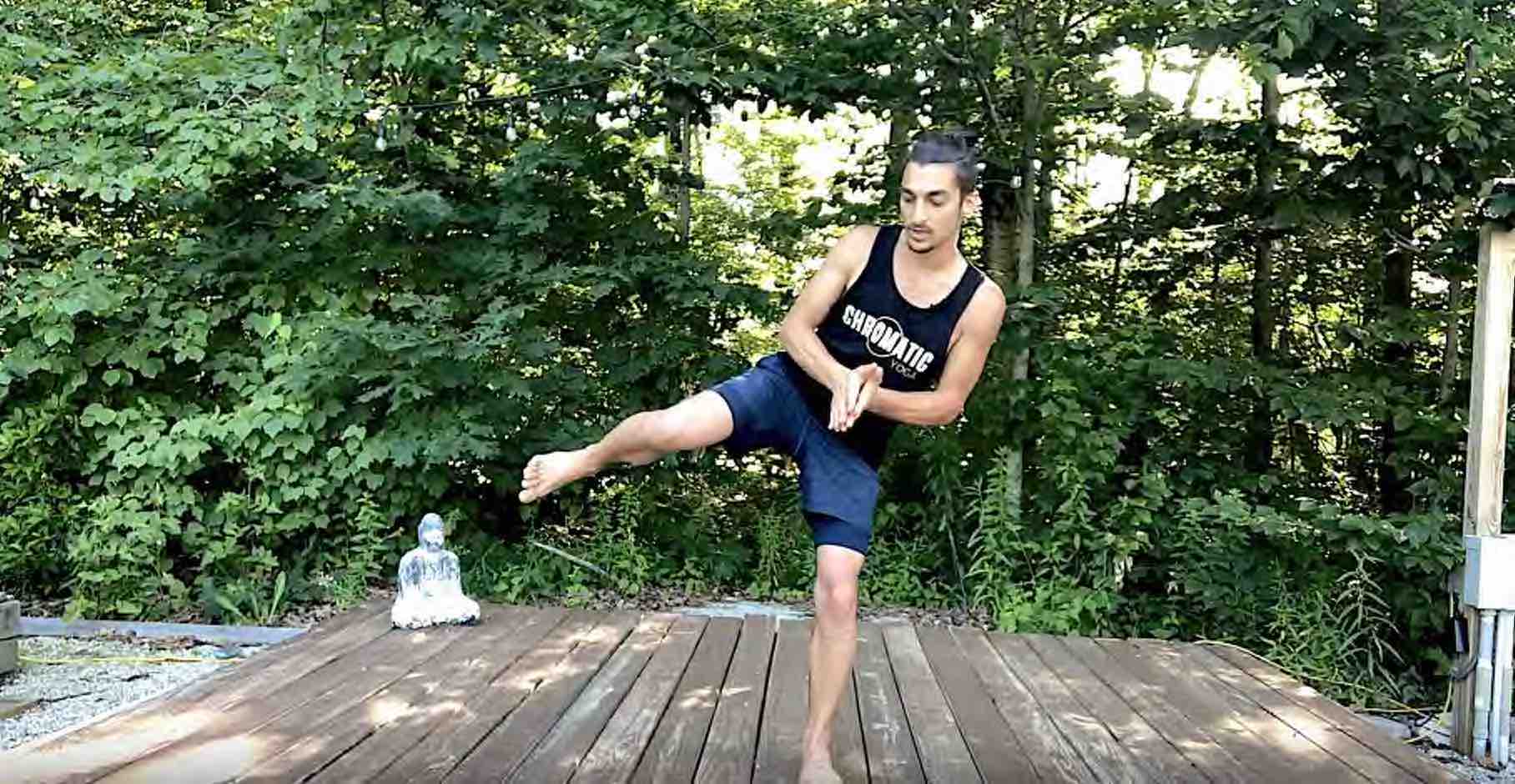
    Lastly, you will need to learn how to activate this muscle group through a range of motion. This means not only choosing a wide range of static yoga postures to activate the abductors in, but you will also want to do the movements that it creates. For this, I chose fire hydrant pose, both abducting the upper hip by lifting the leg up high, and the lower hip by squeezing the pelvis inward. Because the foot is on the ground, moving and rotating the pelvis away from the foot is abduction. You will feel it in your outer hip muscles.

    Mastery Leads to Discernment

    Why become masterful at anything? Mastery is not an end goal, it is simply a state of heightened awareness and capability. To become masterful in your physical body is not a chore but rather a privilege. Getting to know this vehicle that we have for only a short period of time is a form of respect and love. There is no end to mastery, just like there is no end to potential, it’s simply a trajectory or path that we walk out of respect to the greater energy that pulses through us. Mastery simply means that we can assess what is appropriate for the well-being of our body at any given time, and we have the tools to do what’s necessary to feel better. While we will always have blind spots, we can minimize the vast amount of guesswork by taking the step-by-step approach to understanding our body – one muscle group or joint action at a time.

    To apply this approach to the body,  I recommend practicing The July Immersion – 12 Yoga Classes, 4 Guided Meditations – and Hips: Rock and Unlock ‘Em!  The online workshop is a journey through what I call the 4 quadrants of the hips, supporting you on the path toward mastery of the inner thighs, outer hips, posterior chain, and hip flexors.

    Hips: Rock & Unlock 'Em

    Get 2 full hours with Matt Giordano focusing on the techniques that increase the range of motion in your hips and provide long-lasting freedom. You will have immediate, unlimited access, and can enjoy the benefits today!

    LIVESTREAM PACKAGES

    boundless freedom

    • 12 YOGA CLASSES
    • SHOULDER BIOMECHANICS
    • TANTRIK YOGA TEACHINGS
    • 4 POST CLASS MEDITATIONS
    • 12 PEAK POSTURES
    • SALE Price:$98 

    BIRDS OF PARADISE

    • 12 YOGA CLASSES
    • 4 GUIDED MEDITATIONS
    • LIVETIME ACCCESS TO ALL
    • 12 PEAK POSTURES
    • 12 YOGA SUTRA THEMES
    • SALE Price:$98

    BEST STARTER PACKAGE

    • 6 YOGA CLASSES
    • 2 GUIDED MEDITATIONS
    • LIVETIME ACCCESS TO ALL
    • 6 PEAK POSTURES
    • 6 YOGA SUTRA THEMES
    • SALE Price:$78

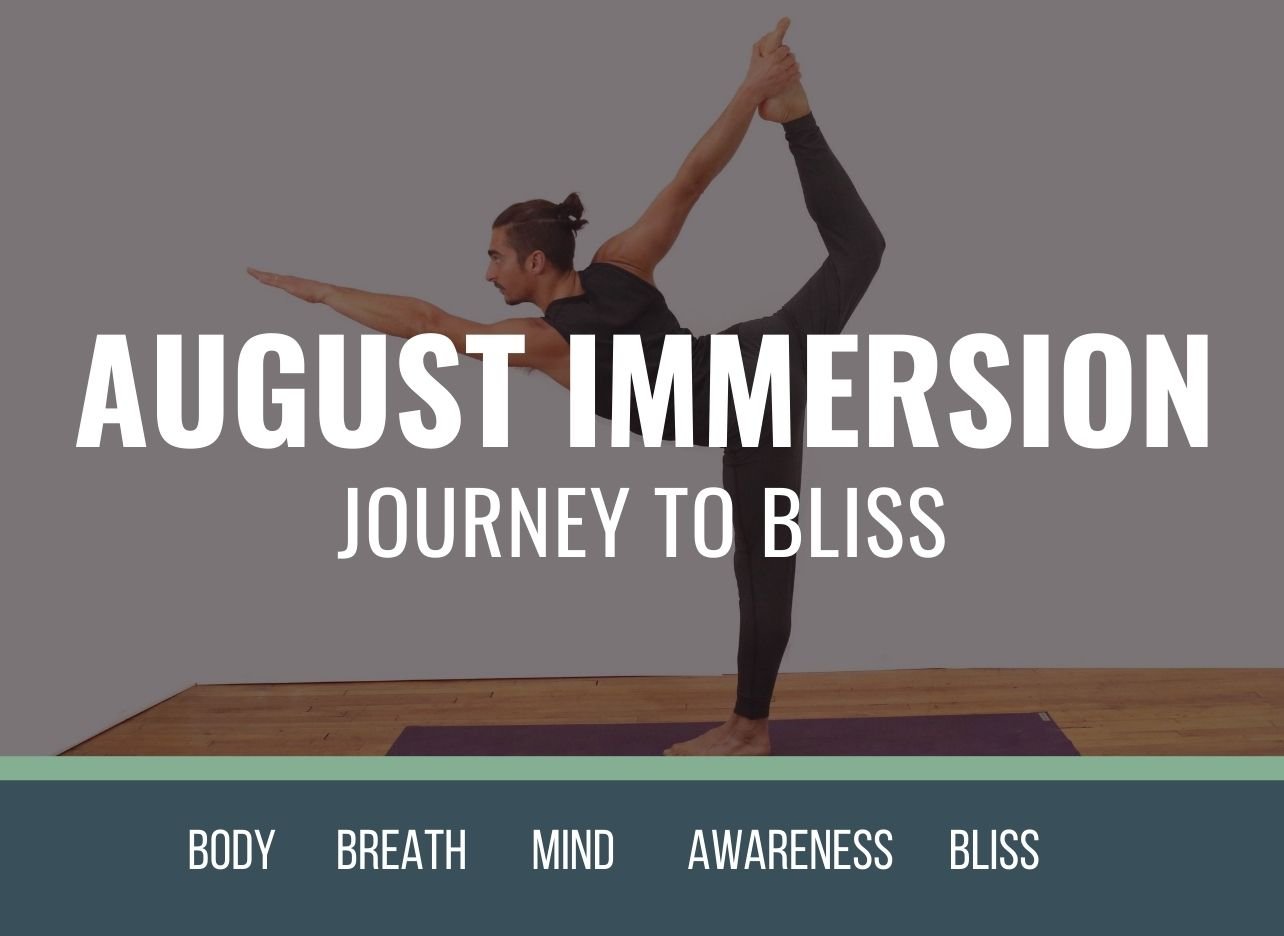
    JOURNEY TO BLISS

    • 12 YOGA CLASSES
    • 4 GUIDED MEDITATIONS
    • LIVETIME ACCCESS TO ALL
    • 12 PEAK POSTURES
    • 12 YOGA SUTRA THEMES
    • SALE Price:$98

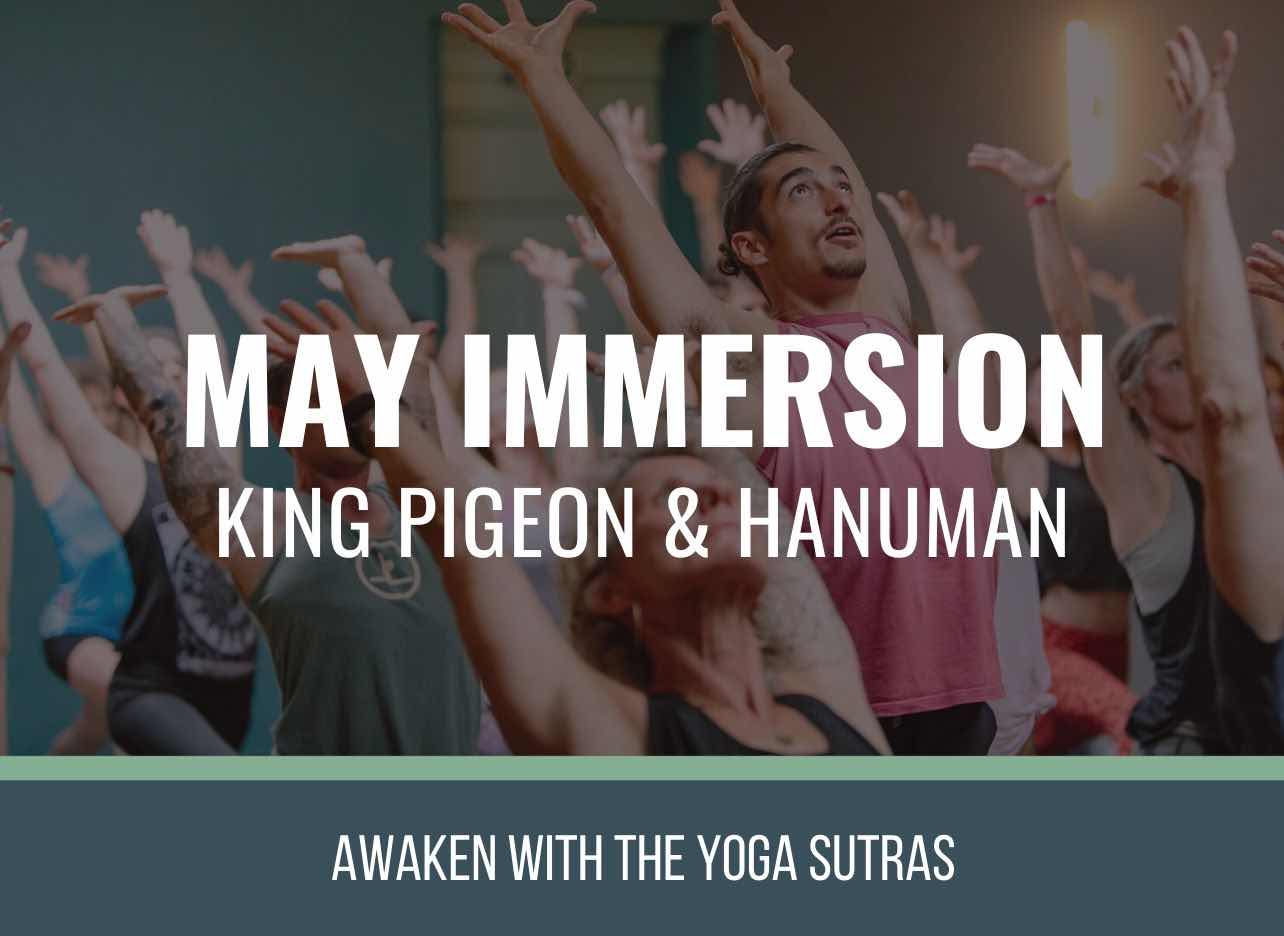
    KING PIGEON & HANUMAN

    • 12 YOGA CLASSES
    • 4 GUIDED MEDITATIONS
    • LIVETIME ACCCESS TO ALL
    • 12 PEAK POSTURES
    • 12 YOGA SUTRA THEMES
    • SALE Price:$98

    JOURNEY TO THE HEART

    • 12 YOGA CLASSES
    • 4 GUIDED MEDITATIONS
    • LIVETIME ACCCESS TO ALL
    • 12 PEAK POSTURES
    • 12 YOGA SUTRA THEMES
    • SALE Price:$128

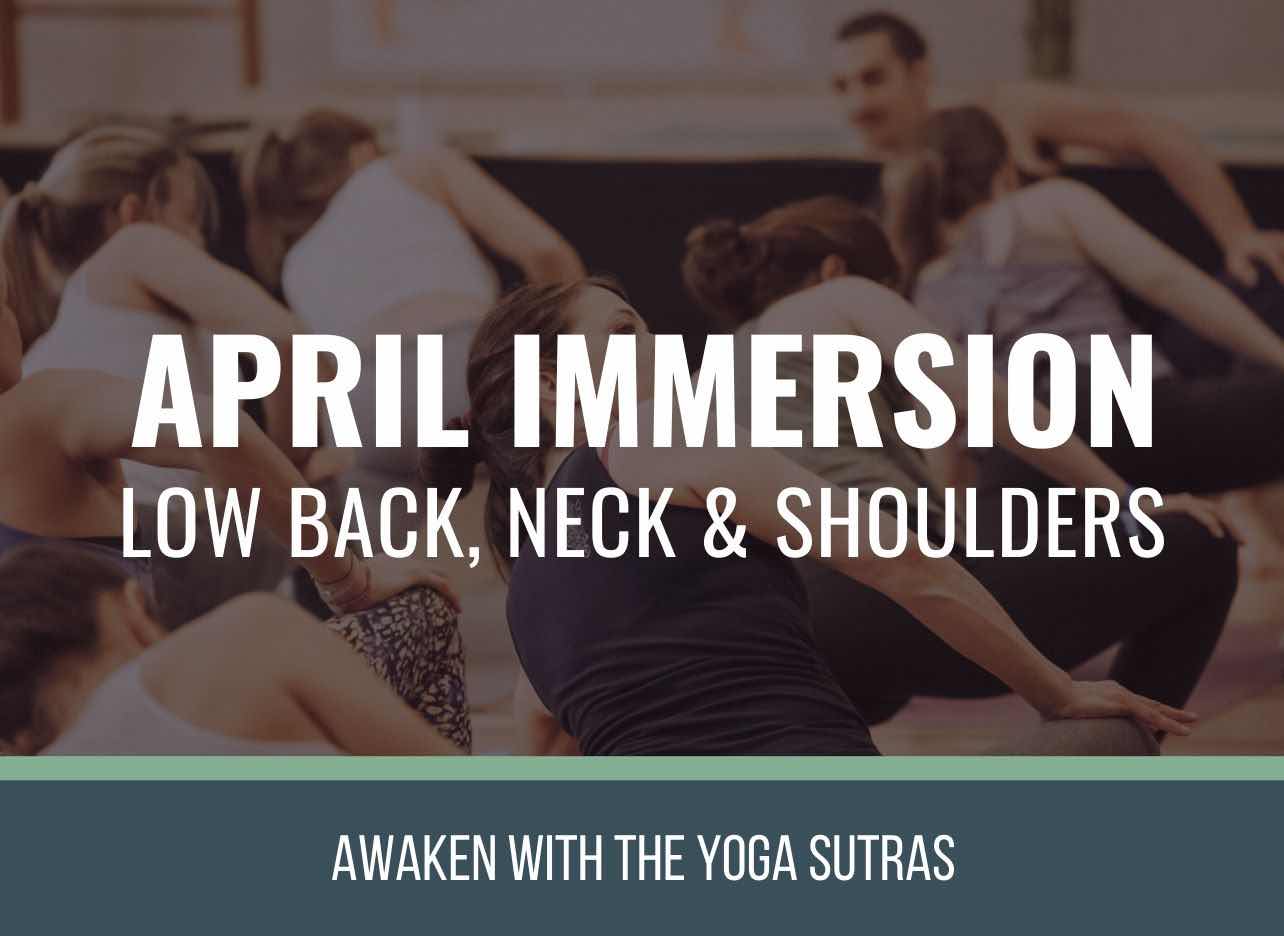
    BACK, NECK & SHOULDERS

    • 12 YOGA CLASSES
    • 4 GUIDED MEDITATIONS
    • LIVETIME ACCCESS TO ALL
    • 12 PEAK POSTURES
    • 12 YOGA SUTRA THEMES
    • SALE Price:$128

    Continue Learning

    Vishvamitrasana At The Wall

    Vishvamitrasana At The Wall

    Vishvamitrasana at the Wall Techniques for Proficient Preparationsage visvamitraVISHVAMITRASANA AT THE WALL There are many stops along the way to a peak posture, but without being empowered by effective steps and techniques to implement, you are left with untapped...

    read more
    Strengthen For Splits

    Strengthen For Splits

    Strengthen for Splits Variations for Increased FlexiblityhanumanasanaSTRENGTHEN FOR SPLITS If the Splits (Hanumanasana) had a personality, it might be one of the most vocal in the room. Aesthetically, it’s quite bold. The shape of the posture makes it evident that it...

    read more
    Prepare For Lotus

    Prepare For Lotus

    Prepare for Lotus Standing Postures for Deep Hip OpeningflexibilityPREPARE FOR LOTUS There are multiple ways to prepare for Lotus Pose. The 5 standing postures and the techniques that are highlighted today are from a portion of a sequence Matt shares in the first...

    read more
    Half Lotus Explorations

    Half Lotus Explorations

    Half Lotus Explorations Articulations for Your Hips, Knees, and Ankleship mobilityHALF LOTUS POSE EXPLORATIONS Lotus Pose may become accessible at different phases of your practice, but it might not ever become attainable. Half Lotus Pose and variations are a great...

    read more
    Fire Log Pose

    Fire Log Pose

    Fire Log Pose 3 Actions for Increased Hip MobilityagnistambhasanaFIRE LOG POSE There’s such a joyous feeling when you’re unwrapping a gift and caught up in the anticipation of finding out what’s inside. This can be similar to the process of exploring a specific yoga...

    read more
    Lotus Pose Variations

    Lotus Pose Variations

    Lotus Pose Variations Is There a Safer Option?padmasanaLOTUS POSE VARIATIONS One of my favorite episodes of Three’s Company is when John Ritter’s character (Jack) laughs at Joyce Dewitt ( Janet) and Suzanne Somers (Chrissy) when they are doing Lotus Pose during a yoga...

    read more

    TOP RECOMMENDATIONS 

    Handstand Training

    Learn the techniques that make Handstand fun, easy and accessible! This 2 part course consists of the top most effective exercises will increase your strength and technique so you can easefully balance a handstand.

    View Details

    SHOULDER REVELATION

    In this 12 class immersion  you will practice specific techniques to strengthen and unlock your shoulders. Each class focuses on a specific joint articulation and muscle group so you gain mastery in the shoulders.

    View Details

    HEART OPENERS

    Finally, a 12 class immersion designed specifically to help you discover the freedom of heart openers. Learn how to avoid uncomfortable compression, and awaken your true range of motion in a step by step manner.

    View Details

    THE FREE TECHNIQUE PACK

    When You Subscribe, You Will Get Instant Access to

    • the Technique Pack: 15 yoga pose breakdowns
    • exclusive online course discounts
    • exclusive blogs and videos
    • This field is for validation purposes and should be left unchanged.

    Still Have Questions? Email Matt Directly

    • This field is for validation purposes and should be left unchanged.

    Chaturanga Alignment Part 2

    Chaturanga Alignment Part 2

    3 Steps to Apply Shoulder Actions

    CHATURANGA

    CHATURANGA: Integrating Shoulder Actions

    Integrating the 3 Necessary Shoulder Actions into your practice can be complicated, so to help you I have come up with 3 Steps to Master your Chaturanga. If you haven’t yet watched Chaturanga Alignment: 3 Necessary Shoulder Actions  then it is best to start there and come back to this afterwards. The 3 step process will help you develop “Muscle Intelligence” or the awareness of how to create specific actions in your body to find less complicated positions which require less strength and give you the space to explore new sensations. If done consecutively, these steps will build the strength over time that will make chaturanga feel light and free.

    Most of us sitting at our computers are not able to get up and start practicing, but if you do have the liberty of doing so, practice along with this video. If not, then simply watch and come back to it at another time so you can practice along. This is meant to help you apply the actions, not just understand them.

    Be patient with yourself as you work through each of the exercises – techniques take time to embody.

    The Intention 

    Perhaps the most confusing thing in the yoga community is the myriad of opinions about how to do each pose. Part of the reason for this is the differences each of us have from body type, to personality, to experience. Additionally, however,  each of us offering a path has a different intention behind our set of alignment cues or muscle actions. It is for this reason that I want to be clear that this is only one approach, and I am happy to provide for you the benefits and the challenges that come with this way. This approach to Chaturanga comes with the intention to build strength in multiple forearm muscles, the seratus anterior, triceps, external rotators of the the humerus, and the pectorals major. With all of these muscles working together to build strength you will inevitably feel more stable and light in your chaturanga and jump back to chaturanga, and also you will be well prepared for arm balances. If you have no intention of building strength in your upper body or practicing arm balances, there might be better ways of practicing Chaturanga. If you have a movement pattern that does not allow you to do protraction without upward tilt of the scapula then you might be better suited to a softer approach for a while. If you are experiencing chronic strain or compression in your wrist joints you may find leaning back in your chaturanga may be either better or worse for you. I mention this not to deter you from fully understanding and integrating this approach to chaturanga, but to help you to understand that there is never and will never be one correct approach to anything. What is good for you now may not be good for you later, and what was good for you yesterday may not be good for you today. This may be hard to grasp but if you try to keep an open mind and let yourself explore various approaches with the utmost attention to detail, you may find a greater sense of mastery in your body than you could ever find by doing one posture “the right way.” If you are ready to build strength, and/or set your self up for arm balances and jump backs, then let’s get started together!

    3 Step Integration

    When learning to integrate new muscle engagements or structural alignments into your practice, it is beneficial to simulate the shape with less stress on the muscles and joints. This usually entails changing your relationship to gravity. In the video and in the 3 steps below, I show you how to do this by doing chaturanga at the wall first, and then on your knees before trying the full posture. Doing these steps often provides a greater proficiency than simply trying it all out right away. This is because your body will always fall into its normal patterns when it’s asked to hold all your weight. We have to shake things up a bit to learn something new.

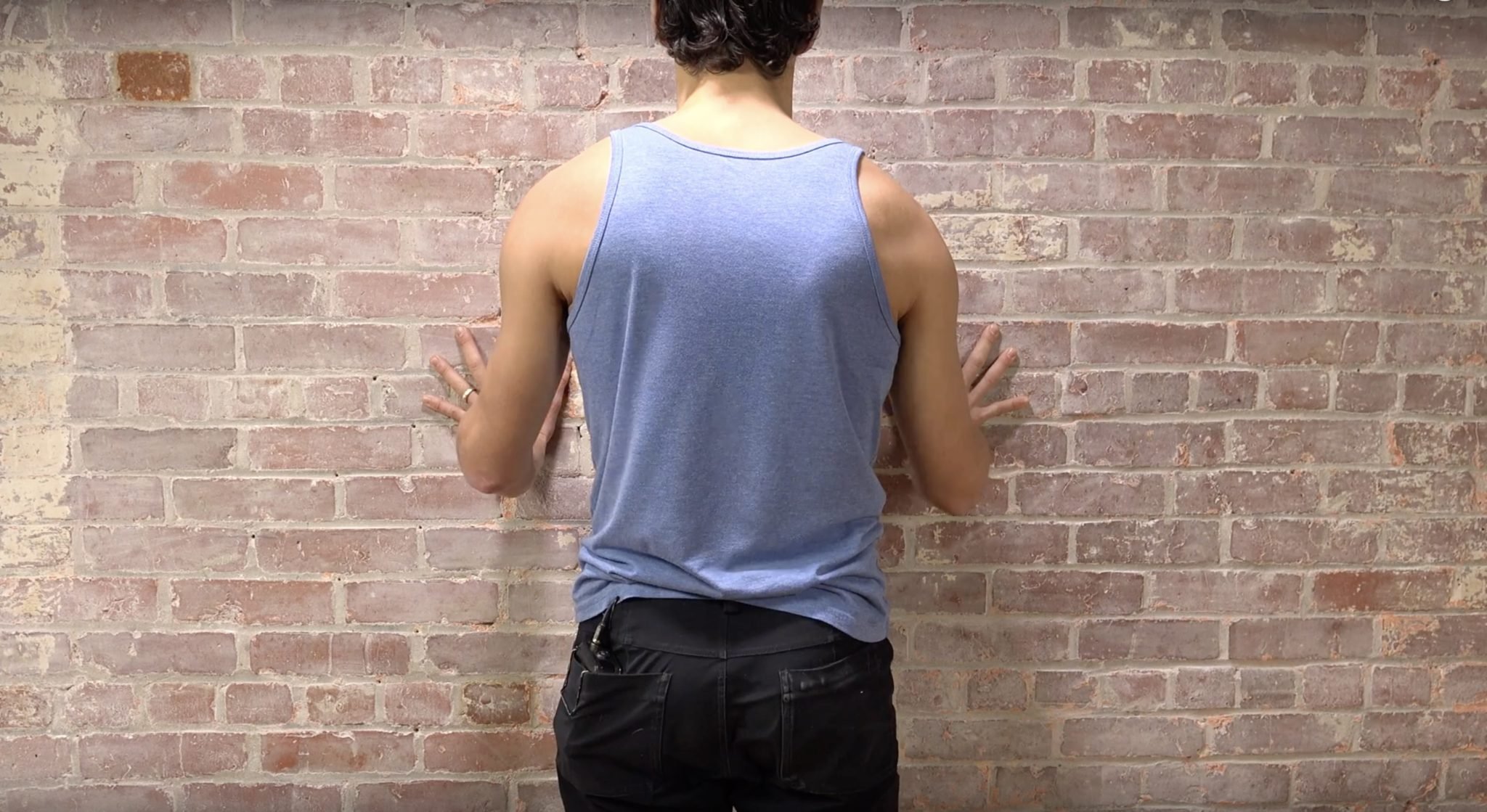
    Step 1 - Chaturanga at The Wall

    Regardless of your level, doing chaturanga at the wall and applying the three shoulder actions is huge in helping build masterful proprioception. This is the most important step in my eyes, especially since you’ll have plenty of time in class to practice step 2 and 3. Taking all the weight off of your body and just applying the actions until it is fully integrated and completely clear in both mind and body will be the best thing you can do. Mastery is not about halfway getting something, but rather nailing it down so that it will never be forgotten regardless of how long you leave the subject of study. Rock this exercise several times for several days/weeks and you will be well set up for building strength rapidly. Strength builds rapidly when our actions are precise in our body.

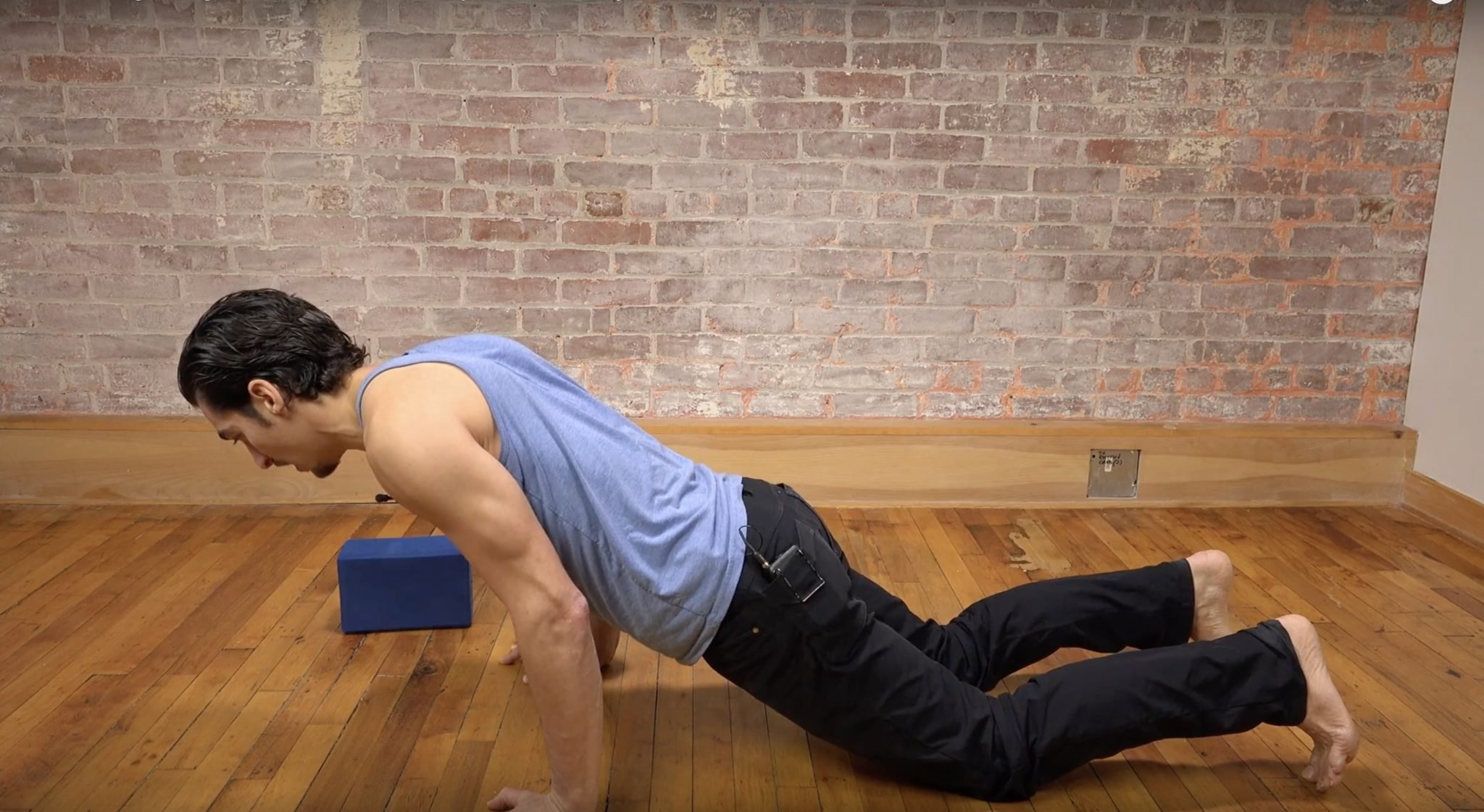
    Step 2: Chaturanga on Knees

    To be honest, when I take a vinyasa class, I do the first 5-10 chaturangas on my knees to get my body and mind linked together prior to floating back. Chaturanga on the knees is a great way to practice the actions with slightly less body weight. This is where you will begin building muscles appropriately, so be as precise and mindful as possible so you are strengthening the muscles required for the 3 shoulder actions. My best advice is start with your shoulders a little bit past the wrists to simulate the leaning forward when coming from plank. With your knees on the ground you can’t actually shift forward so you’ll have to begin by placing your knees closer to your wrists than you normally would. Second, make sure you create one long line from shoulders to knees, without breaking at the hips.

    Step 3: Plank To Chaturanga

    When attempting full chaturanga with a block, it becomes easier to compensate and “fake it” and either over engage in muscles that are not efficient for the actions, or simply getting caught up in compression – placing your bones in the way of the movement in order to slow the movement down – SEE  FIRST VIDEO when I talk about “Upward Tilt” of the scapula.

    Mastering these shoulder actions will not only make your practice of chaturanga easier and more enjoyable, but will open up a whole new world of power and strength in your arm balances.

    If you find yourself struggling to integrate the actions in this version, I highly recommend focusing on the first two options for about 3-5 months and then coming back to this.

    Complexity

    The shoulders are incredibly complex and as a result, it takes quite a lot of self-practice and study to gain any sort of mastery.  I break things down into small steps so that you are able to integrate the actions in your body more easily, however these steps are just the beginning. Let these actions settle into your body over time; rather than forcing them into every chaturanga, pick one action to focus on in your classes and first observe what you are doing before you make changes. Little by little, try to apply the action and notice what it feels like each time. This is a highly effective approach that builds patterns in the body and awareness in the mind. If you are interested in more shoulder strengtheners and stretches check out the Handstand Training. It comes with several videos that directly target the shoulders. Thank you for stopping by. Please share your comments, questions, or requests for other blog topics!

    Hips: Rock & Unlock 'Em

    Get 2 full hours with Matt Giordano focusing on the techniques that increase the range of motion in your hips and provide long lasting freedom. You will have immediate, unlimited access, and can enjoy the benefits today!

    Continue Learning

    Vishvamitrasana At The Wall

    Vishvamitrasana At The Wall

    Vishvamitrasana at the Wall Techniques for Proficient Preparationsage visvamitraVISHVAMITRASANA AT THE WALL There are many stops along the way to a peak posture, but without being empowered by effective steps and techniques to implement, you are left with untapped...

    read more
    Strengthen For Splits

    Strengthen For Splits

    Strengthen for Splits Variations for Increased FlexiblityhanumanasanaSTRENGTHEN FOR SPLITS If the Splits (Hanumanasana) had a personality, it might be one of the most vocal in the room. Aesthetically, it’s quite bold. The shape of the posture makes it evident that it...

    read more
    Prepare For Lotus

    Prepare For Lotus

    Prepare for Lotus Standing Postures for Deep Hip OpeningflexibilityPREPARE FOR LOTUS There are multiple ways to prepare for Lotus Pose. The 5 standing postures and the techniques that are highlighted today are from a portion of a sequence Matt shares in the first...

    read more
    Half Lotus Explorations

    Half Lotus Explorations

    Half Lotus Explorations Articulations for Your Hips, Knees, and Ankleship mobilityHALF LOTUS POSE EXPLORATIONS Lotus Pose may become accessible at different phases of your practice, but it might not ever become attainable. Half Lotus Pose and variations are a great...

    read more
    Fire Log Pose

    Fire Log Pose

    Fire Log Pose 3 Actions for Increased Hip MobilityagnistambhasanaFIRE LOG POSE There’s such a joyous feeling when you’re unwrapping a gift and caught up in the anticipation of finding out what’s inside. This can be similar to the process of exploring a specific yoga...

    read more
    Lotus Pose Variations

    Lotus Pose Variations

    Lotus Pose Variations Is There a Safer Option?padmasanaLOTUS POSE VARIATIONS One of my favorite episodes of Three’s Company is when John Ritter’s character (Jack) laughs at Joyce Dewitt ( Janet) and Suzanne Somers (Chrissy) when they are doing Lotus Pose during a yoga...

    read more

    TOP RECOMMENDATIONS 

    Handstand Training

    Learn the techniques that make Handstand fun, easy and accessible! This 2 part course consists of the top most effective exercises will increase your strength and technique so you can easefully balance a handstand.

    View Details

    SHOULDER REVELATION

    In this 12 class immersion  you will practice specific techniques to strengthen and unlock your shoulders. Each class focuses on a specific joint articulation and muscle group so you gain mastery in the shoulders.

    View Details

    HEART OPENERS

    Finally, a 12 class immersion designed specifically to help you discover the freedom of heart openers. Learn how to avoid uncomfortable compression, and awaken your true range of motion in a step by step manner.

    View Details

    THE FREE TECHNIQUE PACK

    When You Subscribe, You Will Get Instant Access to

    • the Technique Pack: 15 yoga pose breakdowns
    • exclusive online course discounts
    • exclusive blogs and videos
    • This field is for validation purposes and should be left unchanged.

    Headstand: 3 Ways In

    Three Ways In

    Headstand is a powerful pose, typically referred to as the King of the Yoga Asanas (poses). While the gurus and masters have long been preaching the importance of headstand, modern-day anatomists often caution against it. Physically speaking my personal relationship with headstand has been mostly positive, while emotionally there were a couple of years of fear around the potential risks. The warnings of many of my teachers, in addition to neck and shoulder pain eventually turned me away from practicing the pose. In recent years I finally discovered the root cause of my neck pain had very little to do with my neck itself and everything to do with an imbalance in one of my rotator cuff muscles causing referral pain. The reason I feel this is important to mention is that when we are in pain we can be so quick to blame that we might miss what is really going on. We see it all the time in modern medicine. Instead of searching for the root cause of our problem, we focus on the symptom. Let me be clear here, I am not saying if you have neck pain you should do Headstand, I am simply stressing the importance of searching for the root of the pain. Dig deep, keep an open mind, and explore.

    So when is it appropriate to do headstand? This question is not easily answered as it depends on many factors but here are some basic guidelines to consider.
    1. The state of health in your body: Headstand is most appropriate for Yogis with a healthy spine and disks, consult a chiropractor (preferably one that practices yoga) to see if it’s right for you. Same goes for blood pressure irregularities, and of course pregnancy – check with a doctor. If you have other concerns seek professional guidance. If you feel good and know you are in good health, this pose might be your next best friend.
    2. Your Level of Practice, strength, and body awareness: In the video, I mention that there are three levels of entering into headstand; beginner-advanced. Personally, as a teacher I feel headstand is for the intermediate level student, so while I talk about the three levels consider that these are meant for the intermediate student. For the advanced Yoga Asana practitioner, there are multiple ways in and out of headstand, and for the beginner I feel it is most important to build the following prior to attempting the pose:

    Beginners: Preparatory Strength and Technique

    1. Shoulder Strength: From the moment you begin your yoga practice you are likely building shoulder strength. If your desire is to move toward headstand, I suggest building strength specific to having your arms overhead and in front of you. Downward Dog, Arm Balances, Handstand preparations, Dolphin Pose are all great poses to start off with.
    2. Back Body, Spine Strength: Developing the muscles along the back body and spine will help to stabilize your head, torso, and legs when you are ready to work toward headstand.
    3. Neck Strength: Neck strength can be built in preparation. I recommend doing standing yoga postures with hands behind the head and pressing the head back into the hands. This will also help set the head back which can lead to a more optimal alignment of the spine when in headstand, as well as in daily life.

    For my top inversion strength training exercises, check out my Handstand Video at www.TheYogiMatt.com/Handstand

    Benefits of The 3 Approaches

    While scrolling through Instagram and Facebook over the past year or so there is obviously a strong desire to invert amongst yogis. It is beautiful to see the determination amongst practitioners to conquer their fears and prove to themselves that they can do more than they ever could imagine. That dedication toward results typically comes with hazardous experimentation, and maybe a little bit of (dare I say) impatience? I am not innocent when it comes to this topic, which is why I wanted to offer what I have learned along the way to help speed up your overall journey, and potentially save you from some of what I have gone through. I know everyone has to go through their own journey, and I know some of you out there are indeed looking for guidance, and are excited to learn. So if you are interested in the techniques and tools that will develop and empower your practice, I have created a video highlighting three challenging yet highly effective approaches toward headstand. Each one builds strength for the next, so my suggestion is beginners really master the first one without lifting the feet off the ground, and advanced practitioners use all three as drills to build body awareness and strength.

    The 3 Approaches


    1. Half Tuck: The Half tuck teaches the shifting of weight from the feet to the head and arms while not demanding as much body awareness and hamstring flexibility. The first step is simply learning how to point the foot that is on the ground in order to shift your weight. In the video I use a block as a method to get around tight hamstrings. You may stack more than one block so long as you feel stable. The second part of this is to tuck your second leg into your body and balance in a “tuck” position. This may be highly challenging, but keeping your legs in a tuck has the benefit of being low to the ground. Lower center of gravity is easier to balance and therefore can be a safer place to learn balance. I would say that while there is always a risk when balancing upside down, the risk is less than in a full headstand.
    2. Full Tuck: Once you find repeated success with the tuck position and feel comfortable holding it for more than a minute you might try coming straight into a tuck position rather than one leg at a time. This is more challenging on many levels but mostly it requires greater flexibility in the hamstrings, and a stronger sense of proprioception (knowing where your body is in space). If this entrance is feeling great, the second aspect of it is to start extending at the hip joint, bringing your knees upward. How high up to bring the knees will depend on your level of comfort and balance.
    3. Straight Leg Press: Going Straight into a headstand through what is called a pike position in gymnastic and acrobatic language, is definitely the most challenging. It requires tremendous body awareness, low back, and buttock strength. It requires that the hamstrings are both flexible and strong. I highly recommend getting comfortable tucking all the way up and being able to hold a straight headstand for over a minute prior to attempting this.

    Note: For all three approaches be sure to have a teacher around to support you and be your eyes for what you cannot see.

    Beyond the Entry

    Getting into headstand is just the start of the journey. Holding the balance while breathing steady and keeping your mind focused is the real exciting and beneficial part. I love to focus on my spinal curves while upside down, finding the most enjoyable balance. I also love to play with taking pressure off my neck which I will go over in my next blog and video!

    To get started with your strength training and development of body awareness visit TheYogiMatt.com/Handstand. If you know someone that would benefit from this information please share the blog on social media or email. For questions please feel free to reach out to me directly: Matt@TheYogiMatt.com

    Start Practicing

    #1 Tip To Advance Your Practice

    Dharana: The Mastery Approach

    #1 Tip to Advance Your Yoga Practice

    Dharana Leads to Mastery 

    There are multiple reasons why we practice asana (the physical practice of yoga), but most of us would agree that the primary one is that we feel better afterward. Asana offers us an opportunity to get to know our body on a deeper level because it demands the full attention of our mind. You can’t mentally check out while holding a balance posture; you must stay present. It’s that type of absolute focus that allows us to advance in anything we do. In the yoga sutras, the harnessing of our mind’s attention to focus on one thing is referred to as Dharana. We can get to the state of Dharana on and off the mat. It’s a skill that can permeate every aspect of our life. To become masterful at anything we do, we must practice this single-pointed focus. So how do we do it in our asana practice?

    The challenge most of us face is that our only measure of progress in the asana practice is the attainment of postures. I say asana specifically because the yoga practice includes far more than the study of the physical body, and for this discussion, I want to target the development of our physical awareness. If the postures are our only measurement, then we subconsciously will strive for the ability to achieve more of them so long as we feel safe enough. On the other hand, if we don’t feel safe then we will likely hold ourselves back from our potential. I’d like to invite you to focus your attention on something more specific in your physical practice: targeted, intentional muscle activation and the sensations you experience while doing so. Instead of practicing many postures, focus on fewer postures with several muscle activations. The body has a tremendous amount of muscles, so limit your options by focusing on one area of your body i.e. the hips, shoulders, spine, ankles, core, etc. This is how I structure my Elements of Mastery immersion, I take you through simple postures while targeting each area of the body throughout the weekend or online course. In the video below, I give the example of how to activate 3 different muscle groups in the “hips” category for one single posture, lunge pose.

    What Does it mean to be advanced?

    The practice of yoga is always about developing some form of awareness through intentional actions. Advanced in the physical practice of asana means heightened proprioception of the body or “Body Awareness.” Understanding how to activate the various muscles of the body in order to move your bones/joints and be able to feel the sensations of these actions is what qualifies an advanced practitioner. For some, that may result in complex postures that require flexibility and strength, and for others, it might be living a more pain-free life. In any case, “advanced” is not aesthetic, it’s functional, which may or may not be visually pleasing to someone watching. The recent interest in fascia, the connective tissue of the body, has revealed many findings in modern research. While researchers are just a few years into the study of connective tissue, studies are showing the correlation between proprioception and chronic pain – those that are less aware of and capable of moving or activating certain areas of their body also experience chronic pain in these areas. What that means for us practicing yoga is to use the practice to develop greater body awareness if we want to decrease chronic pain. Watch the video below to see how I explore different muscle groups within a simple lunge posture

    4 KEY MOVEMENTS

    To simplify your adventure, let’s look at one way of breaking down potential engagement into 4 directional movements.

    1. Squeeze in: This can be any movement where the extremities are moving or are trying to move toward each other, or more specifically toward the midline of the body. It can also mean the front body contracting inward toward the center of our core – a full tuck position or balasana-child’s pose. In anatomy terms, I am referring to Adduction and Flexion of the body.
    2. Push Out: This is the opposite engagement or movement- away from the midline or when the front body expands like you are stretching out after a good night’s sleep. Anatomically speaking, this is Abduction and Extension of the body.
    3. Turn in: When the Extremities Rotate toward the midline of the body
    4. Turn out: When the Extremities rotate outward and away from the midline.

    In addition, you have side bending and twisting. Side Bending is a push out on one side and a squeeze in on the opposite, while twisting the spine is a rotation along the central axis. My suggestion is to start with the four key movements as they will provide a strong platform to work with.

    ELEMENTS

    Another approach toward simplification of the complexity of the body is using the elements of nature (Earth, Water, Fire, Air). This is the basis that I use for the Elements of Mastery both the online version and live immersions. With the elements, you can still refer back to the 4 Key Movements.

    Earth: The way I structure the earth practice in EOM is we look at the foundations of our postures – the two main connectors to the earth are the feet and the hands. There are 4 main directions of the ankles and if you practice these joint articulations throughout your standing postures, you will gain mastery over the feet and ankles; the same is true for the hands.

    Water: The Element of Motion and Emotion appropriately relates to the hips which are the main area of our body that initiates movement from one place to another. The video above is a great example of hip activation in one posture. To really dive deep into developing awareness of the hips check out Hips: Rock Em and Unlock Em

    Fire: Relates to the Core. The four directions of core activation are Flexion, Extension, Rotation, and Lateral flexion. Of these, Flexion and Rotation are most accurate to the element of Fire. To get to know these best you will want to practice Parts 3 and 4 of Elements of Mastery.

    Air: Air relates to lateral flexion and extension of the spine along with thoracic diaphragmatic breathing. Practice Parts 4 and 5 of Elements of Mastery.

    4 KEY MOVEMENTS

    By exploring the multiple options within just a few postures, you will gain tremendous insight into your body.  When you focus your attention in this way, more advanced postures will likely become accessible simply because of your increased ability to activate muscles and move your joints. This masterful approach done over the course of time will increase the health of your muscle tissue leading to an increased range of motion and greater strength.

    Dharana is the practice of focusing your attention or harnessing the full power of your mind. Now you know how to apply it to your body, but you can also apply this skill to anything you do.

    Elements of Mastery

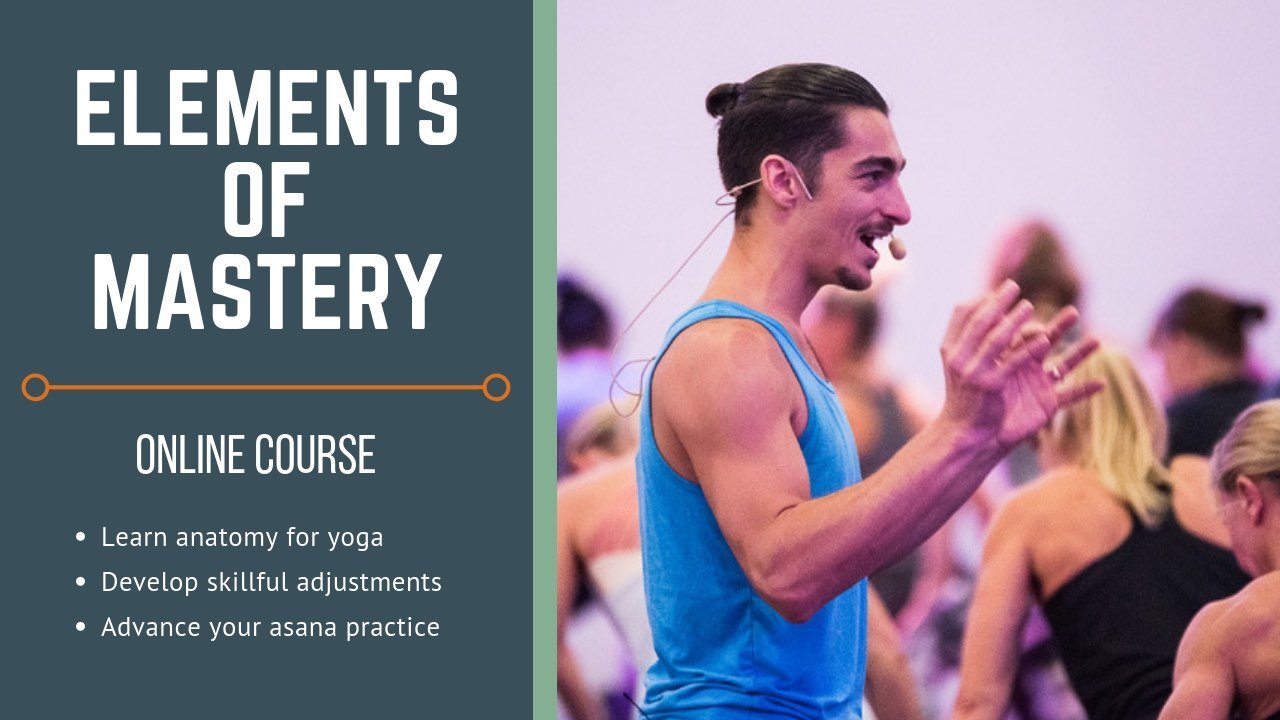
    The most in-depth online yoga immersion offered by Matt Giordano. This immersion contains several full-length workshops focusing on how the body relates to nature’s elements: Earth, Water, Fire, Air, & Space. In addition to deepening your physical practice, you will learn anatomy, adjustments, and the approach to Mastery!

    Product Bundles

    Get access to 3 or more products so you can develop your yoga practice in a well-rounded and enjoyable way right from your home! You will not only save money but you will also have unlimited access to feeling better in your body and mind!

    Continue Learning

    Vishvamitrasana At The Wall

    Vishvamitrasana At The Wall

    Vishvamitrasana at the Wall Techniques for Proficient Preparationsage visvamitraVISHVAMITRASANA AT THE WALL There are many stops along the way to a peak posture, but without being empowered by effective steps and techniques to implement, you are left with untapped...

    read more
    Strengthen For Splits

    Strengthen For Splits

    Strengthen for Splits Variations for Increased FlexiblityhanumanasanaSTRENGTHEN FOR SPLITS If the Splits (Hanumanasana) had a personality, it might be one of the most vocal in the room. Aesthetically, it’s quite bold. The shape of the posture makes it evident that it...

    read more
    Prepare For Lotus

    Prepare For Lotus

    Prepare for Lotus Standing Postures for Deep Hip OpeningflexibilityPREPARE FOR LOTUS There are multiple ways to prepare for Lotus Pose. The 5 standing postures and the techniques that are highlighted today are from a portion of a sequence Matt shares in the first...

    read more
    Half Lotus Explorations

    Half Lotus Explorations

    Half Lotus Explorations Articulations for Your Hips, Knees, and Ankleship mobilityHALF LOTUS POSE EXPLORATIONS Lotus Pose may become accessible at different phases of your practice, but it might not ever become attainable. Half Lotus Pose and variations are a great...

    read more
    Fire Log Pose

    Fire Log Pose

    Fire Log Pose 3 Actions for Increased Hip MobilityagnistambhasanaFIRE LOG POSE There’s such a joyous feeling when you’re unwrapping a gift and caught up in the anticipation of finding out what’s inside. This can be similar to the process of exploring a specific yoga...

    read more
    Lotus Pose Variations

    Lotus Pose Variations

    Lotus Pose Variations Is There a Safer Option?padmasanaLOTUS POSE VARIATIONS One of my favorite episodes of Three’s Company is when John Ritter’s character (Jack) laughs at Joyce Dewitt ( Janet) and Suzanne Somers (Chrissy) when they are doing Lotus Pose during a yoga...

    read more

    TOP RECOMMENDATIONS 

    Handstand Training

    Learn the techniques that make Handstand fun, easy and accessible! This 2 part course consists of the top most effective exercises will increase your strength and technique so you can easefully balance a handstand.

    View Details

    SHOULDER REVELATION

    In this 12 class immersion  you will practice specific techniques to strengthen and unlock your shoulders. Each class focuses on a specific joint articulation and muscle group so you gain mastery in the shoulders.

    View Details

    HEART OPENERS

    Finally, a 12 class immersion designed specifically to help you discover the freedom of heart openers. Learn how to avoid uncomfortable compression, and awaken your true range of motion in a step by step manner.

    View Details

    THE FREE TECHNIQUE PACK

    When You Subscribe, You Will Get Instant Access to

    • the Technique Pack: 15 yoga pose breakdowns
    • exclusive online course discounts
    • exclusive blogs and videos
    • This field is for validation purposes and should be left unchanged.

    Still Have Questions? Email Matt Directly

    • This field is for validation purposes and should be left unchanged.

    Pin It on Pinterest