Build Connection On The Mat

Build Connection On The Mat

GROUNDING

BUILD CONNECTION ON THE MAT

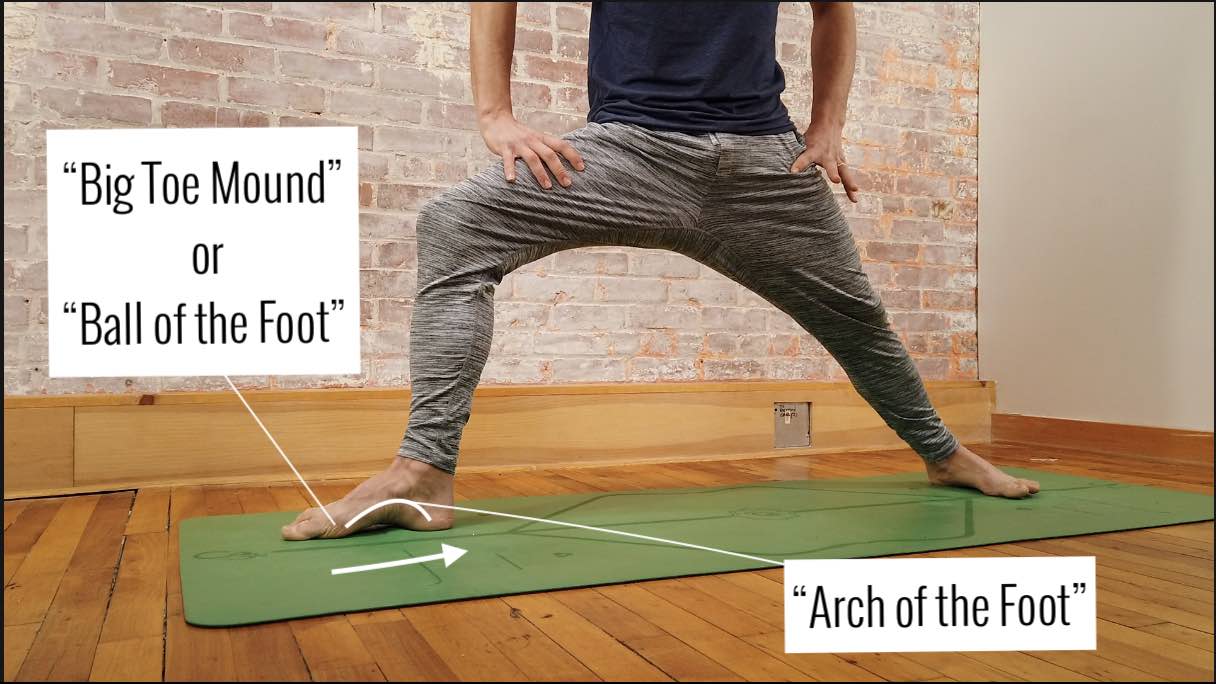
Building connection on the mat starts at the place we tend to overlook: our feet. If we only practice the “shape” of a posture, we can miss the biomechanics that change how the whole pose feels from the inside. Matt reminds us that one action can echo through the body when we know what we’re looking for. Here, the feet become the first teacher. We learn to shorten the sole of the foot by drawing the big toe mound and toe line back toward the heel, and we pair that with a second action: squeezing the legs inward. That inward tone connects to the pelvic floor, which sits like a supportive hammock between the bones of the ilium. Matt cues us to imagine this area like a dome, and when we squeeze in, we contract the dome upward.  When we build connections on the mat it becomes a whole body experience.
chromatic yoga 15 hour immersion

SLOW FLOW & GO

YOGA ASANA, MEDITATION AND PRANAYAMA

  • 10 Chromatic Yoga practices with founder Matt Giordano
  • Physically Invigorating Yet Accessible
  • Breath Work for Energetic Realignment
  • Meditation for Clarity, Focus, and Grounding
  • Themes for Inspiration
  • Physically Well Rounded: All Postural Categories Will be Addressed
  • Designed as “Your Daily Yoga” 60 Minute Classes
  • Non-dogmatic, Anatomy informed Alignment
  • The Perfect Blend of Knowledge and Practice
  • Chromatic Slow Flow Style: Moderate Vinyasa Pacing Infused with Technique and Non-dogmatic Alignment
  • 10 Continuing Education hours with Yoga Alliance and American Yoga Council
  • 10 Accredited Practice Hours with the Chromatic School of Yoga
  • Step-by-Step instruction for increased accessibility
  • Sweat, Breath, Strengthen, Stretch and Feel Amazing!

WARRIOR II FEET

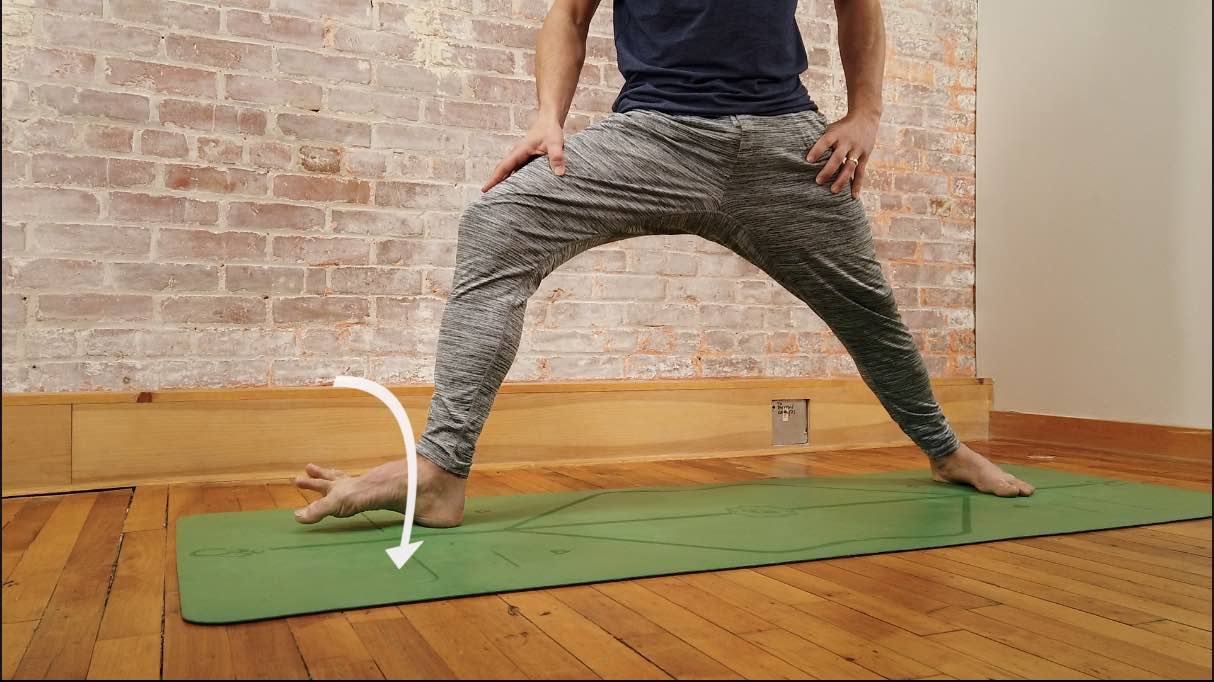
In Warrior II, Matt has us relax the hands first and choose a long stance we can actually control. He cues a subtle shift of the pelvis back, almost like sitting into a chair behind us, so the base feels organized before the arms even lift. Then we find the front foot: a slight lean into the big toe side, and we “scrunch” the sole to build a strong arch.  This happens when the big toe mound draws toward the heel. We repeat the same idea in the back foot, even though it’s trickier because the ankle is in an inverted position. To relieve strain in the outer ankle ligaments, Matt brings in the second action: squeeze the legs toward each other, like we’re narrowing the gap between the inner thighs. That squeeze creates the doming effect up through the pelvis and spine. When we build Connection on the mat it feels less like holding a stance and more like standing inside a support line.

WATCH THE VIDEO

BUILD CONNECTION ON THE MAT: HOW YOUR FEET INFORM YOUR PRACTICE

GET MORE OUT OF SIDE ANGLE PREPARATION 

From that Warrior II base, Matt takes us into Side Angle preparation with forearm to thigh, but he keeps the focus on the feet first. We shorten the soles again (big toe mound toward heel), then we let the inner thighs isometrically contract just enough that the posture starts to feel “self-held.” He cues a slight inward turn of the back thigh, which helps the back leg stop leaking out into the outer ankle. The squeeze of the legs becomes the bridge to pelvic floor support: inner thighs draw in, and the pelvic floor “dome” lifts upward rather than dropping down and forward.  Matt suggests that the right hand (when it’s the front hand) can lower toward the ground without collapsing the base.  Additionally, the chest lengthens forward and the top arm reaches to the sky. Build connection on the mat turns Side Angle into a posture we can trust, not one we brace through.
200 Hour Online Teacher Training Certification

200 HOUR ONLINE TEACHER TRAINING

GET CERTIFIED & DEEPEN YOUR YOGA PRACTICE

  • Deepen your yoga practice
  • Build confidence speaking in front of groups in person and online
  • Learn foundational class structures and templates
  • Learn techniques for a wide range of yoga postures
  • Get certified and highly qualified to teach yoga
  • Yoga Alliance Globally Recognized Certification Program

LIZARD CONNECTION

In Lizard, Matt keeps it simple and grounded. First, the front foot steps out, back knee lowers, and we lift the hips slightly, “stick the bum up” just enough to create space. He cues an inhale to lift the chest, then an exhale down to the elbows for a few breaths. Even here, in order to build connection on the mat we stay with a “foot-led” mentality. Matt has us look at the front foot and rebuild the arch by committing to the same action of the big toe and big toe mound squeezing back toward the heel. Then he layers in traction (pulling the front heel back toward the knee while the back knee subtly drags forward toward the heel). This again creates a controlled isometric “hug” through the legs. That action wakes up the inner thighs and gives the pelvis more integrity, so the stretch becomes intelligent instead of sloppy. The result is a lizard that feels supported from the ground up, not just deep.
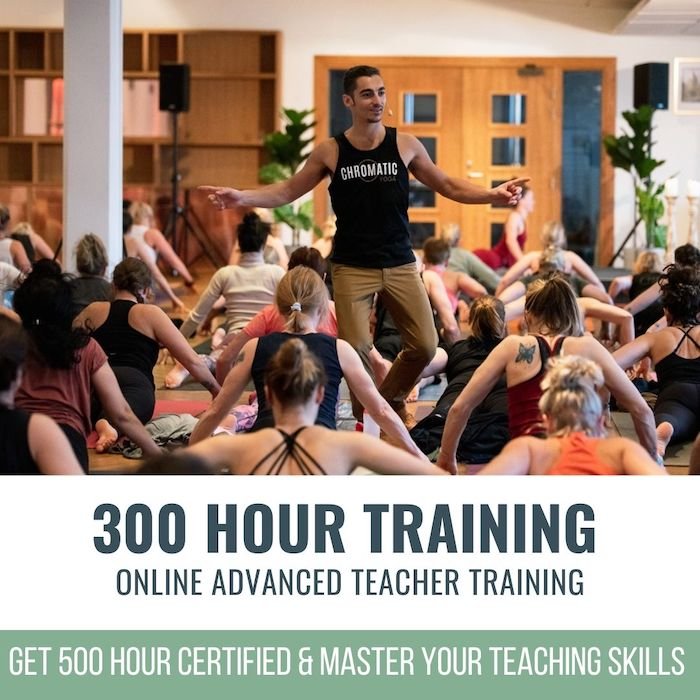
300 hour teacher training online

300 HOUR ONLINE TEACHER TRAINING

GET 500 HOUR CERTIFIED AS A MASTER TEACHER

Master your skill set as a teacher through refined techniques, anatomy, biomechanics, sequencing, philosophy, meditation techniques, theming, yoga business, and much more!

  • Get 500 hour certified
  • Learn anatomy, biomechanics, asana techniques
  • Expand your teaching skills
  • Masterful sequencing and verbal delivery
  • Learn meditation and breathwork techniques
  • Transformative tools: theming, dharma talks, satsang

ROOT, DOME, RISE

So, to build connection on the mat it’s ultimately two actions repeated in different “clothing”.  The “outfits” includes shortening of  the sole, and a squeeze of the legs in. The feet give us a clear starting point which is having the arch active, big toe mound drawing toward heel and then the inner thighs take the message upward into pelvic floor for support. Matt’s dome image is powerful because it keeps the pelvic floor from becoming vague: we don’t “push down” into effort, we contract the dome upward and let that lift echo through the spine and head. Warrior II teaches the base, Side Angle shows how it holds under reach and rotation, and Lizard proves we can stay connected even in deeper shapes. When we return to these actions consistently, the practice stops being about getting through poses and becomes about building a body that knows how to organize itself. That’s the real promise of a path that builds connection on the mat.

If you want to delve deeper into what our yoga practice has to offer then you won’t want to miss out on Matt’s current online immersion Slow Flow & Glow.

The 200 Hr. Teacher Training: Click Here to See the Next Start Date

The 300 Hr. Advanced Teacher Training: Click Here to See the Next Start Date

Article by Trish Curling

Video Extracted From: Slow Flow & Go Immersion
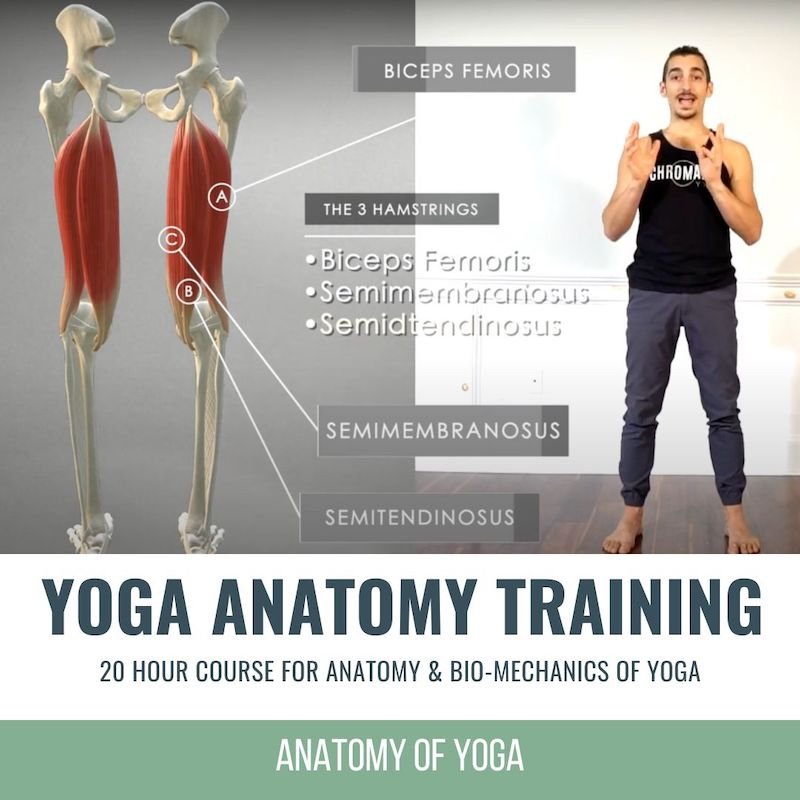
lotus pose online yoga classes

ONLINE ANATOMY COURSE

  • Accessible, exciting, and easy to learn
  • Anatomy and biomechanics for yoga
  • Appropriate for both teachers and students
  • Learn joint alignment vs pose alignment
  • Demystify yoga poses and transitions
  • Release aches and pains
  • Learn how to avoid common injuries
  • Caters to all levels with modifications and props
  • 20 hours Continued Education Credits with Yoga Alliance
  • 20 hours toward Chromatic Yoga Certification and 300 Hour
  • Lifetime access

Continue Learning

A Yoga Treatment For The Shoulders

A Yoga Treatment For The Shoulders

A Yoga Treatment For The ShouldersSTABILITYA YOGA TREATMENT FOR THE SHOULDERS Shoulders tend to speak up when stability is missing. Matt reminds us that building strength isn’t about aesthetics, it’s about support, resilience, and keeping the body working as one...

read more
Reverse Tabletop Strength

Reverse Tabletop Strength

Reverse Tabletop StrengthMECHANICSREVERSE TABLETOP STRENGTH “Solid” implies strength,  yet in yoga, we can easily lose sight of how intentionally building the back body supports everything we do. Reverse Tabletop may look simple, but it asks a lot from the posterior...

read more
Focus On Eagle Pose Legs

Focus On Eagle Pose Legs

Focus On Eagle Pose LegsMECHANICSFOCUS ON EAGLE POSE LEGS When we focus on Eagle Pose legs, it’s tempting to assume the bind is a flexibility test. But this posture quietly reveals something more nuanced: timing, joint mechanics, and how efficiently the legs organize...

read more
Build Connection On The Mat

Build Connection On The Mat

Build Connection On The MatGROUNDINGBUILD CONNECTION ON THE MAT Building connection on the mat starts at the place we tend to overlook: our feet. If we only practice the “shape” of a posture, we can miss the biomechanics that change how the whole pose feels from the...

read more
Flying Revolved Half Lotus

Flying Revolved Half Lotus

Flying Revolved Half LotusARM BALANCEFLYING REVOLVED HALF LOTUS Some postures don’t arrive through imitation; they arrive through investigation. Flying Revolved Half Lotus is one of those shapes. It borrows familiar ingredients like Side Crow mechanics, hip opening,...

read more
Eka Pada Bakasana

Eka Pada Bakasana

Eka Pada BakasanaSINGLE LEG CROWEKA PADA BAKASANA Eka Pada Bakasana asks us to balance curiosity with patience. This one-legged crow variation isn’t just about lifting a leg, it’s about organizing pressure, timing, and trust in unfamiliar territory. The posture...

read more

THE FREE TECHNIQUE PACK

When You Subscribe, You Will Get Instant Access to

  • the Technique Pack: 15 yoga pose breakdowns
  • exclusive online course discounts
  • exclusive blogs and videos
  • This field is for validation purposes and should be left unchanged.

Side Angle Self Adjustment for Hip Strength

SELF ADJUSTMENT IN SIDE ANGLE POSE 

ACTIVATE YOUR GLUTES FOR GREATER GAINS

SIDE ANGLE

SELF ADJUSTMENT IN SIDE ANGLE POSE — ACTIVATE YOUR GLUTES FOR GREATER GAINS

Glute gains! Who doesn’t want those, right? When we think about glute gains though, our minds may go directly to the aesthetic appearance, when in reality, what we really need is the health and strength of that group of muscles (gluteus minimus, medius, and maximus) in order to have functional strength, balance, and endurance. We have the ability to create this reality within our bodies by way of adjustments and focused muscle activation in our physical yoga practice.  

When we think about adjustments in a yoga context, it can be quite a lengthy discussion with many layers. Receiving adjustments from our yoga teachers can be a wonderfully supportive experience, while for some, it may be the complete opposite. There may be an aversion to touch for many reasons; no matter what the reasons are, they are to be 100% respected.  

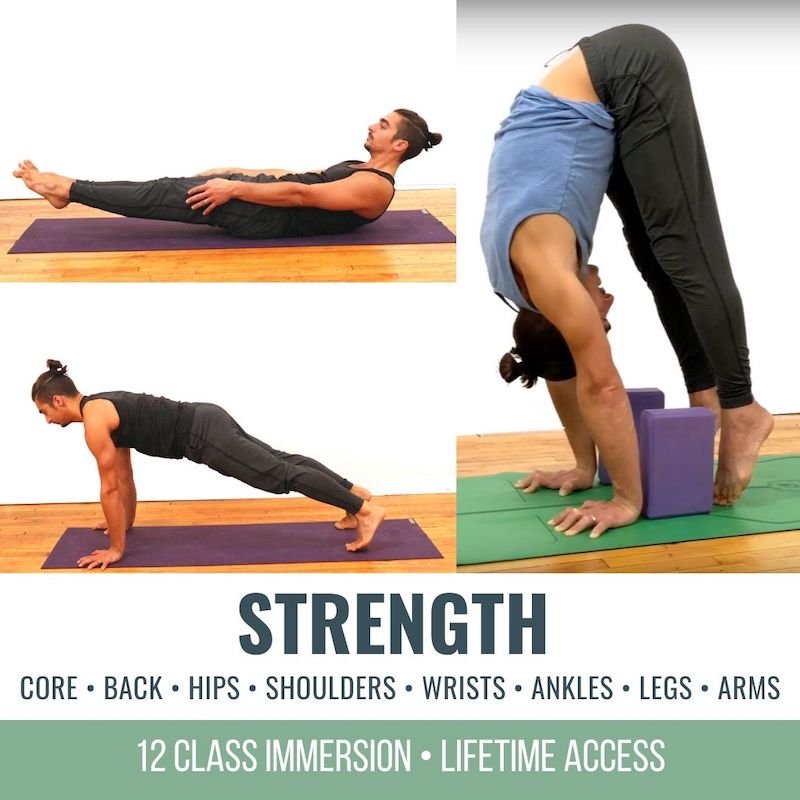
STRENGTH

Yoga For Strength: Strengthen Your Weaknesses • Maximize Your Physical Potential

  • 12 classes: Each class targets a specific muscle group
  • Strengthen your core, back, hips, shoulders, wrists, ankles, legs, and arms
  • Learn creative ways to strength train within the context of a yoga practice
  • Increase mobility by balancing your strength with oppositional muscle groups
  • Joyful accountability to help you reach your practice goals

SALE PRICE: $138.00 $128.00

The Power of Self Adjustments

Now, we happen to be in a time where so many of us are still not practicing in studios or in person with our private teachers. We are participating in virtual classes more than ever. If you weren’t utilizing self adjustments before, this unique time provides an opportunity to incorporate them. This can be a transformative addition to your physical practice, whether in the studio or at home.  Self adjustments offer more than you may think they do. They can be a really great way to connect with our own bodies. When we maintain awareness of the breath and connect with the specific action in the self adjustment, we can truly transform the experience we are having on the mat.

Incorporating adjustments is more than just placing our bodies into a specific alignment. Taking gradual steps through the process helps us to feel safe, therefore helping us to progress.

3 STEPS TO TAKE BEFORE SETTING UP YOUR SELF ADJUSTMENT

  1. Pay attention to your breath, maintain a rhythm that sends a signal to your brain that you are safe and that you are ready to sync the next action with your breath.
  2. Find stability first.  If you need additional support in the posture, then gather the props you may need. Utilizing blocks, a chair, and/or a wall may be just the thing that helps you to find the sensation or connection to the muscle activation.  
  3. Go for it! Perform the self adjustment. First, find the appropriate alignment in your body and then apply the action/contraction in the muscle with your own assist.

In today’s video, we can see Matt take all of these steps for glute activation in Side Angle Pose. In his preparation for the posture, he has set himself up on a chair, making himself more stable, and then he presses the knee of the front leg out into his bicep in order to turn on the abductors and gluteus muscles. He adds the action of pressing down through the heel in the front foot to turn on the gluteus maximus. These actions completely change the experience in the posture.

300 hour teacher training online

300 HOUR ONLINE TRAINING

Yoga teachers, take your certification to the 500 hour level, and become a master level teacher.

  • Master your skillset as a teacher
  • Refine your practice techniques
  • Learn anatomy, biomechanics, self adjustments
  • Develop masterful sequencing with the most effective structure
  • Learn to teach meditation and breathwork

WHAT ARE THE BENEFITS?

The 3 Main Benefits of Self Adjustments

  • Gain a sense of awareness of where we are in space (proprioception)
  • Develop muscular strength
  • Gain access to increase range of motion

With better proprioception (body awareness), we have a better chance of activating our targeted muscles. In the example of Side Angle from the video, the act of pressing into the bicep provides feedback into the brain and body to activate the abductors. We can understand the sensation of this activation so much more. This feedback shows us how to come back to this activation with more confidence whenever we revisit this posture in our practice. The act of that isometric contraction in the targeted muscles builds integrity and strength in the muscles and surrounding tissues. With more strength, we find an opportunity to increase more active range of motion. With better active range of motion, we in turn unleash our access to new postures. We can truly see that self adjustments provide so much more than stacking bones and joints. We are changing our experience on the mat and in our bodies as a whole.

If you want to develop more strength in your yoga practice, check out Matt’s October 2021 Immersion, titled “Strength  

If you’re ready to unleash your true potential and develop greater strength in your yoga practice, then Matt’s new Immersion Strength for the month of October is perfect for you.

In this immersion, you will gain access to:

  • 12 Classes: Each class targets a specific muscle group
  • Strengthen your core, back, hips, shoulders, wrists, ankles, legs, and arms
  • Learn creative ways to strength train within the context of a yoga practice.
  • Increase mobility by balancing your strength with oppositional muscle groups
  • Joyful accountability to reach your practice goals.

~Written and Edited by Trish Curling

STRENGTH

Yoga For Strength: Strengthen Your Weaknesses • Maximize Your Physical Potential

  • 12 classes: Each class targets a specific muscle group
  • Strengthen your core, back, hips, shoulders, wrists, ankles, legs, and arms
  • Learn creative ways to strength train within the context of a yoga practice
  • Increase mobility by balancing your strength with oppositional muscle groups
  • Joyful accountability to help you reach your practice goals

SALE PRICE: $138.00 $128.00

Livestream Class Packages

STRENGTH

Yoga For Strength: Strengthen Your Weaknesses • Maximize Your Physical Potential

  • 12 classes: Each class targets a specific muscle group
  • Strengthen your core, back, hips, shoulders, wrists, ankles, legs, and arms
  • Learn creative ways to strength train within the context of a yoga practice
  • Increase mobility by balancing your strength with oppositional muscle groups
  • Joyful accountability to help you reach your practice goals

SALE PRICE: $138.00 $128.00

Vinyasa and Meditation Yoga Immersion

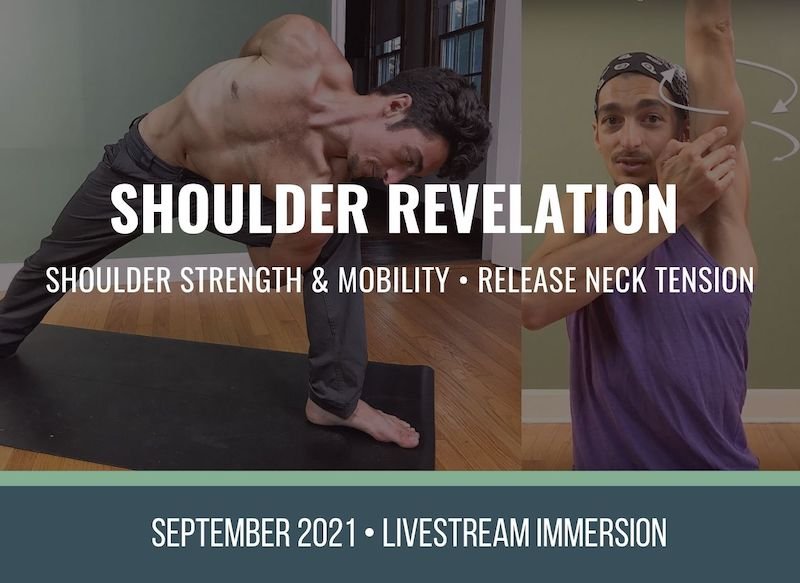
SHOULDER REVELATION

Strength•Mobility•Biomechanics

  • Increase strength and flexibility
  • Decrease risk of injury
  • Release shoulder tension
  • Learn anatomy and biomechanics
  • Access a wider range of postures
  • Stabilize the rotator cuff muscles
  • Learn binds, heart openers, and arm balances
  • 12 all-levels, 75-minute online classes
  • Lifetime unlimited access to all

$198.00 $138.00

Vinyasa and Meditation Yoga Immersion

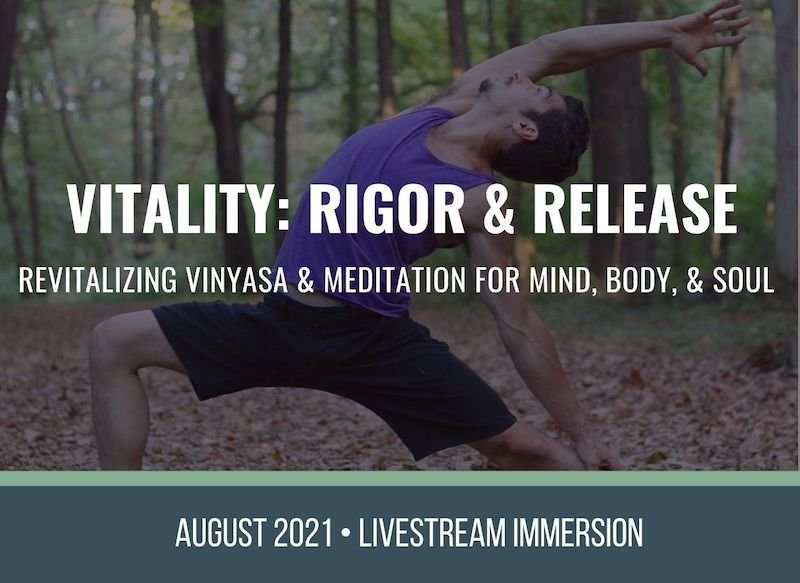
VITALITY

RIGOR & RELEASE

  • Get back to feeling energized
  • Vinyasa-style approach, accessible to everyone
  • Hips, twists, heart openers, shoulders, core, & more
  • Guided meditations to de-stress, increase focus, and gain mental & emotional clarity
  • Strengthen and lengthen the most essential muscle groups
  • 12 all-levels, 75-minute online classes
  • Lifetime unlimited access to all

$198.00 $108.00

Arm Balances Online Yoga Classes

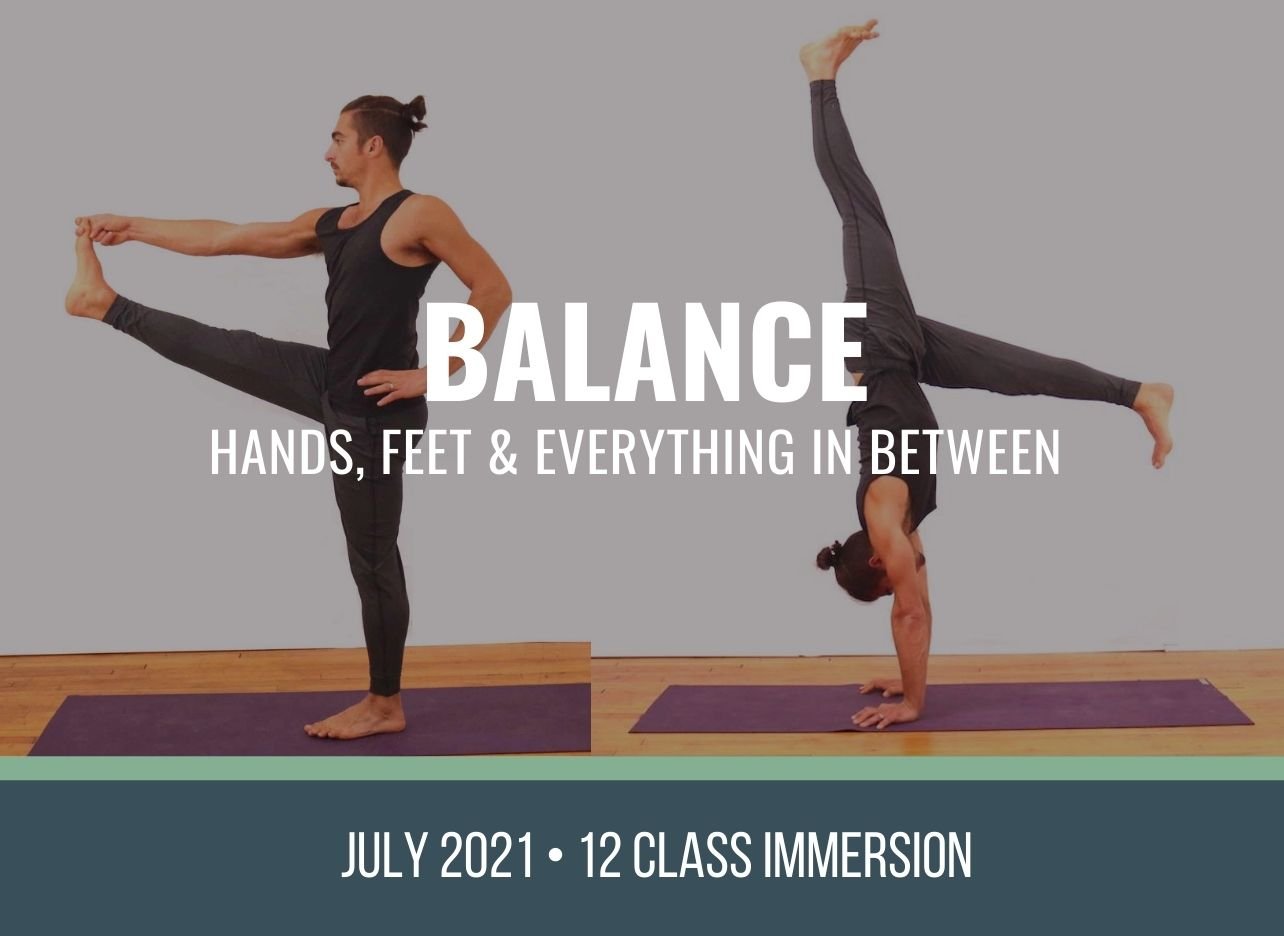
BALANCE

INCREASE & AWAKEN YOUR BALANCE

  • Learn over 12 balance postures
  • Muscle strength and reactive patterning
  • Increase proprioception and deliberate weight shifting
  • Tree, Standing Hand-to-Foot variations, Warrior III
  • Half Moon variations, Handstand, Side Plank, Headstand
  • 12 all-levels, 75-minute online classes
  • Lifetime unlimited access to all

$198.00 $128.00

Arm Balances Online Yoga Classes

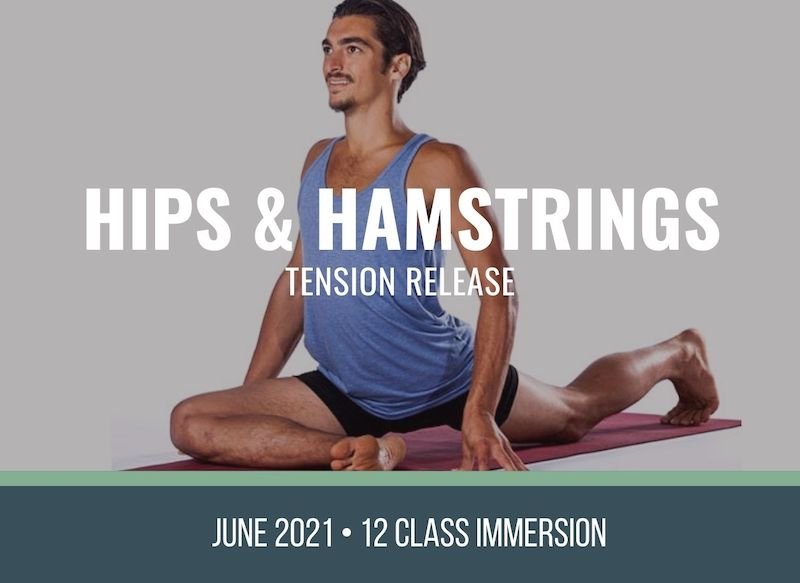
Hips & Hamstrings

RECLAIM YOUR ELASTICITY

  • Learn over 12 hip openers
  • Step-by-step instructionals in every practice
  • Techniques, biomechanics and alignment
  • Pigeon, Eagle, Fire Log, Lizard
  • Lotus, Flying Pigeon, Splits, Straddle
  • 12 all-levels, 75-minute online classes
  • Lifetime unlimited access to all

$148.00

Arm Balances Online Yoga Classes

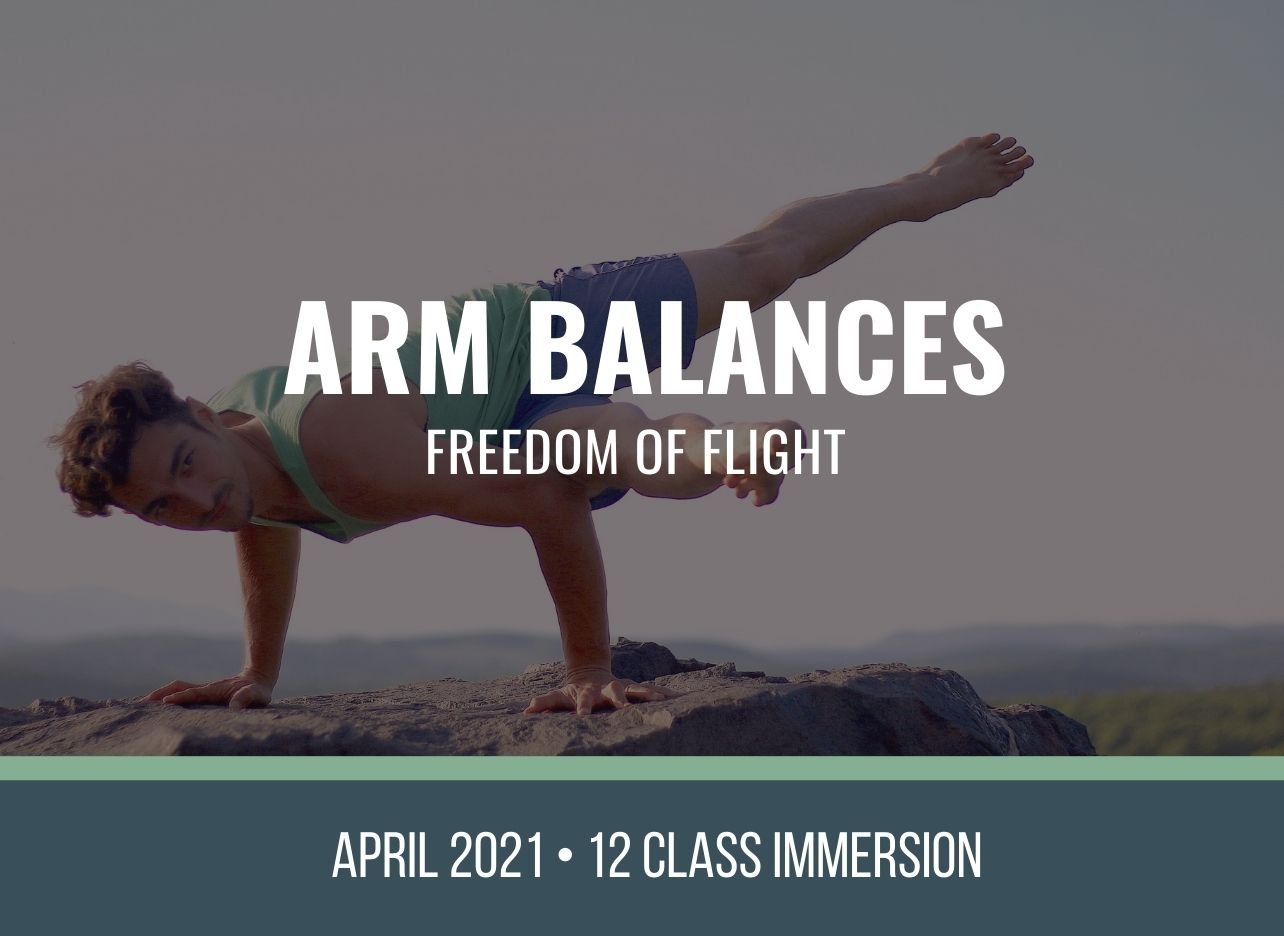
ARM BALANCES

FREEDOM OF FLIGHT

  • Learn over 12 arm balances
  • Step-by-step instructionals in every practice
  • Techniques, biomechanics and alignment
  • Crow, Side Crow, Titibasana, Ashtavakrasana
  • Forearm Stand, Koundinyasana 1 & 2, Handstand
  • 12 all-levels, 75-minute online classes
  • Lifetime unlimited access to all

$198.00 $128.00

yoga backbend techniques: 12 classes

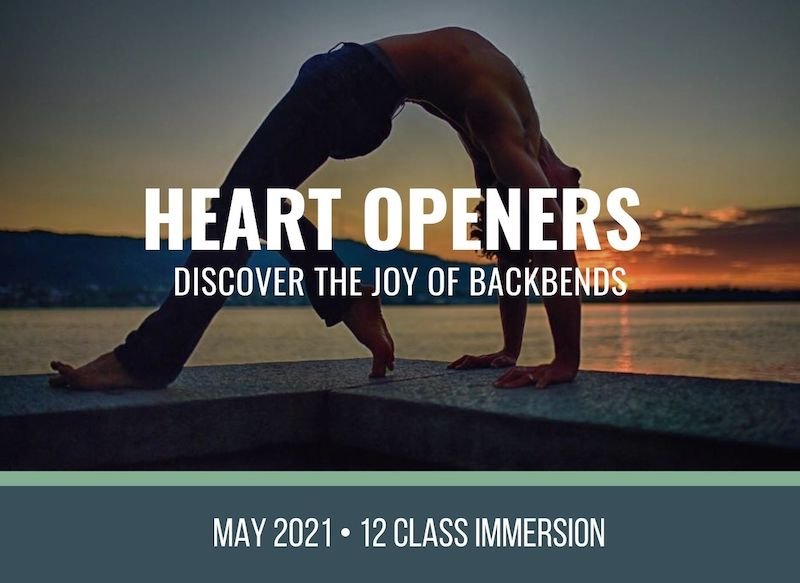
HEART OPENERS

DISCOVER THE JOY OF BACKBENDS

  • Learn over 12 backbends
  • Step-by-step instructionals in every practice
  • Techniques, biomechanics and alignment
  • Bow Pose, Camel, Dancer, Full Wheel
  • King Cobra, King Dancer, King Pigeon
  • 12 all-levels, 75-minute online classes
  • Lifetime unlimited access to all

$148.00

Yoga Alignment and Flow

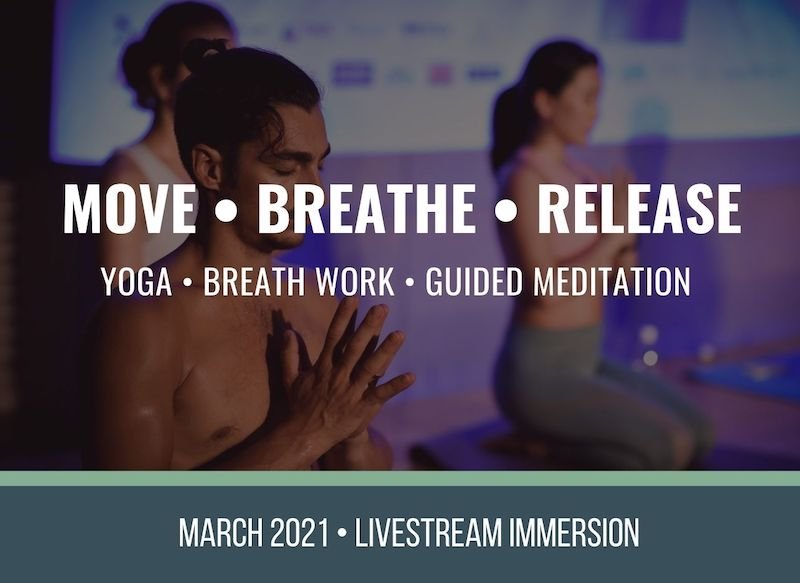
MOVE • BREATHE • RELEASE

YOGA • BREATHWORK • MEDITATION

  • YOGA: TRANSFORM YOUR BODY
  • BREATHWORK: REJUVENATE
  • MEDITATION: AWAKEN YOUR MIND
  • THE TRIFECTA OF YOGA
  • 12 CLASSES: ALL LEVELS  

$128.00

Yoga Alignment and Flow

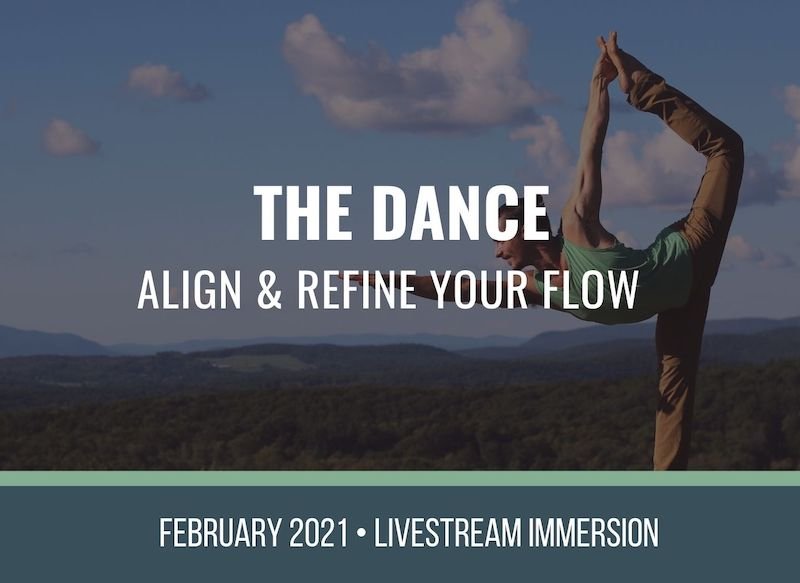
THE DANCE

ALIGN • REFINE • FLOW

  • MOVEMENT TRANSFORMATION
  • ALIGNED TRANSITIONS
  • TARGETED STRENGTH
  • DEEP HIP OPENERS
  • 12 CLASSES: INTERMEDIATE

$148.00

back health online yoga classes

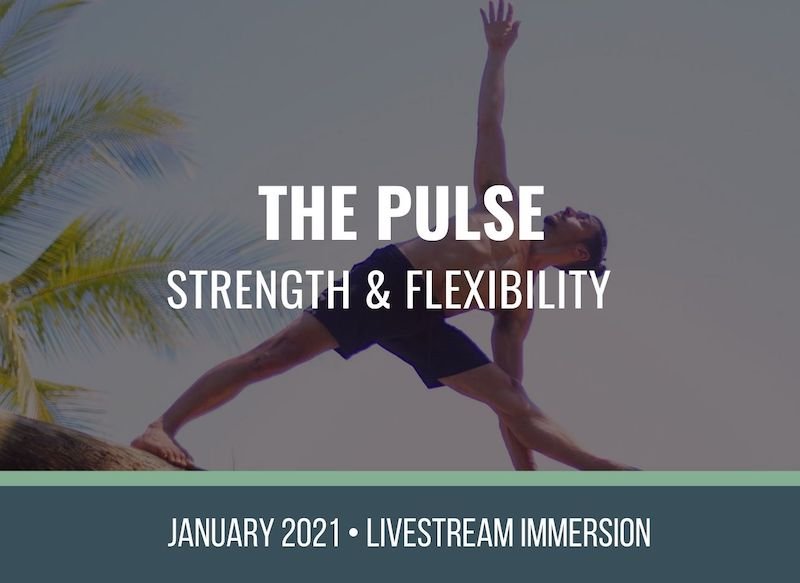
THE PULSE

BALANCE • STRENGTH • FLEXIBILITY

  • SHOULDER STRENGTH
  • HEART OPENERS
  • HAMSTRINGS & BUTTOCKS
  • INNER THIGHS
  • 12 CLASSES: ALL LEVELS  

$128.00

2020 IMMERSIONS

back health online yoga classes

HIPS • HEART • HANDSTAND

  • HIP OPENERS
  • HEART OPENERS
  • HANDSTAND TECHNIQUES
  • BUILD COURAGE & STRENGTH
  • 12 CLASSES: ALL LEVELS  

$148.00

boundless freedom

  • SHOULDER & NECK RELEASE
  • SHOULDER BIOMECHANICS
  • BALANCED STRENGTH
  • INCREASE RANGE OF MOTION
  • 12 CLASSES: ALL LEVELS

$298.00 $128.00

BIRDS OF PARADISE

  • FLEXIBILITY OF INNER THIGHS
  • 4 GUIDED MEDITATIONS
  • LIFETIME ACCCESS TO ALL
  • LEADS TO BIRDS OF PARADISE 
  • COMPARTMENTS OF THE MIND 

$298.00 $128.00 

BEST STARTER PACKAGE

  • 6 YOGA CLASSES
  • 2 GUIDED MEDITATIONS
  • LIFETIME ACCCESS TO ALL
  • 6 PEAK POSTURES
  • 6 YOGA SUTRA THEMES

$148.00 $78.00

back health online yoga classes

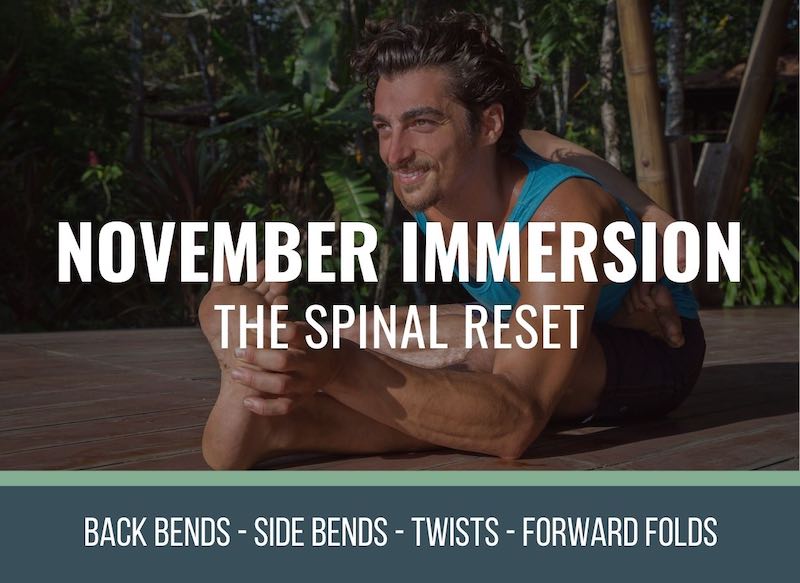
THE SPINAL RESET

  • BACKBENDS & SIDE BENDS
  • TWISTS AND FORWARD FOLDS
  • SPINAL BIOMECHANICS
  • 4 POST-CLASS MEDITATIONS
  • 12 CLASSES: ALL LEVELS

$128.00

JOURNEY TO BLISS

  • PHYSICAL MEETS SPIRITUAL
  • EXPLORE THE KOSHAS
  • MIND-BODY TENSION RELEASE
  • FOUR GUIDED MEDITATIONS
  • 12 YOGA CLASSES: ALL LEVELS

$148.00 $118.00

BACK, NECK, & SHOULDERS

  • 12 YOGA CLASSES
  • 4 GUIDED MEDITATIONS
  • LIFETIME ACCCESS TO ALL
  • 12 PEAK POSTURES
  • 12 YOGA SUTRA THEMES

$178.00 $128.00

October Livestream Yoga Classes

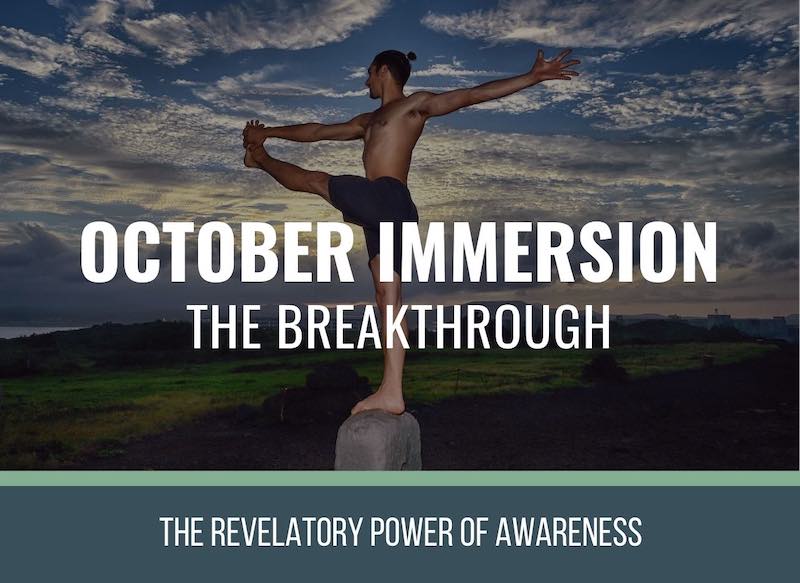
THE BREAKTHROUGH

  • HIP OPENERS
  • HIP BIOMECHANICS
  • EMPHASIS ON ARM BALANCES
  • 4 POST-CLASS MEDITATIONS
  • 12 CLASSES: ALL LEVELS  

$128.00

JOURNEY TO THE HEART

  • FULL BODY RESET
  • INCREASE BALANCE
  • ARM BALANCES
  • 4 GUIDED MEDITATIONS
  • ELEMENTALLY THEMED

$148.00 $118.00

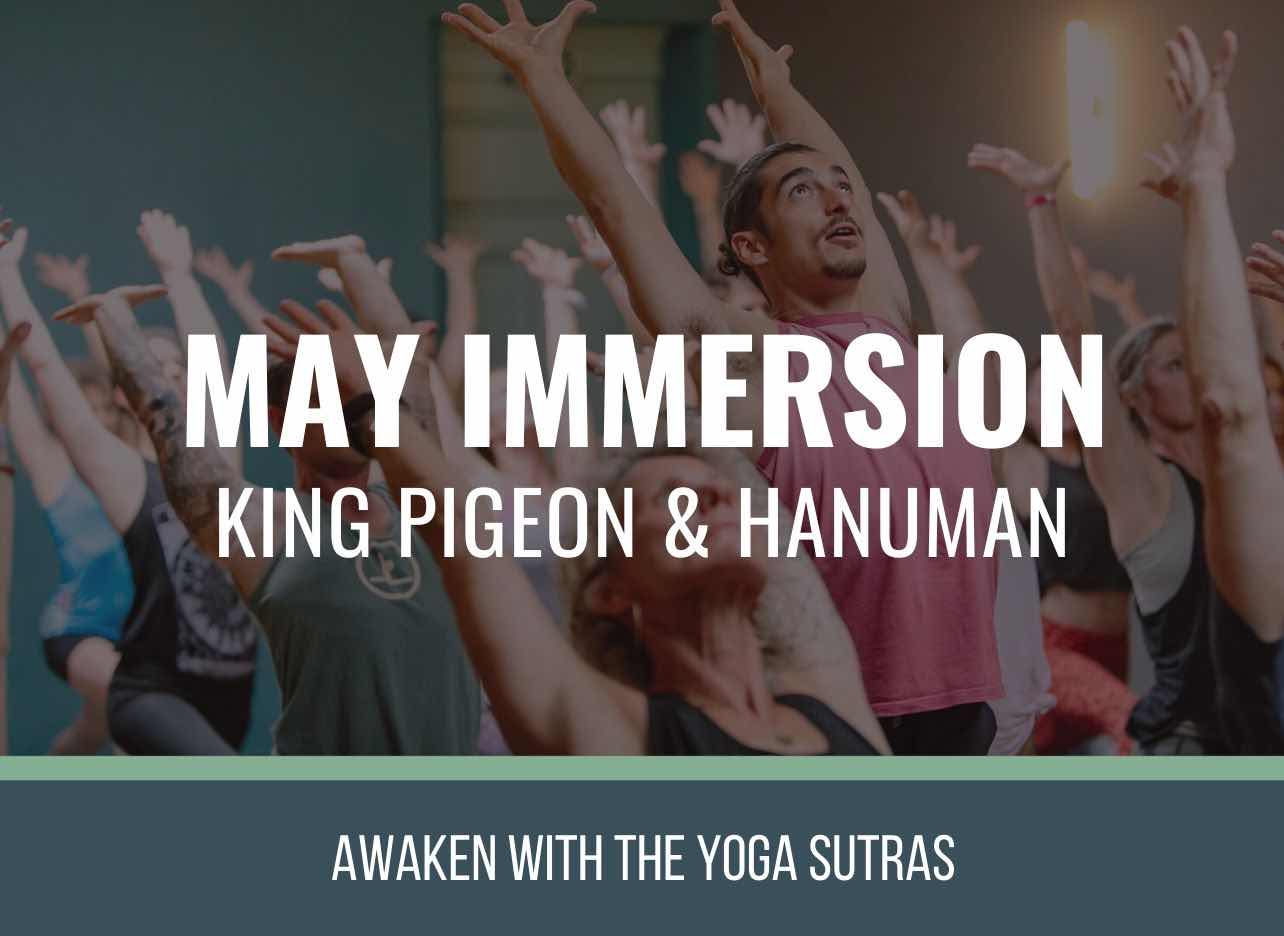
KING PIGEON & HANUMAN

  • FLEXIBILITY OF HIPS
  • SHOULDER & SPINE MOBILITY
  • 4 GUIDED MEDITATIONS
  • 12 INTERMEDIATE CLASSES
  • HAMSTRING RANGE OF MOTION

$128.00

Continue Learning

A Yoga Treatment For The Shoulders

A Yoga Treatment For The Shoulders

A Yoga Treatment For The ShouldersSTABILITYA YOGA TREATMENT FOR THE SHOULDERS Shoulders tend to speak up when stability is missing. Matt reminds us that building strength isn’t about aesthetics, it’s about support, resilience, and keeping the body working as one...

read more
Reverse Tabletop Strength

Reverse Tabletop Strength

Reverse Tabletop StrengthMECHANICSREVERSE TABLETOP STRENGTH “Solid” implies strength,  yet in yoga, we can easily lose sight of how intentionally building the back body supports everything we do. Reverse Tabletop may look simple, but it asks a lot from the posterior...

read more
Focus On Eagle Pose Legs

Focus On Eagle Pose Legs

Focus On Eagle Pose LegsMECHANICSFOCUS ON EAGLE POSE LEGS When we focus on Eagle Pose legs, it’s tempting to assume the bind is a flexibility test. But this posture quietly reveals something more nuanced: timing, joint mechanics, and how efficiently the legs organize...

read more
Build Connection On The Mat

Build Connection On The Mat

Build Connection On The MatGROUNDINGBUILD CONNECTION ON THE MAT Building connection on the mat starts at the place we tend to overlook: our feet. If we only practice the “shape” of a posture, we can miss the biomechanics that change how the whole pose feels from the...

read more
Flying Revolved Half Lotus

Flying Revolved Half Lotus

Flying Revolved Half LotusARM BALANCEFLYING REVOLVED HALF LOTUS Some postures don’t arrive through imitation; they arrive through investigation. Flying Revolved Half Lotus is one of those shapes. It borrows familiar ingredients like Side Crow mechanics, hip opening,...

read more
Eka Pada Bakasana

Eka Pada Bakasana

Eka Pada BakasanaSINGLE LEG CROWEKA PADA BAKASANA Eka Pada Bakasana asks us to balance curiosity with patience. This one-legged crow variation isn’t just about lifting a leg, it’s about organizing pressure, timing, and trust in unfamiliar territory. The posture...

read more

THE FREE TECHNIQUE PACK

When You Subscribe, You Will Get Instant Access to

  • the Technique Pack: 15 yoga pose breakdowns
  • exclusive online course discounts
  • exclusive blogs and videos
  • This field is for validation purposes and should be left unchanged.

CONTACT

  • This field is for validation purposes and should be left unchanged.

Lifting The Arches of Your Feet

Are Your Arches Lifted?

Setting the foundation for standing postures - Avoid Collapsed Arches

Is your foundation trong?

Setting the foundation of any posture is arguably the most important step you can take aside from breathing of course, which you can simply consider a part of the foundation. You probably have heard me talk about the foundation of arm balances and handstands a million times, but how about standing postures? If you have practiced with me on retreat or at the Elements of Mastery, you already know the importance of what I am about to share with you. If you have not worked with me before, no problem, I am going to take you through a step-by-step approach to building a strong, solid foundation for all your standing postures.

Have you been asked to lift the arches of your foot in a class? Did you know how to do that on your own? Maybe you were told to lift your toes in order to do so, and you probably noticed a loss of connection to stability. Lifting your toes can be a great way to strengthen some of the muscles I am about to share with you, but it is literally just the beginning.

Does it really matter?

This is a great question and I wouldn’t blame you for asking because ultimately knowing the why behind anything we do gives our actions power. So why lift the arches? Consider your feet the foundation of all standing postures. Would you build your extremely expensive one-of-a-kind house on mud, or would you prefer a solid foundation you know will hold up over time? Picture it, a strong, heavy house resting on a muddy foundation, eventually part of the house would start to sink downward while other parts remained strong. The pressure would build and the weakest parts would start to break. This happens in our body, and the weakest points are typically our joints. The joints are weak because they are the place where two or more bones come together for the purpose of movement. If they were too strong, no movement would be available. Gravity is always upon us and pulling us downward. When our bones are properly aligned there is less stress on the joints. However, what if we have an imbalance at the ankle that causes our weight to fall to the inside or outside of the foot? Not only is the ankle or foot at risk but ALL of the joints that exist above it are too because they have to compensate for the new alignment. This is why you could have a pain in your neck that stems from weakness and miss-alignment at the ankle. You feel it in the neck because the neck is compensating for everything below it. This is very important to understand especially if you are a yoga teacher or in any field of physical health. Does it matter…? YES!

The Anatomy

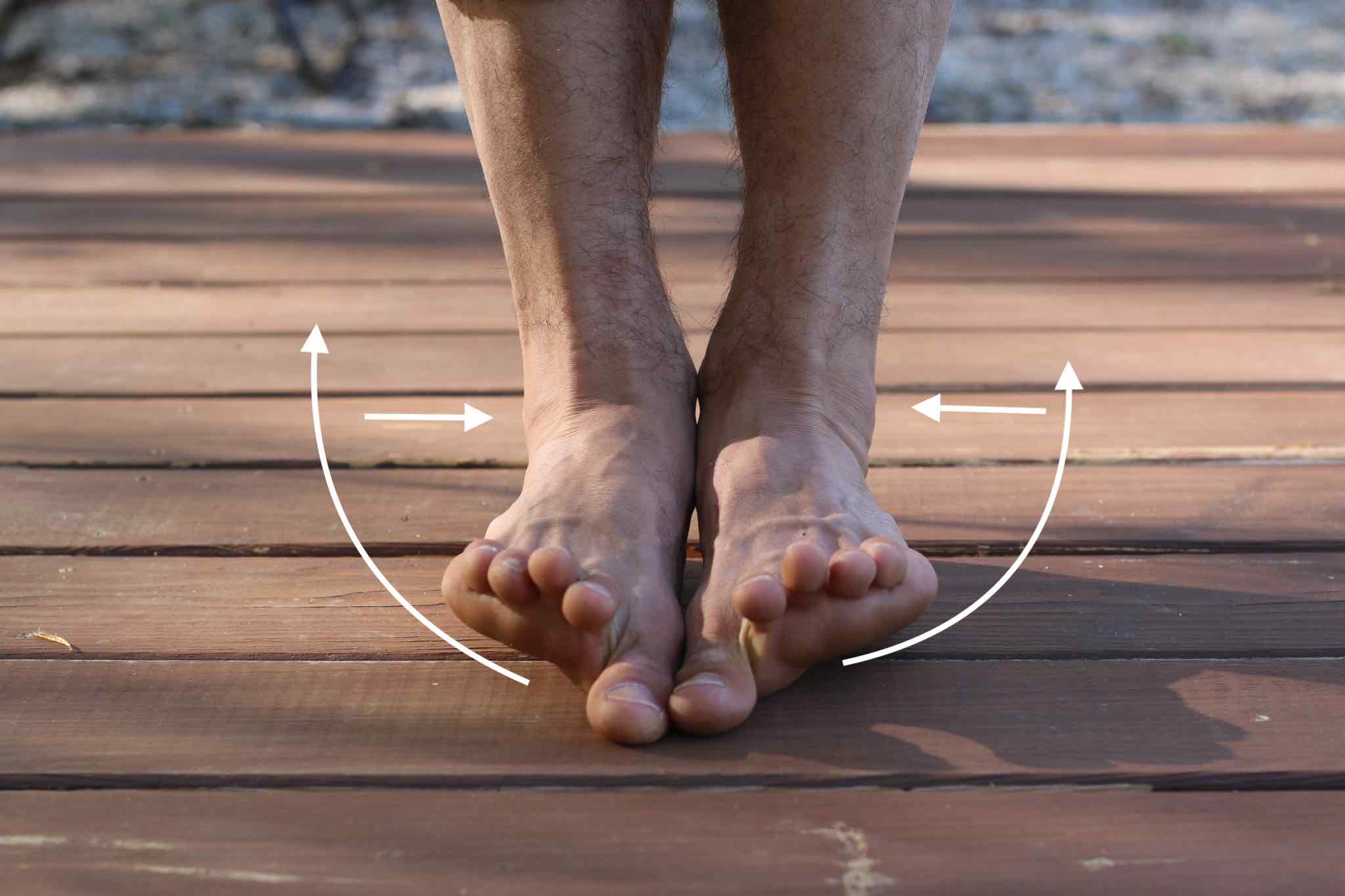
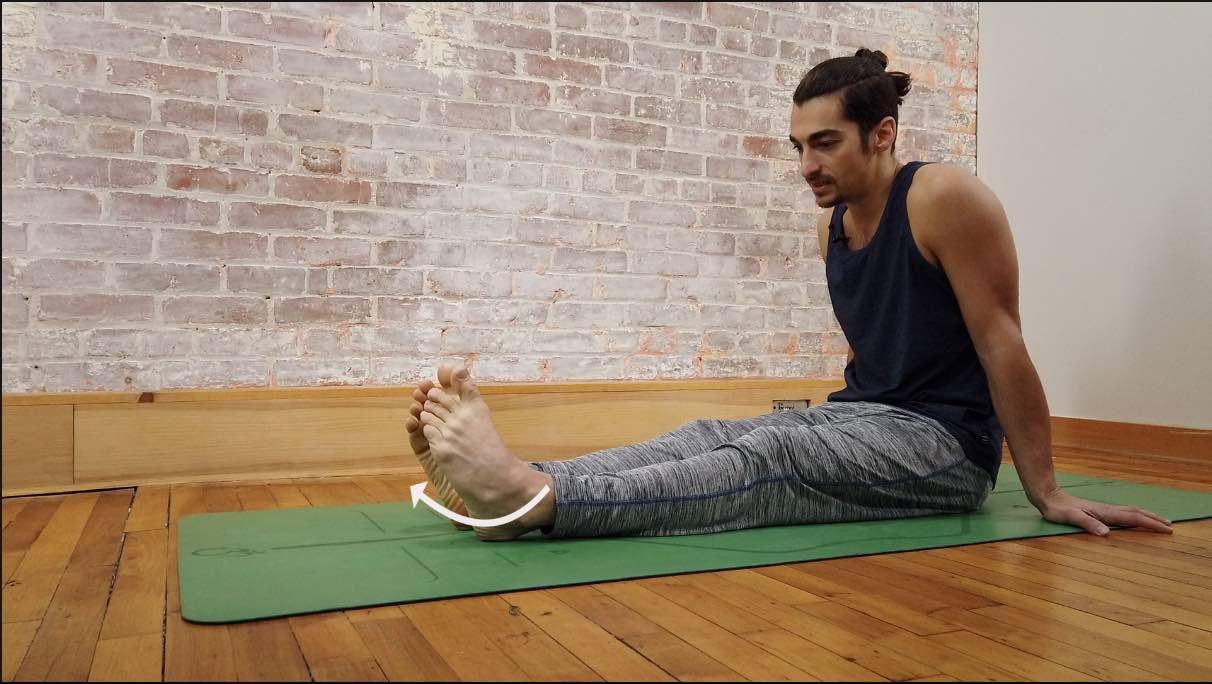
For the purposes of this article, we will talk about two joint actions and the muscle groups that create them: Eversion and Pronation of the ankle which occurs at the subtalar joint. The subtalar joint is just below the ankle joint. The ankle joint allows for the up and down movements of plantar flexion (pointing the foot) and dorsiflexion (flexing the foot), while the subtalar joint allows the foot to rock from side to side. For the purpose of simplicity, we will refer to both of these joints as a collective –  “the ankle”.

The arch of the foot

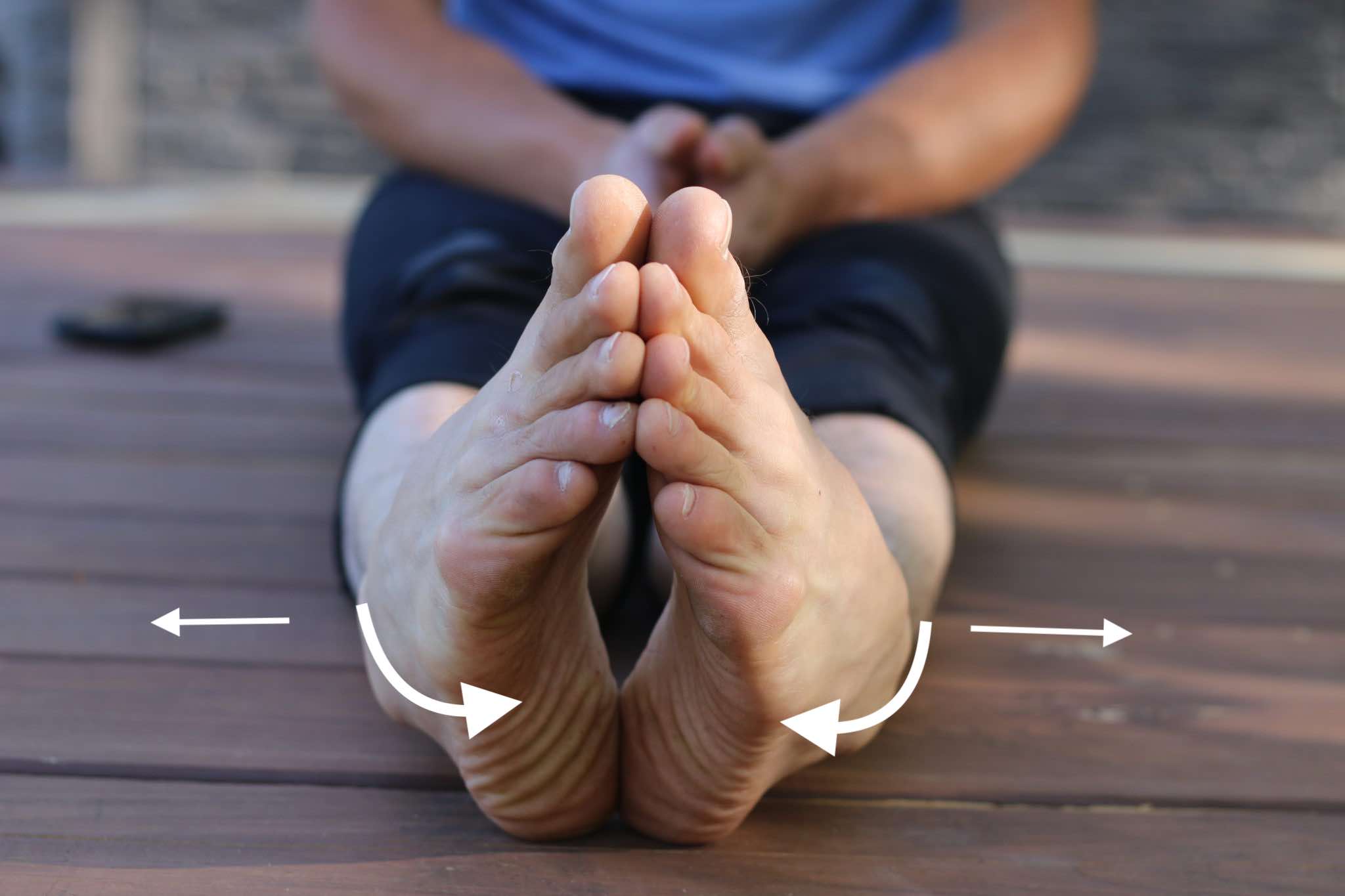
There are multiple muscles that help to form the arch of the foot. How high someone’s arches are may be due to the structure of the foot – the bones might be shaped in a more flattened position. However, we aren’t concerned with the external look of an arched foot but rather, training the muscles to activate appropriately for our feet. Most of us can use strengthening of these muscles. The way that I found really helps is first learning how to isometrically engage the muscles of inversion and eversion at the same time which forms a “bootstrap” like scenario around the foot. One of the fibula muscles wraps from the outer shin down the outer ankle and attaches near the ball mound of the big toe – That is pretty cool! There are muscles underneath the sole of the foot that when activated in conjunction with the muscles of inversion and eversion allow us to find greater engagement and lift of our arches.

One of the best ways to integrate these actions in your practice is to repeat them throughout your yoga practices. If you are interested in greater balance, stability, and ankle awareness there are two online immersions – 12 class packages that focus heavily on the feet and ankles.

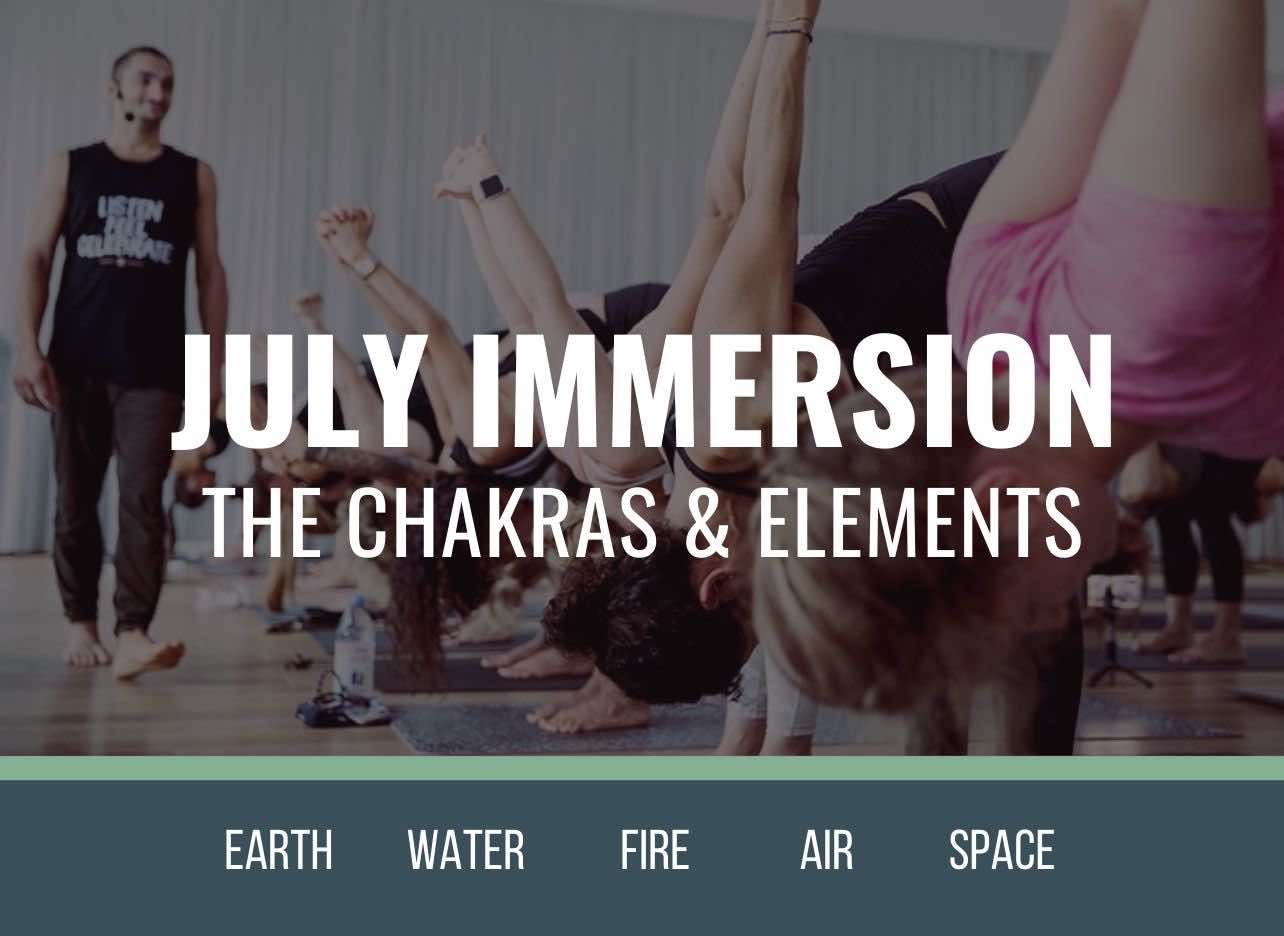
1. The July 2020 Immersion titled The Chakras & the Elements – the Earth and Water practices will provide a profound awakening to the ankles and feet and how they relate to your practice.

2. The August 2020 Immersion titled Journey To Bliss follows a similar format as of July; the first few practices target the ankles and feet. I highly recommended either or both of these immersions.

Everting

ankle strength, heal sprained ankle with yoga

Inverting

ankle strengthening for yoga
October Livestream Yoga Classes

CHAKRAS AND ELEMENTS

FULL BODY AWAKENING

  • Unlock Your Hips!
  • Awakem Your Arm Balance Practice
  • Detailed Ankle and Feet Articulation
  • Develop Low Back and Buttock Strength
  • Strengthen Your Core
  • Release S.I. Joint Pain
  • Release Neck Pain
  • The July Immersion Has it ALL
  • Each Chakra & Element is Paired with an Area of the Body and Muscle Group
  • 12 All Levels Live Asana Classes
  • 4 Live Guided Meditations


3 Steps To Activate the Core of the Foot

  1. Press the outer edge of the food down.
  2. Maintain this action, and counter engage by pressing the big ball mounted and big toes down.
  3. Drag the big ball mound back toward the inner heel.
inversion of the ankle - arch of the feet

Step 1 - invert the ankle

While you can certainly evert the ankle first, I find for most people it is more effective to start with inverting the ankle when approaching standing postures. For clarity of the action, I am showing it in a seated position – try it seated first so you are very clear on how to invert. When in Warrior 2, press the outer edge of the front foot into the ground until your feel the muscle deep in the calf muscle activating. The ball mound and the big toe might lift when you do this – it is ok for now.

evert the ankle in warrior 2 yoga pose

Step 2: Evert the Ankle

I recommend learning everting when seated – first, pull the outer edges of the feet back, it can be helpful to press the big toe and toe mound forward. When articulating this action properly you will feel the muscles along the outer shin engage. After you are aware of the action, the next part can be challenging. In warrior 2, be sure to maintain the muscle activation of inversion and add eversion by pressing the big toe and toe mound down into the ground, while trying to roll the outer ankle in slightly. Be sure not to fall flat into the inner arch while doing so – if this happens it means you are no longer activating the muscles of inversion, so go back to step 1 and try again.

arch of the foot in warrior 2 yoga pose

Step 3: contract The Arch

While this step is optional, it can be really helpful especially for anyone that gets plantar fasciitis. The idea is to maintain steps 1 and 2 but then add an activation of the musculature along the bottom (plantar side) of the foot. The action is to try and drag the big ball mound of the foot toward the inner heel. Like inversion and eversion, this action can be quite foreign and may take a bit of time until you are able to feel the muscles contract. I really like to focus on this action in the change of seasons when I am switching between different shoes and my feet are trying to adapt to the differences.

October Livestream Yoga Classes

JOURNEY TO BLISS

12 CLASS PACK - FULL BODY AWAKENING

  • Strong focus on ankles, feet & wrists
  • Release Stress Patterns in body and mind
  • Increase Shoulder and Spinal Flexibility
  • Includes 2 hour Workshop on Full Wheel Pose
  • Strengthen Your Core
  • Learn Breathwork and Meditation Techniques
  • Connect the the 5 Layers called The Kosha's
  • 12 All Levels Live Asana Classes
  • 4 Live Guided Meditations
  • Lifetime Unlimited Access to All
  • SALE: 1 Time Payment of $118

The Results

Activating the arch of the foot can be challenging at first. Typically the hardest part is learning how to co-contract opposing muscle groups. When opposing muscle groups contract at the same time, you get lifting and stabilizing of the joints. In this case, when you activate the muscles along the inside and outside the leg, it’s like pulling up your bootstraps and stabilizing the ankle. As a wonderful result, the arch of the foot pulls up.

Integration

 To fully integrate these actions into your practice you will need repetition throughout all of your standing postures. Try it in your next class, or if you want a full workshop that incorporates these exact actions throughout, check out Hips: Rock Em and Unlock Em workshop below.

Thanks for stopping by. Leave a comment if this post has been helpful, or if you have questions or requests for future posts.

October Livestream Yoga Classes

BEST SELLING PACKAGE!

8 CLASS PACK INCLUDES CLASSES FOCUSED ON:

1. Flying Pigeon
2. Half Lotus (avoid knee pain)
3. Compass Pose
4. Bow Pose & Wild Thing
5. Crow Pose & Half Firefly

  • 6 All Levels Yoga Practices
  • 2 Guided Meditations
  • 6 Different Peak Postures 
  • Compass Pose Full Length Class
  • Flying Pigeon Full Length Class
  • Unlimited Views + Lifetime Access

Continue Learning

A Yoga Treatment For The Shoulders

A Yoga Treatment For The Shoulders

A Yoga Treatment For The ShouldersSTABILITYA YOGA TREATMENT FOR THE SHOULDERS Shoulders tend to speak up when stability is missing. Matt reminds us that building strength isn’t about aesthetics, it’s about support, resilience, and keeping the body working as one...

read more
Reverse Tabletop Strength

Reverse Tabletop Strength

Reverse Tabletop StrengthMECHANICSREVERSE TABLETOP STRENGTH “Solid” implies strength,  yet in yoga, we can easily lose sight of how intentionally building the back body supports everything we do. Reverse Tabletop may look simple, but it asks a lot from the posterior...

read more
Focus On Eagle Pose Legs

Focus On Eagle Pose Legs

Focus On Eagle Pose LegsMECHANICSFOCUS ON EAGLE POSE LEGS When we focus on Eagle Pose legs, it’s tempting to assume the bind is a flexibility test. But this posture quietly reveals something more nuanced: timing, joint mechanics, and how efficiently the legs organize...

read more
Build Connection On The Mat

Build Connection On The Mat

Build Connection On The MatGROUNDINGBUILD CONNECTION ON THE MAT Building connection on the mat starts at the place we tend to overlook: our feet. If we only practice the “shape” of a posture, we can miss the biomechanics that change how the whole pose feels from the...

read more
Flying Revolved Half Lotus

Flying Revolved Half Lotus

Flying Revolved Half LotusARM BALANCEFLYING REVOLVED HALF LOTUS Some postures don’t arrive through imitation; they arrive through investigation. Flying Revolved Half Lotus is one of those shapes. It borrows familiar ingredients like Side Crow mechanics, hip opening,...

read more
Eka Pada Bakasana

Eka Pada Bakasana

Eka Pada BakasanaSINGLE LEG CROWEKA PADA BAKASANA Eka Pada Bakasana asks us to balance curiosity with patience. This one-legged crow variation isn’t just about lifting a leg, it’s about organizing pressure, timing, and trust in unfamiliar territory. The posture...

read more

THE FREE TECHNIQUE PACK

When You Subscribe, You Will Get Instant Access to

  • the Technique Pack: 15 yoga pose breakdowns
  • exclusive online course discounts
  • exclusive blogs and videos
  • This field is for validation purposes and should be left unchanged.

Pin It on Pinterest